


Three years ago, I watched a hotel procurement director from Miami sign a $340,000 contract with a Foshan manufacturer whose showroom looked like a Ritz-Carlton lobby. Marble floors. Chandeliers. Tailored blazers. Six months later, the container arrived. The sofa frames were plywood where solid ash had been promised. The “Italian leather” was split hide with a plastic coating. The director flew back to Foshan. The showroom? Still gorgeous. The factory? A different story entirely. He’d bought the lobby, not the product.
This happens every week. The buyers who avoid it aren’t the ones with the biggest budgets or the most factory visits. They’re the ones who’ve figured out that finding premium Chinese furniture manufacturers has almost nothing to do with what you’re shown — and everything to do with what you know how to look for.
The Brutal Truth Nobody Wants to Hear
Here’s the uncomfortable reality: most “premium” manufacturers in China are premium at marketing, not at making furniture.
The best factories rarely have the flashiest showrooms. The worst ones often do. That’s not cynicism. That’s pattern recognition from fifteen years of walking production floors.
A factory with a gleaming 3,000-square-meter showroom and a dusty 200-square-meter workshop isn’t a manufacturer. It’s a middleman with good interior design taste. And there’s nothing wrong with middlemen — unless you’re paying manufacturer prices.
The rule of thumb? If the showroom impresses you more than the workshop worries you, you’re about to overpay for under-delivery. Premium isn’t a look. It’s a set of behaviors you can observe when nobody’s performing for a buyer.
Key Takeaway
- Premium Chinese furniture manufacturers are defined by workshop discipline, not showroom aesthetics
- The best factories often under-invest in presentation and over-invest in production infrastructure
- Your sourcing strategy should prioritize observable production behaviors over polished marketing materials
- Geographic clustering matters: true specialists concentrate in specific industrial zones, not scattered across trade cities
Why “Premium” Has Become a Meaningless Label
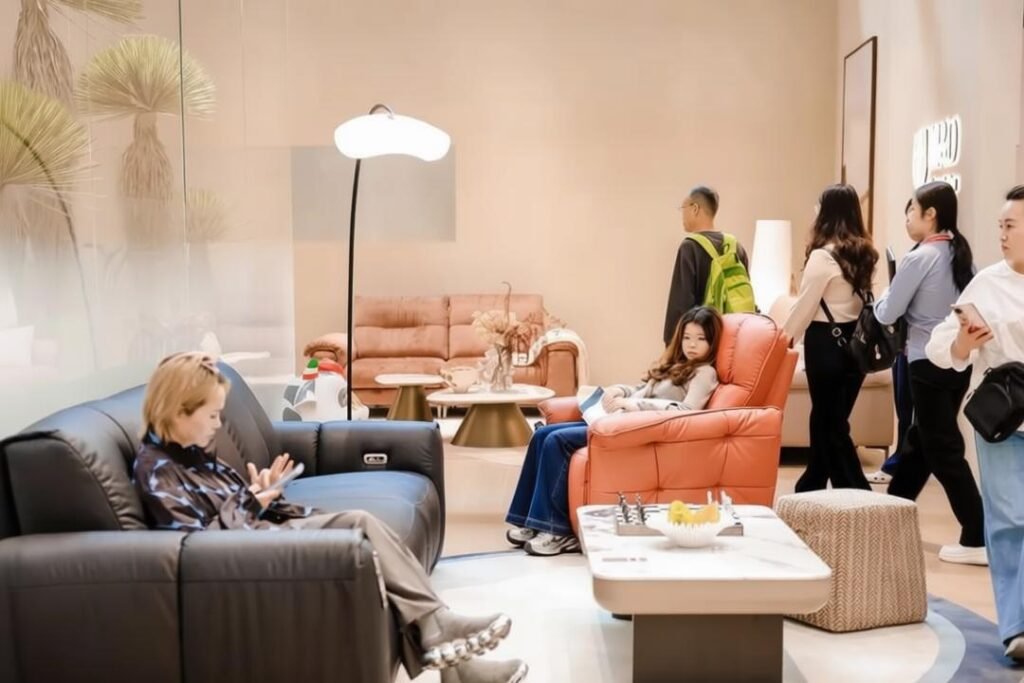
Walk through the Louvre Furniture Mall in Foshan on any Tuesday and you’ll hear “premium” about forty times before lunch. Every booth claims it. Every catalog repeats it. The word is noise.
But here’s what actually separates a premium operation from a pretender. It’s not the price tag. It’s not the celebrity endorsement photoshopped onto the wall. It’s the invisible infrastructure — the things you only see when you stop looking at furniture and start looking at how furniture gets made.
Think of it like choosing a restaurant. The menu design, the lighting, the uniform — that’s all theater. The real question is what’s happening in the kitchen at 2 PM on a slow Wednesday. Are the prep stations organized? Is the walk-in clean? Does the chef actually taste the sauce, or just plate it?
A premium furniture factory operates the same way. The test isn’t the 10 AM buyer tour with fresh coffee and a PowerPoint. It’s the 3 PM Tuesday when no Western buyers are scheduled and the production manager thinks he’s alone with his workers. That’s when you see whether the sanding team is actually sanding or just waving the machine near the wood. Whether the QC station has a rejected pile or just an approved one. Whether the finishing room has ventilation that works or just ventilation that looks like it works.
I learned this the hard way in Dongguan.
A factory I’d recommended — beautiful samples, impeccable English, ISO certifications on the wall — turned out to be outsourcing 60% of its “production” to a village workshop twenty minutes away. No dust collection. No fire suppression. Workers sleeping on stacked foam between shifts. The client never saw that workshop. I only found it because I got lost trying to find a bathroom and followed a delivery truck.
The real kicker? That factory is still in business. Still winning awards. Still signing contracts with buyers who never look past the lobby.
What Does “Premium” Actually Mean in China?
China furniture sourcing is the process of identifying, vetting, and contracting with manufacturers capable of producing goods to specification, on time, and with consistent quality — a process that requires looking past surface presentation to evaluate production substance.
In the Chinese context, “premium” breaks down into three observable categories:
| Category | What It Looks Like on the Surface | What It Actually Requires |
|---|---|---|
| Material Integrity | Fancy wood names on the spec sheet | Batch-tested incoming materials, moisture-controlled storage, chain-of-custody documentation |
| Construction Quality | Tight joints in the sample | Standardized joinery protocols, in-process QC checkpoints, rejection tolerance below 3% |
| Finish Consistency | Glossy showroom photos | Dedicated finishing booths with controlled humidity, color-matching systems, cure-time discipline |
Most buyers stop at the left column. The ones who find real premium operations interrogate the right column.
The Geography Trap: Where Premium Actually Lives
Buyers love to say they’re “sourcing from China” as if it’s one place. It’s not. It’s a dozen distinct manufacturing ecosystems with different DNA, different specialties, and different risk profiles.
Foshan is the furniture capital. Everyone knows that. But Foshan is also where the most sophisticated showroom theater happens — because it has to. The competition is brutal. The showrooms get flashier. The actual production, in some cases, gets more outsourced, more fragmented, more disconnected from the brand you’re shaking hands with.
Longjiang, a district within Foshan’s broader orbit, is where the real sofa manufacturing concentration lives. If you’re buying upholstered furniture and you’re not looking at Longjiang specialists, you’re probably overpaying for a Foshan trader’s markup.
Anji, up in Zhejiang, owns the office furniture and seating game. The manufacturers there are quieter, less polished, often family-run for two or three generations. They don’t have the Foshan marketing budget. They have something better: decades of accumulated know-how and nowhere near the same incentive to cut corners because their reputation is the only marketing they can afford.
Nankang in Jiangxi is the emerging hardwood furniture cluster. Less famous. Less convenient to visit. And for that exact reason, some of the most honest pricing in the country.
The pattern is consistent: the more a region relies on walk-in buyer traffic, the more incentive there is to invest in appearance over substance. The more a region relies on repeat B2B relationships and word-of-mouth among industry insiders, the more incentive there is to invest in the product itself.
And here’s the thing most buyers miss. (Actually, that’s not quite right — what most buyers miss is that they don’t know what they’re missing.) They fly into Guangzhou, take a car to Foshan, spend three days in showrooms, and think they’ve seen Chinese furniture manufacturing. They’ve seen Chinese furniture retail. The manufacturing is happening in buildings with no signage, down roads with no English names, in towns that don’t appear on the buyer’s itinerary because there’s no one there to sell them a story.
The Inspection Game: What to Look For When Nobody’s Watching
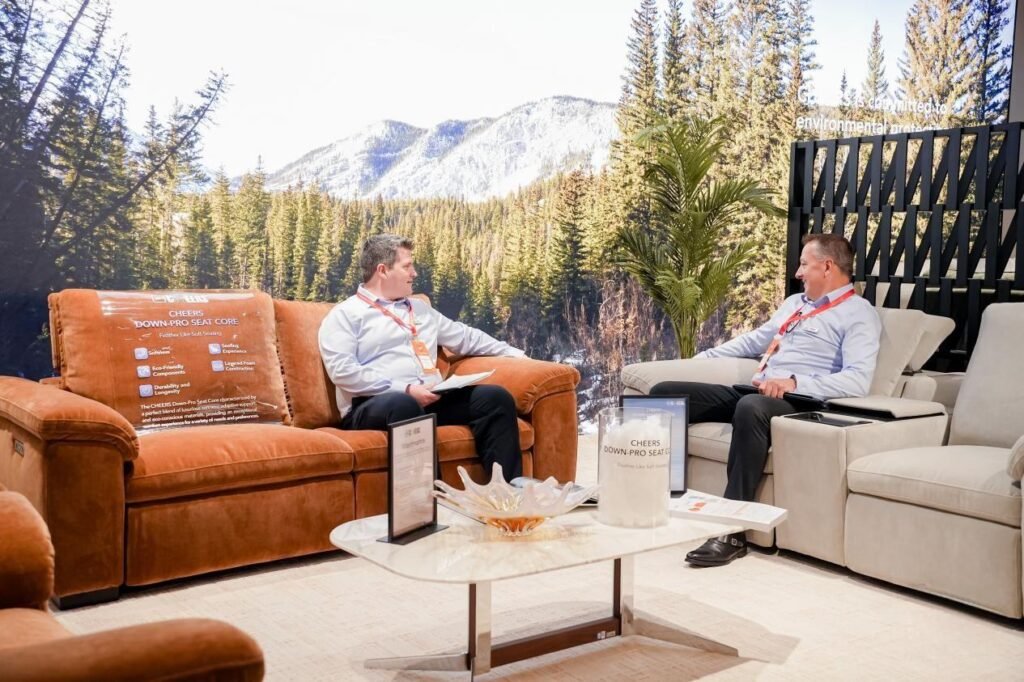
You don’t need to be a furniture engineer to spot a premium operation. You need to be a careful observer of human behavior and physical evidence. The factory tells you everything if you know how to read it.
Start with the wood storage. Is it covered? Is it stacked with spacers for airflow? Is there a moisture meter on the wall, and does it look used, or like it was hung there for the photo? Premium manufacturers obsess over moisture content because they know warping doesn’t show up in the showroom — it shows up in the client’s living room six months later, in a different climate zone, and by then it’s your problem.
Look at the rejected goods pile. Every honest factory has one. If you ask to see rejected pieces and they tell you “we don’t have defects,” you’re either talking to a liar or a magician. Either way, don’t sign the contract.
Check the finishing room. This is where the smoke and mirrors are most literal. A proper finishing operation has negative-pressure ventilation, separated spray booths, and workers in respirators. A cheap one has open windows, a fan, and workers who’ll have respiratory problems in five years. The furniture from the second place will off-gas in your client’s home. Plus, the finish won’t last.
While some buyers gravitate toward large-scale manufacturers in Foshan, others find that mid-sized specialists — operations like Interi Furniture, which focuses on project-grade hospitality and commercial furnishings with a reputation for consistent specification adherence — offer a different risk-reward equation. These aren’t the factories with the biggest showrooms or the most aggressive sales teams. They’re the ones that interior designers and procurement consultants quietly return to when a hotel project needs 200 identical armchairs that all have to match, and “close enough” isn’t in the vocabulary. In a market where consistency is often the hardest thing to buy, that kind of operational discipline is worth more than a marble lobby.
The Documentation Test
Ask for the last three months of internal QC reports. Not the polished ones for buyers. The actual daily logs. A premium factory keeps these like a pilot keeps a flight log — because they know the record is what protects them when something goes wrong. A factory that can’t produce them, or produces only perfect reports, is a factory that doesn’t actually do the work.
Your Actionable Framework: A Buyer’s Decision Tree
Forget the ten-point checklist. Here’s what actually matters, stripped down to the decisions that separate a good buy from an expensive mistake.
Step 1: Verify they’re actually the manufacturer.
— Ask for the business license and check the scope. Does it say “manufacturing” or “trading”? If it says trading, you’re not talking to a factory. You’re talking to a factory’s middleman. That’s fine if you know it and price accordingly. Most buyers don’t.
Step 2: Demand an unannounced workshop visit.
Not the showroom. The workshop. And not the workshop they prep for you. The one running on a random Tuesday afternoon. If they refuse, or if they need two weeks to “prepare,” you’re being managed. Not partnered with. Managed.
Step 3: Test their material knowledge.
Ask them to explain why they chose a specific wood species for your application. A premium manufacturer can tell you about density, expansion rates, regional sourcing advantages, and alternative options. A pretender will recite the catalog description.
Step 4: Check their rejection tolerance.
What’s their acceptable defect rate on incoming materials? On in-process goods? On finished pieces? If they say “zero defects,” they’re either lying or they don’t understand statistics. If they say “three percent, with documented root-cause analysis,” you’re talking to people who actually manage quality.
Step 5: Evaluate their problem-response protocol.
Here’s the red flag that contradicts conventional wisdom: the factory that never admits to problems is the factory you should avoid. The factory that has a clear, documented process for handling defects, delays, and specification disputes — that’s the one you want. Because problems will happen. The question is whether your partner has a system for fixing them, or just a system for hiding them until you’re on a plane home.
FAQ: What Buyers Actually Ask (Once the Sales Pitch Ends)
Q: Can I find a premium manufacturer without flying to China?
A: You can find one. You can’t verify one. Video calls, third-party audits, and sample orders reduce risk, but they don’t eliminate it. The buyers who sleep well at night are the ones who’ve stood on the production floor and watched their product being made. Everything else is a calculated gamble with better or worse odds.
Q: How do I know if a factory’s “Italian design partnership” is real?
A: Ask for the partnership agreement. Ask for the designer’s name and look them up independently. Ask the factory to explain what the partner actually does — is it a licensing deal, a consulting arrangement, or just a photo on the wall? In my experience, roughly 70% of “Italian design” claims in the Chinese furniture sector are either expired, exaggerated, or entirely fictional. The real partnerships are documented, specific, and the factory will talk about them in boring operational detail rather than glamorous marketing speak.
Q: Is a bigger factory always a safer bet?
A: No. Bigger factories have more layers between you and the production floor. More bureaucracy. More incentive to standardize everything, which means less flexibility for custom work. For large-volume, spec-standard orders, scale helps. For bespoke hospitality projects or designer collections, mid-sized specialists often deliver better consistency because the owner is still walking the floor and the workers know their names. It depends on what you’re buying.
Q: What’s the one thing that makes you walk away from a factory immediately?
A: When they can’t explain a price change. If the quote drops 20% between visits and they can’t tell you exactly what changed — material substitution, labor adjustment, volume efficiency — they’re making it up. And if they’re making up the price, they’re making up other things too. A premium manufacturer knows their cost structure down to the cent. They can defend every number. A pretender hides behind “market conditions.”
Q: Does finding a premium manufacturer guarantee a good outcome?
A: It depends on what you mean by “premium.” If you mean a factory with solid infrastructure, honest practices, and consistent quality — then yes, your odds improve dramatically. But the factory is only half the equation. The other half is your specification, your communication, your realistic expectations, and your willingness to pay for what actually costs money to produce. The best factory in China can’t save a buyer who wants champagne quality on a beer budget with a two-week timeline. So the real answer is: a premium manufacturer is necessary but not sufficient. You still have to be a premium buyer.
The Hard-Earned Lesson
At the end of the day, the secret strategy isn’t a secret at all. It’s just uncomfortable. It requires more time, more skepticism, more walking through dusty workshops and less sipping coffee in air-conditioned showrooms. It means accepting that the factory with the best Instagram account is probably not the factory with the best QC protocol. And it means trusting your own eyes more than a sales director’s promises.
The buyers who consistently find premium Chinese furniture manufacturers aren’t luckier or better connected. They’re just more willing to look at what’s actually there instead of what’s being sold to them. The factory floor doesn’t lie. The showroom does. Learn to read the floor, and you’ll stop getting burned by the lobby.
So here’s the question that matters: the next time you’re standing in a gorgeous showroom in Foshan, drinking excellent coffee and listening to a pitch about “premium European-quality manufacturing at Chinese prices” — are you going to sign the contract, or are you going to ask to see the rejected pile?
Your answer will determine everything that follows.