

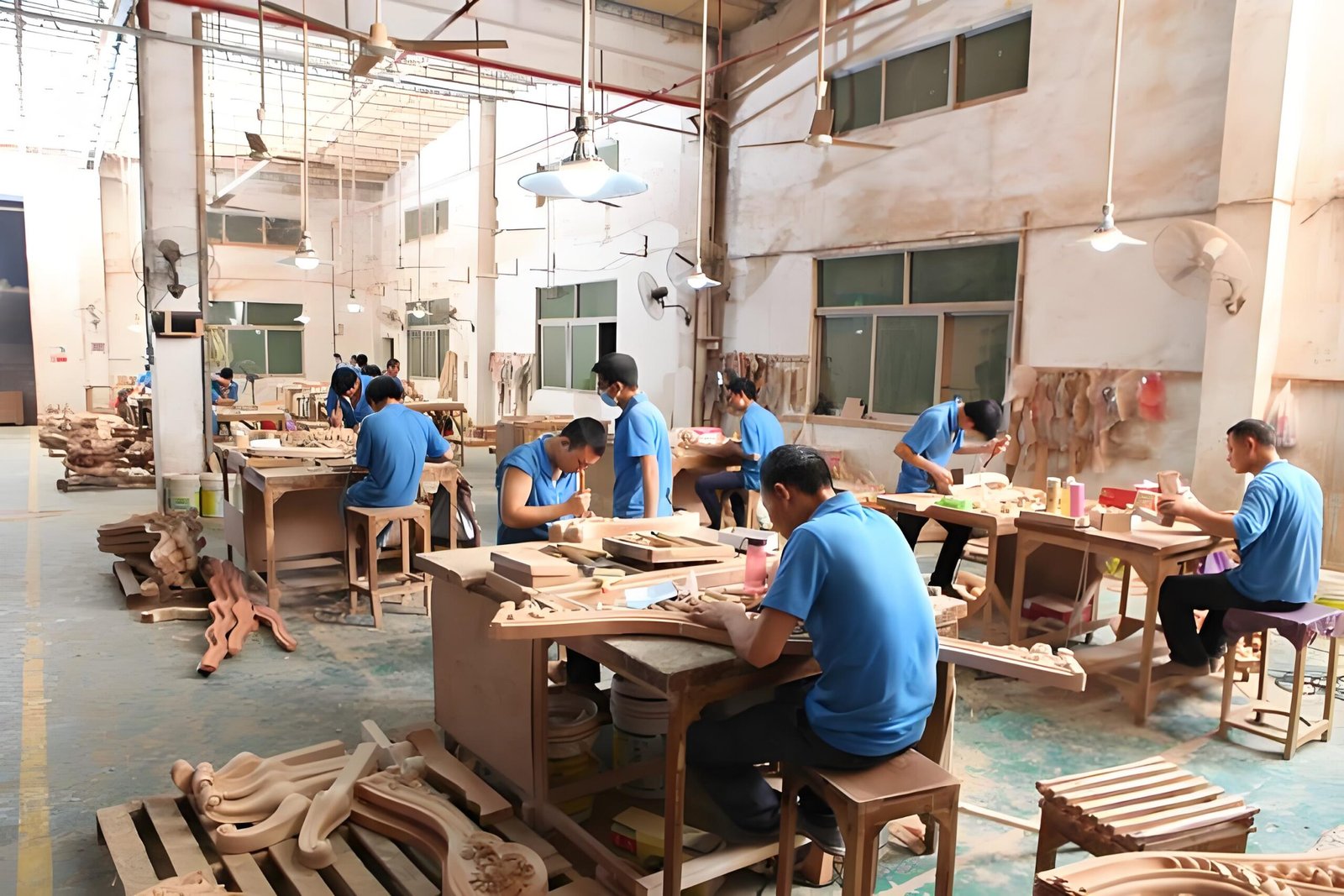
The order was for forty-seven banquettes. Not off-the-rhelf units — proper custom pieces, built to inch-perfect specs for a hotel restaurant in Miami. My client, an interior designer who’d flown into Guangzhou in June, had spent three days in Longjiang haggling over foam densities and leg profiles. She’d left feeling confident. The factory had nodded along, taken her CAD files, and quoted $14,200 with a six-week turnaround.
What showed up in the container seven weeks later was… close. Close enough that her installer didn’t immediately reject the shipment. But the seat depth was off by two inches. Two inches. That doesn’t sound like much until you’re trying to squeeze those banquettes between fixed columns in a 120-seat dining room. The architect had drawn 22 inches. The factory had built 24. “Standard size,” they said. “More comfortable.”
She ate the cost. Had them trimmed locally. Spent another $3,800.
This is the gap between what buyers think custom means and what Chinese factories actually deliver.
The Brutal Truth: “Custom” Is a Spectrum, Not a Guarantee
Here’s what most procurement directors don’t want to hear. When a Chinese factory says “yes, we can customize,” they’re not promising a replica of your drawing. They’re promising a version of your drawing that fits their existing production pipeline.
The uncomfortable reality? Made-in-China furniture customization operates on a principle of least resistance. The factory will adjust your spec to whatever requires the fewest changes to their current setup. Different leg? Sure, if they already source something similar. Custom finish? Absolutely, if their coating supplier has it in stock. But truly bespoke engineering — the kind that requires new jigs, unfamiliar hardware, or non-standard dimensions — that’s where things drift.
A rule of thumb I picked up in Dongguan after watching a $200,000 hotel project nearly collapse: if the factory doesn’t ask you at least three annoying questions about your spec, they’re not really customizing. They’re adapting. And adapting is where the two-inch gaps live.
Key Takeaways
- China furniture sourcing is the process of negotiating between your design intent and a factory’s production reality — the “custom” label doesn’t automatically bridge that gap.
- The three most common customization failures involve dimensional drift, material substitution, and hardware mismatches — none of which are typically caught in pre-shipment photos.
- The factories that ask the most questions before production begins are usually the ones that deliver the fewest surprises after the container arrives.
- Custom Chinese furniture can deliver exceptional value, but only when the buyer treats the specification phase as an active dialogue, not a one-way transmission.
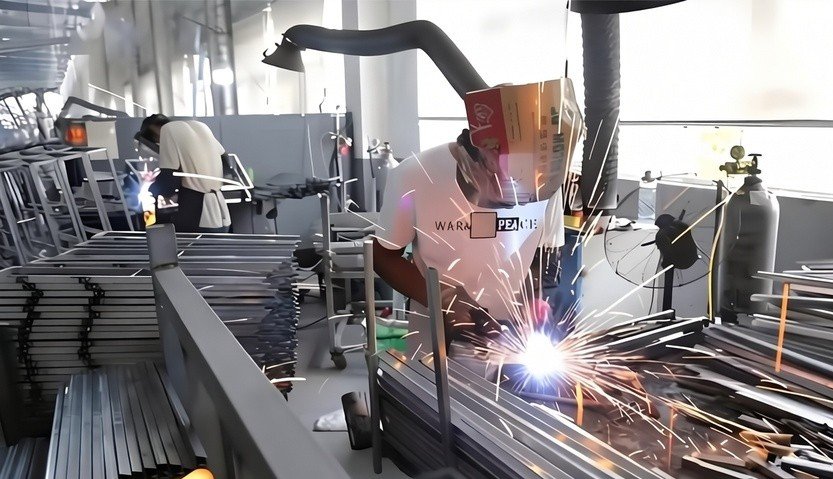
Flaw 1: The Dimensional Drift — When “Exactly” Means “Approximately”
Ordering custom dimensions from a Chinese factory is like ordering a bespoke suit over WhatsApp. You send measurements. They confirm. You imagine a Savile Row experience. What you get is more like a very attentive tailor who secretly decides your shoulders are “basically standard” and adjusts from there.
The real kicker isn’t malice. It’s metric. Most mid-sized factories in Foshan and Longjiang run CNC cutting programs that default to centimeter increments. Your 22-inch seat depth? That’s 55.88 centimeters. The machine operator rounds to 56 cm. Then the upholsterer adds foam. Then the leather stretches. Suddenly you’re at 24 inches. And nobody along the line thought to flag it because, from their perspective, they hit the number.
But here’s the thing. Even when buyers provide metric drawings, the drift happens elsewhere. I once watched a factory in Anji produce 200 custom dining chairs for a Sydney restaurant. The client had specified 450mm seat height. The factory built them at 460mm. Why? “Taller is more comfortable for Westerners,” the production manager told me. He’d made an assumption. A generous one, in his mind. The chairs had to be reupholstered with shorter legs in Australia. Cost the buyer $8,000.
The most dangerous phrase in custom furniture isn’t “we can’t do that” — it’s “no problem.”
And if you’re thinking, “I’ll just visit during production,” that’s not a bad instinct. But the dimensional drift is often invisible until final assembly. The components look right in isolation. The disaster reveals itself only when the upholsterer tries to fit the cushion into the frame.
Flaw 2: The Material Bait-and-Switch — What You See Isn’t What They Source
Let’s talk about the fabric you FedEx’d to Shenzhen. The swatch. The holy grail. You paid $42 a yard for Belgian linen, shipped a five-yard sample to the factory, and wrote “USE EXACTLY THIS” in all caps on every document.
What tends to happen next depends on the factory’s procurement chain. Some operations — particularly the larger, export-hardened ones — will source precisely what you specified. But many mid-tier factories, the ones that offer attractive pricing on custom Chinese furniture, work through a network of local material brokers. And those brokers operate on substitution.
It’s like ordering a specific whiskey at a bar and getting the house pour. The color’s similar. The bottle looks right. But it’s not what you asked for.
Actually, that’s not quite right. What most buyers miss is that the factory often doesn’t realize they’re substituting. The material broker says, “I have a linen blend in that color family.” The factory sees the word “linen” and the right Pantone shade. They approve it. Your $42 Belgian linen becomes a $12 domestic polyester-linen mix that pills after six months.
The general pattern suggests this happens most often with textiles and finishes because those are the easiest categories to swap without immediate visual detection. A leather sample can be matched to three different grades of split hide. A walnut veneer specification can be fulfilled with engineered walnut on an MDF substrate. The factory isn’t trying to scam you. They’re trying to solve a supply problem while keeping your price intact.
The fabric sample you sent is a reference, not a contract — unless you make it one.
While some buyers gravitate toward large-scale manufacturers in Foshan with locked-in supply chains, others find that mid-sized specialists — operations like Interi Furniture, which focuses on project-grade hospitality and residential upholstery with direct material sourcing — offer a different risk-reward equation. They may not have the volume discounts of a mega-factory, but their procurement tends to be more transparent because their margins depend on repeat project work rather than one-off volume.
Flaw 3: The Hardware Disconnect — Invisible Until It’s Catastrophic
This one’s my personal nightmare. Because it doesn’t show up in photos. It doesn’t show up in the factory’s QC report. It shows up when your installer in Denver tries to attach the sofa backs and realizes the European cam-lock fittings don’t match the American frame hardware.
Chinese furniture hardware defaults to Chinese supply chains. That sounds obvious, but you’d be stunned how many experienced buyers forget it. The factory in Dongguan buys connectors from a local industrial supplier they’ve used for fifteen years. Those connectors are metric, built for the domestic market and export to Southeast Asia. Your project is in Texas. The assembly language is different.
Or rather, the problem isn’t the factory, it’s the expectation. Buyers assume that “custom” includes “compatible with my country’s assembly standards.” It doesn’t. Not unless you specify it. Not unless you send the actual hardware you want them to use. And even then, some factories will quietly swap to their default because “it’s the same thing.”
I learned this the hard way in Dongguan. A client had specified Blum soft-close hinges for a run of 80 custom cabinets. The factory installed hardware that looked identical in photos. Same color. Same shape. Different internal mechanism. The cabinets closed with a slam. The client had to replace 160 hinges in Manhattan. Shipping cost alone was brutal.
Hardware is where factories save money they didn’t tell you they needed to save.
The fix seems simple: specify brands. But even that has gaps. Some factories will install genuine Blum hinges on the two sample cabinets they photograph, then switch to knockoffs for the bulk production. The only way to catch this? Random disassembly inspection before shipment. Most buyers don’t do that. Most buyers don’t even know they should.
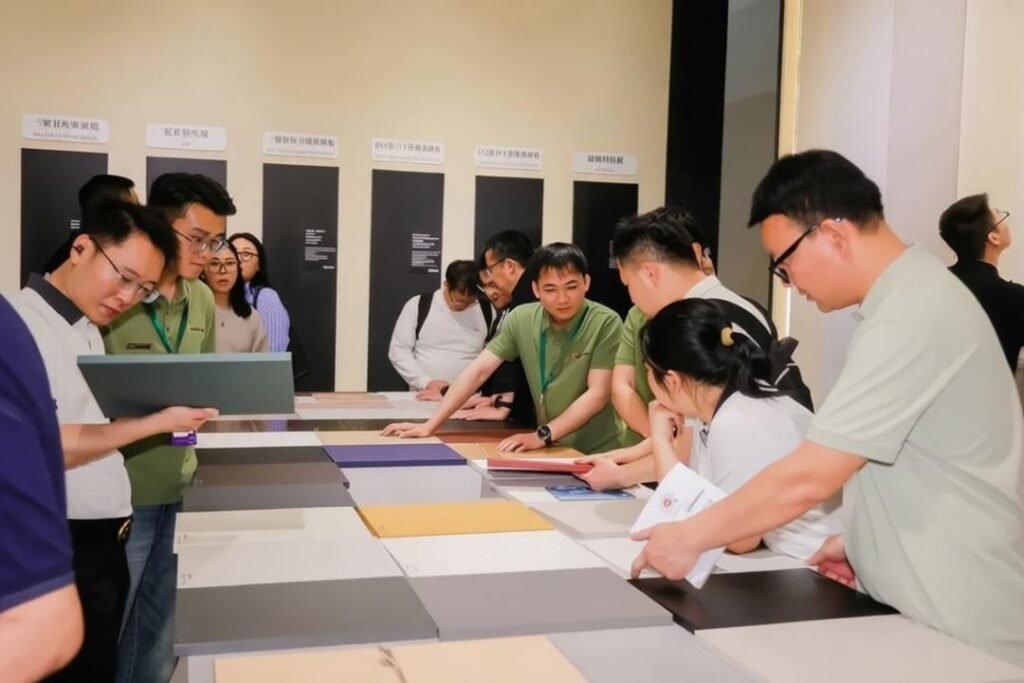
The Ecosystem Reality: Not All Factories Play the Same Game
If this article sounds like I’m painting every Chinese manufacturer with the same brush, I’m not. The landscape is split. On one end, you’ve got massive production complexes in Shunde pumping out container loads with minimal deviation tolerance because deviation is expensive at scale. On the other, you’ve got boutique workshops in Shenzhen doing genuine one-off artistry — at prices that make your CFO wince.
The middle ground is where most buyers live. And in that middle ground, the variation is enormous. Some factories have invested in digital sampling and material traceability systems because they serve European chains with strict compliance requirements. Others are still operating on WeChat photos and verbal confirmations.
What determines which factory you land in? Usually, your order size and your sourcing channel. Small orders routed through trading companies often get pushed to the most flexible (read: least consistent) workshops. Large direct contracts with established manufacturers get more rigorous treatment, but only if you have the technical documentation to hold them accountable.
Interi Furniture sits in an interesting position here — a Guangdong-based operation that built its reputation on project-specific hospitality work rather than catalog production. Buyers working with firms of that scale often find the customization conversation starts differently. The factory pushes back on specs that don’t make sense. They ask about fire ratings, installation logistics, and destination market codes before they quote. That pushback is annoying. It’s also a signal that they’re thinking about delivery, not just production.
Your Pre-Production Defense: A Buyer’s Checklist
Before you sign off on any custom order, run through this framework. It’s not bulletproof, but it closes the gaps that catch most buyers.
The Specification Lock
- Send physical samples of every material — fabric, leather, veneer, hardware — with your company stamp and date. Demand the factory sign a receipt.
- Require the factory to photograph the actual sourced material next to your sample before cutting begins. Not “similar.” The actual bolt.
- For dimensions, provide both imperial and metric drawings. Highlight the non-negotiables in red. Ask them to confirm each one in writing.
The Production Audit
- If you can’t visit, hire a third-party inspector to check dimensions on raw frames before upholstery. Post-upholstery checks are nearly useless for catching structural drift.
- Request photos of the hardware packaging. Brand names should be visible. If they won’t show you, that’s information.
- Ask for a mid-production video call. Not a polished tour — a five-minute walk to your actual units on the line.
The Red Flags
- The factory says “no problem” to every request without asking follow-up questions. This is not good service. This is a warning that they’re not actually processing your spec.
- They quote significantly faster than competitors on a complex custom order. Speed often means they’re adapting an existing design, not engineering yours.
- They resist sending pre-production samples. “Too expensive” or “too slow” usually means “we don’t want to commit to this exact spec in writing.”
The Contract Language
- Include a dimensional tolerance clause: ±3mm on wood, ±5mm on upholstered dimensions. Anything beyond that triggers rework at factory cost.
- Specify material substitution penalties. If they swap without written approval, they eat the replacement cost including freight.
- Define “custom” in the contract. Not the word — the actual process. What constitutes approval? What triggers production? Who has sign-off authority?

FAQ: What Buyers Actually Ask
Q: If the dimensions are wrong, will the factory remake the pieces for free?
A: Only if you have it in writing before production. Most Chinese factory contracts default to “best effort” unless you specify dimensional penalties. If you catch the error before shipment, you have leverage. If you catch it in your warehouse in Chicago, you have a very expensive negotiation. The general pattern suggests factories will offer a discount before they’ll pay for a full remake with international shipping.
Q: How do I know they’ll use the exact fabric I sent and not a local substitute?
A: You don’t. Not with certainty. But you can reduce the risk by requiring pre-production material photos with batch numbers, by specifying the supplier in your contract, and by working with factories that have a track record of hospitality or contract work where material traceability is standard. For high-value orders, consider arranging the fabric purchase yourself and shipping it directly to the factory.
Q: Is it cheaper to fix customization errors locally or ship everything back to China?
A: Almost always fix locally. Shipping furniture back to China is financially irrational for most orders under $100,000. The freight, duties, and factory reluctance to accept returns make it a non-starter. Budget 10-15% of your order value for local remediation. If you’re not prepared for that contingency, you’re not prepared for custom sourcing.
Q: Can I visit the factory during production without offending them?
A: Yes. In fact, the factories that get offended by visit requests are often the ones you don’t want to work with. Mid-tier and above manufacturers in Guangdong and Zhejiang are accustomed to buyer visits. Schedule it after frame completion but before final upholstery — that’s your window to catch dimensional and hardware issues. Bring a tape measure and a camera. Don’t apologize for using them.
Q: Do Chinese furniture factories understand North American fire safety standards like CAL 117 or NFPA 260?
A: Some do. Many don’t. And the ones that claim they do often mean “we’ve shipped to the US before,” not “we’ve tested this specific foam to your specific standard.” If fire compliance is required, specify the exact standard, require a test report from a certified lab, and verify the lab’s accreditation independently. Don’t assume. Ask for the certificate number. Then Google it.
The Hard-Earned Lesson
After fifteen years of walking factory floors in Guangdong, Zhejiang, and Jiangxi, I’ve come to one conclusion that I wish someone had tattooed on my forearm when I started: customization isn’t about the factory’s capability. It’s about the conversation that happens before the first cut.
The best custom Chinese furniture I’ve seen wasn’t produced by the biggest factory or the most expensive workshop. It came from operations where the buyer treated the spec phase like a negotiation, not a handoff. Where “no problem” was met with “actually, explain how.” Where someone asked the annoying questions before the container was sealed.
So here’s my question back to you: are you buying furniture, or are you managing a production process? Because if you think you’re just buying furniture, that container arriving in six weeks is going to teach you otherwise. And the tuition, as my Miami designer learned the hard way, runs about $3,800. Plus whatever your pride costs these days.