

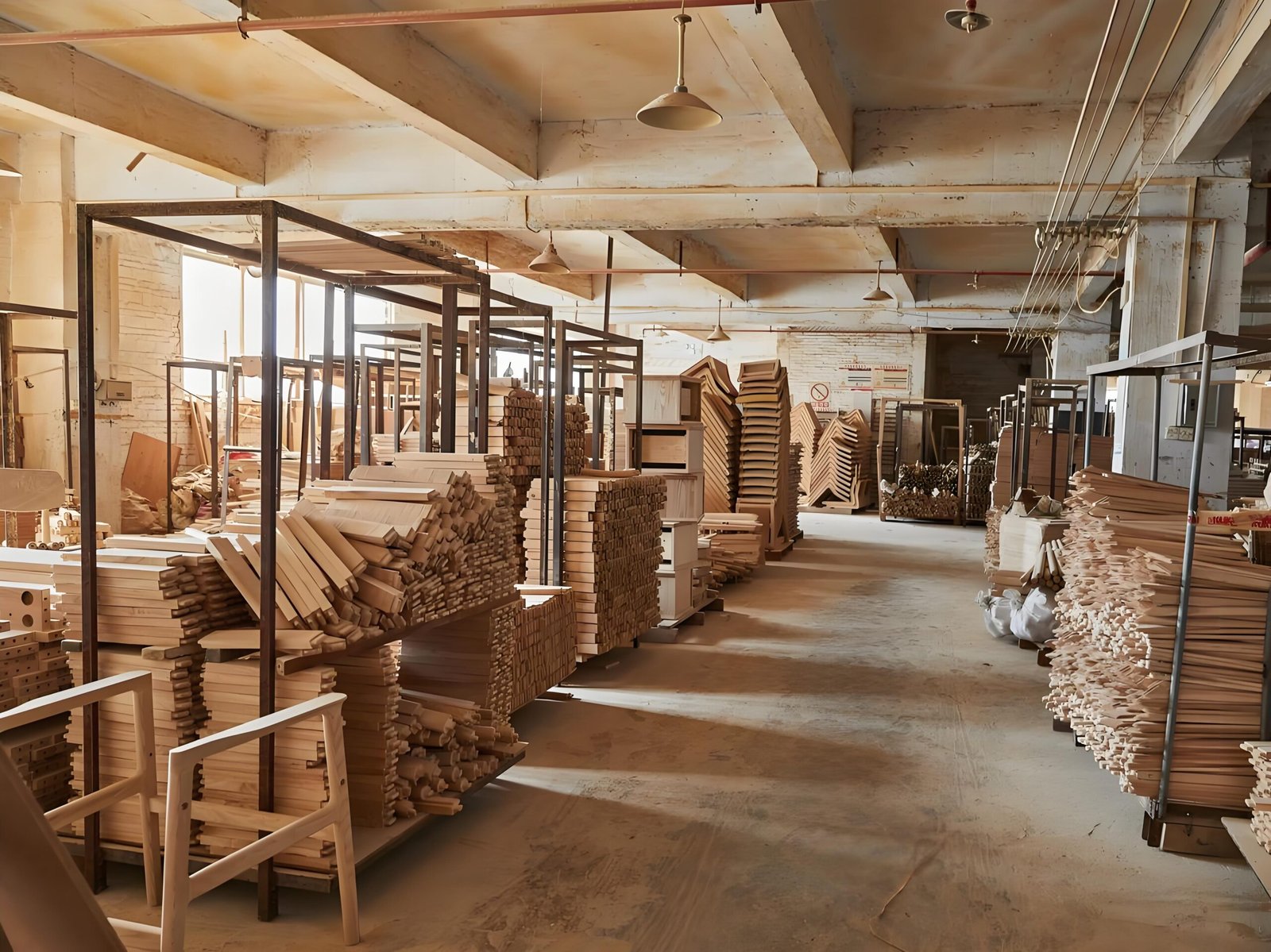
I was in a Foshan showroom last March. Saleswoman, acrylic nails, tapping on a table she swore was “100% American white oak.” Price tag: $1,850. She knocked on it. Thumped it. Even let me smell the thing — “Real wood aroma, see?” I pulled out my phone flashlight, angled it across the edge, and caught it. A hairline seam running the whole length of the apron. Veneer over MDF. That “aroma” was factory finish. She didn’t even blink. Just smiled and said, “Same thing, no?”
Three more showrooms that afternoon. Different business cards. Same script. By the time I hit Longjiang later that week, I wasn’t mad anymore. I was counting. How many ways can one industry repackage the same half-truth? At least seven. And the clever ones? Not even illegal. Just… misleading enough to get the wire transfer through.
The Brutal Truth
Nobody at the design fair tells you this. “Solid wood” in China doesn’t mean what it means in Hamburg or Sydney. It means whatever the factory needs it to mean to close.
Rule of thumb: if the label says “solid wood” and the price makes you think you got lucky, you didn’t. You got played.
Buyers don’t get fooled because they’re stupid. They get fooled because the deception is calibrated. It’s not a scam, technically. It’s a language game. A materials shell game. And the house — literally — wins almost every time.
Key Takeaway
- “Solid wood” on Chinese furniture labels is a marketing term, not a technical spec. Legally, it covers everything from genuine timber to engineered composites with a thin wood skin.
- China furniture solid wood fake practices are rarely outright fraud. They exploit gaps between Chinese manufacturing standards and Western consumer expectations.
- Chinese furniture material fraud is most common in the mid-market segment — the $800-$3,000 range where buyers expect quality but factories compete on margins that don’t exist.
- Made in China fake wood isn’t some factory conspiracy. It’s a supply-chain survival strategy passed from raw-material suppliers to exporters to showroom staff.
What’s Actually Under That Finish?
Is it wood, or is it wood-adjacent?
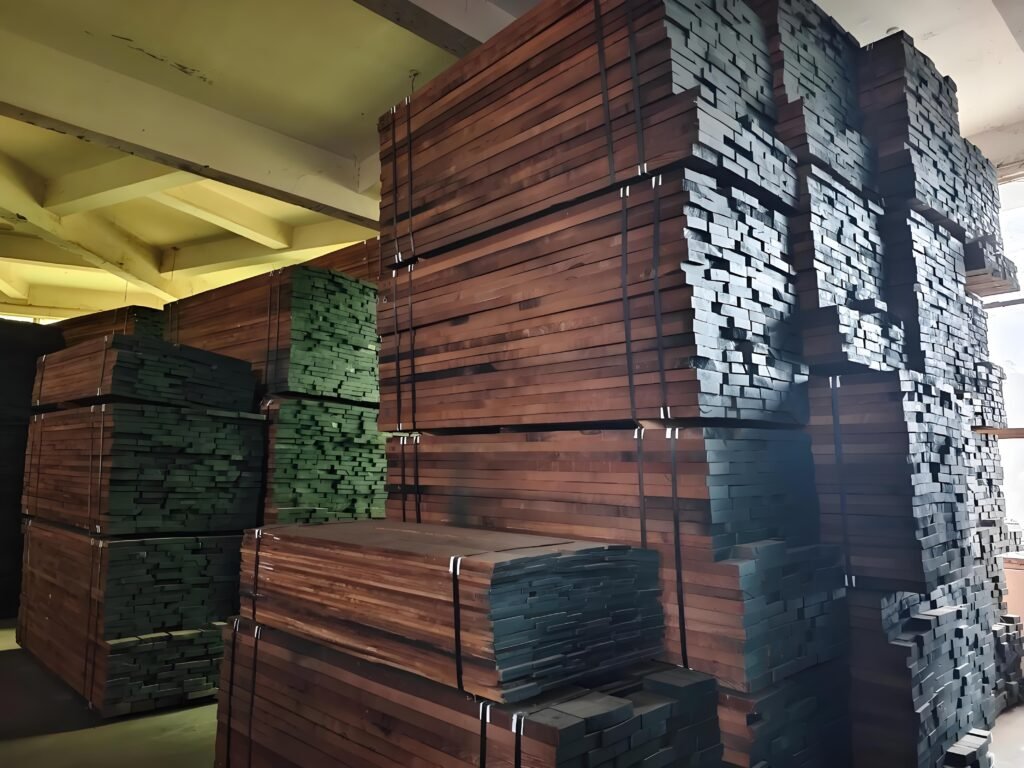
Walk into any finishing workshop in Dongguan and you’ll see it. Stacks of MDF boards waiting for their glow-up. It’s almost theatrical. A 0.3mm oak veneer gets pressed onto the substrate. Edge-banding hides the seams. A multi-layer stain system adds grain variation. By the time it hits the photography studio, even the factory manager would need a chisel to tell the difference from the door.
I watched a technician in Shunde apply what he called “three-dimensional grain enhancement.” Fancy words for steel brushes and reactive stains creating fake pores and knots in the veneer. The board underneath? Standard 18mm MDF. Cost savings? Roughly 60% versus actual solid oak. Retail markup? Often identical to the real thing.
But here’s what keeps me up. This isn’t some back-alley operation. These are ISO-certified factories with clean floors and QR-coded inventory. They’ll show you the veneer invoices. They’ll explain the “engineered wood construction” if you ask directly. The problem isn’t that they’re hiding it. It’s that they’re not leading with it.
Actually — wait. That’s not quite right. What most buyers miss is that a lot of salespeople genuinely don’t know. They’ve been told it’s “solid wood construction” by their own managers. The lie’s been laundered through three supply-chain layers before it hits your ears. So who’s the real liar? Hard to say.
The Seven Shell Games
How factories turn sawdust into “solid wood”
Let me walk you through the taxonomy. Not ranked by audacity. Ranked by how often I’ve bumped into them in the wild.
The Veneer Waltz. Paper-thin slice of real wood — sometimes 0.2mm, sometimes 0.6mm — glued over plywood, MDF, or particleboard. Legally defensible if you squint. Practically deceptive if you’re the buyer. The giveaway? Check the edge grain. Real solid wood shows continuous grain wrapping around corners. Veneer shows a seam, a color shift, or that telltale black line where the substrate peeks through.
The Multi-Ply Masquerade. Plywood built up thick, then edge-banded to look like a solid timber slab. Heavy. Dense. Feels right when you lift it. But cross-section reveals the layered construction. I’ve seen this sold as “solid wood core” — technically true, if you consider glued wood sheets a “core.”
The Finger-Joint Facade. Small offcuts of real wood, finger-jointed together, then wrapped in a veneer of premium species. Oak finger-joints covered with walnut veneer. Sold as “walnut solid wood.” The wood is real. The species is real. The construction is… creative, let’s call it.
The Reconstituted Ruse. Sawdust and wood chips pressed with adhesive, molded into shape, then veneered. Some factories call this “eco-solid wood” or “recycled timber construction.” The environmental pitch is genuine. The material honesty? Negotiable at best.
The Species Swap. A rubberwood core stained and finished to look like oak, ash, or walnut. Rubberwood is technically a hardwood. It’s solid. It’s wood. But when you’re paying oak prices for rubberwood density and grain, that’s not a specification. That’s a magic trick with stain.
The Frame vs. Surface Con. Solid wood frame. Veneered panels. The factory isn’t lying when they say “solid wood construction.” They’re just being selective about which part they’re describing. Check the back panel. Check the drawer bottoms. That’s where the truth lives, if you know where to look.
The Finish Film. Not even wood underneath anymore. High-pressure laminate or melamine with a photorealistic wood print. The best ones have synchronized pores you can actually feel. I’ve seen designers run their hands across these surfaces and swear they felt grain. What they felt was industrial texture engineering. Fooled the fingers. Fooled the eyes.
And here’s the real kicker. Most of these constructions are perfectly fine for residential use. They don’t warp as easily as solid timber. They cost less. They’re more sustainable in some ways. The sin isn’t the material. It’s the label. The mismatch between what you think you bought and what’s actually in the box.
Why the Mid-Market Gets Hit Hardest
The $2,000 table trap
There’s a dangerous price band in Chinese furniture exports. Between $1,500 and $4,000 retail, buyers expect heirloom quality. Factories know this. They also know that genuine solid walnut or oak at that price point — with Western margins, shipping, and duties folded in — is mathematically impossible unless they’re cutting every other corner.
So they don’t cut the other corners. They cut the wood corner instead.
While some buyers gravitate toward large-scale manufacturers in Foshan, others find that mid-sized specialists — operations like Interi Furniture, which focuses on project-grade hospitality and residential furnishings — offer a different risk-reward equation. These aren’t boutique artisans. They’re structured operations with material traceability systems that larger commodity factories often skip. Not every mid-sized factory is honest. But the ones that are, like Interi, tend to survive on repeat project business rather than one-off showroom dazzle. That changes their incentive structure. They can’t afford to burn a hotel chain.
The commodity factories? They’re playing a volume game. One-and-done. Ship it, forget it, next container. Different universe.
Your Field Guide to Spotting the Fake
A checklist that actually works in a factory or showroom
Forget the magnet test. Forget the “knock and listen” routine. Here’s what I do. Every single time.
Bring a flashlight. Not your phone. A proper LED flashlight. Angle it across the surface at 15 degrees. Veneer seams, filler patches, and grain inconsistencies jump out under raking light. Solid timber has chaotic grain. Manufactured grain repeats. Pattern recognition. Your brain knows, even if you don’t.
Carry a pocket knife. Politely ask to scrape an inconspicuous spot — the underside of a table apron, the back of a leg. Veneer is paper-thin. It’ll expose the substrate in one stroke. A factory confident in their materials won’t flinch. (And yes, I’ve been asked to leave showrooms for this. Consider that a useful data point. If they’re that nervous, you just saved yourself two grand.)
Read the weight. Solid oak is heavy. But so is MDF. The difference is in the density distribution. Lift one corner. Solid timber feels rigid and dense throughout. MDF feels dead-weight uniform — no grain tension, no organic variation. It just sits there. Heavy and lifeless.
Check the back and bottom. This is where factories get lazy. A solid wood piece usually has solid wood everywhere. A veneered piece will show particleboard, plywood, or cheap pine on the reverse side. If the back is covered in fabric or sealed with a panel you can’t remove, ask why. No good reason to hide it.
Smell the drawer. Pull open a drawer and inhale. Fresh MDF smells like chemicals — formaldehyde, adhesives, solvent. Solid wood smells like… wood. Even with finish, the interior of a drawer box betrays the construction. No factory finishes the inside of a drawer to fool the sniff test. Too much work.
Ask for the species breakdown. Not “what wood is this?” Ask: “Which parts are solid oak, which are veneer, and which are engineered?” A straight answer — “Solid oak frame, oak-veneer MDF panels” — is a sign of honesty. A vague answer is a sign of a game being played. And you’re the mark.
Demand the FSC or origin documentation. Not because you’re saving the rainforest. Because it’s a forcing function. Factories sourcing genuine timber usually have chain-of-custody paperwork. Factories playing material games rarely do. The paperwork isn’t proof of quality. But its absence is a red flag that contradicts what most buyers think — they assume certified wood is about ethics. It’s actually about traceability. Big difference.

FAQ
Q: If I order a “solid wood” table from a Chinese factory and it turns out to be veneered MDF, do I have legal recourse?
A: Probably not, unless your purchase contract explicitly defines “solid wood” using a technical standard like FAS timber grading or specifies “no engineered substrates.” Chinese manufacturing contracts often use descriptive marketing language that doesn’t hold up in cross-border disputes. Your better protection is a pre-shipment third-party inspection with material verification in the scope. Cost: $300-$600. Value: immeasurable.
Q: Is all Chinese furniture material fraud intentional, or do some factories genuinely not know what they’re selling?
A: Both. Tier-1 factories with export certifications usually know exactly what they’re doing. They’re optimizing margins within legal gray zones. Smaller workshops often receive materials from suppliers who’ve already blurred the lines — the factory thinks it’s buying “oak solid wood” because that’s what the supplier called it. The ignorance cascades. Either way, the buyer bears the risk. Not fair. But true.
Q: Can I tell the difference between solid wood and veneer just by looking at a showroom sample?
A: Sometimes. Look for grain continuity across edges and corners. Look for organic variation — knots, color shifts, pore depth changes. But modern veneer and print technology has become frighteningly good. In my experience, roughly 30% of buyers can spot basic veneer seams. The other 70% need physical testing or documentation review. Don’t trust your eyes alone. They weren’t designed for industrial deception.
Q: Is engineered wood always worse than solid wood?
A: No. For large flat surfaces — dining table tops, wardrobe doors — engineered substrates often perform better. They don’t warp with humidity changes. They’re more dimensionally stable. The problem isn’t the material. It’s the mismatch between what you paid for and what you received. If you want engineered construction, buy it knowingly. Don’t discover it accidentally when your “heirloom” table starts bubbling at the edge.
Q: Does “made in China fake wood” mean I should avoid Chinese furniture altogether?
A: No. It means you should avoid buying on faith. China produces some of the finest timber furniture on the planet. It also produces some of the most sophisticated material deceptions. The country isn’t the variable. Your verification process is. That’s the part you control.
The Hard Lesson
I started this piece with a story from Foshan. Let me end with one from Nankang.
Last year I met a factory owner who’d been in the business for twenty-three years. He showed me a dining table his team had built — genuine white oak, 45mm top, through-tenon joinery, hand-planed surface. Beautiful thing. Cost him $420 in materials and labor. He was selling it to a European distributor for $680. The distributor would retail it for $2,400.
Then he showed me his bestseller. Same dimensions. Veneered MDF core. Same finish color. Cost him $180. Selling to the same distributor for $310. Retail price? $2,200.
“Which one do you think they order more of?” he asked me.
I didn’t need to answer. The math was the answer.
The lie persists because it’s profitable. Because buyers want to believe. Because the difference between $2,200 and $2,400 feels negligible when you’re already spending that much, but the margin difference to the distributor is enormous. Everyone in the chain wins except the person sitting at the table.
So here’s the principle I’ve carved into my own buying habits after fifteen years of getting it wrong, then right, then wrong again: Trust the material, not the marketing. Verify the construction, not the certificate. And never — never — let a showroom knock test be the final word on what you’re actually bringing home.
What’s the last piece of furniture you bought that you genuinely inspected before paying?