


Longjiang. October. Floor smelled like sawdust, polyurethane, and something I couldn’t place. Regret, maybe. Or just the humidity.
Dave from Miami. Hotel procurement. Sixteen hours in coach — coach, not business — to look at armchairs for some boutique chain. Solid ash. High-resilience foam. Bouclé that cost more per meter than my first apartment’s rent. Three days of samples. Three days of Lao Chen watching him. Like a cat. Like a cat watching a bird that’s about to do something really, really stupid.
Day three. Lao Chen slides the quote across the laminate table. $485 per chair. FOB Shenzhen. MOQ 120.
Dave looks. Grimaces. Says it.
“Too expensive. My guy in Ho Chi Minh does $340 for basically the same thing.”
Lao Chen smiles. Stands up. “Then buy from Vietnam. No problem.” Walks out. Door shuts. Click.
Dave turns to me. Eyes like saucers. “What just happened?”
What happened? Dave said the four worst words in Chinese suppliers negotiation. That’s what happened. And here’s the part that still makes me wince — three weeks later, same factory, same chairs, Dave places the order at $460. Didn’t find a better deal. Just learned, the hard way, how to stop sounding like a tourist with a credit card and a death wish.
The Thing Nobody Tells You
Most buyers think China wholesale furniture is about haggling. Like you’re buying a fake Rolex in Bangkok. It’s not. It’s theater. And Western buyers? Terrible actors. Community theater bad. The kind where you cringe and look at your shoes and hope nobody you know is watching.
Here’s what the factory hears when you say “too expensive”:
You’re stupid. Your math is wrong. Your craft is worthless. Your whole life is a joke. In a business where price and face are braided together tighter than a steel cable, those words land like a slap with an open hand. Not a closed fist. An open hand. Worse.
My rule? Brutally simple: Lead with price, you lose before you start. Every time. No exceptions. None. Zero.
The factory that caves on price-first? They’re not giving you a discount. They’re taking something out. (And yeah, I’ve peeled back upholstery in Dongguan. Seen it with my own eyes. Smelled it, too.) Thinner veneer. Cheaper foam. Mortise-and-tenon becomes screws and brackets. Eighteen months later, your customer’s sitting on the floor wondering what the hell happened. And you’re wondering why your reputation smells like a dumpster fire.
You think you won. You didn’t. You bought a mystery box. And the surprise inside always — always — costs more than the discount you thought you got.
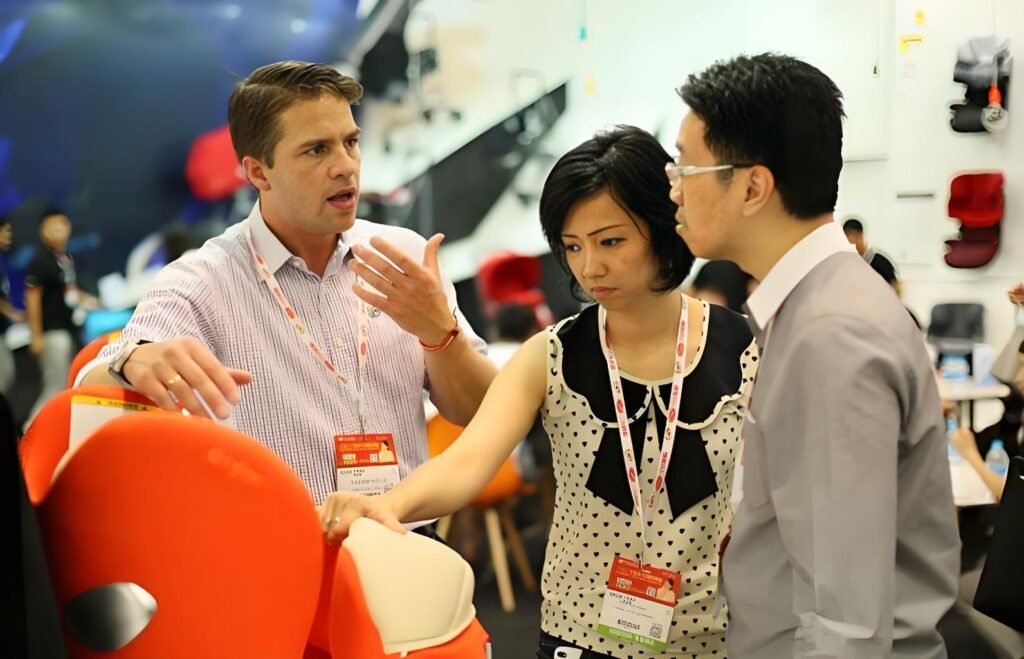
What “Too Expensive” Actually Does
Picture this. You’re in a restaurant. Don’t speak the language. Point at a dish. Waiter watches your face. You see the number, scrunch your nose, make that “ouch” face. That face.
Kitchen sees that. They don’t lower the quality. They just stop caring. You get the food. It fills you up. But nobody tried to make it good. Nobody cared. And you can taste it. You can always taste it.
That’s exactly what happens in Chinese suppliers negotiation. You say “too expensive,” the supplier downgrades you from “partner” to “bargain hunter.” And the whole factory shifts. Sales manager stops pushing the floor for favors. QC stops flagging the tiny stuff. Your order goes behind the German guy who spent forty-five minutes asking about kiln temperatures and wood moisture content. Forty-five minutes! That guy gets the A-team. You get the B-team. Maybe the C-team.
I learned this the expensive way. Anji. 2019. Dining chairs for a hotel group. Quote felt high. I pushed. Hard. Got my 12% off. Did a little victory dance in the hotel room. Alone. Sad, really. Shipment lands. Legs wobble on marble like a drunk giraffe. Factory wasn’t crooked. They just read my signal: price shopper, not partner. Moved my order to the B-team line. The kicker? Fixing those chairs cost me triple what I “saved.” Triple. Not double. Triple. I did the math. Three times. Still mad about it.
The First Quote Is Just a Filter
The first number in China wholesale furniture? It’s not a price. It’s a filter. A test. A wall. A gatekeeper.
Suppliers in Foshan and Nankang see hundreds of buyers a year. Hundreds. They spot a rookie in thirty seconds flat. Twenty, sometimes. That opening number is a test: Does this person know what goes into this product, or are they just shopping a number like it’s Amazon?
Treat it like the final boss, you already lost. Game over. Insert coin, try again.
Actually — wait. That’s not quite right. What most buyers miss: the first quote isn’t even the real offer. It’s the opening move in a conversation they don’t think you’re qualified for yet. The buyers who get the best terms? Not the screamers. Not the ones who pound the table. Not the ones who threaten to walk. The ones who lean back and ask, “What happens if I bump the order thirty percent?” Or, “Which spec is eating the budget here?”
Those questions signal something money can’t buy. You know the game. Once they believe that — really believe it — they stop playing defense. They start playing chess with you instead of checkers. And chess is where the real money gets made.
The Three-Breath Rule
Here’s a move I teach. Factory gives you the quote. You say nothing. Count three slow breaths. One. Two. Three. Most buyers panic. Fill the silence with chatter, concessions, nervous laughter. Don’t. Let the quiet sit there. Heavy. Thick. Like fog you can cut with a knife. Like soup.
Chinese sales managers are trained to read rooms. Trained like dogs, almost. When you don’t react, they start wondering. Did I misread this guy? Is she comparing me to someone I don’t know? Does he have more budget than I thought? Uncertainty becomes your weapon. In the absence of information, they fill the gap with concessions before you even open your mouth. I’ve seen it happen. Over and over. Like a magic trick that never gets old.
Or rather — the problem isn’t the factory. It’s the expectation. Buyers think negotiation is a fight. A boxing match. Punch and counter-punch. In China wholesale furniture, it’s fishing. You set the line. You wait. You let the fish tell you when it’s ready to talk. You don’t yank the rod. You don’t reel too fast. You wait. And you wait. And then you wait some more.
What They Actually Care About
Money isn’t the only thing. I keep saying this. Fifteen years on factory floors. Here’s what Chinese suppliers actually value. Four things. Just four. I could make it five, but four is honest.
Volume predictability. Payment reliability. Technical clarity. Respect.
That’s it. Four things. Nothing else matters as much as those four. Not your charm. Not your suit. Not your PowerPoint. Those four things.
A buyer who pays on time, specs clearly, reorders consistently — they get pricing no amount of screaming unlocks. I’ve seen it. A $12,000 order from a respectful repeat buyer priced lower than a $40,000 order from a demanding newbie. Factory isn’t crazy. They’re strategic. Less margin on a client who doesn’t cause headaches beats chasing a one-time premium from a nightmare. Every single time. No contest. Not even close.
Now, some buyers gravitate toward the giants in Foshan. Five hundred workers. Assembly lines that never stop. Conveyor belts and buzzers. Others find mid-sized specialists offer something completely different. Operations like Interi Furniture, down in Guangdong, focus on project-based hospitality and custom residential work. Not volume giants. Nimble shops where the owner walks the floor at 10 PM. Where a good conversation unlocks flexibility a mega-factory simply won’t touch. Can’t touch. The trick is matching your order to their sweet spot. Walk into a custom shop demanding commodity pricing, get shown the door. Walk into a commodity mill demanding hand-finished joinery, get laughed out of the building. I’ve seen both. Neither is fun. Both are embarrassing.

Know Which Pond You’re Fishing In
China wholesale furniture isn’t one market. It’s a dozen ecosystems that barely talk to each other. Maybe thirteen. I stopped counting after twelve. Got depressed.
Mass-volume monsters in Dongguan. Container loads of standardized sofas. Solid-wood clusters in Nankang. Fighting for pennies on oak and rubberwood. Project-oriented mid-tier players — shops like Interi Furniture, serving hotel groups and design studios with made-to-order runs that need engineering talks, not price lists. Engineering talks! Can you imagine?
Buyers who thrive in China? Not the ones with a single playbook. Not the ones who read one book and think they’re ready. The ones who know which factory type they’re actually talking to. Most buyers don’t. They treat every factory like a vending machine. Insert money, get chair. Then wonder why the machine keeps eating their cash and giving them garbage. Broken garbage. Wobbly garbage.
What Actually Works on the Ground
Forget the MBA books. Forget “anchoring” and “BATNA.” I hate those words. Here’s what works in Longjiang, Foshan, Anji. When the dust is real and the tea is lukewarm and nobody’s wearing a suit because it’s too hot and too humid for suits.
Do your homework before you land.
Research material costs for your category. Upholstered goods? Know the per-meter price of your fabric grade. Wood furniture? Know the gap between MDF, plywood, solid wood. Walk in informed, factory stops treating you like a walking ATM with a pulse. A pulse and a wallet. That’s all you are to them, otherwise.
Lead with the product. Never the price.
First twenty minutes: construction, tolerances, finish standards. Ask to see the workshop. Take photos of the joinery. Geek out. Get excited. The more you care about the product, the more they believe you’re serious. Serious players get serious quotes. Tourists get tourist prices. And tourist prices are always higher than they look. Always.
The “help me understand” pivot.
Never say “too expensive.” Never. Say: “Help me understand what’s driving this number. I’m comparing against another option, want to make sure I’m looking at apples to apples.” Frames the talk as collaborative, not combative. Gives them a chance to explain their value — or quietly adjust the spec to meet your budget without losing face in front of their team. Face is everything. Remember that. Write it down. Tattoo it on your arm if you have to.
Compromise, not demand.
Instead of asking for a flat discount, propose a trade. “If we simplify the leg profile and drop to standard foam, where does the price land?” Signals you respect their margin. Gives you a clean exit if the original spec is too rich for your blood. Which it might be. That’s okay. Admit it. Say it. “This spec is too rich for my blood.” They’ll respect that more than bluffing.
The volume gambit — careful.
Only promise future volume if you can deliver. Chinese suppliers remember everything. Everything. Patience for bluffing? Zero. Less than zero. Negative patience. You say “test order for a bigger program,” you’d better have a program. A real program. With numbers. Six months from now, they’ll remember. Don’t come through, next quote gets padded with enough skepticism to sink a cargo ship. And they won’t tell you why. They’ll just smile. And charge more. And smile while they charge more.
Ask for the ex-works breakdown.
Detailed cost split: materials, labor, overhead, profit. Most won’t hand over everything. But the ones who give you anything are signaling transparency. And transparency is the only foundation for a partnership that survives a bad shipment. Because bad shipments happen. They always happen. Always. If you haven’t had a bad shipment, you’re not ordering enough.
Red flag — ignore at your peril:
Supplier drops price 20% in five minutes? Not generous. Not kind. Desperate for cash, or planning to cut corners you won’t detect until your customer calls screaming. (Learned this in Zhejiang, 2017. Showroom was gorgeous. Like a five-star hotel. Workshop was a fire hazard. Chairs fell apart in six months. Six. Months. I counted.)
Factory refuses to show you the production floor? Don’t negotiate harder. Don’t ask again. Leave. Now. No second chances. No “maybe next time.” No “we can work around this.” Just leave. Walk out. Get in the car. Go.
FAQ — The Real Questions, Not the Pretty Ones
Q: Do Chinese factories always pad the first quote by 30%?
A: Depends. Mass-market mills in Dongguan might only have 8–12% wiggle room. Already scraping by on thin margins. Thin like paper. Custom shops in Guangdong might have 20–25% built in, but that’s because their first quote assumes a higher spec than you need. General pattern: 15–20% is realistic for mid-tier Chinese suppliers negotiation, but only if you’ve earned access through relationship-building. Walk in cold demanding 30% off, you either get laughed out or served a quietly degraded product. Seen both. Neither ends well. Trust me on this one. I’ve got the scars.
Q: Does visiting in person actually get a better price than WeChat?
A: Yes. Absolutely. No contest. Not even a little bit of contest. Face-to-face in China wholesale furniture carries ridiculous weight. Ridiculous. Factory owner reads your body language, assesses your seriousness, decides if you’re worth the long-term investment. I’ve seen buyers secure terms over a factory dinner in Longjiang — just dinner, some baijiu, some fish — that they couldn’t touch in six months of email ping-pong. Personal connection matters more than contract language. Way more. It’s not even close. Not close at all.
Q: What if the supplier flat-out refuses to negotiate?
A: You either asked wrong, or you’re talking to the wrong factory. Mid-sized supplier won’t budge on 200 units? Probably at capacity. Don’t need your business. Good sign — means they’re not desperate. But if a hungry factory won’t negotiate, you probably insulted them without realizing. Did you say “too expensive”? Compare them to Vietnam without context? If so, apologize and reframe. Or move on. Not every factory is your factory. And that’s fine. More than fine. It’s normal.
Q: How do I know if the “final” price is really final?
A: You don’t. Not really. Not truly. In my experience, roughly 80% of factories reopen pricing if you return with a larger order, a payment term they value, or a referral to another buyer. “Final” is final for this conversation. Rarely final for the relationship. Buyers who get the best lifetime value from China treat every order like a chapter, not the whole book. Think long. Always think long. Short-term thinking is expensive thinking. The most expensive kind.
Q: Should I hire a local agent to negotiate?
A: Depends on order size and your Mandarin. Under $15,000, agent’s fee might eat your savings. Above $50,000, a good agent who knows the factory’s real cost structure is worth their weight in ash timber. But — huge but, enormous but — find an agent who gets paid by you, not by the factory. Commission-based agents taking cuts from both sides? Conflict of interest waiting to explode. Seen it. Ugly. Very ugly. Like, “I need therapy” ugly.
The Lesson That Cost Me Fifteen Years
Fifteen years watching smart people make dumb mistakes in Chinese factories. After all that, here’s what I’ve got. The only thing I’ve got:
The price you pay is a reflection of the conversation you had. Not the product. The conversation.
Buyer walks in with curiosity, respect, genuine understanding of what things cost? Almost always out-negotiates the spreadsheet warrior who thinks entitlement is a strategy. Factories know the difference. Feel it in the first five minutes. Sometimes three. Price accordingly. They always do. Always.
So next time you’re sitting across from a supplier in Foshan, staring at a number that makes your stomach flip, don’t reach for the old “too expensive” crutch. Please. Take a breath. Ask a better question. Let the silence do some heavy lifting.
Because at the end of the day, the best deal isn’t the one where you beat the factory into submission. It’s the one where they still pick up your call six months later when something goes sideways.
And something always goes sideways. Always. Without fail. Every single time.
Choose your words carefully. Your wallet will thank you. Eventually. Maybe not today. Maybe not tomorrow. But eventually.