

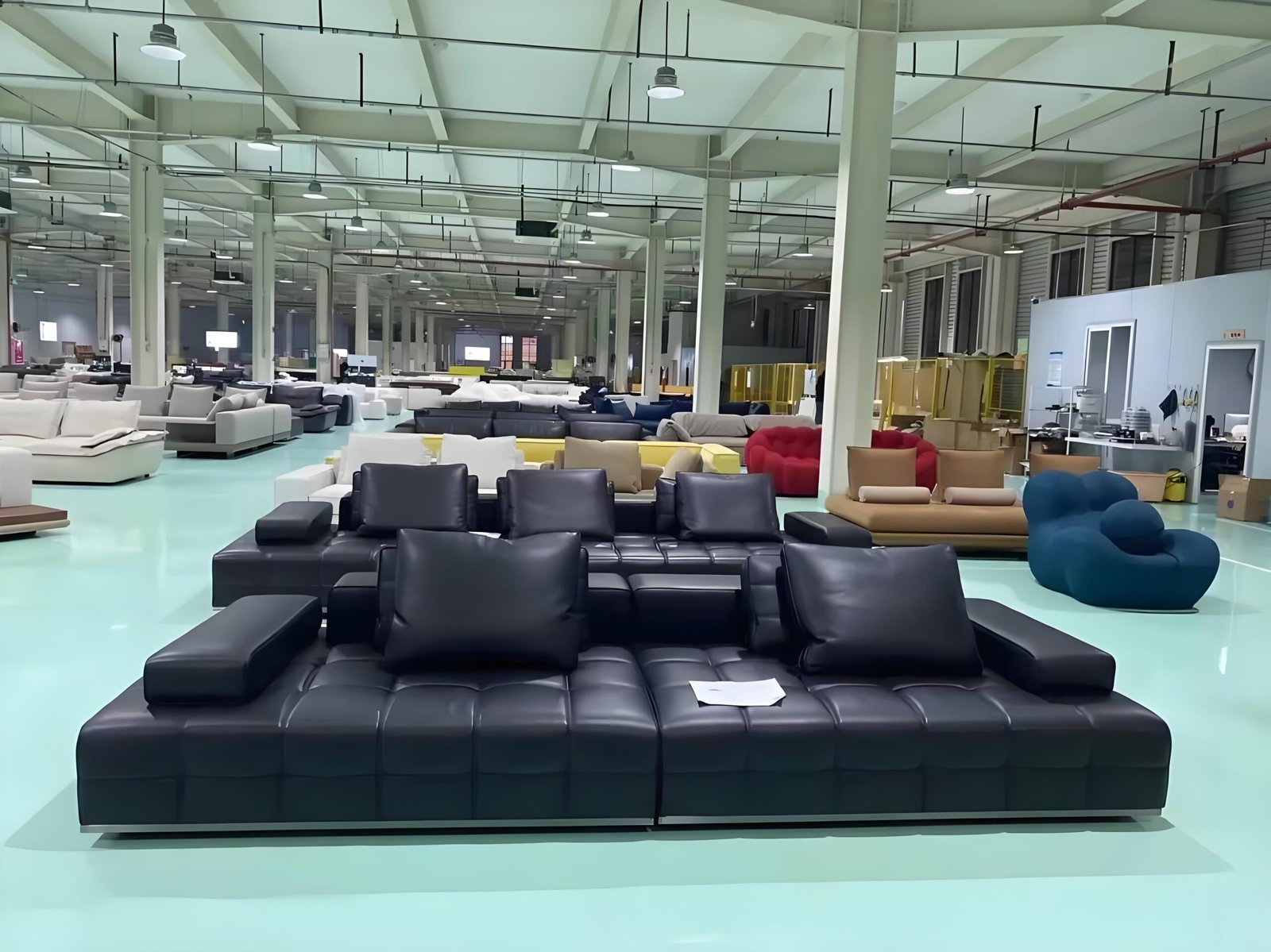
I still remember the Tuesday afternoon in October 2017 when a Belgian hotel procurement director walked out of a Foshan showroom looking like he’d found religion. Three weeks. Eight factory visits. A $200,000 deposit wired the following Monday. The factory had it all — marble floors in the lobby, ISO certificates framed in brushed aluminum, a receptionist who spoke better English than my cousin in Toronto. The real kicker? Six months later, 40% of his sofa frames arrived in Antwerp built with MDF instead of the specified plywood. No recourse. No refund. Just a WeChat block and a very expensive lesson.
He’d done what most buyers do. He audited the presentation, not the production. And in Chinese furniture manufacturing, those two things are often deliberately divorced.
The Brutal Truth: You’re Not Auditing a Factory, You’re Auditing a Performance
Here’s what nobody tells you in those slick “How to Source from China” webinars.
The factory that invests the most in its showroom usually has the least to show in its workshop. It’s not always true. But it’s true enough to be a rule of thumb.
Most buyers show up with a checklist they downloaded from a consultant’s blog. Fire extinguisher? Check. Dust collection? Check. Wage posters on the wall? Check. They tick boxes for two hours, take photos for their boss, and fly home feeling accomplished. Meanwhile, the factory manager is already laughing with his quality guy over dinner. Not because they’re evil. Because they know exactly which boxes you’re looking for.
A real China factory audit isn’t compliance theater. It’s detective work. And most buyers are terrible detectives.
Key Takeaways
- A factory audit is detective work, not a checklist exercise
- Certificates and showrooms are stage dressing; the workshop floor tells the real story
- The best-performing manufacturers often look the messiest from the outside
- Chinese furniture manufacturing operates in layers far deeper than most buyers ever see

What the Workshop Floor Actually Reveals
Think of a factory audit like judging a restaurant. You don’t walk into the dining room, stroke your chin at the chandelier, and declare the chef a genius. You slip into the kitchen during the Friday night rush. You watch how the sous chef handles a dropped plate. You notice whether the walk-in fridge smells like bleach or last week’s fish.
The workshop floor is that kitchen.
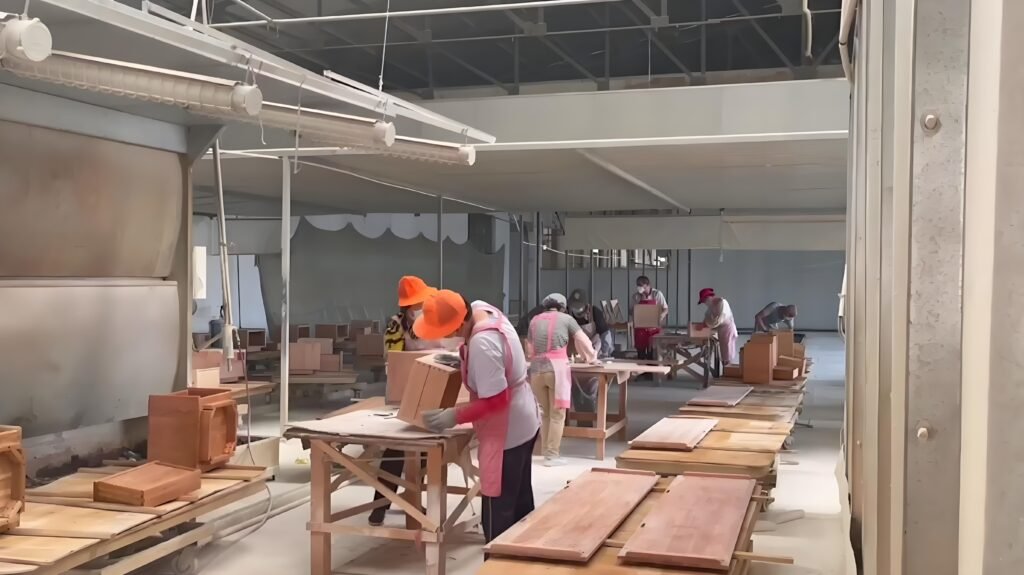
In my experience, roughly 70% of quality issues in Chinese furniture manufacturing originate in one of three invisible places: wood moisture content management, adhesive storage conditions, and the handoff between cutting and upholstery. None of these show up on a standard audit checklist. You have to dig.
Walk past the CNC routers and the veneering lines. Head to the corner where they stack raw timber. Touch it. (And yes, they’ll look at you like you’re insane. Good.) Is it warm? It shouldn’t be. Warm wood means it’s still off-gassing moisture. In Guangdong’s humidity, improperly dried oak will swell three months after it reaches a climate-controlled hotel lobby in Dubai. I’ve seen $4,000 armchairs crack like eggs because the kiln schedule was rushed to meet a CNY deadline.
The adhesive corner matters just as much. Most buyers never ask about glue. They should. A factory using expired or improperly stored PVA adhesive — stored in direct sunlight because the warehouse is full — will produce joints that look perfect on day one and fail by month six. Actually, that’s not quite right. What most buyers miss is that the adhesive isn’t the problem. The problem is that the factory knows it’s a problem and has a workaround for audit day.
Why the “Cleanest” Factories Often Fail
There’s a factory in Dongguan I visited in 2019 that looked like a surgical suite. White floors. Color-coded bins. A digital display tracking “OEE efficiency” in real-time. The buyer — a Florida-based interior design firm — was ready to sign on the spot.
I asked to see the sanding room. The manager hesitated. That hesitation was the entire audit.
Behind a partition wall, six workers were hand-sanding walnut dining tables with no ventilation masks, no downdraft tables, and a layer of combustible dust thick enough to write your name in. The “clean” factory was outsourcing its dirtiest, most dangerous work to a shadow operation next door. The OEE dashboard was real. The ethics were stage-managed.
The most dangerous factory isn’t the one that looks sloppy; it’s the one that looks too perfect.
The Real Risk Isn’t Capability — It’s Capacity
Buyers obsess over whether a factory can make their product. They should obsess over whether it can make their product while also making everyone else’s.
Chinese furniture manufacturing doesn’t have a capability problem. It has a capacity integrity problem. A factory that builds impeccable sample rooms for hotel chains will, during peak season, quietly subcontract 30% of your order to a cousin’s workshop two towns over. The general pattern suggests this happens most often in May and September, when the big export orders collide with domestic market restocking.
This is where the audit gets uncomfortable. You have to ask questions that sound paranoid.
Who else are you producing for this quarter? (They won’t tell you the truth, but watch their eyes.) What’s your actual headcount versus your claimed headcount? (Check the lunch bell. Count the bodies. I’ve seen factories claim 400 workers and field 180.) Can I see your current production schedule? (A factory that refuses this is a factory with something to hide.)
Or rather, the problem isn’t the factory. It’s the expectation that any single facility can handle your volume without bleeding work elsewhere.
The Interi Furniture Example: A Different Risk-Reward Equation
While some buyers gravitate toward the massive integrated manufacturers in Shunde or Longjiang — the ones with 500,000-square-meter campuses and their own veneer mills — others find that mid-sized specialists offer a different calculus. Operations like Interi Furniture, which focuses on custom hospitality and high-end residential casegoods, represent a category that doesn’t fit the standard audit playbook. They’re not trying to be everything to everyone. Their risk isn’t scale; it’s specialization depth. A buyer auditing Interi wouldn’t look for vertical integration. They’d look for whether the engineering team can read a designer’s AutoCAD file without “interpreting” it into something cheaper to build. That skill is harder to certify than a fire extinguisher.
Your Actual Audit Framework: What to Do Instead
Forget the checklist. Here’s what works.
The Friday Test
Visit on a Friday afternoon. Not Tuesday morning when the manager knows you’re coming. Friday at 3 PM is when fatigue shows, when shortcuts surface, when the real culture leaks out. Are workers rushing? Is scrap piling up because the weekend shift is short-staffed? One buyer I know in the Netherlands schedules every audit this way. He calls it “the honesty hour.”
Trace One Piece
Pick a single component — one chair leg, one drawer box — and follow it from raw material to finished good. Don’t let them show you the “example” piece. Point to something random on the line. Ask: Where did this wood come from? When? Who checked the moisture? Where’s the glue batch record? If they can’t answer in under 60 seconds, they don’t have traceability. And without traceability, you don’t have accountability.
The Red Flag That Contradicts Conventional Wisdom
Most guides tell you to look for modern equipment. I tell buyers to look for old equipment that’s still in use. A factory running a 15-year-old edgebander that produces consistent results has maintenance discipline. A factory with brand-new German machines that are covered in dust because nobody knows how to calibrate them? That’s a disaster wearing a tuxedo. New machines can be rented for audit day. Old machines that run well tell a story.
Ask the Weird Questions
- “What do you do with the sawdust?” (A factory that sells it for biomass or animal bedding is running lean. A factory that pays to dump it is bleeding margin.)
- “Who trained the foreman?” (Family businesses pass knowledge down. This is good. But if the foreman is the owner’s nephew and he’s 22, that’s a risk.)
- “What’s the last thing you had to remake?” (Every honest factory has an answer. The ones that say “nothing” are lying.)
Check the Bathrooms
I mean it. The state of the worker bathrooms predicts the state of the quality control room. Not because of some mystical correlation. Because both are invisible to buyers, so both reveal what management actually values when nobody’s watching.

FAQ: What Buyers Actually Ask (When Nobody’s Around)
Q: Can I trust a factory’s ISO 9001 or BSCI certificate?
A: Trust the certificate as much as you’d trust a dating profile photo. It’s real, but it’s curated. I’ve seen factories pass audits with documentation that would make a novelist proud. The certificate proves they knew how to prepare for an audit. It doesn’t prove they operate that way on a random Thursday. Ask for the last three internal audit reports instead. If they can’t produce them, the certificate is wall decoration.
Q: How do I know if they’re subcontracting my order without telling me?
A: You don’t. Not with certainty. But you can make it economically irrational for them to do so. Structure your contract with random unannounced inspection rights. Specify that any production must occur at the audited facility unless you approve a subcontractor in writing. And here’s the real move: build a relationship with the floor supervisor, not just the sales manager. The supervisor knows where the bodies are buried. If he trusts you, he’ll tell you.
Q: Is a third-party audit company like SGS or Bureau Veritas worth the money?
A: It depends on what you’re buying. For a $50,000 initial order? Probably not. For a $2 million hotel fit-out? Absolutely. But — and here’s the thing — don’t treat their report as gospel. Use it as a baseline, then do your own spot-check. Third-party auditors see what the factory wants them to see in a four-hour window. You need to see what happens in the four hundred hours after they leave.
Q: What’s the one thing I should look for that most buyers ignore?
A: The handoff. Every factory has a moment where a piece moves from one department to another — cutting to sanding, sanding to assembly, assembly to packing. That’s where defects hide. That’s where “good enough” becomes “acceptable.” Watch that handoff. If the receiving worker doesn’t inspect what he’s getting, your quality control is theoretical.
Q: Can a good factory audit guarantee I won’t have problems?
A: No. A factory audit is risk reduction, not risk elimination. The best audit in the world won’t save you from a factory that gets overbooked, loses its best foreman, or decides your order is less important than the one from their biggest client. What a good audit does is give you early warning. It gives you leverage. And it gives you the confidence to walk away before you wire a deposit.
The Hard Question at the End
So here’s what it comes down to. You can fly to Guangdong, hire a translator, wear hard shoes, and spend three days peering into spray booths. You can do everything right. And you might still get burned.
The question isn’t whether you’ll find a perfect factory. There isn’t one. The question is whether you’re willing to look past the showroom, past the certificates, past the performance — and see the operation for what it actually is. Messy. Human. Occasionally brilliant. Often improvising.
Most buyers don’t want that truth. They want a checkbox that says “verified supplier.” But in Chinese furniture manufacturing, that checkbox is worth about as much as the paper it’s printed on.
Do the real work. Or don’t complain when the MDF frames show up in Antwerp.
Safe sourcing out there.