


Longjiang, July. 38 degrees outside, easy. The factory office AC wasn’t broken — it was aggressive. Blowing hot air directly onto my neck while Lao Chen, this sales manager who’d clearly rather be anywhere else, slid a quote across a desk sticky with tea rings and what I really hope was just glue.
$47,000. Hotel nightstands and headboards. Eight hundred workers downstairs, three shifts running, machines screaming through the floor, and this guy wants me to believe I need to order 500 sets to get a “fair” price. 15% off. The magic number. The tiered pricing trap that every sourcing 101 blog tells you to chase.
Here’s what I did. I didn’t play.
I looked at the sheet — 8%, 12%, 15% — and I asked for a quote on 150 sets. Not 500. Not 300. One-fifty. Lao Chen’s face did this weird thing. Like I’d insulted his mother. Or maybe like I’d finally said something interesting. Twenty minutes later, we’re shaking on a 200-set deal that’s actually cheaper than his advertised 500-set rate.
How? Because the tiers are fake. All of them. And every buyer who chases them is walking into a trap set by people who’ve been running this exact game since the 90s.
The Brutal Truth Nobody Wants to Hear
Key Takeaway (The stuff you actually need to know)
- Tiered pricing in Chinese mills? Theater. Pure theater. The factory isn’t passing on volume savings — they’re testing how greedy you are. That’s it.
- Your smallest possible order is probably already profitable. The factory just won’t say so out loud.
- China price negotiation isn’t about charm. It’s about knowing which numbers are real and which are decoration.
- The buyers who win? Not the ones with massive POs. The ones who know what keeps the factory owner awake at 3 AM.
Nobody wants to hear this. But somebody has to say it.
Most buyers walking into a Foshan showroom think they’re playing chess. They’re not. They’re feeding quarters into a slot machine designed by guys who’ve owned furniture mills longer than most of us have had credit cards. These guys grew up watching their fathers negotiate with Hong Kong traders in the 80s. Your PowerPoint deck doesn’t impress them.
The factory doesn’t care about your “partnership.” They care about cash flow. Line utilization. Whether the spray booth operator showed up drunk again and ruined half a shift. Your tiered pricing sheet? It’s a fairy tale. A pretty spreadsheet written to make you overcommit to inventory you can’t sell while the factory locks in margin they’d take on a 50-unit order anyway.
Rule of thumb: if a Chinese mill hands you tiered pricing without you even asking, they’re already making too much on your order. Full stop. That’s not cynicism. That’s arithmetic.
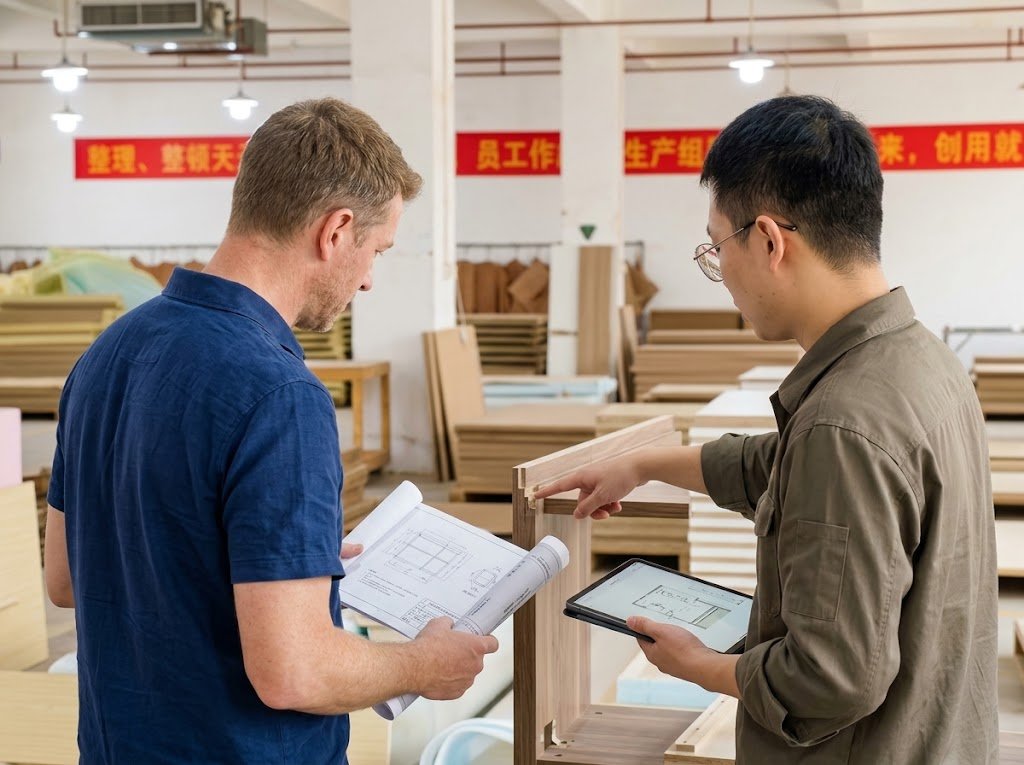
How the Volume Scam Actually Works
Why Do Factories Love This Trap So Much?
Think about those all-you-can-eat buffets in Guangzhou. The restaurant doesn’t want you eating five plates. They want you paying for five while eating two. Plate three is pure profit. Four and five? That’s the margin that pays the rent and the health inspector bribe.
Chinese furniture mills run the exact same racket. When Lao Chen showed me that 8-12-15 ladder, he wasn’t calculating reduced labor costs or bulk material savings. He was calculating my greed. The factory knows if they dangle 15% off, you’ll stretch your budget, your warehouse, your sanity — whatever it takes to hit that number. And you’ll feel smart doing it.
And here’s the dirty secret nobody puts in the brochure. The actual cost gap between making 200 nightstands and 500? Maybe 4%. On a good day. With favorable exchange rates. The rest? That’s the optimism tax. The tax on you believing that more must equal cheaper.
I was in Anji last March. Casegoods factory. Owner was this guy in his sixties, smoked like a chimney, hadn’t smiled since the Bush administration. Pulled back the curtain without meaning to. We were looking at his CNC area — three machines, same program running all day. “For you,” he said, “100 pieces, 500 pieces — same CNC program. Same setup. Same guys.” He shrugged. “Wood is cheap. Labor is cheap. Machine doesn’t care.”
He wasn’t being generous with information. He was bored. Seen a thousand buyers chase phantom volume discounts. And honestly? He was tired of the performance.
What Actually Scares the Factory Boss?
Not what you think. It’s not losing your order. It’s not a bad Google review — half these guys don’t even have websites, let alone review pages. What keeps a mill owner up at night? Idle capacity. An empty spray booth. A CNC router collecting dust. A finishing line with nobody standing at it. That’s the nightmare. That’s the thing that makes him call his brother-in-law for a loan.
Because in China, fixed costs aren’t that fixed. But rent ticks every day. Labor gets paid whether you’re shipping containers or watching soap operas in the break room. So when you walk in waving a tiered pricing demand, you’re speaking the wrong language entirely.
You’re saying “I want to pay less.” They hear “I might not order enough to keep the line moving.” You’re negotiating price. They’re negotiating survival. Two completely different conversations. And honestly? Most buyers never figure out the difference. They walk out thinking they got a deal when they actually just promised to buy 300 extra chairs they don’t need.
Flip the script. Instead of “What’s my price at 500 units?” — try this: “I’m looking at 120 units. What’s the real number where you don’t lose money?” Watch the theater stop. Watch the sales manager stop smiling. He’ll pull out a different calculator. The one he actually uses. The one with the worn buttons.
Because you’ve just done something rare. You signaled you’re not a sucker chasing a fake discount ladder. You actually understand his business. Or at least, you understand it enough to make him nervous.
The factory doesn’t respect your purchase order. It respects your understanding of its pain.
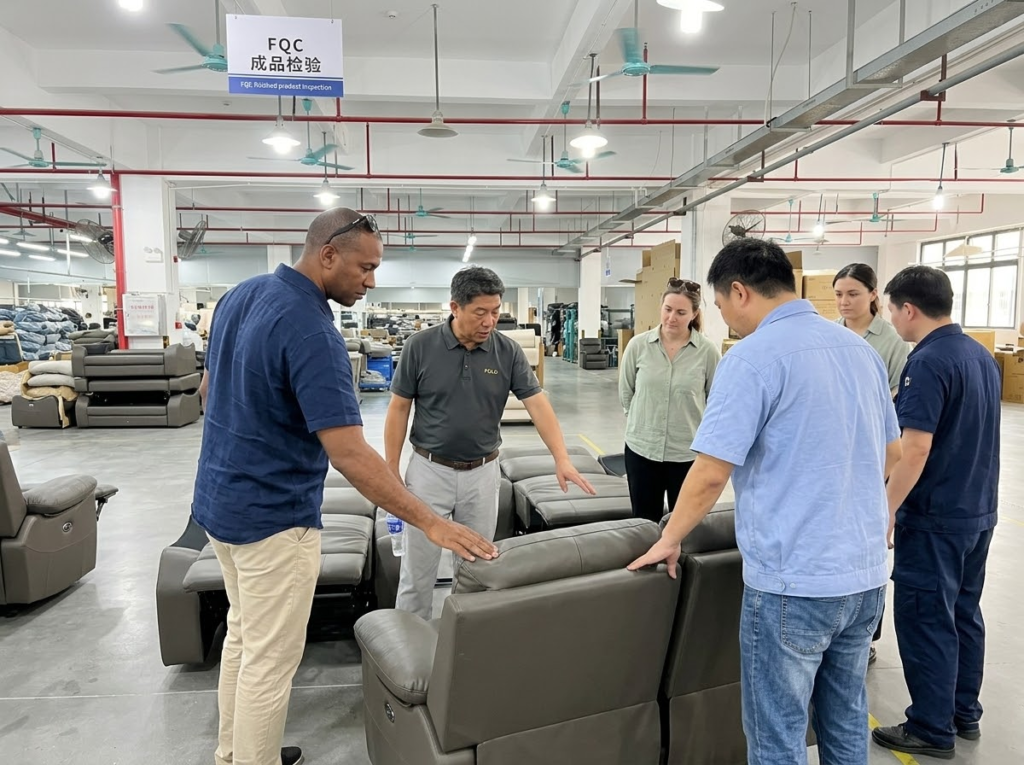
The Mid-Sized Sweet Spot
There’s this persistent myth that only the giants give real discounts. The 2,000-worker monsters in Shunde with their own container yards and in-house veneer mills. Sure, they can move on price. But they can also afford to tell you no. They’ve got Hilton and Marriott on speed dial. Your fifty-grand hotel project? You’re a rounding error. A blip they won’t remember by lunch.
The giants in Shunde can move on price, no doubt. But they can also afford to tell you no. Your fifty-grand hotel project is a rounding error — a blip they forget by lunch. Interi Furniture sits in a completely different lane. They’re a mid-sized Guangdong operation building custom hospitality casegoods and upholstered pieces for boutique hotel chains. Not an assembly-line nightmare cranking out ten thousand identical chairs. A flexible shop where the owner still walks the floor every morning, where moving a button placement doesn’t trigger a three-day WeChat chain with six department heads, and where your order actually shows up on the P&L as a real line item.
The pricing isn’t always the lowest on paper. But the negotiable surface? Huge. You can talk finishes. Payment terms. Reality. Mills with 80 to 300 workers — that’s the sweet spot, in my experience. Big enough to have real equipment and export experience. Small enough that your business still moves the needle. These are the factories where tiered pricing is most obviously a fiction. They don’t have the volume to support deep Chinese mills discount at scale, so the tiers are even more inflated than at the giants. And that inflation? That’s your opportunity.
The Framework — Stuff I Actually Use
Look, I’m not going to give you some MBA checklist with action items and stakeholder alignment. Here’s what I keep in my phone notes. Use what works. Ignore the rest.
Kill the anchor. When they hand you a tiered sheet with three price levels, fold it. Slide it back across the table. “Let’s start at my minimum quantity. What’s your real cost?” You’re not being rude. You’re being sane. The anchor is designed to make everything else look reasonable. Remove it, and you’re negotiating from zero. Which is exactly where you should be.
Find the ghost tier. Every factory has a number they won’t print. Below their advertised minimum. The quantity where they break even but keep the lights on and the workers showing up. Ask for it straight. “Below 100 units — what’s your cost-cover number?” They’ll hesitate. They’ll look at the ceiling. Good. That silence is data. That hesitation means you’re finally in the real conversation.
Split material from labor. This is where leverage actually lives. Ask for two quotes: one with their materials, one with yours. If you can source your own veneer or hardware — or even just threaten to — you strip away their padded material margin. Suddenly the tiered pricing looks very different. Because half that “discount” was just them overcharging you on oak plywood anyway. (And yes, they do this. Everyone does this.)
Trade time for money. A factory will almost always trade price for predictability. “I’ll give you this order every quarter for two years. 150 units per shipment.” That beats a one-time 500-unit order every single time. Cash flow beats volume. Every. Single. Time. The factory owner doesn’t want a hero order that saves his quarter. He wants to know he can pay his spray booth guy next month without calling his uncle.
Bring them to your turf. Don’t negotiate in their showroom surrounded by their trophies and their over-brewed tea. Invite them to your warehouse. Your project site. Your design studio. When they see you’re real — you’ve got pallets, you’ve got a team, you’ve got actual projects with actual deadlines — the “small buyer” label vanishes. You’re no longer a tourist with a PO. You’re a potential channel.
Red flag — the impossible tier jump. If the gap between Tier 2 and Tier 3 is way bigger than Tier 1 to Tier 2, run. Not because the discount’s too good. Because it’s math that doesn’t work. A factory doesn’t magically save 8% more going from 300 to 500 units than from 100 to 300. That gap is pure fantasy. It’s the factory betting you’ll overextend yourself to chase it. Don’t. I’ve seen buyers commit to 400 extra units just to hit a tier that saved them less than the storage costs for the excess inventory.
Get it on paper before you stand up. Verbal discounts in Chinese mills have a half-life of about four hours. Sales manager promises 14% off, goes to lunch, comes back, “needs to check with the boss.” Number shrinks. Get it written. Get it stamped. Take a photo of the stamped paper on your phone before you leave the building. Trust me on this one. Learned it the hard way in Dongguan. Lost three percentage points and a whole afternoon because I trusted a handshake.
FAQ — The Questions Buyers Actually Ask
Q: If I don’t take the tiered pricing, won’t the factory just refuse to work with me?
A: No. The factory wants your order more than they want their pricing structure. I’ve walked away from tiered sheets in Longjiang, Dongguan, Nankang — every single time, the sales manager called back within 48 hours with a “special exception” or “my manager made an adjustment.” The tiers are a starting position, not a policy. Treat them like what they are: an opening bid from someone who fully expects you to counter.
Q: How do I know if I’m actually getting a good price or just being made to feel like I won?
A: You don’t. Not absolutely. But you can triangulate. Get three mills quoting the exact same spec — same wood, same hardware, same finish code. If one is 30% below the others, something’s wrong. Either the quality’s different or they’re buying the order to fill a production gap. The best price isn’t the lowest. It’s the one sitting in the middle of a believable range. When a price feels too good? It is. Every time.
Q: Does this work for custom furniture, or only for standard catalog pieces?
A: Works better for custom, actually. Catalog pieces have thin margins already — they’ve sold them a thousand times, they know the exact cost down to the screw. Custom work has padding built in for uncertainty. That’s your surface area. The factory doesn’t know how long your weird headboard will take to engineer. They’ll pad the quote by 20% just to be safe. Your job is to unpick that padding by showing you understand the process. Ask about setup time. Ask about jig costs. Ask how many hours they estimated for the prototype. When they realize you know what a jig is, the game changes completely.
Q: I’m a small buyer. Like, twenty rooms small. Not two hundred. Do I have any leverage at all?
A: Different leverage. Not pricing power — relationship power. Small buyers who pay on time, communicate clearly, don’t change specs three times because their client “had a vision”? Unicorns. Absolute unicorns in this industry. A factory will give 5% off to a reliable small buyer over a flaky big buyer every single day. Be the buyer they don’t have to babysit. That has real value. More than most buyers realize. Actually, that’s not quite right — most buyers do realize it, they just don’t act like it.
Q: Can you actually “trick” a Chinese mill into giving deep discounts, or is the title just clickbait?
A: It depends on what you mean by trick. You can’t deceive a factory owner who’s been negotiating since before you could legally drink. These guys have seen every trick in the book. Twice. But you can absolutely use their own tiered pricing structure against them by refusing to play the volume game. The trick isn’t deception — it’s opting out of a rigged system. When you stop chasing fake tiers and start negotiating on real costs, the discounts appear. Not because you fooled anyone. Because you finally spoke their language. And in China price negotiation, that’s rarer than you think.
The Hard Lesson
That wheezing AC in Longjiang. I still think about it. About Lao Chen’s face when I asked for 150 units instead of 500. The confusion. Then — slowly — the respect. Then, finally, the real number.
We ended up doing three orders with that factory over two years. Never once hit their “Tier 3.” Never once needed to. They made money. I saved money. And the only thing that changed was I stopped pretending their spreadsheet meant something it didn’t.
Chinese mills don’t give deep discounts because you asked nicely. They don’t give them because you threatened to walk. They give them because you understood what they were actually selling. Not furniture. Not volume. Not even price. They were selling you a story about how business works. And the buyers who walk away with the best deals? They’re the ones who stopped reading the story and started writing their own.
So. Next time a factory slides that tiered pricing sheet across the table — are you climbing their ladder? Or are you asking why the ladder was even there?
Safe sourcing. And bring your own calculator.