

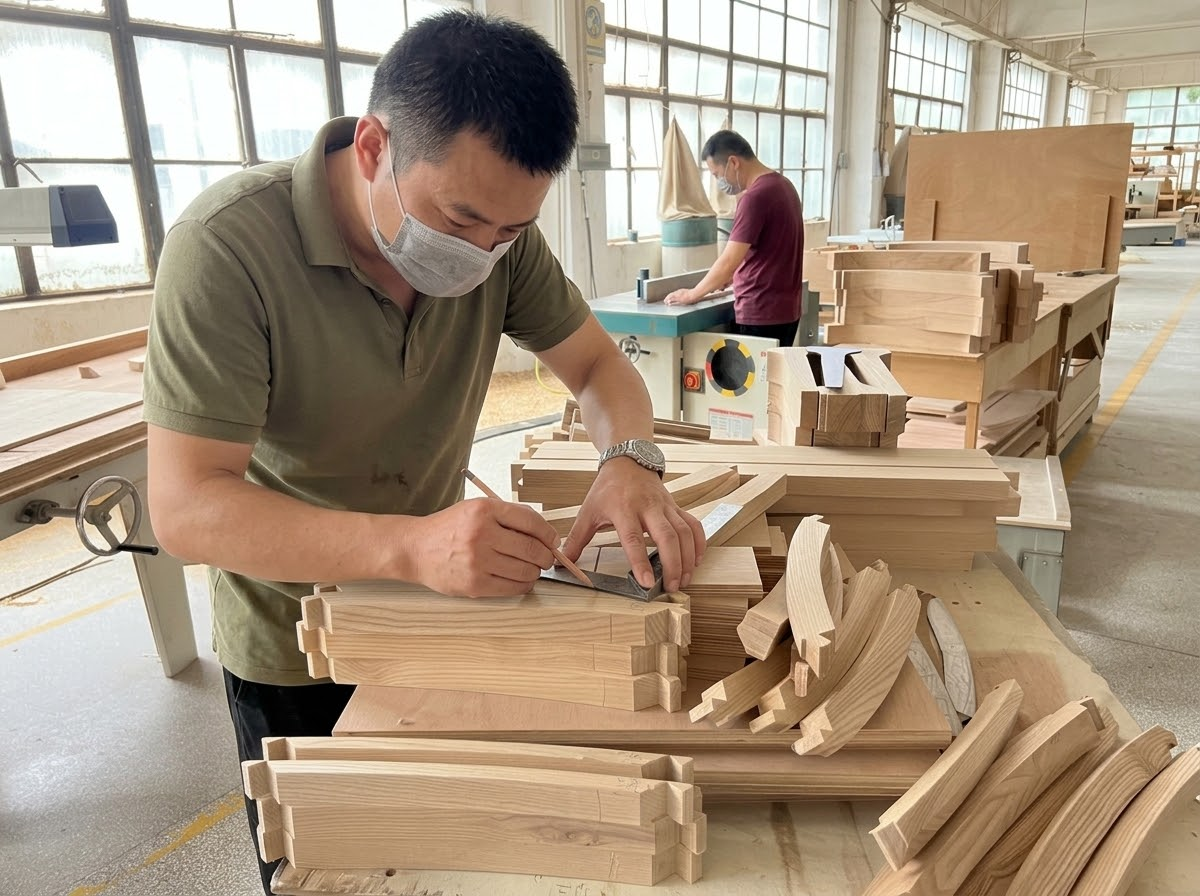
Mike from Phoenix texted me a screenshot last March. $1,180. Velvet sectional. “Free shipping, arrives in 8 to 10 weeks.” I was standing in a factory showroom in Longjiang at the time, sweating through my shirt, surrounded by foam blocks and half-finished frames that smelled like adhesive and sawdust. I walked three aisles over. Same sofa. Same fabric bolt. Same guy operating the sewing machine in the back corner. Factory gate price? $340. Mike didn’t laugh. He just typed back: “You’re kidding.” I wasn’t. And that’s the whole game right there.
China furniture online looks like a gold rush from the outside. Scroll Instagram long enough and you’ll see these slick ads — “direct from factory,” “wholesale prices,” “no middleman.” The photography is gorgeous. The copy sounds like it was written by someone who actually cares about your living room. But here’s what nobody tells you. That $1,180 sofa? The factory sold it for $340. The other $840 isn’t craftsmanship. It’s not better foam. It’s not even shipping. It’s the cost of a story. And brother, you’re the one paying for the storytelling.
The Brutal Truth: You’re Buying a Story, Not a Sofa
Let’s get this out of the way. Most of those B2C platforms aren’t manufacturers. They’re not wholesalers either. They’re arbitrageurs with Shopify accounts and Facebook ad budgets.
The factory makes your sofa for $300. The platform lists it at $950. They never touch the thing. Never sit on it. Never inspect a single stitch. They download a photo from 1688, run it through a filter, write some copy about “Scandinavian-inspired living,” and wait for your credit card to clear. That’s the business model. That’s literally it.
If a China furniture online store won’t show you photos of their actual warehouse — and I mean their warehouse, not some stock photo of a clean white room — they’re marking up factory prices by 200% to 400%. Minimum. No exceptions. I’ve been doing this fifteen years and I’ve never seen one that doesn’t.
Why do buyers fall for it? Fear. Pure, simple fear. Alibaba looks like a flea market had a baby with a spreadsheet. The idea of wiring five grand to a stranger in Dongguan makes your stomach turn. So you pay the fear tax. Sometimes it’s $600. Sometimes it’s $2,000. But it’s always there, hiding in the “convenience” of a clean checkout page.
Here’s the thing in plain English
- Those “factory-direct” B2C sites? Usually 2x to 4x above real factory pricing. No joke.
- The premium covers marketing spend, payment processing, and customer service tickets — not better wood, not denser foam.
- Real Chinese wholesale strategy means skipping the dropship layer and talking to factories or first-tier traders yourself. Period.
- Geography isn’t trivia. Foshan does upholstery. Anji does chairs. Longjiang does mattresses. Nankang does wood. Knowing this saves you money. Not knowing it costs you.
What “Factory Direct” Actually Means (Spoiler: It Doesn’t Mean What You Think)
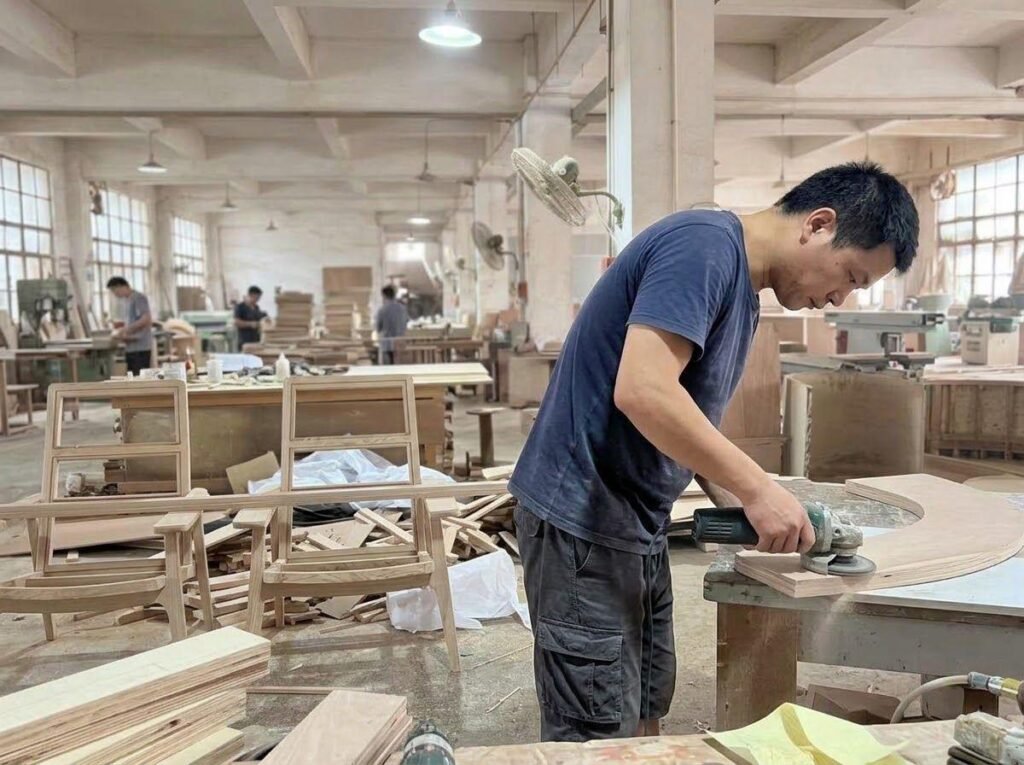
Let’s pull apart a typical listing. Mid-century dining chair. Walnut veneer. Brass legs. “Handcrafted by skilled artisans,” it says. Handcrafted? Sure. If by “artisan” you mean a CNC router in Nankang running two shifts and a guy named Lao Wang who’s been feeding it boards since 2019.
The platform didn’t design this chair. They found it on 1688 — China’s real wholesale backbone — where it sells for $42 a piece if you buy fifty. They cropped the photo, warmed up the filter, and listed it at $149. “Free shipping.”
Actually, hold on. That’s not quite right. The shipping isn’t free. It’s buried so deep in the markup you’ll never find it. Ocean freight from Shenzhen to LA for one dining chair? Maybe $20. The platform’s “shipping cost” is maybe $35. They’re still clearing $70 per unit before they even touch Facebook Ads. And Facebook Ads aren’t cheap. Some of these guys are spending $80 to acquire a single customer. Guess where that $80 comes from? Your wallet.
China furniture sourcing is the process of finding, vetting, and buying directly from manufacturers or authorized trading companies inside China’s industrial clusters — cutting out the dropshipping middlemen who inflate prices without adding a damn thing to the product itself.
Think about it like ordering a burger through a delivery app. You pay $14 for a $6 burger because someone built the app, ran the Instagram ads, handled your complaint when the fries were cold, and still needs to turn a profit. The burger didn’t change. The infrastructure around it did. Furniture is the same game, except the burger weighs 200 pounds and costs twelve hundred bucks.
Why the Photos Look Better Than What Shows Up
I was in Anji last year, visiting a chair factory. The owner — call him Old Chen — showed me an email from a dropshipping client. “Reference images attached.” Gorgeous lifestyle shots. Some Scandinavian brand with perfect lighting and a model drinking coffee in a linen shirt. “Can you make this?” the client asked. Old Chen nodded. He’d seen this two hundred times. What arrived at the customer’s door? Same silhouette, yeah. But lighter fabric weight. Cheaper foam. Proportions slightly off, like the chair had been left in the dryer too long. And the B2C listing? Still using the original aspirational photo.
The general pattern? Most product photography on these smaller B2C platforms is aspirational staging or straight-up supplier catalog shots that don’t reflect the actual SKU being fulfilled. I’d bet money on it. Sixty, seventy percent of the time, easy.
And here’s the part that really burns. Most buyers don’t fight it. They look at the slightly-wrong sofa and think, “Well, it’s not exactly the photo, but returning it to China would cost a fortune.” Exactly. The platform knows this. They built the entire model around your resignation. You keep the sofa. They keep the $800. Everyone moves on. Except your living room looks worse than you planned.
Where Your Money Actually Goes: A Map of the Markup
China’s furniture geography isn’t random. It’s tribal. Foshan is upholstery and ceramics. Longjiang is mattresses and soft seating — drive down the main road and you’ll see foam blocks stacked three stories high like some kind of beige mountain range. Anji is chairs, period. The air there tastes like sawdust. Nankang handles solid wood and mid-market case goods. Dongguan mixes high-end OEM with mass production, often in the same industrial park.
When a B2C platform sources from these zones, they don’t add value through design or QC. They add value through abstraction. They hide the factory. Hide the port. Hide the customs form. Sell you a story about simplicity. “Click here. Sofa arrives. Don’t worry about the details.”
But Chinese wholesale strategy has always been about relationships, not interfaces. The buyers getting the real pricing — the $340 sectional, not the $1,180 one — are the ones who fly to Guangzhou, rent a car, and spend three days eating factory canteen food and walking production floors until their feet hurt. Or they hire a sourcer who’s already done that suffering. Either way, they’re paying for expertise, not markup. There’s a difference.
The Middleman Nobody Wants to Talk About
Western sourcing circles love to say “cut out the middleman, save 30%.” It’s not that simple. A good trading company in Shenzhen or Guangzhou earns their cut. They inspect. They consolidate. They handle the paperwork that would bury a first-time buyer in confusion and late fees.
The problem isn’t the middleman. It’s the wrong middleman. A dropshipping platform that never sees the product, never negotiates specs, never steps foot in a factory? That’s not a supply chain partner. That’s a toll booth. And you’re paying the toll every single time.
| What You’re Paying For | B2C Dropshipping Site | Direct Factory / Tier-1 Trader |
|---|---|---|
| Product cost | $300 (buried, hidden) | $300 (out in the open) |
| Markup layer | $600-$900 | $50-$150 (actual trading margin) |
| Quality inspection | Usually zip | Pre-shipment, often AQL-based |
| Customization | “Email us” (good luck) | Direct negotiation, samples approved |
| Shipping method | Cheapest LCL they can find | Optimized FCL or sea-air hybrid |
| After-sales support | Ticket system, 48-hour response | WeChat, phone, often immediate |
| Photo accuracy | Stock dreams | Actual production samples |
Now, some buyers gravitate toward the massive manufacturers in Foshan — the ones with their own export licenses and MOQs that make your eyes water. But others find that mid-sized specialists offer a completely different risk-reward equation. Operations like Interi Furniture, for example, which focuses on project-grade and hospitality upholstery. You won’t find them on consumer-facing platforms. They don’t need to be there. They live on trade show appointments, hotel supply contracts, and word-of-mouth referrals from designers who’ve been burned by the dropshipping circus. Their pricing reflects real production cost plus a reasonable margin. Not a 300% surcharge for a pretty website.
A Sourcing Veteran’s Decision Framework (Or: How to Not Get Screwed)
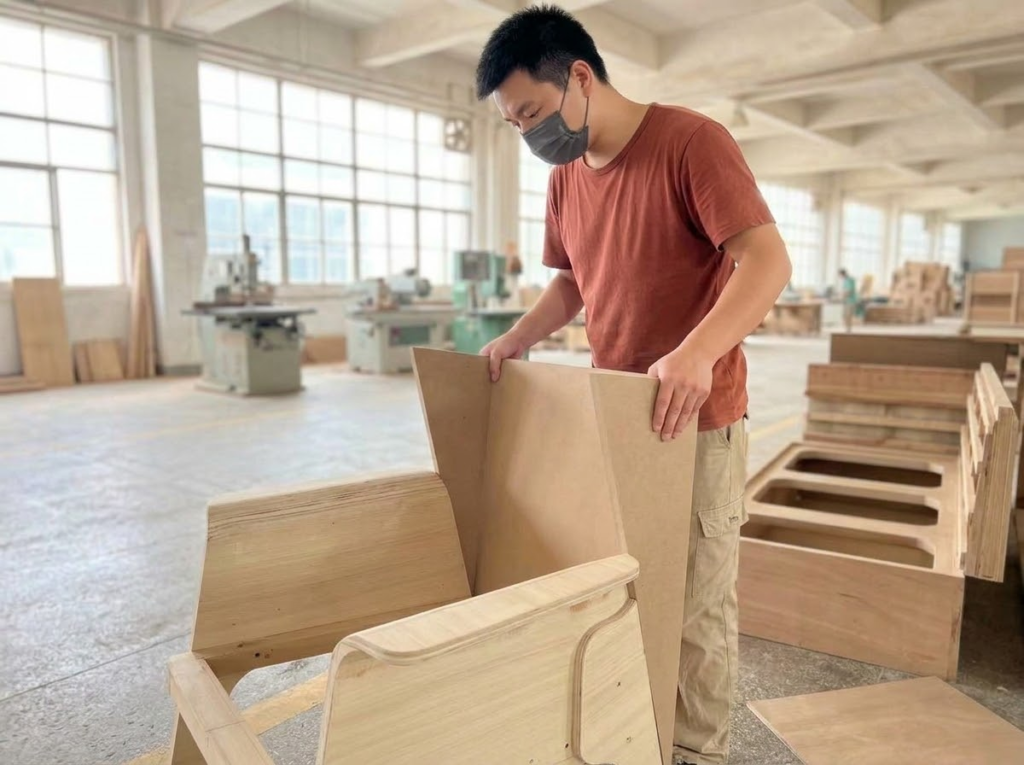
I’ve cleaned up enough sourcing disasters to fill a book. Here’s what actually matters. Not the theory. The dirt-under-your-fingernails reality.
Red flags. If you see three of these, run.
- The site claims “we are the manufacturer” but lists eight hundred SKUs across furniture, lighting, rugs, and wall art. Real factories specialize. Even big ones. A sofa factory doesn’t also make pendant lights. Come on.
- Product descriptions read like a translation app had a stroke. “Comfortable sitting experience for your posterior relaxation.” I saw that exact line on a $2,400 sofa listing. Two thousand four hundred dollars. For that copy.
- No physical address in China. Just a Delaware LLC or a London mailbox. Where’s the factory? “Oh, we work with partner facilities.” Partner facilities is code for “we found it on 1688 and hope for the best.”
- “Free worldwide shipping” on a solid wood dining table. Nothing’s free. Someone’s eating that cost. Usually you, buried so deep in the unit price you’ll never find it.
- Reviews that all sound like the same person wrote them. Five stars. Two sentences. All posted within a three-week window in March. Yeah, that’s organic.
Green lights. What legitimacy looks like.
- Factory direct with MOQ. You’re buying twenty dining chairs or five sofas. You get a real quote sheet. You get production photos sent to your WhatsApp. You pay 30% upfront, 70% against bill of lading. This is how the industry actually breathes.
- Tier-1 trading company with a Foshan or Shenzhen office. They add 10-20%, but they handle QC, consolidation, and the mountain of paperwork. Worth every penny if your order’s under fifteen grand.
- Platform as lead gen, factory as fulfillment. Some platforms do connect you to real factories. The difference? Transparency. You know the factory’s name. You get their contact. You’re not locked into inflated pricing forever.
Here’s a red flag that goes against everything the blogs tell you: If the price seems too reasonable compared to West Elm or CB2, and the site promises “luxury quality at fraction cost,” be extra suspicious. The factories that actually manufacture for those Western brands? They don’t need to undercut by 70% on some random Shopify store. The math doesn’t work. What tends to happen is a lower-grade factory copies the look, a dropshipper steals the photos, and you get a product that starts sagging fourteen months in. I learned this the hard way in Dongguan. Twice.
FAQ: The Stuff Buyers Actually Ask Me
Q: Am I definitely getting ripped off if I buy from a B2C China furniture site?
A: Not definitely. You’re paying a premium for convenience and risk absorption. If you’ve got zero sourcing experience, no freight forwarder, and the thought of a customs form makes you break out in hives, that premium might be worth it to you. But know what you’re buying. You’re buying a service layer, not superior furniture. The underlying product is the same thing available at wholesale for 40-60% less. Same factory. Same line. Different price tag.
Q: Can I negotiate with these B2C platforms like I would on Alibaba?
A: Rarely. And here’s why — the whole model depends on you not knowing the factory price. They don’t want you asking about foam density or fabric grade. Their entire margin lives in that information gap. You ask for a discount, you’ll get a 10% “loyalty code” and maybe a free throw pillow. They won’t drop the sofa price by $400 because that $400 is their profit. That’s the whole enchilada.
Q: Is the quality from a dropshipping site worse than buying direct?
A: Depends on the factory they use, but generally? Yes. Or at least, way more inconsistent. Dropshippers switch factories based on price and availability, not loyalty or standards. The sofa you order in March might come from a different production line than the one reviewed in January. Direct sourcing locks you into a factory, approved samples, and monitored production. Big difference.
Q: What’s the minimum order to bypass dropshipping and deal direct?
A: In my experience, $3,000 to $5,000 starts opening doors with mid-sized factories. For upholstered goods in Foshan, five to ten sofas usually gets you past the receptionist and into a real conversation. For case goods in Nankang, a mixed container — maybe $8,000 to $12,000 in value — gets you pricing that’ll make your accountant smile. Below that? Find a good trading company. Don’t mess around with factories for a $1,200 order. You’ll spend more on headaches than you save.
Q: So is dropshipping China furniture always a bad deal?
A: It depends on what you value. If you want one point of contact, fluent English, and someone else to handle the mess when the freight forwarder ghosts you, the markup is the price of that convenience. But if you’re buying multiple pieces, furnishing a rental property, or running a small hotel project? The dropshipping illusion will cost you triple — and the sofa won’t be one bit better for it.
The Hard-Earned Lesson
I started with Mike from Phoenix. Let me finish with something he told me in the car back to Guangzhou. Stuck in traffic on the Guangzhou-Sanshan Highway, rain hammering the windows, him staring at his phone. “I thought I was being smart,” he said. “Avoiding the hassle. Paying a little more for peace of mind.” Long pause. “I didn’t realize ‘a little more’ was eight hundred dollars per sofa. Per sofa, man.”
Fifteen years in this business, and here’s what I know for sure. The most expensive thing in China furniture sourcing isn’t the product. It’s the information you don’t have.
The dropshipping model feeds on that gap. It wraps wholesale goods in retail clothing and sells you the fantasy that you’re getting a deal. You’re not. You’re getting a story with a shipping label. And at the end of the day, it’s your living room. Not theirs. Your money. Not theirs.
So next time you see a “direct from factory” sectional at 40% off, ask yourself — 40% off what? The factory sold it for $300. Everything above that? That’s somebody else’s rent payment. And you’re the landlord now.