

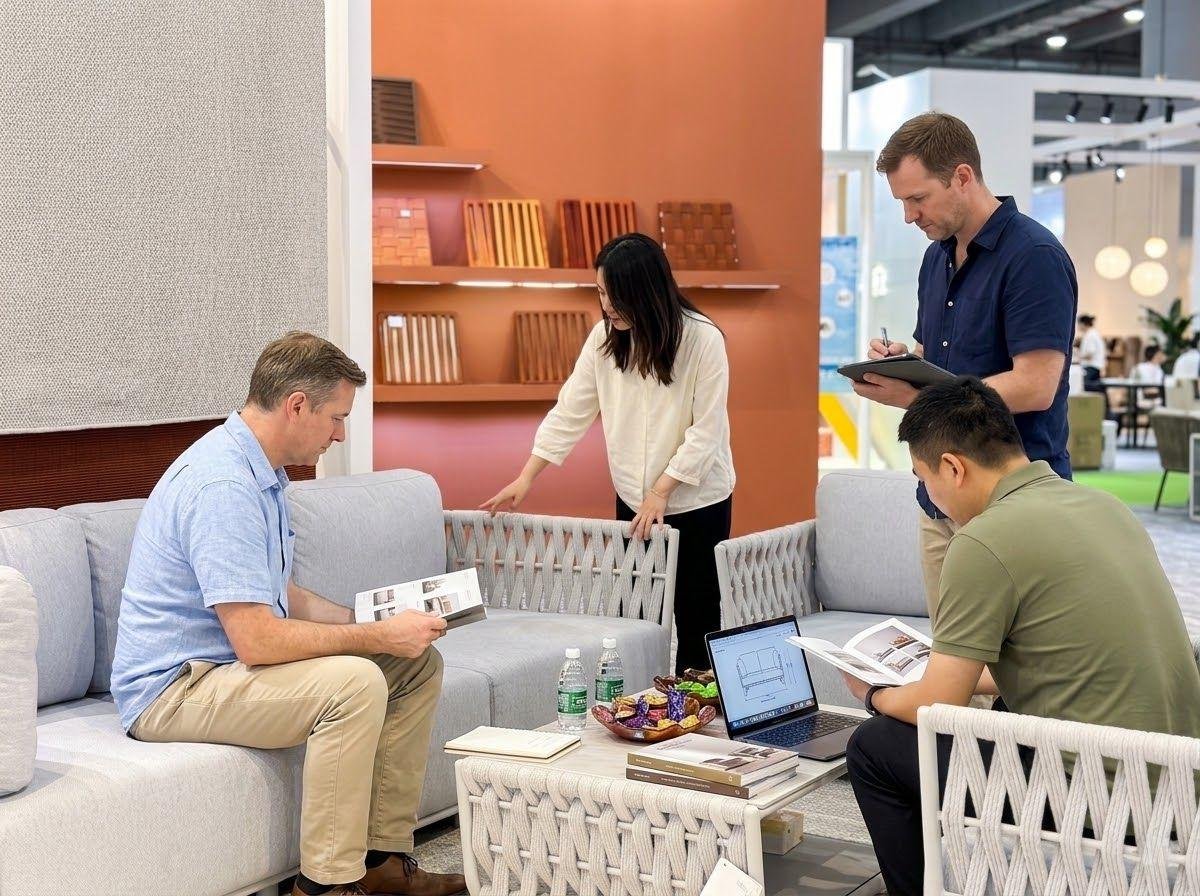
The Guangzhou humidity hits your shirt at 8:47 a.m. like a wet towel. I’m standing outside the Canton Fair Complex, coffee bleeding through the paper cup, running on four hours of sleep and a $12 hotel breakfast that tasted like regret. Flew in from Miami the night before — sixteen hours in the back of the bus because my Brickell client, some developer doing forty-seven waterfront luxury units, had exactly one brief: “Art Deco bones, minimalist skin. And don’t make it look like a 2011 hotel lobby.” Right. Easy.
So here I am. Badge dangling. Surrounded by buyers from Dubai, São Paulo, places I can’t pronounce. All hunting the same ghost. The ghost being that you can just walk into CIFF, point at shiny things, and somehow birth a coherent apartment building. You can’t. Not without knowing which booth is selling furniture and which one is selling you a dream they’ll forget by dinner.
The Brutal Truth About “Luxury” at CIFF
Nobody says this on the airport shuttle. Maybe sixty percent of the booths flashing marble and brass at CIFF Phase 1 are built for the kill shot — that two-second wow when you round the corner. They stop you. Sure. But stopping a buyer and shipping forty identical dining sets with hardware that actually matches? Different sport entirely.
The factories that win on the show floor? Often lose in the workshop. The real mules — the ones who’ll pump out thirty bedside tables where the lacquer doesn’t drift between batch one and batch four — usually hide in the cramped booths. The dusty ones. The ones that look like a storage unit had a baby with a trade show.
Rule of thumb: if the booth feels like a boutique hotel lobby, the factory behind it probably can’t handle your multi-unit job without farming half your order to some guy they met last Tuesday. That’s not pessimism. That’s fifteen years of walking Foshan floors and getting burned.
Key Takeaways
- China furniture sourcing is the process of matching a manufacturer’s project discipline with your design specs — not just picking pretty stuff off a showroom floor.
- Art Deco furniture China makers cluster in the Pearl River Delta, but the ones who can actually blend Deco geometry with minimalist restraint are usually mid-sized specialists, not the volume monsters hogging the main CIFF halls.
- CIFF luxury apartment buyers should treat Phase 1 (March 18–21, 2027) as reconnaissance, then use Phase 2 (March 28–31) or separate factory audits to check if they can actually walk the talk.
- The biggest risk in a blended-style fit-out isn’t component failure. It’s aesthetic chaos. Twelve different “luxury” signatures in one unit looks like a furniture warehouse had a seizure.
Why Does Every Booth Look Like a Museum?
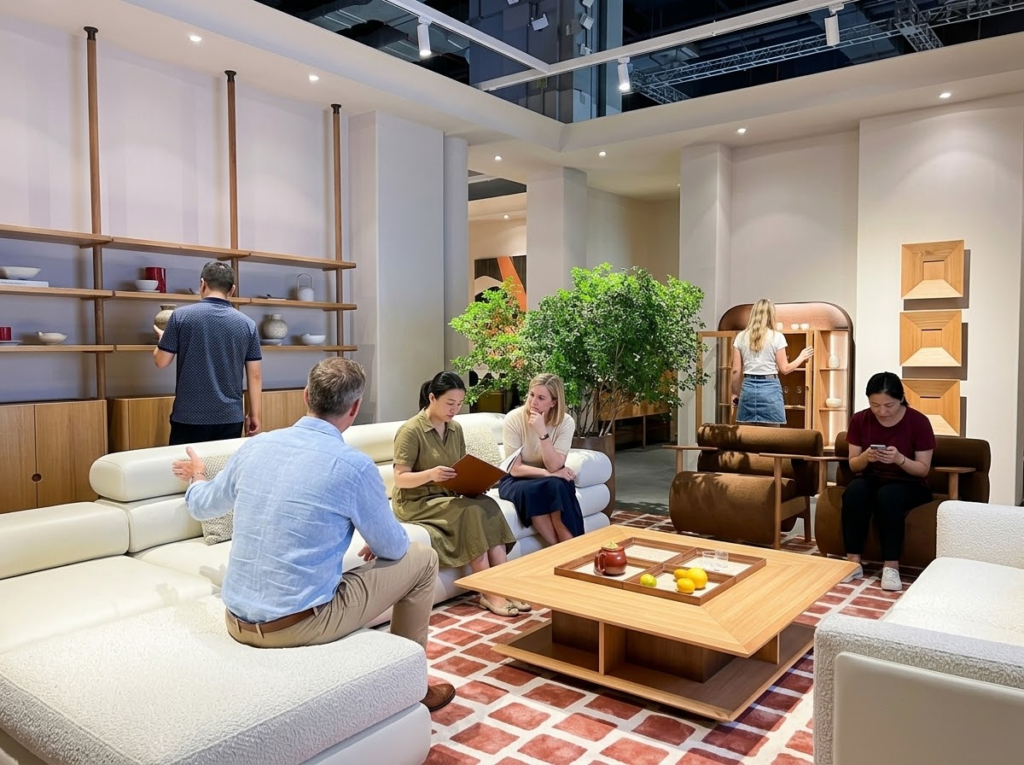
Walking CIFF’s home furniture halls is dangerous. Velvet channel-tufted sofas screaming 1920s glamour. “Minimalist” marble coffee tables that weigh as much as a VW Beetle. Theatrical lighting. Generous spacing. Some salesperson with perfect English hands you a cappuccino and says, “We can do anything.”
It’s like dating apps. Every profile is a highlight reel. The booth is the swipe-right photo. The factory — if you ever drive the ninety minutes to Longjiang or Dongguan — is where you find out if the relationship lives or dies in a pile of mismatched veneer samples.
What Are They Actually Selling?
Most big OEM exhibitors at CIFF Guangzhou sell one thing: capacity. Five thousand square meters of floor. Two hundred workers. A catalog covering French Provincial to vaguely Scandinavian. Sounds great. It’s also the trap.
Because blending Art Deco with modern minimalism isn’t about having a big menu. It’s about knowing when to shut up. When to stop adding. A factory that “does everything” usually does everything at about eighty percent. That brass inlay on the Deco cabinet? Looks righteous in the booth. Six months later in your apartment, the patina’s inconsistent across units. The sunburst geometry drifts three millimeters. Small stuff. Until your client notices. And they will.
The real kicker? The factories that nail this blend are the ones who tell you no. They’ll say they don’t do that finish. They’ll push back on your timeline. Honestly? That’s the conversation you want.
Can You Actually Source Both Aesthetics in One Trip?
Art Deco and minimalism are an odd couple. One wants ornament — geometry, lacquer, brass, mirrors, bold contrast. The other wants absence. Clean planes. Muted palettes. Negative space. Material honesty. Asking one factory to do both at volume is like asking a jazz saxophonist to play techno. Some can. Most can’t. And the ones who swear they can? Usually farming the half they care less about to a cousin’s shed they don’t want you to see.
Where the Brass Meets the Bare Wall
In my experience, roughly seventy percent of the Art Deco furniture China buyers drool over at CIFF comes out of the Foshan corridor — Shunde, Longjiang, Lecong — where geometric inlay, lacquered surfaces, and metal accents have been refined for twenty years. The minimalist side, especially the tight joinery and restrained upholstery, tends to come from a different animal. Sometimes the same factory runs separate workshops. Often, they don’t.
Here’s where buyers screw themselves. They fall for a Deco credenza at CIFF. Notice the same factory offers a “minimalist” dining table that looks almost right. Bundle the order. Save on shipping. Simplify. Six months later, the reveal happens. Something’s off. The pieces don’t hate each other, but they don’t talk. Proportions are weird. Materials drifted.
Actually, wait — that’s not quite right. What most buyers miss isn’t the factory’s fault. It’s the expectation that one supplier can curate a complex aesthetic blend for you. They can’t. You curate. They build. End of story.
The Ecosystem Reality: Who Actually Builds This Stuff?
China’s furniture game isn’t one thing. On one end, massive OEMs — filling CIFF Guangzhou halls with sofa set after sofa set, MOQs starting at a full container, “customization” meaning pick from six leathers. On the other, boutique workshops — ten guys in a converted Anji warehouse making gorgeous one-offs that cost a fortune and can’t be replicated.
While some buyers chase the big names in Foshan, others find that mid-sized specialists — operations like Interi Furniture, which focuses on bespoke contract and residential work from dual bases in Guangzhou and Foshan — play a different game. They’re not trying to be Amazon. They know their lane. And for a developer who needs consistency across thirty-plus units without the design going numb, that specificity beats raw tonnage every time.
The general pattern? The best luxury fit-outs source primary fixed and loose furniture from one project factory, then layer in specialty pieces — statement lighting, accent case goods, sculptural seating — from secondary suppliers who own a specific material or period vocabulary. More headaches. More logistics. But it’s the only path to both coherence and soul.
| Factor | Large-Scale OEM | Mid-Sized Project Specialist |
|---|---|---|
| Typical MOQ | Full container (20–40 pcs per SKU) | Flexible; project-based |
| Customization depth | Limited to finishes and dimensions | Deep; bespoke joinery, materials |
| Best for | Standardized inventory, retail | Multi-unit residential, hospitality |
| Aesthetic range | Broad but shallow | Narrower but deeper |
| CIFF presence | Prime hall locations, big booths | Smaller booths, often by appointment |
| Risk profile | Consistency at scale, design drift | Design fidelity, capacity ceilings |
The Buyer’s Framework: A 48-Hour CIFF Decision Tree
You don’t have a week. You’ve got two days at CIFF before your flight home and a hundred Slack messages. Here’s how to use them without drowning in catalogs.
Day One — Walk. Don’t Buy.
- Hit Phase 1 (home furniture, March 18–21) with a physical sample board. Not iPhone photos. Actual swatches. If a factory can’t match it on the spot, their “custom” capability is theoretical.
- Photograph booth pieces. Then flip them over. Check the back panels. The underside of tables. Drawer joinery. The bottom of a cabinet tells you more than the front ever will.
- Ask for the factory address. More than two hours from Guangzhou? Budget a separate trip. They hedge on the address? Walk.
Day Two — Verify or Die
- Return to your top three with a technical gotcha. “How do you stop brass inlay from lifting in Miami humidity?” or “What’s your tolerance for veneer match across twelve nightstands?” The answer should be immediate and granular. Hesitation is data.
- Cross-reference with Phase 2 (machinery and components, March 28–31) if your dates overlap. See what equipment and materials your shortlist actually buys. Not perfect intel, but better than blind faith.
- Demand a pilot sample. Not a showroom piece. A production sample from the line that’ll build your order. Budget $800–$2,500. Cheapest insurance you’ll ever buy.
Red Flag — The One That Breaks the Rules
- If a factory says they master both ornate Art Deco and restrained minimalist production in-house at volume? Thank them. Leave. No single facility does both well at scale. The ones claiming otherwise are subcontracting the part they care about less. Real specialists know their lane. And they’ll tell you what they won’t do before they’ll tell you what they will.

FAQ: The Questions Buyers Actually Ask
Q: Can I really source a full luxury apartment fit-out at CIFF Guangzhou, or am I an idiot for looking for a one-stop shop?
A: You can source most of it at CIFF. But you won’t find a real one-stop shop for a sophisticated Art Deco-minimalist blend. Treat CIFF as recon and relationship-building. Plan on two to three suppliers and at least one factory audit. The show gets you eighty percent there. The other twenty happens in the messy follow-up.
Q: How do I know if a factory’s “handmade” Art Deco details are actually handmade, or just CNC with metallic paint?
A: Ask to see the tooling. Real brass inlay or hand-lacquer needs specific jigs and skilled benchwork — you’ll see the stations on a factory visit. CNC isn’t evil; it’s just faster and flatter. It won’t have the depth or the slight irregularity of handwork. Request a cut sample. If the “brass” is a micron-thin foil, you have your answer.
Q: Is it cheaper to put everything through one factory, or split between a minimalist specialist and an Art Deco workshop?
A: One factory looks cheaper on paper. Splitting is cheaper in reality. A single factory doing both styles will subcontract one half and mark it up. You pay for a single invoice while losing quality control. Splitting gives you direct relationships, better per-category pricing, and accountability where it hurts.
Q: What’s a realistic lead time for a thirty-unit apartment project from order to delivery?
A: Based on export patterns and typical Guangdong production schedules for custom contract furniture, budget fourteen to eighteen weeks from signed tech packs to FOB departure. Add four to six weeks for ocean freight to the US East Coast. Rush jobs exist, but they cost twenty to forty percent more and the error rate jumps. Anyone promising ten weeks for a full custom fit-out is either cutting corners or lying about capacity. Or both.
Q: Should I visit the factory before placing the order, or is CIFF enough?
A: For projects over $150,000, visit the factory. No exceptions. CIFF is theater. The factory is reality. You’re not just checking machines; you’re checking if the QC manager understands your tolerance specs, if the finishing room is ventilated (lacquer consistency lives or dies there), and if the booth samples were made by the same hands building your order. Depends on your risk tolerance, but factory visits separate the pros from the tourists.
The Hard-Earned Lesson
At the end of the day — yeah, I know how that sounds, but it’s accurate — the best luxury apartment fit-outs aren’t sourced. They’re orchestrated. You become a conductor, not a shopper. You don’t walk into CIFF hoping to find the perfect chair. You walk in knowing exactly what frequency your project needs to hit, then you assemble the suppliers who can hit those notes without missing.
My Brickell client? We split it. Primary case goods and upholstery from a Foshan project specialist. Statement Deco pieces from a smaller metalwork and lacquer shop in Dongguan. Three trips. Two pilot samples. One brutal conversation about veneer grain matching. Building sold out pre-construction. Would I do it the same way again? In a heartbeat.
But here’s what still keeps me up: how many “luxury” developments look expensive but feel hollow because someone treated furniture sourcing like a shopping spree instead of a design discipline? Too many. Don’t let yours be one of them.
Safe travels. And wear decent shoes — Hall 9 is bigger than it looks.