


So there I was last October, nursing a desperately lukewarm Tsingtao in the lobby bar of the Langham Guangzhou. My feet were completely wrecked. I’m talking blister-on-top-of-blister wrecked after twelve brutal hours speed-walking Phase 2. The guy sitting next to me? A procurement director from some massive Vegas casino group who looked like he hadn’t slept since Tuesday.
He practically chucked his battered Moleskine notebook onto our sticky table, knocking over a bowl of peanuts in the process.
“Fourteen thousand chairs,” he muttered. He was rubbing his temples hard enough to leave red marks. “And not a single damn one of them has a soul.”
He was on an absolute tear trying to source a $4,500 brushed brass reception console. Something with a liquid-metal pour aesthetic. Heavy. Visceral. The kind of thing you expect to see in a moody architectural digest spread. Instead? He’d just blown an entire day drowning in an endless sea of cheap MDF and chrome-plated aluminum tubing that literally squeaked when you pushed on it.
Designers fall into this exact trap every single spring and autumn. They endure a soul-crushing 15-hour flight across the Pacific, chasing the ghost of cheap manufacturing. They genuinely expect to trip over avant-garde sculptural furniture sitting right there in the dead center of a mass-market pavilion.
But the reality of designer sourcing Canton Fair style? The true metal artisans are absolutely nowhere near Hall 9.1. They are hiding out in the grimy, un-mapped industrial parks of Foshan and Dongguan, quietly forging the heavy, complex pieces that eventually end up sitting in Milan showrooms with a 500% markup attached to them.
The Brutal Truth About Mass Sourcing
Let’s just rip the band-aid off right now. If your game plan for sourcing statement pieces involves merely strolling the sprawling exhibition halls with a shiny VIP badge on a lanyard, you are actively burning your client’s money. It is literally hunting for a sniper rifle inside a factory that manufactures plastic water guns.
Mass halls exist for one very specific reason: absolute, unadulterated scale. The vendors paying premium rent there want to sell you a 40-foot HQ container packed to the brim with identical, flat-pack dining chairs. Statement pieces? With their bizarre non-stackable geometry, complex internal TIG welds, and hand-rubbed patinas? That is their worst nightmare. They hate it. It slows down the line. It ruins their daily quotas.
Here is my golden rule of thumb for this: If a factory lead immediately starts bragging about container loading efficiency, they completely lack the skillset to cast a complex statement piece.
It really is that simple. Don’t try to force a square peg into a round hole just because they bought you a nice dim sum lunch.
Key Takeaways: Navigating the Supply Chain
- The volume trap: Mega-halls prioritize flat-pack efficiency. Complex metallurgy jams up their assembly lines and pisses off their floor managers.
- Geography is everything: True sculptural metalwork happens in specialized sub-districts, usually a two-hour drive in heavy traffic from the slick export booths.
- Vendor profiling: You need mid-sized, engineering-heavy workshops. Not massive assembly conglomerates with thousands of workers.
- The language red flag: Slick English reps with perfect iPads at giant booths usually signal a trading company. They will inflate your costs by at least 30% and block you from talking to the actual engineers.
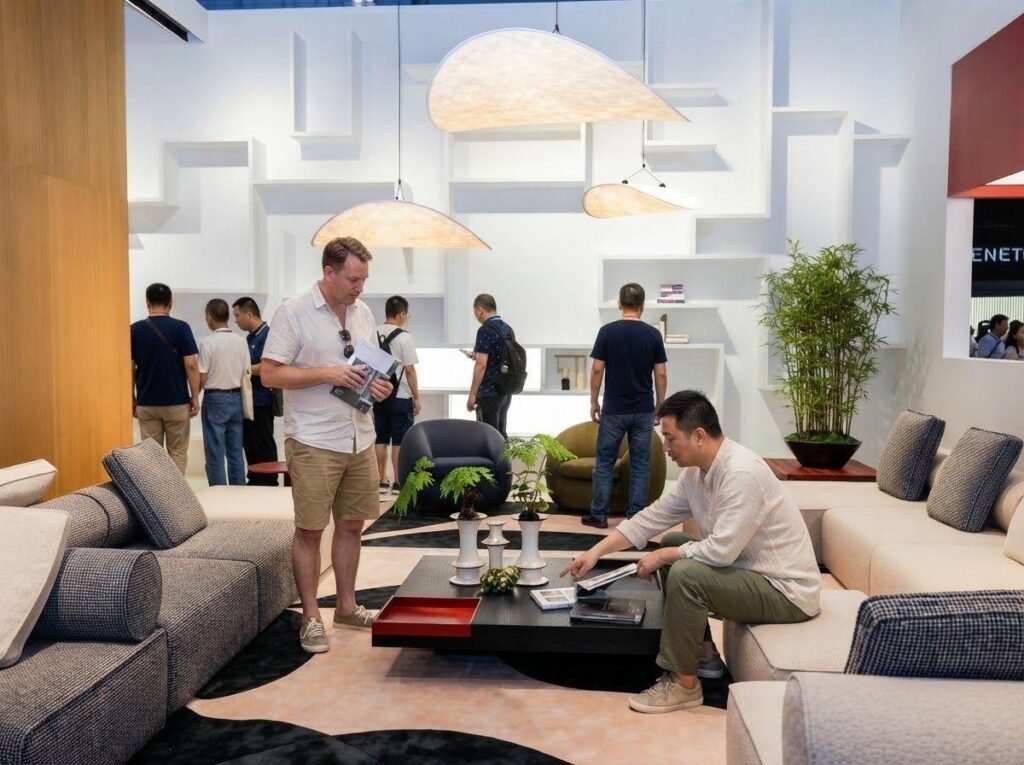
The Foundry Floor Reality
China furniture sourcing is the process of filtering out thousands of aggressive middlemen to find the exact industrial capability required for your specific blueprint. Actually, that’s not quite right—what most buyers completely misunderstand is that they aren’t hunting for a furniture factory at all. You need a heavy metal foundry. One that just so happens to dabble in interior decor on the side.
Think of it like getting a custom suit tailored. You wouldn’t walk into a massive textile mill churning out miles of cheap polyester, hand them a photo of James Bond, and ask them to cut a bespoke tuxedo, right? It takes a specialized tailor. Casting organic, asymmetrical brass shapes requires that exact same bespoke tailoring—just with crucibles of molten metal, intense heat, and angle grinders.
I’ll never forget standing inside a dedicated polishing room out in Nankang a few years back. The noise was ear-splitting. Bone-rattling. You couldn’t hear yourself scream. I watched a guy covered head-to-toe in black soot spend five solid hours hand-buffing a single cast aluminum chair frame. He just kept working the wheel. Swapping out grit pads. 400 grit. 800 grit. Until the raw, ugly metal looked like liquid mercury.
That is where the actual work happens. Not in a brightly lit exhibition center while drinking instant Nescafe. Just raw, deafening labor.
The most reliable vendors for statement pieces operate facilities that smell like ozone and burnt grinding wheels, never lavender and fresh leather.
Why Do So Many Designer Mood Boards Go to Die Here?
Designers love to point at a Pinterest render of a fluid, Zaha Hadid-style bronze bench and assume the factory already owns the tooling. They don’t. Pushing molten metal into complex, organic shapes involves massive thermal dynamics and serious upfront mold fees. We’re talking thousands of dollars before a single prototype is even poured. Metal shrinks when it cools. It warps. It gets porosity—little air bubbles that ruin the finish.
Most volume-driven bosses won’t even look at the drawing. They prefer straight lines. Quick cuts. Fast welds that can be hidden under a layer of thick black powder coat.
Push them to try a seamless pour, and they’ll just nod, take your 30% deposit, and ship you a jagged, Frankenstein-welded disaster 120 days later. (I learned this the hard way in Dongguan back in 2014, and having to explain that mess to my client nearly cost me my job). Or rather, the problem isn’t the factory, it’s the expectation. You asked a Honda Civic plant to build a custom Ferrari engine, and then got mad when it broke down.
| Mass-Market Factory | Sculptural Metal Workshop |
| Core Metric | Speed, stackability, high volume |
| Factory Floor | Massive assembly lines, exceptionally clean |
| Pricing | Dirt cheap, but requires MOQ of 100+ |
| Trade Show | Prime real estate, massive double-decker booths |
| Core Metric | Hand-finishing, custom tooling, low volume |
| Factory Floor | Heavy machinery, foundries, chaotic polishing rooms |
| Pricing | High per-unit cost, lower MOQs |
| Trade Show | Often totally absent, or hidden in obscure design wings |
The Missing Middle Market
The supply chain here has totally fractured over the past decade. It used to be simpler, but now it’s a mess. You’ve got the mega-factories eating up massive hotel rollouts on one side. On the other end? A chaotic network of specialized, mid-sized workshops hiding in the industrial parks of Guangdong and Zhejiang, way off the main highways.
This is the sweet spot. While rookie buyers flock to the giant, shiny Foshan conglomerates to hit aggressive price points, seasoned veterans dig into these mid-sized specialists.
Let’s look at operations like Interi Furniture, which specifically balances that tricky line between heavy project engineering and high-end aesthetic execution. They exist right in this pocket. Why? Because the risk-reward ratio actually makes sense. They keep enough engineering talent on staff to pull off custom metallurgy without holding a gun to your head demanding a 300-piece MOQ for a heavy bronze table. They get the design intent. When a boutique hospitality group needs thirty statement consoles for a lobby, these are the guys who can handle the casting molds without defaulting to cheap tubular steel and hoping you won’t notice.
Navigating this specific tier of the market is exactly why procurement directors exist. It isn’t glamorous work. You have to ditch the Pazhou complex. You hire a sketchy local driver who chain-smokes Zhonghuas. You spend three days sweating through your shirt in un-air-conditioned industrial parks just to verify their casting molds in person. If you aren’t doing that, you’re just guessing. And guessing in China manufacturing is an expensive hobby.
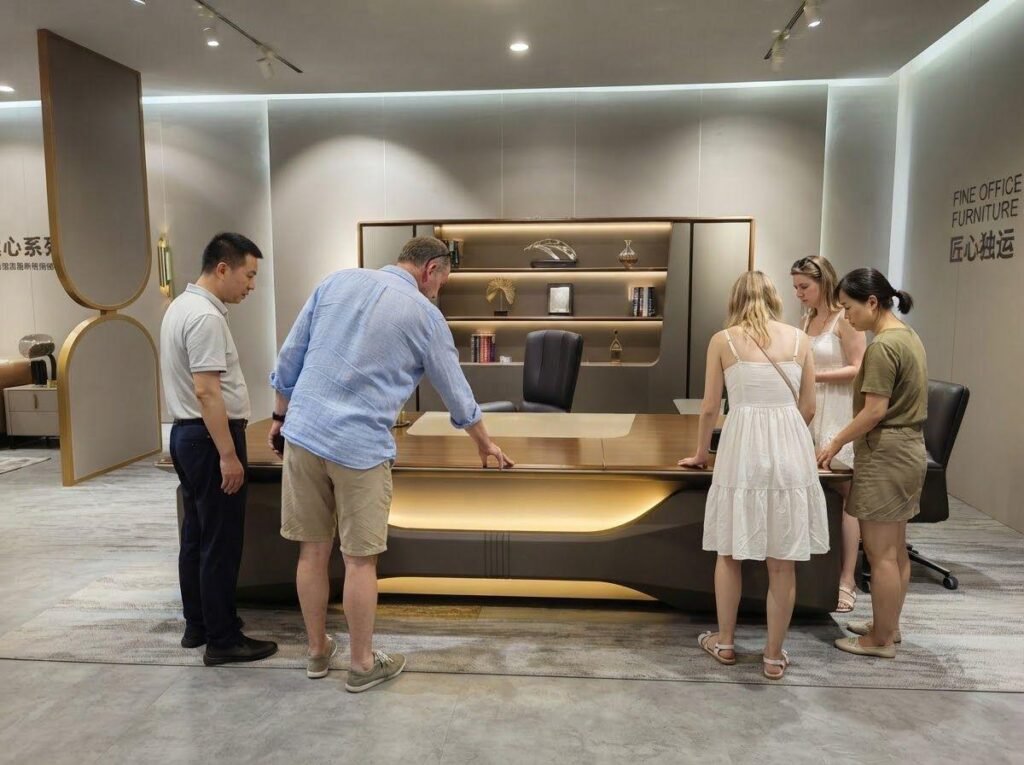
The Statement Piece Audit Framework
Stop acting like a tourist with a checkbook. When evaluating a new metalwork vendor for sculptural furniture China, you have to act like a hostile investigator. Assume everyone is lying until you see the sparks flying with your own eyes. Use this exact checklist next time you walk a factory floor:
- Demand the polishing room tour: If they brag about luxury metalwork but flat-out refuse to show you the grinding and electroplating lines—usually citing “safety reasons” or saying the boss has the key and he’s at lunch—walk for the door immediately. They are flipping someone else’s product. End of story.
- The blind touch test: High-end sculptural geometry lives and dies by seamlessness. Close your eyes. Run your bare fingers underneath the bottom edges of a sample table. Feel a rough weld bead popping through the plating? A sharp edge that catches your nail? Their QC is absolute trash.
- The brute force weight check: Solid brass has an undeniable, back-breaking density. If the factory boss swears a piece is solid cast bronze but you can lift one end of the table with three fingers, they are scamming you with plated zinc alloy or hollow tubing filled with sand. Don’t fall for it.
- A good factory expects failure: This contradicts everything you’re taught in western business school. A legitimate foundry doing risky metal pours will openly admit to a 15-20% defect rate on complex shapes. Metal cracks when it cools too fast. If they look you in the eye and say “we never have casting problems,” they have absolutely no idea what they are doing. They just haven’t tried anything hard yet.

The Ugly Realities of Sourcing (FAQ)
Q: “I literally sat in a gorgeous, fluid brass chair in a vendor’s booth at the fair. Doesn’t that prove they manufactured it?”
A: No, and you should always assume they bought it off a competitor to use as bait. This happens constantly. Factories buy one high-end statement piece from a hidden workshop just to lure you into their booth. Once you sit down and look at their iPad, they aggressively pivot to selling their standard catalog garbage.
Q: “What kind of MOQs are we actually talking about for the real custom stuff?”
A: Almost never a full container. Real foundries will usually entertain an MOQ of 10 to 15 pieces per design—but only if you write a separate, upfront check to cover the custom tooling molds. Don’t ask them to amortize the mold cost over 10 pieces. They’ll laugh you right out of the showroom.
Q: “Should I even bother with China for this, or just fly to Portugal and pay the premium?”
A: If you have the grit to physically audit these workshops and bully them on QC, southern China offers world-class capabilities for half the price. But if you just want to point at a glossy PDF and go play golf? Book a ticket to Europe.
Q: “If I find a solid-looking supplier on Alibaba, can I just WeChat them my CAD files and get a perfect organic metal shape?”
A: No. Sourcing complex sculptural furniture requires boots-on-the-ground physical oversight. You cannot manage a thermal metal pour over a text message. It’s a physical, tactile process that requires human eyes.
The Hangover
I can’t tell you how many young designers I’ve watched crying into their gin and tonics at the hotel bar, totally devastated because their bespoke metal centerpieces showed up looking like a middle-school shop class project. They open the crate in Los Angeles, and the $3,000 table they promised their client looks like a spray-painted radiator.
And here’s the kicker: that is simply the ignorance tax in this market.
The Chinese manufacturing machine is wildly capable. It can build literally anything. But it demands relentless, aggressive management. You can’t just throw a slick CAD rendering of a liquid-metal chair at a facility built to weld cheap folding tables and pray for a miracle. It doesn’t work that way. It never has.
Are you actually willing to skip the easy, air-conditioned pavilions and get a thick layer of metal dust on your boots? Because if you aren’t, leave the statement pieces to the professionals and go buy some flat-pack chairs.
Catch you on the next flight out.