

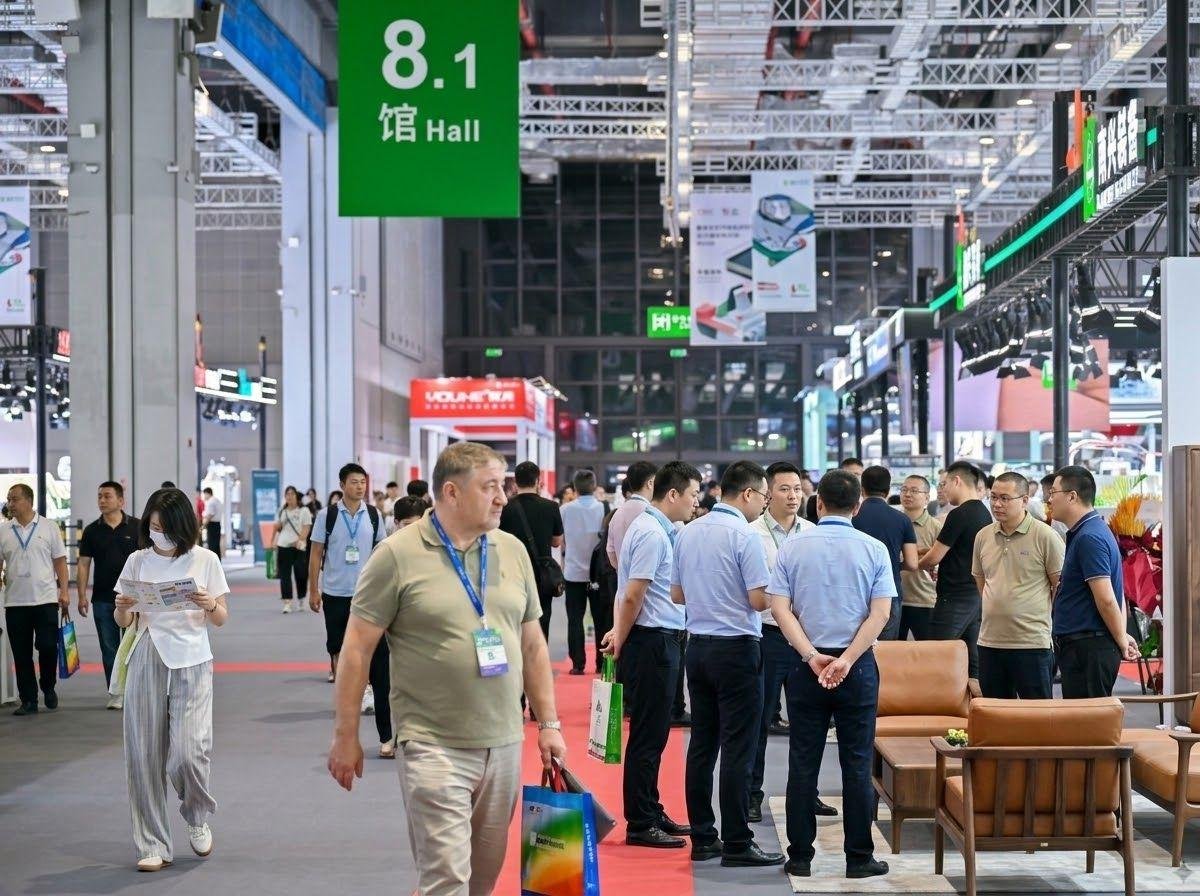
March last year. I’m standing in Hall 9.2 at the CIFF in Guangzhou, watching an Australian hotel procurement director shake hands with a factory owner from Longjiang, a town so deep in Foshan’s furniture belt that GPS barely knows what to call it. The buyer’s just placed a $40,000 order for sixty custom headboards. The factory guy — let’s call him Mr. Chen, because half the guys in Longjiang are Mr. Chen — leans in and says something I’ve heard maybe two hundred times: “Don’t worry. If anything’s wrong, we guarantee return. Full refund. No problem.”
The buyer nods. He looks relieved. He’s got a spreadsheet to fill and a flight to catch.
Here’s the thing. That guarantee? It’s worth about as much as the complimentary CIFF tote bag hanging off his shoulder. I’ve spent fifteen years walking these halls — Dongguan, Longjiang, Anji, Nankang — and I’ve watched this exact scene play out with the predictability of a bad soap opera. The verbal promise at the booth. The confident smile. The handshake that feels like a contract but isn’t. And six months later, that same buyer is emailing me, panicked, because the headboards arrived with frames that split along the grain and the factory’s gone radio silent.
This isn’t a story about dishonesty, exactly. It’s about a structural trap baked into how China furniture fairs operate, how export guarantees are sold, and why your “ironclad” verbal assurance dissolves the moment your container hits the water.
The “Brutal Truth”
Let’s not dance around it.
A verbal return guarantee from a China furniture exporter at a trade show is not a guarantee. It’s a sales tactic. The sooner you internalize that, the less money you’ll lose.
Most buyers don’t want to hear this. They want to believe the handshake matters. They want to believe that “guarantee” means the same thing in Longjiang as it does in Melbourne or Dallas. It doesn’t. In my experience, roughly eight out of ten “return guarantees” offered verbally at Chinese furniture fairs come with conditions so invisible, so buried in WeChat voice notes and ambiguous translations, that enforcing them is functionally impossible.
Here’s a rule of thumb I give every junior buyer I train: if the guarantee isn’t in the contract, in English and Chinese, with a specific arbitration clause and a named bank account for refunds, it doesn’t exist. Full stop.
Key Takeaways
- A verbal “return guarantee” at a Chinese furniture fair is a sales closing tool, not a legal commitment.
- The enforcement gap between what’s promised on the booth floor and what’s written in the contract is where most buyers lose money.
- China furniture sourcing is the process of negotiating not just price and quality, but enforceable accountability — and most buyers skip the third part.

Why the Booth Floor Promise Feels Real (And Why It Isn’t)
Walk into any hall at the Shanghai Furniture Fair or the CIFF, and you’ll notice something about the lighting. It’s aggressive. Everything glows. The walnut looks richer than it is. The leather smells like money. You’re tired, you’re jet-lagged, and you’ve just spent three hours in a taxi from Baiyun Airport trying to explain to a driver that yes, Pazhou really is a place.
That environment is designed to make you say yes.
The factory rep isn’t lying to you, not exactly. What tends to happen is this: he genuinely believes his factory won’t make a mistake. Or his boss told him to say it. Or — and this is the real kicker — “guarantee” in his mental framework means “we’ll fix it on the next order,” not “we’ll wire you back $40,000.”
I once watched a buyer from Miami nearly cry in a Dongguan showroom. The factory owner had looked him in the eye and promised “100% return if quality not match.” The quality didn’t match. The wood was pine instead of ash. When the buyer demanded his money back, the owner sent a PDF of his “guarantee policy.” It was three sentences long. One of them was “Return shipping cost by buyer.” Another was “Product must be in original condition.” The chairs had already been installed in a hotel. Original condition? Impossible.
The booth floor operates like a carnival game. The prizes look close. The rules look simple. But the physics are rigged against you.
And here’s what most sourcing guides won’t tell you: the bigger the booth, the louder the guarantee. I’ve seen factories with 800-square-meter CIFF displays — the kind with espresso machines and hostesses in matching blazers — offer “lifetime warranties” on dining chairs that cost $28 a piece. Do the math. There is no universe where that math works.
The Three Layers of the “Guarantee” Illusion
If you peel back how these promises are constructed, you find three distinct layers. Understanding them is the difference between a smart buyer and a broke one.
“We Accept Returns” — The Language Trap
First, there’s the translation layer. Mandarin business culture doesn’t have a clean equivalent for “money-back guarantee” as Western consumers understand it. The phrase “baotui” (包退) literally means “package return” or “accept returns.” It implies willingness, not obligation. It suggests a relationship conversation, not a contractual mechanism.
When a factory says “we guarantee return,” what they’re often communicating is: “We’re reasonable people. If there’s a genuine problem, we’ll talk.” That’s not nothing. But it’s not what you heard.
Actually, that’s not quite right — what most buyers miss is that the factory isn’t even thinking about your definition of “problem.” To you, a problem is a structural defect. To a cost-pressured workshop in Nankang, a problem is a container that sinks in the South China Sea.
The Insurance Mirage
Second layer: some exporters will wave around “export insurance” or “quality assurance certificates” like they’re magical shields. I’ve seen A4 printouts framed behind reception desks in Longjiang that look official enough to hang in a dentist’s office. But here’s the insider observation from a factory visit that still sticks with me: most of those certificates are for the factory’s ISO compliance, not for your specific order. They certify that the facility has a quality manual. Not that your sofa won’t collapse.
One factory I visited in Anji — bamboo furniture specialist, very nice people, terrible paperwork — had a “Product Liability Insurance” certificate displayed prominently. I asked to see the policy. It covered product liability in China only. Domestic sales. The export buyer? Not named. Not covered.
The Jurisdictional Void
Third layer, and this is where it gets ugly. Even if you have a written guarantee, even if it’s in both languages, even if it’s signed and chopped — enforcing it across borders is expensive, slow, and often futile.
I compare this to buying a used car from a guy who lives three states away and only takes cash. Sure, he said he’d fix the transmission. But are you driving back to argue? Most buyers can’t. The legal costs to pursue a $25,000 furniture claim through Chinese commercial courts, especially without a locally registered entity, often exceed the claim itself. A written guarantee you can’t enforce is just expensive fiction. The general pattern suggests that factories know this. They count on it.
What the Smart Money Actually Does
So if verbal guarantees are theater, what separates the buyers who survive from the ones who get burned?
It’s not about finding “honest” factories. That’s a fairy tale. It’s about structuring the transaction so honesty becomes irrelevant.
While some buyers gravitate toward large-scale manufacturers in Foshan with glossy catalogs and English-speaking sales teams, others find that mid-sized specialists — operations like Interi Furniture, which focuses on contract and hospitality-grade pieces from their Guangdong base — offer a different risk-reward equation. These aren’t necessarily safer in terms of guarantees. But their business model depends on repeat project work, which means their incentive structure aligns differently than a booth-renter who’s trying to hit quarterly targets at a single fair. The point isn’t that one is good and the other is bad. It’s that understanding why a factory makes a promise matters more than the promise itself.
Understanding why a factory makes a promise matters more than the promise itself. The buyers who do well long-term treat every guarantee as a variable to be engineered out of the equation. They don’t trust. They verify. And they build consequences into the payment structure, not the conversation.
A Buyer’s Decision Framework: Before You Shake That Hand
Here’s what I tell people who email me after reading my columns. Use this like a pre-flight checklist. Ignore it at your cost.
The Non-Negotiables
- Get it in writing, in both languages, chopped and scanned. A WeChat voice note is not a contract. A smiling photo is not a contract. If the factory rep says “my boss doesn’t like lawyers,” you say “my boss doesn’t like losing money.” Walk away if they refuse.
- Structure payment in thirds, not halves. 30% deposit, 30% after pre-shipment inspection by an independent third party (not the factory’s “QC guy”), 40% against copy of B/L. If they balk at the inspection hold, that’s data. Listen to it.
- Specify defect thresholds in numbers, not adjectives. “High quality” means nothing. “No more than 2% variance in fabric dye lot” means something. Attach physical approval samples. Mail one to yourself before production starts.
The Red Flags That Defy Conventional Wisdom
- A factory that guarantees too much is often the most dangerous. Conventional wisdom says confidence equals competence. In the China furniture export game, excessive confidence often equals cash flow desperation. The factory offering “lifetime warranty” on a $45 bar stool isn’t generous. They’re either lying or they’re three months from insolvency and don’t care.
- “We have many happy customers in your country” is a deflection, not proof. Ask for references you can call. Not email — call. If they provide only one, and it’s a distributor who hasn’t bought in two years, that’s your answer.
Verbal Promise vs. Structured Protection
| Element | Booth Floor Verbal “Guarantee” | Properly Structured Safeguard |
|---|---|---|
| Form | Handshake, WeChat voice, email | Signed contract, bilingual, chopped |
| Remedy | “We’ll fix it” / “No problem” | Named arbitration, specified refund mechanism |
| Enforceability | None across borders | Payment holds, inspection gates, B/L leverage |
| Cost to Buyer | “Free” (until it isn’t) | 3–5% of order value (inspection, legal review, agent) |
| Factory Incentive | Close the sale today | Protect reputation for repeat business |
The Verification Layer
- Hire an inspection company for pre-shipment. Yes, it costs $300–$500. Based on export data patterns I’ve observed over fifteen years, buyers who skip independent inspection face defect rates roughly three to four times higher than those who don’t. (And yes, I know “defect rate” is a squishy metric — but the directional signal is consistent.)
- Photograph the loading process. Seals, container numbers, the physical condition of the cartons. I’ve seen factories load A-grade samples for inspection and B-grade stock for shipping. It happens.
- Build a relationship with a local agent. Not a translator. An agent with skin in the game — someone who visits factories when you’re not there, who knows which workshops in Dongguan have quietly changed ownership, who can walk into a production meeting and ask uncomfortable questions in the local dialect.
FAQ: The Questions Buyers Actually Ask
Q: If a factory puts “100% satisfaction guarantee” on their Alibaba page, does that mean anything legally?
A: No. Alibaba page language is marketing copy, not contract terms. Unless that exact phrase appears in your signed purchase order with defined remedies, it’s decorative. I’ve seen “guarantees” on Alibaba pages that weren’t even written by the factory — they were generated by the platform’s SEO team.
Q: Can I sue a Chinese furniture exporter in my home country if they break a verbal promise?
A: Technically, maybe. Practically, almost never. Even with a written contract, enforcing a foreign judgment in China requires specific treaty frameworks or bilateral agreements that most buyers don’t have. The general pattern suggests that your best “suit” is your payment structure, not your lawyer. Build protection into the transaction, because the courts won’t save you.
Q: Are the big fairs like CIFF or Furniture China safer than finding factories online?
A: It depends on what you mean by “safer.” The fairs filter out complete ghosts — you’re unlikely to hand money to a shell company with no factory. But the verbal guarantee trap is actually worse at fairs because the face-to-face pressure makes you trust faster. Online, you’re skeptical by default. In Hall 10.1 at Pazhou, surrounded by polished wood and free coffee, your guard drops.
Q: What if the factory offers to put the guarantee in the contract, but the English version says one thing and the Chinese version says another?
A: This is classic. The Chinese version controls in Chinese courts unless you specify otherwise. Always insert a clause stating: “In case of discrepancy, the English version shall prevail.” And get it reviewed by someone who reads both. I learned this the hard way in Dongguan — a “guarantee” clause in Chinese that translated to “factory will make best effort to assist buyer” while the English said “factory guarantees full replacement.”
Q: So are all return guarantees from China furniture exporters fake?
A: No. But the ones that are real are expensive, heavily documented, and usually offered by factories who’ve already priced the risk into your unit cost. A genuine guarantee in this market isn’t a favor. It’s a financial product. If you’re getting it for free, you’re not getting it.
Fifteen years in, I still don’t have a foolproof way to spot the lie before it’s told. What I have is a growing list of factories that kept their word, and a longer list of ones that didn’t — and the difference between them usually had nothing to do with how sincere the handshake felt.
The real question isn’t whether Chinese furniture exporters honor their guarantees. It’s whether you’re structuring your business so that you don’t need them to.