

Look, November in Longjiang is totally miserable. The factory bosses out there absolutely refuse to heat those cavernous showrooms, so you end up walking these massive 50,000-square-meter concrete floors with numb toes. I was shivering near the loading dock last year, clutching a paper cup of 3-in-1 Nescafé just trying to keep my fingers functional.
The sales rep trailing me—some twenty-something kid wearing an oversized suit—would not shut up. He kept slapping his clipboard against his thigh, aggressively pitching their new Italian-minimalist collection.
And honestly? The floor model looked insanely good.
The headboard upholstery featured this incredibly supple top-grain hide. Run your hand across it, and it feels exactly like a forty-dollar-a-yard Italian import. The baseball stitching was dead straight. If you parked this exact piece in a high-end Chicago retail space, you could easily slap a $3,800 price tag on it without breaking a sweat. Yet, the FOB price listed on the kid’s crumpled spec sheet was sitting at a hilariously low $480.
Then I did the one specific thing that makes every single factory rep on the mainland break into a cold sweat.
I dropped to my knees on that freezing tile floor, grabbed the bottom edge of the heavy wooden frame, shoved it onto its side, and dug my rental car key hard into the black dust cover stapled underneath.
Rrrrip.
It gave way like wet tissue paper. Actually, no—that’s a terrible comparison. Wet tissue paper at least puts up a fight. This stuff just immediately disintegrated. What spilled out onto the showroom floor wasn’t just raw eucalyptus off-cuts and mismatched foam scrap. It was a brutal, multi-thousand-dollar lesson in how export economics actually work. They had built an absolute masterpiece of an illusion. Wrapping the guts of a garbage-tier internal chassis in premium cowhide.
The Brutal Truth About Factory Floor Economics
Most western buyers get completely distracted by shiny objects. They really do. They spend weeks arguing over leather grading over WeChat. They stare at foam density charts until their eyes bleed.
They look at absolutely everything except the underbelly.
And Chinese factory bosses know this perfectly well. They bank on your blind spots. If you leave a material blank on your purchase order, the factory defaults to the absolute cheapest junk available in the local wholesale market. It isn’t some malicious plot to destroy your brand. It’s just basic survival in a manufacturing ecosystem where margins are fought over by fractions of a penny.
You demand a rock-bottom price for a high-end aesthetic? That missing margin gets clawed back from the places you aren’t looking.
Rule of thumb: If your contract doesn’t explicitly spec a heavy woven bottom cover, you are paying for dyed black dust.
Key Takeaway: The Non-Woven Reality
- The Trap: Chinese bed frames routinely utilize ultra-thin, non-woven spunbond fabric on unseen bottom panels, a material that literally photodegrades into black powder within 24 months due to basic ambient room humidity.
- The Damage: Frantic customer service calls, ruined bedroom carpets, and permanently dead brand equity cost retailers exponentially more than the two bucks the factory saved on cheap fabric.
- The Fix: Force your suppliers to use a minimum 80gsm woven polyester, and explicitly write a zipper requirement into the PO for mandatory internal quality checks.
Anatomy of the Cover-Up
Why This Stuff Basically Explodes on Your Customers
China furniture sourcing is the process of managing a thousand tiny, agonizing compromises across a wildly unpredictable global supply chain.
Think about how it usually plays out in real life. You squeeze your factory rep for a 5% discount because ocean freight rates just spiked again, and your boss is breathing down your neck. The factory owner smiles, nods, pours you some green tea, and immediately tells his purchasing manager to swap out the standard 100gsm woven bottom cover for a 30gsm non-woven spunbond polypropylene.
It’s essentially a disposable grocery tote bag stapled to the bottom of a luxury item.
A massive percentage of warranty claims on high-end upholstered beds originates right here, with these invisible downgrades. It’s exactly like dropping a hundred grand on a high-performance sports car, driving it off the lot, and realizing the manufacturer swapped the brake pads for wooden blocks behind those shiny chrome rims. Sure, it looks gorgeous parked in your driveway. But hit the brakes at sixty miles an hour? Total catastrophic failure.
The absolute most dangerous materials on a factory floor aren’t the toxic chemicals; they are the invisible shortcuts.
I remember sweating through my shirt while walking a production line down in Dongguan a few summers ago. The noise was physically painful. Air compressors whining constantly, nail guns firing every half second. The air hung thick with the sweet, dizzying stench of toluene-based glue. I stood there, just watching these exhausted guys on the line furiously stapling this fuzzy black non-woven material over completely raw, wet plywood frames.
They were hustling so fast. And the fabric was so laughably thin that it was already tearing around the metal staples before the bed even made it to the packing station.
I pointed the tears out to the line manager. He didn’t even blink. Just lit a cigarette and shrugged. To him, that bed was going inside a heavy cardboard carton, crossing the Pacific, and becoming a massive headache for some poor retailer in Texas. Zero skin off his back.
The Math of a Two-Dollar “Saving”
To truly get why this swindle is so deeply ingrained in the industry, you have to look at the raw math the cutting room managers see every morning. The price gap between a fabric that survives a decade and one that literally turns to powder in two years is pocket change. But they will fight you tooth and nail over it.
| Material Type | Avg. Cost (Per Meter) | Expected Lifespan | Tear Resistance | Factory Preference |
| 30-gram Non-Woven | $0.15 – $0.25 | 12-24 Months | Zero (Punctures easily) | High (Default choice) |
| 80-gram Woven Poly | $0.80 – $1.10 | 5-8 Years | Moderate (Requires scissors) | Low (Cuts into margin) |
| Heavy Canvas | $2.50 – $3.50 | 10+ Years | Extreme (Highly durable) | Very Low (Premium only) |
When you fail to enforce material standards, you are trading thousands of dollars in hard-earned brand reputation for a 60-cent factory floor saving. It’s absolute insanity.
I had a client out of Miami lose a massive boutique hotel contract last year. Complete disaster. Why? Because the hotel’s housekeeping staff kept vacuuming up this weird “black mold” from underneath all the guest beds.
Except it wasn’t mold. It was degrading polypropylene snowing onto the high-end rugs. The hotel management completely panicked, ripped out all 150 beds, and hit my client with a massive chargeback.
The Density Deception
What Are They Actually Hiding Down There?
The problem isn’t just the cheap black fabric. Or rather, the fabric is just an accomplice. The real issue is what that black fabric allows the factory to hide from your QC inspectors.
When assembly workers know a western buyer will never, ever open the bottom of a bed frame, that inner chassis immediately turns into a dumping ground for manufacturing scrap. You don’t get solid pine. You certainly don’t get properly kiln-dried plywood.
You get bark-edged off-cuts.
You get green wood with moisture levels so dangerously high it will warp, squeak, and crack the absolute second somebody turns on the winter heating in a Denver apartment. (I’ve literally stuck my Delmhorst moisture meter into a “premium” frame and watched it spike to 22%—basically a wet sponge.)
Sometimes, if they are really desperate to hit a price target, they glue scrap MDF blocks together to fake a solid structural beam.
I’ve slashed open the bottoms of “premium” frames during pre-shipment inspections and found literal handfuls of floor sweepings. I’ve found cigarette butts. I’ve found mismatched chunks of bright pink and green rebond foam crammed into the empty corners just to keep that ultra-thin fabric from sagging inward.
A permanently sealed, non-removable dust cover on a luxury piece of furniture isn’t a finishing touch; it’s a crime scene tarp.
If you can’t visually verify the internal skeleton of what you’re importing, you have absolutely zero business selling it to a high-end consumer. The structural integrity of that piece is just a wild guess until you unzip that bottom lining and check the joinery yourself.
You wouldn’t buy a house without looking at the concrete foundation, right? Don’t buy a bed without looking at the internal frame.
The Middle Market Reality Check
So how do you fix this mess without moving your entire supply chain to North Carolina and tripling your retail prices? You need to figure out exactly what tier of factory you are currently dealing with.
Take your high-end custom designs to one of those massive, sprawling multi-campus mega-factories up in Foshan, and you are just a mosquito to them. Seriously. They live on brutal, high-speed, low-margin volume. Their standard operating procedures strictly mandate aggressive cost-cutting on all unseen China upholstery materials.
Trying to get a giant operation to slow down their assembly line just so your measly three containers get premium woven covers is a complete waste of breath. The line managers will nod, smile nicely, and completely ignore your spec sheet so they can hit their daily quota.
But mid-sized specialists? That’s a totally different ballgame.
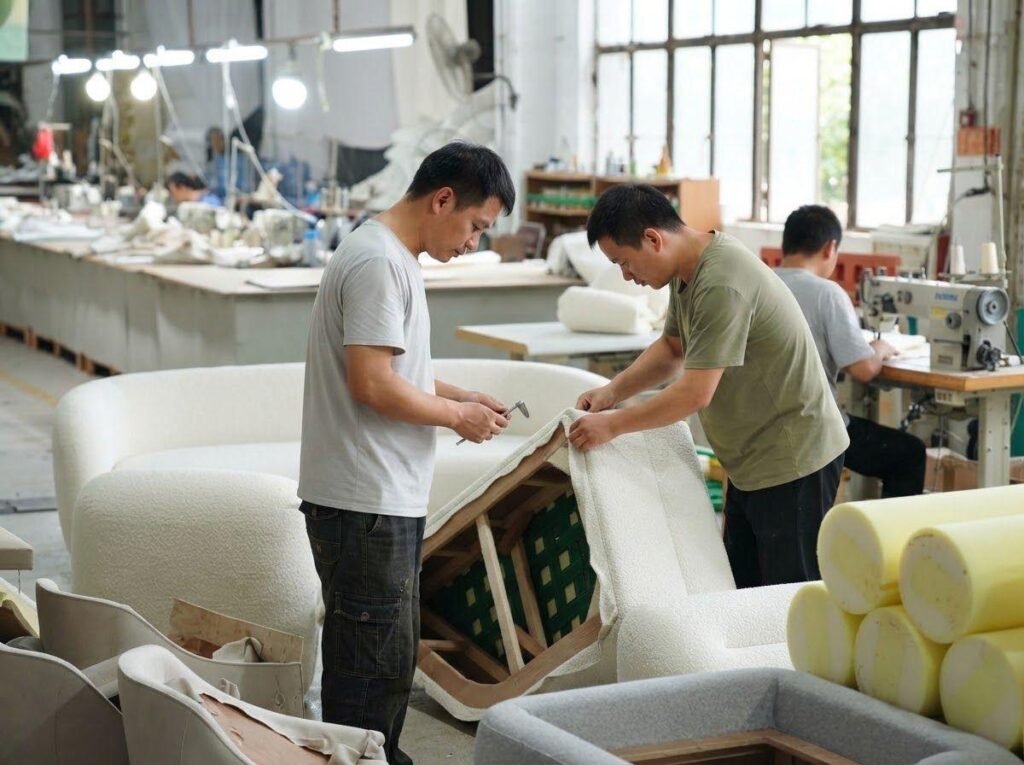
Smart buyers figure out pretty quickly that mid-tier operations offer a much safer bet for complex specs. While some rookies gravitate toward the biggest names on Alibaba, veterans often find that specialized setups—take an operation like Interi Furniture, which focuses heavily on export-grade project execution and custom hospitality lines—provide a vastly different risk-reward equation. Facilities operating in this specific lane survive by keeping tight, highly communicative, long-term relationships with demanding overseas clients.
They are way more likely to upgrade your internal framing or actually sew in a zipper without pulling a quiet bait-and-switch on your second container. You aren’t fighting a faceless, indifferent giant. You’re working with a boss who actually needs your repeat business to keep his core crew paid during the slow season.
(And yeah, finding those Goldilocks-zone factories takes months of agonizing boots-on-the-ground auditing. You don’t just stumble onto them with a quick web search while sitting on your couch back home.)
The Inspector’s Playbook: Stripping the Frame
Here is exactly how you bulletproof your purchase orders and stop the factory from shipping you pretty garbage. Don’t treat these as friendly suggestions. Treat them as survival tactics.
- The Weight Mandate — Never just type “dust cover” on a PO. That’s pure amateur hour, and the factory will exploit it immediately. Write exactly this: “Bottom dust cover must be woven polyester, minimum 80gsm, black color.”
- The Zipper Rule — Demand a zipper. Always. Make them sew a heavy-duty U-shaped zipper right into the bottom cover so your QC guy can open the frame and check the wood with a flashlight. If a factory tells you they can’t manage to put a 50-cent zipper in a 500-dollar bed frame, walk away right then and there. They are hiding something ugly.
- The Photo Clause — Put a line in your contract that forces the factory to send high-res photos of the raw wooden frames before they start any of the upholstery work.
- The Scratch Test — Make your third-party inspector physically drag a metal house key across the bottom fabric during the pre-shipment check. If the material shreds, tears, or catches, you fail the whole shipment. Don’t negotiate a discount. Fail it.
- The Fast “Yes” — A factory that agrees to your target price too fast, without fighting you to downgrade the internal specs, is absolutely planning to rob you blind on the unseen materials.
That last bullet point catches rookies every single time. Buyers love hearing a quick “yes” when they negotiate hard. It strokes their ego. They feel like absolute geniuses who just gamed the system.
But in Chinese manufacturing, an easy “yes” on price is the most expensive word you’ll ever hear.
It means the factory boss already knows exactly which hidden corners he’s going to cut to hit your crazy target. He’s done the math in his head, and he’s just waiting for your wire transfer to clear.

Buyers’ Awkward Questions, Answered
Q: Why does the bottom of my imported bed look like it’s growing weird black cobwebs after a year in my customer’s house?
A: Because it’s a low-grade non-woven polypropylene. Normal room humidity and even slight temperature changes make these cheap spunbond plastics literally photodegrade. The chemical bonds break down into a nasty, sticky black powder that hangs off the bottom. It’s not mold, it’s not bugs, it’s chemical disintegration.
Q: Is all material over there just cheap junk waiting to ruin my brand?
A: No, not even close. China produces some of the absolute best performance fabrics and top-grain leathers on earth. The problem isn’t their skill level. It’s accountability. Pay a fair price for good materials, verify them with your own independent inspectors, and you get world-class stuff. Close your eyes and demand a massive discount? You get garbage.
Q: Can I force them to replace the frames if the dust cover rots a year later?
A: Legally? Good luck fighting a cross-border contract over fifty bucks worth of fabric. It’ll never happen. Practically? It depends entirely on your leverage. Buy heavy volume, and a smart factory credits you on the next container just to keep the peace. If it was a one-off order, you’re eating the cost.
The Reality Check
Sourcing luxury furniture isn’t about flying business class to Guangzhou, eating fancy dim sum, and drinking aged pu’er tea in perfectly lit showrooms. That’s just the shiny Instagram version of the job.
The real work is getting your knees dirty on a loud, dusty factory floor so you can see exactly what they shoved underneath the leather.
Are you buying a solid piece of engineering built to survive a decade of heavy use? Or are you buying a pretty wrapper stuffed full of manufacturing scrap?
Stop taking the bottom of the bed for granted. Write every single detail into your contract. Assume absolutely nothing until an inspector you pay directly verifies it with their own eyes.
And keep your car keys handy.