

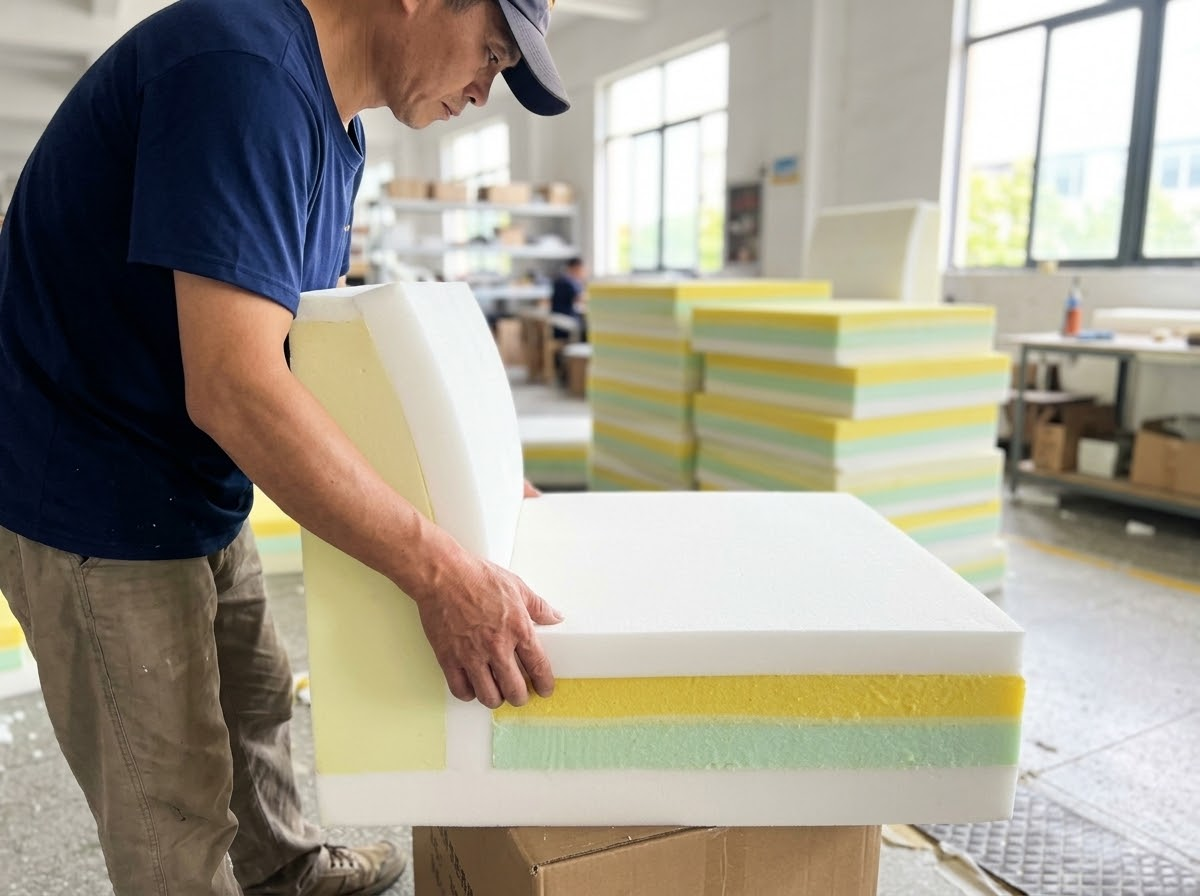
Container XU-2847’s been sitting in Long Beach for six days. Maria’s not sleeping. Three Austin hotels, eighty sofas, and a $340-per-unit quote from a Shunde factory that beat the next guy by ninety bucks. She sat on the sample in Longjiang. Felt like a dream. What showed up? Spongy garbage. Two inches of give before you hit the frame. That squeak — you know the one. Like a cheap mattress in a highway motel. Sixty days of guests and those cushions will be pancakes. Her GC’s already framing the next project. The opening’s in eleven weeks. Twenty-seven grand to replace. And the worst part? She did everything right. Sample, spec sheet, the works. Didn’t matter. They swapped the foam anyway.
The Floor Reality Nobody Wants to Hear
Here’s what the blogs tell you. Get a sample. Hire an inspector. Read the fine print. Done. Bullshit. You’re not buying a car with a VIN number. You’re buying a promise from a factory floor where the foreman makes eight hundred a month and his bonus depends on how much he saves on foam.
Fifteen years walking these floors, and here’s the only rule that hasn’t failed me: when a quote makes you do a double-take, they’re not being generous. They’re swapping your foam.
Most buyers think a China furniture scam means fake invoices or phantom factories. Wrong. The real scam’s much quieter. It’s systemic. It’s baked into the mid-tier factories in Shunde’s industrial belt — the ones that churn out sofas by the container-load and treat specs like a suggestion box. A 35kg block costs about forty percent more than 22kg at wholesale. On a hundred-unit hotel order, that’s not pocket change. That’s a new car. And the factory knows you’ve got a hard stop on your opening date.
Key Takeaway
- This bait-and-switch isn’t some bad apple story. It’s the operating model in China’s mid-tier furniture belt.
- That showroom sample? Bait. The production batch? Switch. Rarely the same foam.
- Quotes sitting twenty-five percent below the pack aren’t efficient. They’re cheating on materials.
- Third-party inspectors catch surface flaws. Core foam? They almost never cut deep enough.
How the Switch Actually Happens
Mechanism: The Sample-to-Production Gap
Think of it like a fish market. The guy holds up the beautiful snapper for you to see. You nod. He wraps it. You get home — it’s tilapia dyed pink. Same deal.
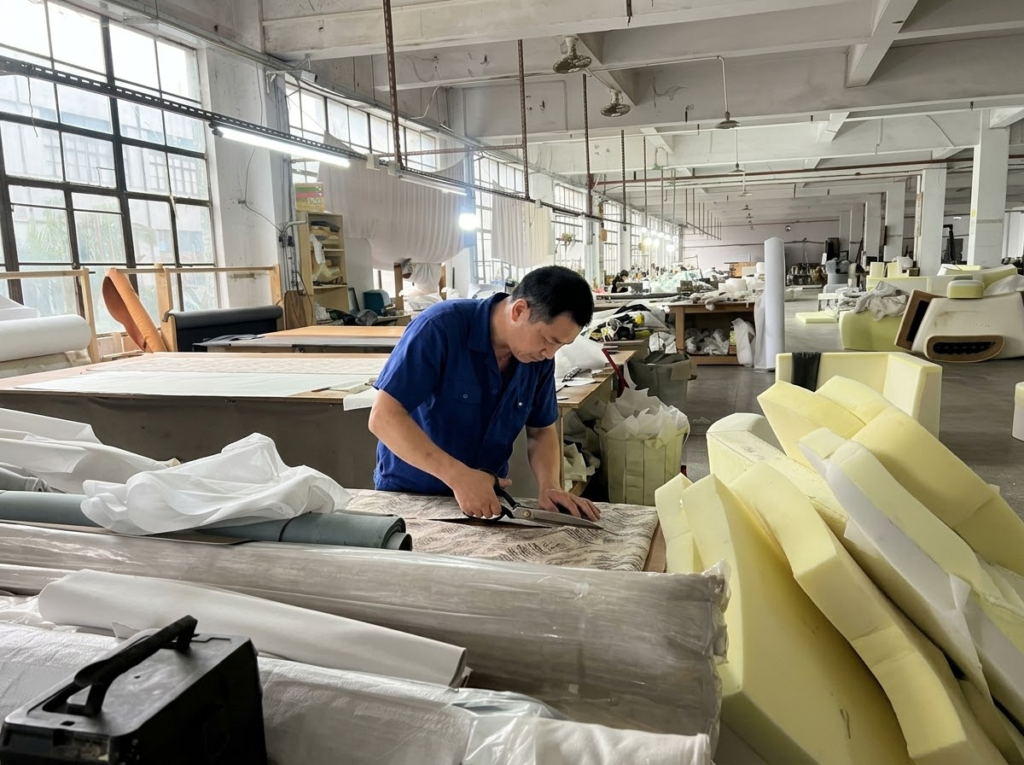
Longjiang’s south side. Half the world’s upholstered furniture passes through here at some point. The sales team quotes to win the PO. Production builds to protect margin. Different people. Different buildings. Sometimes different zip codes.
Maria’s sample? Pulled from “showroom stock” — a separate pile of higher-density blocks kept just for mockups and client visits. Production drew from the bulk pile. Same color. Same hand-feel if you don’t know what you’re doing. Completely different cell structure. Showroom foam bounces back in three seconds. Bulk foam? Remembers your ass forever.
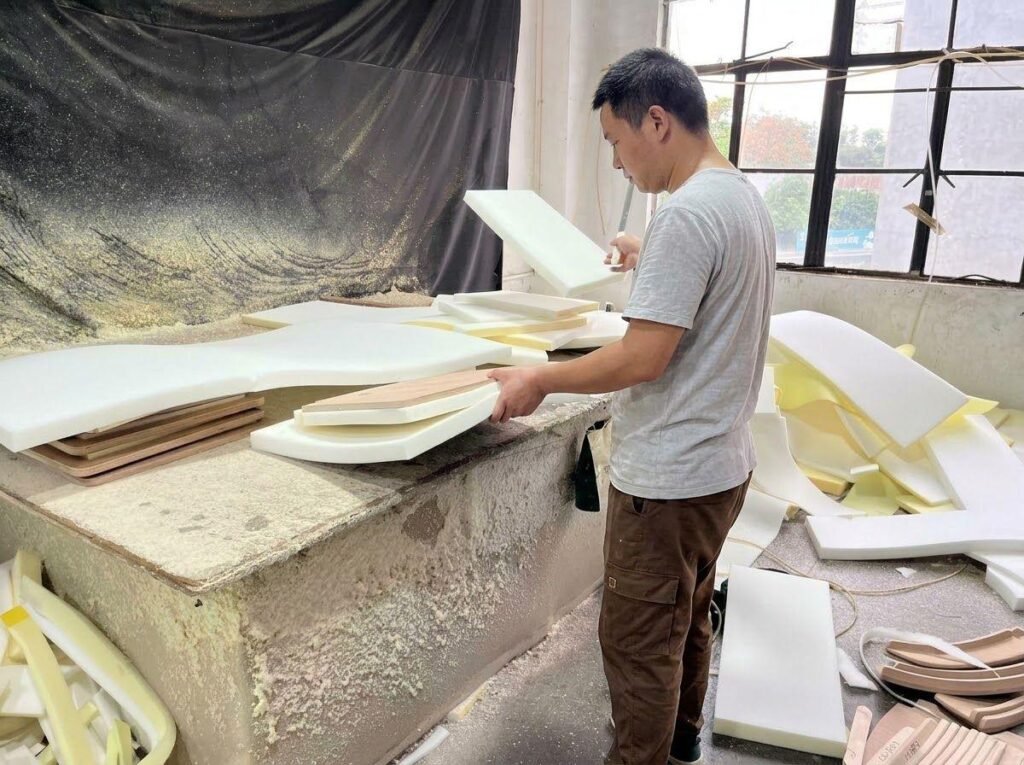
Actually, wait — some factories don’t even bother with two piles. They’ll lay a thin high-density skin on top, maybe an inch, and pack the guts with scrap or low-grade filler. Sit test feels fine for thirty seconds. Lifespan? Eight weeks. Maybe ten if you’re lucky.
Variable: The Density Shell Game
Chinese foam density isn’t a number. It’s a negotiation. A range. A game. The factory knows it. You don’t. That’s the whole point.
| Spec Level | Density (kg/m³) | Typical Use | Cost Index | What They Actually Use |
|---|---|---|---|---|
| Showroom Sample | 40-45 | High-end seating | 100% baseline | None — it’s the bait |
| Contract Grade | 35-40 | Hotel/lounge | 75% | 28-30kg “mixed” junk |
| Mid-Market | 28-35 | Residential retail | 55% | 22-25kg low-resilience |
| Budget | 18-25 | Online/entry | 35% | Rebonded scrap, no label |
The certificate’s the real magic trick. Nanzhuang, just west of Foshan’s furniture corridor — factory I won’t name, they’re still in business. Showed me a clean 35kg certificate. Official stamp. Lab logo. Production floor was running 24kg blocks from a supplier three streets over. Real certificate. Wrong foam. I watched a foreman in Dongguan peel the sticker off a high-density block and press it onto a low-density one. Twelve seconds. Inspector was downstairs drinking tieguanyin.
Benchmark: What a Clean Factory Looks Like
Interi Furniture, out of Guangdong’s project belt, runs a different playbook. Single audited foam supplier. Buyers can walk the raw pile before cutting. Batch testing on request. Nothing revolutionary. Just expensive. Their quotes run fifteen to twenty percent over the Longjiang average. Eighty hotel units? That premium’s cheaper than one replacement order.
But Interi’s the exception that proves how dirty the rule is. Most factories in the Shunde-Longjiang corridor don’t own their foam supply. They buy whatever the trader drops off that morning. And the trader? He’s buying whatever the chemical plant needs to dump before quarter-end.
Clean factory? Three tells. Foam blocks stacked by grade with visible labels — not scribbled in marker, printed. A cutting floor that lets you walk the raw material before they upholster it. And when you ask to take a core sample mid-production, they say “sure” without calling the boss. If they hesitate, you’re not paranoid. You’re just awake.
The Red Lines Most Buyers Cross Without Knowing
“High-density foam” without a number is worthless. Had a factory try to sell me 19kg as “high-density.” That’s not seating foam. That’s packing material. You might as well stuff the sofa with popcorn.
Don’t worship the certificate. Lab reports are real. But factories running multiple SKUs — standard in Foshan’s OEM halls — shuffle paperwork between orders like a card trick. Your certificate might belong to a container that went to Germany last month.
The “friendly” factory tour is theater. Pristine showroom. Spotless cutting room. But they rush you past the foam storage? They’re hiding the inventory. The foam pile tells the truth. The showroom lies.
— Storage reeks of chemicals? Low-grade foam off-gasses harder.
— Workers cutting blocks with no density labels in sight?
— Foreman can’t name the foam supplier without checking his phone?
— Quote beats everyone by more than twenty percent? Run.
Counter-Indicator: Pre-shipment “sit test.” Buyers love this. Sit on the finished sofa, feel good, sign off. Here’s the thing — a thirty-second sit tells you nothing about compression set. Factory knows this. Counts on it. Sit test is theater. Core sample is evidence.
What to Do, Based on Who You Are
Hotel Procurement Directors
You’re not negotiating. You’re verifying. Opening dates don’t move. Liability doesn’t sleep. Put density in kg/m³ right in the PO — not an email, not a side note, in the contract. Batch-specific certificates tied to your lot number. And pay for an inspector who knows how to core-sample without destroying the piece. Two hundred to repair. Two thousand to replace. Do the math.
— Foam specs in the PO penalty clause. No exceptions.
— Mid-production core sampling on ten percent of units. Destructive? Yes. Worth it? Also yes.
— Unbundle “project pricing.” When foam hides inside a frame-plus-fabric bundle, you can’t audit it.
Interior Designers
Your hell isn’t a budget overrun. It’s proportion death six months later. Cushions sag. Seams pull. That perfect Belgian linen wrinkles like a slept-in bedsheet. Specify foam grade like you specify fabric lot numbers. Demand photos of raw foam blocks with density stamps visible before they upholster. Not standard practice? Good. That’s why it works. Compliant factories do it without whining. The ones planning a switch? “Trade secrets.” “Supplier confidentiality.” Bullshit.
— Tie foam spec to your fabric performance warranty.
— Pre-upholstery photos of labeled blocks. Non-negotiable.
— Budget twelve to fifteen percent above the low bid. The low bid’s a trap.
High-End Residential Buyers / Independent Importers
No procurement team. No legal department. Just you, a wire transfer, and a WeChat chat. Smaller batches. Higher scrutiny. Order four first. Not forty. Sit on them. Daily. Two weeks. Then name the foam supplier in your bulk contract — not just the factory, the actual chemical supplier. And never pay a hundred percent upfront. Factories demanding full prepayment on custom orders swap materials at three times the rate of shops working on thirty-seventy terms.
— First order: sample plus small batch. Always.
— Foam supplier named in the contract, not just the factory name.
— Thirty percent deposit. Seventy percent against inspection docs. Never pre-shipment.

The Questions Buyers Actually Ask
Q: Can’t I just squeeze the cushion and tell?
A: No. Fresh low-density foam has a resin shell. Feels firm. Almost hard. Density is weight per cubic meter, not finger pressure. A 22kg block can feel harder than 40kg on day one. Day ninety? The 22kg’s lost forty percent of its height. The 40kg hasn’t moved.
Q: They sent a certificate. Good enough?
A: Only if it matches your batch. Generic mill report means they once bought good foam. Doesn’t mean they put it in your sofa. Demand a batch-specific report dated within two weeks of your cutting schedule. Can’t produce it? Wallpaper.
Q: What’s the real price gap between honest 35kg and the cheap stuff?
A: Based on Foshan corridor export patterns, raw foam difference runs thirty-five to forty-five percent at factory gate. Sofa price drops more than twenty percent below the median of three comparable bids? They’re not efficient. They’re cheating.
Q: Is this even illegal?
A: Technically, yes. Practically? District-dependent. Shunde’s output volume swamps the local inspection bureau. Dongguan’s a bit tighter. Your contract matters more than the law on paper.
Q: So every Chinese factory’s running a foam scam?
A: No. But the ones thirty percent below market usually are. Problem isn’t Chinese manufacturing. It’s procurement culture that rewards the lowest bid without ever checking what’s inside the frame.
The Hard Question at the End
I keep seeing that Dongguan foreman. Twelve seconds. Peeling a sticker. He’s not evil. He’s a guy making eight hundred a month in a system where buyers keep picking price over proof. The real question isn’t whether factories will keep sneaking low-density foam into production. They will. As long as there’s a procurement director in Austin, a designer in Milan, or an importer in Hamburg who treats foam like an invisible commodity, the incentive stays alive.
So here’s my question. Your next container lands. Cushions feel fine on day one. Will you cut the core sample anyway? Or will you convince yourself this factory’s different, this quote was straight, this time the sticker matches the block?
I’ve been burned. Nankang, 2019. Vouched for a factory that passed every test. Six months later, hotel client called. Foam collapsed. They’d switched suppliers between my visit and production run. I learned it the hard way. The only factory you can trust is the one you’re standing in while they’re cutting your foam — not yesterday’s good behavior, not a buddy’s referral, not a shiny certificate.
What’s your move?