

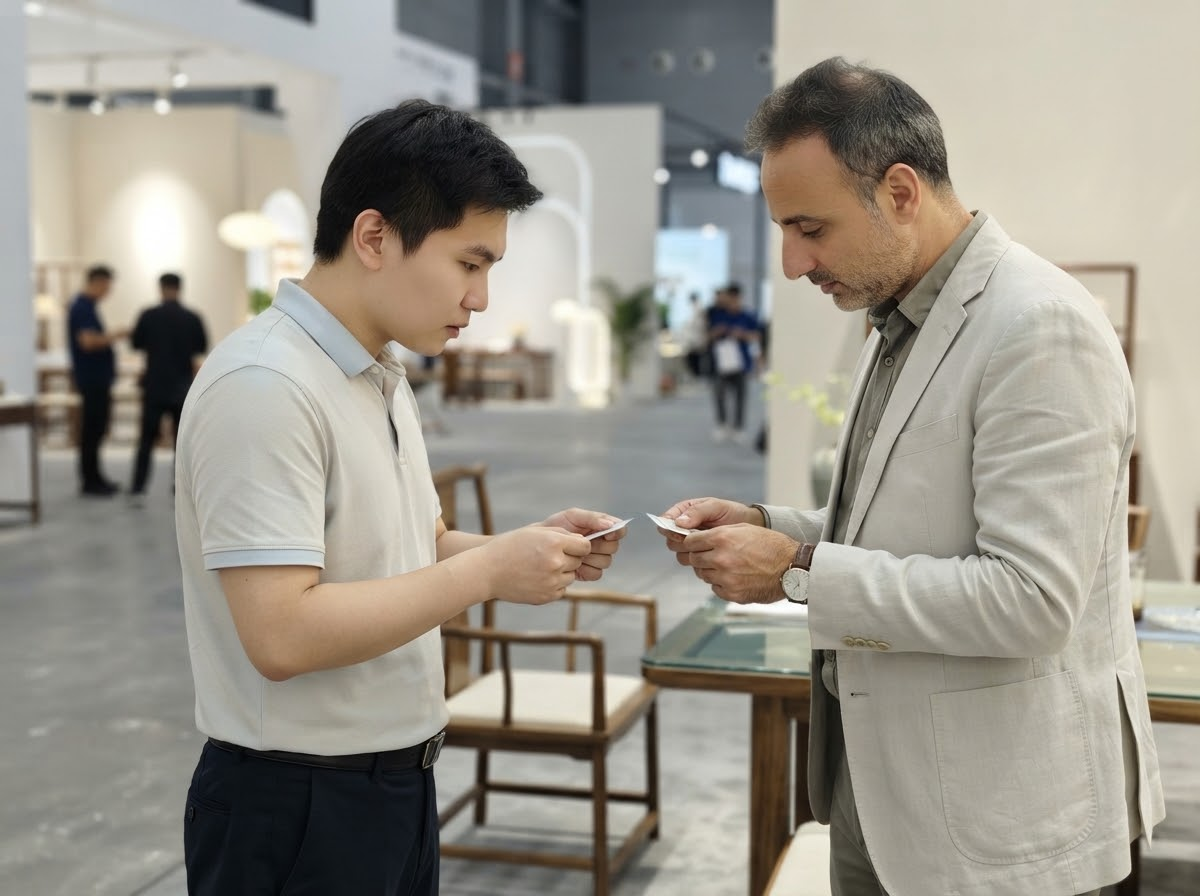
Your container’s stuck in Long Beach. Maria’s staring at 847 barstools that look nothing—nothing—like the sample she greenlit in Guangzhou. Walnut’s two shades off. Brass footrests? Brushed, not polished. Invoice hit $47,200. Twelve grand over budget for a rooftop lounge that opens in six weeks. She’s on the phone with some guy in Guangdong who’s telling her “wood tone variation is natural character.” Natural character? The GC’s already installing the bar. Maria hasn’t slept in two days. She’s calculating whether she can source 847 replacement stools domestically in 42 days without torching the entire FF&E contingency. This? This is what happens when the CIFF floor is your whole damn sourcing strategy.
The Showroom Mirage vs. The Factory Floor
Here’s the thing the trade rags won’t print. The CIFF booth? It’s theater. Not a lie, exactly. More like a curated performance. That sectional with the hand-rubbed oil finish? Built by a sample maker who doesn’t even know where the production line is. The factory that actually fills your PO? Probably running three shifts on composite board, spraying PU lacquer in a converted warehouse where “ventilation” means whichever way the wind blows across Foshan.
Conventional wisdom says walk the floor, collect cards, compare quotes. You’re doing due diligence, right? Wrong. You’re comparing theatrical sets. The factory that wins on price? They win because they’re quoting a different product than the one you touched.
Key Takeaway
- CIFF showrooms display “hero units” built by sample teams—not production lines. What you see? Rarely what ships at volume.
- A CIFF private factory tour exposes the real manufacturing conditions, material grades, and subcontracting relationships that make or break your order.
- The most reliable direct supplier China operations don’t need the CIFF floor to find buyers. They run on referral networks and private tour relationships.
- Skipping the showroom and walking the workshop isn’t a luxury. It’s the only way to verify the person quoting you actually controls the machinery.
Rough rule of thumb from the trenches: if a factory’s CIFF booth runs bigger than 200 square meters and the staff’s wearing matching blazers, they’re either a trading company or a brand with markup so aggressive it’d make your accountant cry. The real manufacturers—the ones worth your flight—often hide in modest stalls in Hall 9. Or skip the fair completely.

How the Sausage Gets Made
Mechanism: The Subcontracting Chain
Walking into a Chinese furniture factory isn’t like touring some German kitchen plant where everything’s automated and the floors are clean enough to eat off. It’s more like a dim sum hall. The cart comes to your table looking seamless. But the har gow came from the steamer station, the char siu bao from the oven room, and the egg tarts? Baked three blocks down by a guy who supplies half the restaurants on the street. Your host doesn’t own the kitchen. He owns the cart.
Same deal with that “factory” you’re touring. They might own the assembly hall and the spray booth, sure. But the solid wood milling? Outsourced to a shop three streets down. Upholstery? A workshop across the district. Metal fab? Cousin’s plant in Dongguan. The manager will proudly march you past the CNC machines. (And yeah, they’re impressive.) But what you need to see is the subcontractor list. Who cuts the joinery? Where’s the foam from? Show me the leather warehouse—not the swatch book.
Most buyers get dazzled by the machinery and miss the supply chain entirely.
Actually, wait. That’s not quite right. What they miss isn’t the subcontracting. It’s the unacknowledged subcontracting. The factory swearing “everything is made in-house”? Usually the one with the messiest web of external suppliers. They just don’t want you knowing. Breaks the narrative.
The real kicker? Your order’s quality depends less on some ISO certificate hanging in the lobby and more on which subcontractor they stick you with.
Variable: Timing and the Production Calendar
Chinese furniture manufacturing runs on rhythms that have zero to do with your project timeline. Pre-Chinese New Year? Skilled workers vanish for three weeks. Factories push out rushed orders with temp labor who’ve never seen your spec. Canton Fair cycle? Every available hand’s building samples, not filling POs. Humid season in the Pearl River Delta? Veneer glue takes forever to cure. Warping rates spike. And nobody tells you this when they’re promising “45 days, no problem.”
| Factor | CIFF Floor Visit | Private Factory Tour |
|---|---|---|
| Product viewed | Hero sample, hand-finished by the best guy | Production unit from current batch |
| Pricing context | Showroom markup baked in | Raw factory gate pricing |
| Subcontractor visibility | None—single point of contact | Can trace component suppliers |
| Production timeline | Salesperson’s optimistic guess | Floor manager’s real capacity |
| Quality verification | Visual only | Touch, stress-test, inspect raw materials |
| Relationship leverage | Transactional, fair-dependent | Referral-based, ongoing accountability |
Case study from last spring. I toured a mid-size upholstery factory on the south side of Longjiang, Shunde, with a buyer from a Miami design firm. Decent CIFF presence—clean booth, slick catalog. On the floor? Two parallel operations. Front hall built export-grade pieces with high-resilience foam and hardwood frames. Back hall, separated by a thin plywood wall, pumped out domestic-market goods with plywood frames and recycled foam. Buyer’s quote looked competitive because he’d been priced against the back-hall product. When we pushed, the owner admitted the “export line” cost 18% more. Buyer had already wired a $34,000 deposit based on the showroom sample. Had to renegotiate or walk. He walked. Found a smaller operation in Anji that didn’t exhibit at CIFF at all. Saved 12% and got better foam density.
Interi Furniture sits in that same middle ground—Guangdong-based, export-oriented, serving hospitality and project work with what looks like a hybrid model. Part in-house, part vetted partner workshops. They’re not the cheapest name at the fair. And that’s the whole point. Buyers chasing the lowest CIFF quote usually find out, six months down the road, that the “savings” evaporated into rework, air freight, and pissed-off clients.
Benchmark: What “Direct” Actually Means
“Direct supplier” gets thrown around like “farm-to-table.” Everyone claims it. Few deliver.
A true direct factory relationship means you’re talking to the person who signs the paychecks. Not the sales agent. Not the export coordinator. Not the “factory representative” renting a desk in the showroom and clipping 15% off the top. The owner. The production manager. The person who loses sleep when a container fails inspection.
And here’s the uncomfortable part: that person is usually terrible at marketing. English? Functional, maybe. Catalog? Probably a PDF from 2019. No Instagram. No LinkedIn. They survive on word-of-mouth from freight forwarders, hardware suppliers, and the odd persistent buyer who refused to leave without seeing the workshop floor.
The Red Lines Most Buyers Cross Without Knowing
Never trust a factory that bans photos. “Intellectual property protection,” they claim. No patents. No exclusive designs. No OEM clients you’ve ever heard of. What they’re hiding? Dirty floors. Subcontractor labels on boxes. Workers without safety gear. The photography ban isn’t about IP. It’s about controlling your perception.
Don’t buy the “sample is being repaired” excuse. Can’t produce a current sample on demand? Can’t produce your order on demand. The sample room should be messy. Sawdust on the floor. Should feel like a workshop, not a boutique.
Beware the “one-stop solution” pitch. Claims to make solid wood, upholstery, metal, and glass—in-house, at volume, cheap? They’re farming out at least two categories. Guaranteed. One-stop convenience centralizes your risk. And not in a good way.
— Sales manager’s never laid eyes on the subcontractor’s facility
— The “factory” address on the card? Showroom. Not workshop.
— Pushing for 50% deposit before you’ve seen a single machine running
— Quote came back suspiciously fast. No questions about your spec. Not one.
Counter-Indicator: Factory audits. Everyone thinks they’re the gold standard. They’re not. A factory can clean up for a day, hide the back-hall operation, put on a show for the inspector. I’ve seen places in Nankang rent equipment for the audit. Real test? Unannounced. Tuesday morning. Their busiest month. Show up uninvited. That’s when you see what you’re actually buying.
Who You Are Determines Where You Go
Hotel Procurement Directors
You’re managing 200 rooms, a lobby, three restaurants, and a spa. Your opening date is contractual, not aspirational. Volume, consistency, and paperwork that satisfies your brand’s sustainability audit.
Don’t waste time at CIFF browsing. Pre-qualify three to five factories by their existing hospitality client list. (And yeah, you’ll have to dig—most won’t advertise Marriott or Hilton directly due to NDAs, but freight forwarders know who ships what.) Request batch samples, not single pieces. Inspect the packaging as carefully as the product. Hotel furniture takes a beating in container consolidation. Build a 10% buffer into your timeline for the inevitable spec revision after the first prototype. Your leverage is volume. Use it to demand dedicated production lines, not just “priority scheduling.”
Interior Designers
You’re chasing the perfect proportion, the exact stain match, the fabric that reads different under LED than it did in the memo. Your client expects bespoke. Your budget expects semi-custom. You’re stuck in the middle.
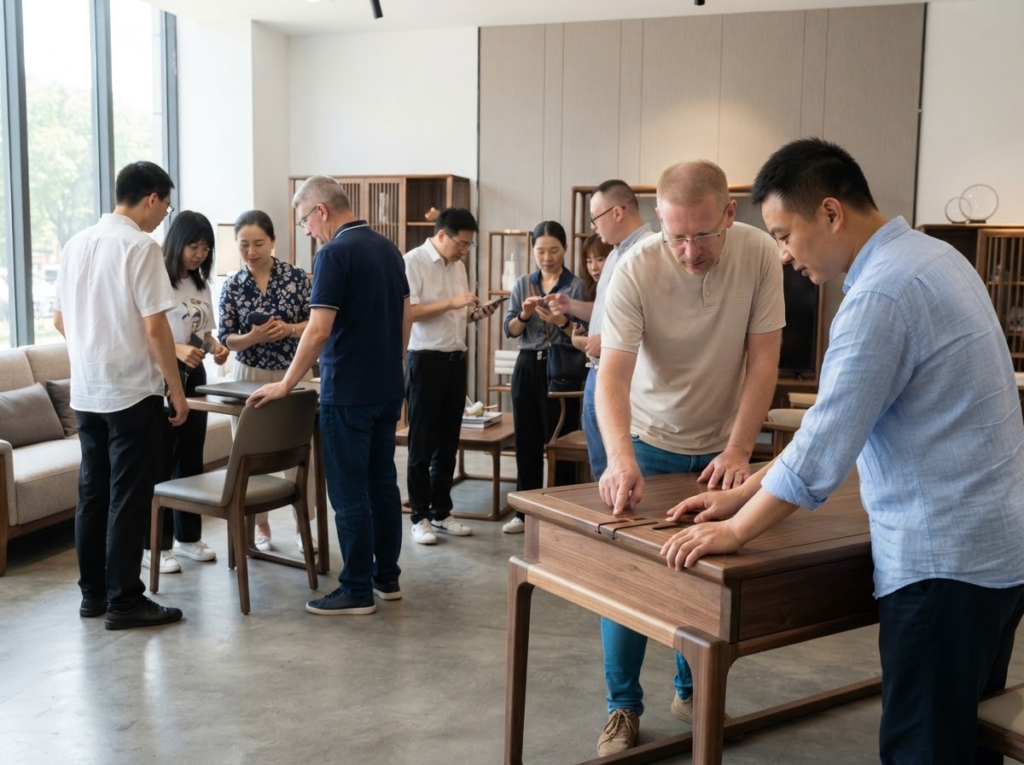
Your CIFF strategy should be reconnaissance, not procurement. Walk the floor to spot aesthetic direction. Then bail. Find the workshop that specializes in your category—Anji for bamboo and rattan, Longjiang for leather upholstery, Nankang for solid wood case goods. Bring physical samples of what you’re trying to match. A color chip. A hinge. A piece of marble. Chinese factories are visual processors; they reverse-engineer from objects better than they interpret verbal descriptions. Your leverage is creativity. Use it to co-develop pieces that won’t show up in any other designer’s portfolio.
High-End Residential Buyers / Independent Importers
You’re buying for your own inventory or a curated client list. Margin matters. MOQ flexibility matters more. You can’t commit to a 40-foot container of a single SKU, and you shouldn’t have to.
This is where private factory relationships pay dividends that the CIFF floor never will. Small-to-mid-size factories—often family operations with 30 to 80 workers—will negotiate on MOQ if you demonstrate repeat business potential. They’d rather have a steady 20-piece order every quarter than a one-off 200-piece gamble. Visit during off-peak months. Bring a small gift. (I learned this the hard way in Dongguan—a box of decent coffee goes further than a business card.) Ask about their slow season. That’s when you get attention, flexibility, and pricing that reflects actual capacity rather than peak-demand markup.

The Questions Buyers Actually Ask
Q: “If I skip CIFF entirely and just fly to Foshan cold, won’t I get ripped off worse than at the fair?”
A: You might. CIFF offers a baseline of legitimacy—booth fees filter out complete scams. But the fair also filters in sophisticated trading companies with polished presentations. If you go direct, you need a referral chain. Start with your freight forwarder. Ask which factories they collect from regularly. Cross-reference with hardware suppliers or veneer traders. A factory that buys quality hinges and pays its material suppliers on time is usually a factory that delivers. Don’t go cold. Go connected.
Q: “How do I know if the person showing me around is actually the owner and not just a hired actor?”
A: Watch who signs the documents. The owner handles payment terms, worker disputes, and subcontractor negotiations. Ask to see the business license. Ask who registered the company. A real owner lights up when you ask about their machinery—they’ll tell you the model year, the maintenance schedule, the limitations. A hired guide recites a script. Also: check the office. Family photos. Awards from the local furniture association. A dog sleeping under the desk. Theatrical, maybe. But real factories have real clutter.
Q: “Is it rude to ask to see the actual workers’ dormitory or the waste disposal area?”
A: Not if you frame it as sustainability due diligence. Most mid-to-large factories expect this now, especially from European and North American buyers. If they refuse outright, that’s information. If they show you a pristine dormitory that looks like it was staged that morning, that’s also information. What you want to see is the real condition—lived-in, imperfect, but not exploitative. The waste area tells you about their chemical handling. A factory that dumps lacquer thinner behind the building is a factory that cuts corners you can’t see in the showroom.
Q: “Can I really secure better pricing by bypassing CIFF and going direct to the factory?”
A: Sometimes. Usually 8% to 15% below CIFF showroom pricing, based on export data patterns I’ve watched over the past decade. But the bigger win isn’t the unit price—it’s the spec control, the timeline honesty, and the ability to course-correct before 400 chairs are already in a container. You pay for the relationship, not just the product.
Q: “So is it actually possible to bypass the CIFF floor and build a reliable direct supplier network in China?”
A: It depends on whether you’re willing to do the groundwork. If you expect to replace CIFF with a few Alibaba messages and a Zoom call, no. If you’re prepared to spend ten days on the ground, visit six factories, eat questionable street food in Longjiang, and develop relationships that outlast any single order—then yes. Absolutely.
The Harder Question
The south side of Longjiang smells like lacquer and leather scrap, and the humidity in July makes your shirt stick to your back before you’ve walked two blocks. But that’s where the real work happens. Not under the LED spotlights of Hall 10. Not in the air-conditioned meeting rooms where sales managers pour oolong tea and promise “no problem” to every request.
So here’s what I’m still wrestling with after fifteen years: have we trained an entire generation of buyers to be so dependent on curated trade-show experiences that they’ve forgotten how to read a workshop floor? Can you still spot quality in the sawdust, or has the industry convinced you that the only legitimate sourcing happens under a banner with a booth number?
If you’ve walked a factory in Anji at 7 a.m. and known within ten minutes whether the foreman was the real deal, you already know the answer. If you haven’t, the CIFF floor isn’t your starting point. It’s your distraction.