

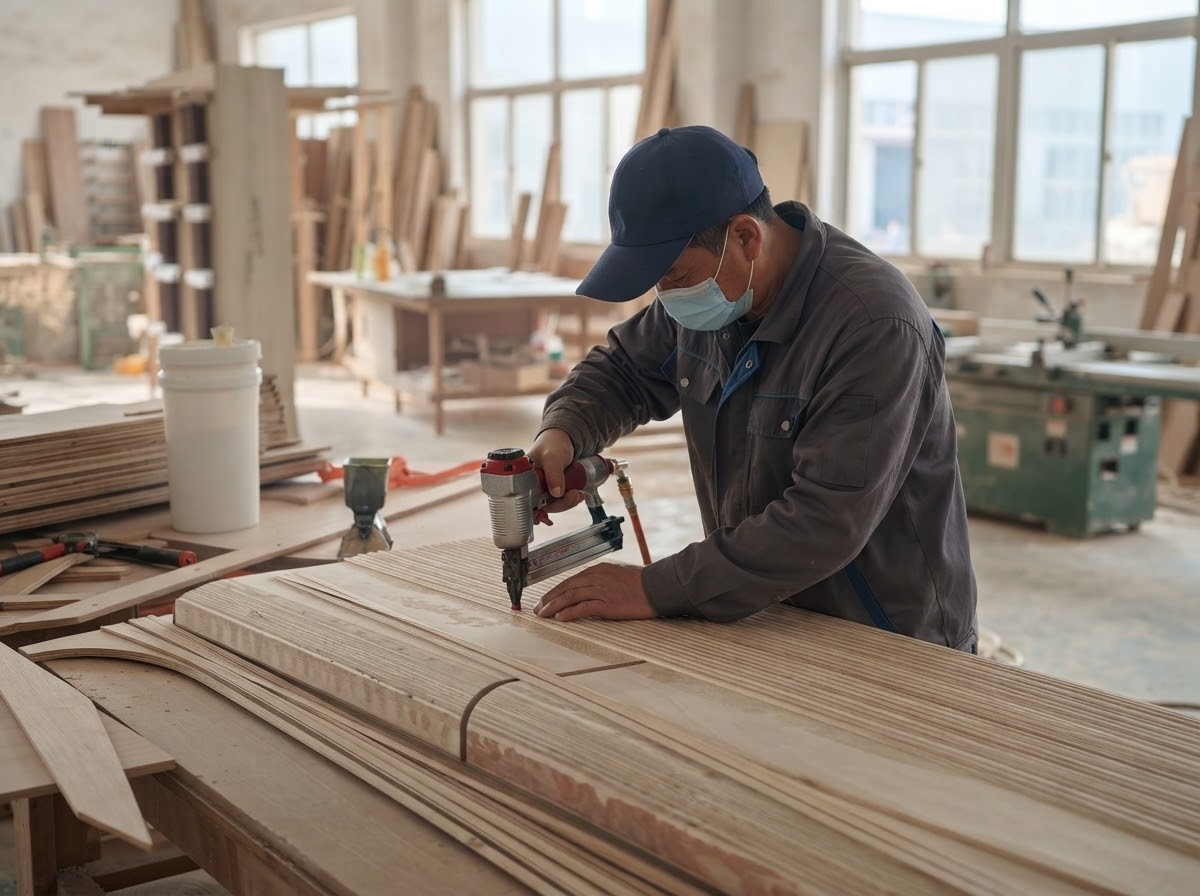
You’re sweating through your shirt at 9 AM on the south side of Longjiang, Shunde. Twelve thousand square meters of concrete floor, and the humidity’s already winning. Production manager waves you toward a sample chair — same SKU from the Alibaba listing, same photos, same everything. But the back leg joinery? Off. Not dramatically. Just… wrong. Tenon depth is shy by about 4 millimeters. Finish has this faint orange peel you missed completely under those fluorescent showroom lights back in Foshan. Miami hotel opening. Fourteen weeks out. Container sails in seventy-two hours. And that “upgraded” internal frame quote just hit your inbox: $47,200. Thirty-eight percent over December’s budget. No backup supplier validated. GM’s blowing up your phone from the lobby.
This is the moment. Not when you sign the PO. Not when the wire clears. This. Right here. You realize that when you buy from China, it has nothing to do with finding the cheapest factory. It’s about finding the one that won’t ghost-replace your specs the second you board your flight home.
The Part Nobody Wants to Say Out Loud
Look. Most buyers judge Chinese furniture like they’d judge a used car. Paint job and sticker price. Fly to Foshan, hit Louvre Furniture Mall, pick three showrooms with pretty displays, negotiate hard on unit cost. That’s the playbook. And it’s broken.
Because you’re comparing finished products that came from completely different worlds. One chair? Built in a 200-worker facility with CNC mortise joints and a QC station where someone actually gets paid to say no. The identical-looking chair two floors down? Assembled in a 30-person workshop where the foreman doubles as the delivery driver. Same photo. Same price bracket. Entirely different DNA.
My rule of thumb — and I’ve given this to every green procurement director who’s called me at midnight — is simple: if you can’t smell the sawdust, you don’t know what you’re buying. Showroom samples are theater. The real story lives in the cutting room, the drying kiln, and that dark corner where they stack the wood that’s “good enough” for some sucker overseas.
Key Takeaway
- Chinese furniture craftsmanship isn’t a smooth spectrum. It’s a split. Big shops with process control on one side. Small workshops running on handshake deals and razor margins on the other.
- The “same” product spec can mean a 20-year lifespan or a 20-month death spiral. Depends entirely on which tier actually machines the parts.
- Chasing unit cost alone? You’re not getting a deal. You’re self-selecting into the lower tier, where material swaps and spec drift aren’t bugs. They’re features.
- Real craftsmanship shows up on the factory floor, not in a showroom. The gap between those two places is where most sourcing nightmares begin.
What Actually Makes It Last: The Stuff Nobody Photographs
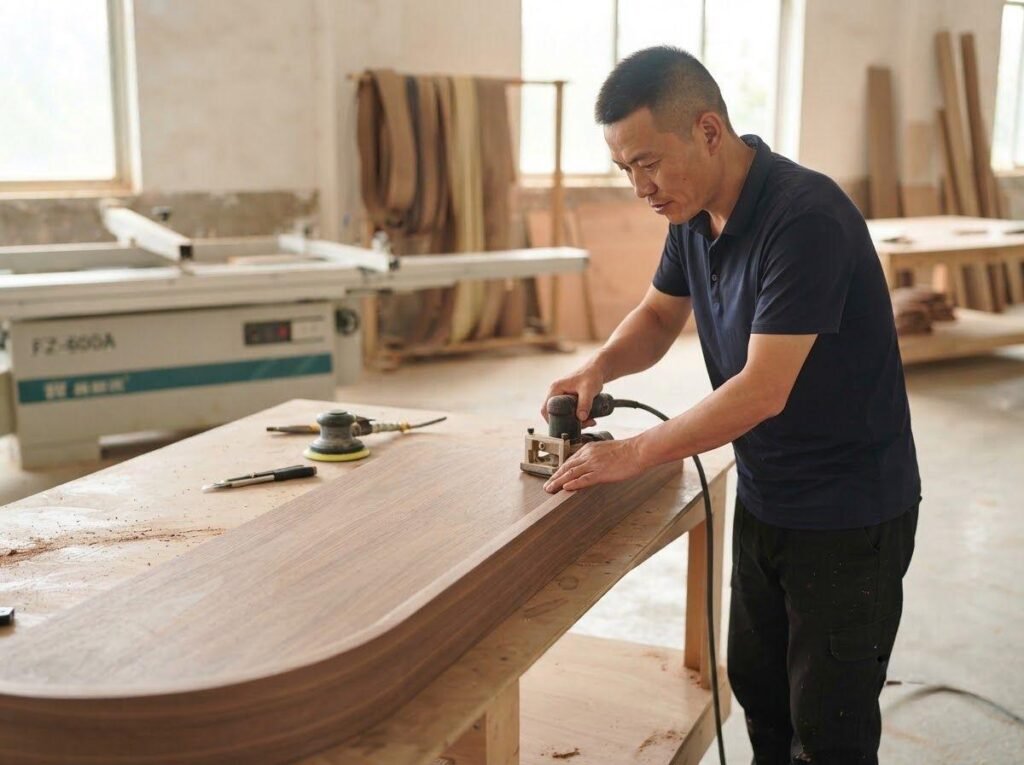
Mechanism: Wood Drying — The Invisible Killer
Think of wood prep like aging a steak. Rush it, surface looks fine. Inside? Already compromised. In my experience, maybe six out of ten “craftsmanship failures” I get called in to autopsy trace back to moisture content. Not joinery skill. Not bad glue. Water. In the wood.
Proper hardwood drying takes 45 to 90 days in controlled kilns before a CNC router ever touches it. But come peak season — September through November, when every buyer’s screaming for Christmas and CNY sailing windows — some shops cut that to 12 days. Boards feel dry. Machine clean. Six months later, in a climate-controlled lobby in Denver, the joints pop open like clam shells. Chair’s done. Reputation’s done. And the factory? Already moved on to the next container.
The real kicker isn’t that factories do this. It’s that buyers never ask to see kiln logs. (Yeah. This happens more than anyone admits.) I’ve walked into Nankang workshops where the “kiln” is a corrugated metal shed with a space heater and a clipboard that hasn’t been updated since June. Pin meter reads 18% moisture. For North American interiors, you want 6% to 8%. That gap? That’s the difference between heirloom and landfill.
Variable: Joinery You Can’t See
Actually, wait. That’s not quite right. What most buyers miss isn’t the joinery method itself — it’s that the method is invisible by the time the piece is upholstered or finished. A sofa frame with double-doweled corner blocks and brace screws? Outlasts a staple-and-L-bracket frame by five times, easy. But you can’t see that in a photo. Can’t see it from outside a finished sample. Can’t see it at all unless you tear something apart.
I learned this the expensive way in Dongguan, 2019. Sourcing 340 guest room armchairs for a boutique hotel chain. Factory — call them Golden Oak, not their real name — had a gorgeous showroom in Houjie. Samples passed sit-testing. Finish matched the designer’s swatch book like a dream. First container hits Long Beach. Twelve percent defect rate on frame stability. We fly back, walk the line, and find the “corner blocks” are 8mm plywood triangles. Stapled in place. No screws. No dowels. Wood itself was fine. Craftsmanship was theater. Total write-down: $31,000 in replacement freight and labor. Plus a three-week delay that killed the client’s soft-opening marketing push. One factory visit would’ve caught it. Just one.
Here’s how the tiers actually stack up:
| What to Look At | Tier-1 (Export/Hospitality) | Tier-3 (Price-Driven) |
|---|---|---|
| Wood moisture at cut | 6–8%, kiln logs on file | 12–18%, air-dried or rushed |
| Frame joinery | Mortise/tenon + blocks + screws | Staples + brackets + hope |
| Foam density | 35–45 kg/m³ HR foam, layered | 20–25 kg/m³ scrap, single block |
| Finish coats | 6–8 coats, sanded between | 3 coats, minimal prep |
| QC checkpoints | Inline + pre-pack + random pull | Final pack only, if that |
| Warranty they actually honor | 3–5 years, paper trail | 30–90 days, verbal shrug |
Benchmark: Geography Is Destiny
Anji bamboo cluster in Zhejiang? Some of the most sophisticated engineered bamboo on the planet. Multi-generational shops. Cross-laminated veneer presses. Formaldehyde-free adhesives. Real investment. Real know-how. But walk into a generic trading company in Shenzhen, ask for “bamboo furniture,” and you might get routed to a subcontractor in Guangxi using raw bamboo chemically softened with sulfur dioxide. Hot-melt glue assembly. Same material name on the invoice. Completely different molecular reality.
Interi Furniture sits in this same soup — Guangdong-based, serving hospitality projects and high-end residential. What sets their model apart, from what I’ve watched, is they keep frame production in-house instead of buying components off the spot market. That sounds basic. It isn’t. Most mid-size Foshan factories are assemblers, not makers. They buy legs from one guy, frames from another, slap it together. Keeping joinery and finishing under one roof costs more. A lot more. But it’s the only way to guarantee the left hand knows what the right hand is doing when a designer changes the spec at hour 47 of a 48-hour sample deadline.
Risk Matrix: Lines You Don’t Cross
Never trust a factory that bans photos on the production floor. If the owner says “no phones” or walks you through a sanitized demo workshop while the real facility hides across town, you’re not seeing craftsmanship. You’re seeing a stage set.
Happens constantly. The “show factory” is spotless, well-lit, workers in matching uniforms. Actual production? Converted warehouse three kilometers away where dust collection is theoretical and fire exits are blocked by lumber stacks. I’ve seen this in Longjiang, Nankang, and once — memorably — outside Zhangzhou where the showroom had marble floors and the real shop had chickens wandering between sanding stations.
“Friend of a friend” introductions are a trap. Feels safe. Isn’t. In my experience, seven out of ten sourcing disasters I’ve been hired to fix started with “my colleague knows a guy.” The personal buffer creates blind spots. You don’t ask hard questions because you don’t want to insult the intermediary. Meanwhile, the factory knows you’re a referral. Less likely to audit. Less likely to walk. More likely to accept “almost right.”
Counter-Indicator: That ISO 9001 Certificate on the Wall
Most buyers see a quality cert and relax. Don’t. In China’s furniture sector, ISO 9001 is often purchased, not earned. I’ve seen certificates hanging in factories where the “quality manual” is a 12-page PDF nobody on the floor has read. The certificate proves someone paid a consultant. It does not prove the foreman checks moisture before routing. What you want is process paperwork — batch cards, inspection logs, non-conformance reports. Not wall decorations.
— Can’t produce batch-specific material certs within 24 hours? They’re hiding something.
— Sample finish feels “too perfect”? Ask if it’s hand-rubbed or spray-coated. Hand-rubbed oil takes days and skilled hands. Spray coating takes minutes.
— Any quote 25% below the next lowest bid isn’t a bargain. It’s a warning shot across your bow.
Who Should Do What (Because One Checklist Fits Nobody)
Hotel Procurement Directors
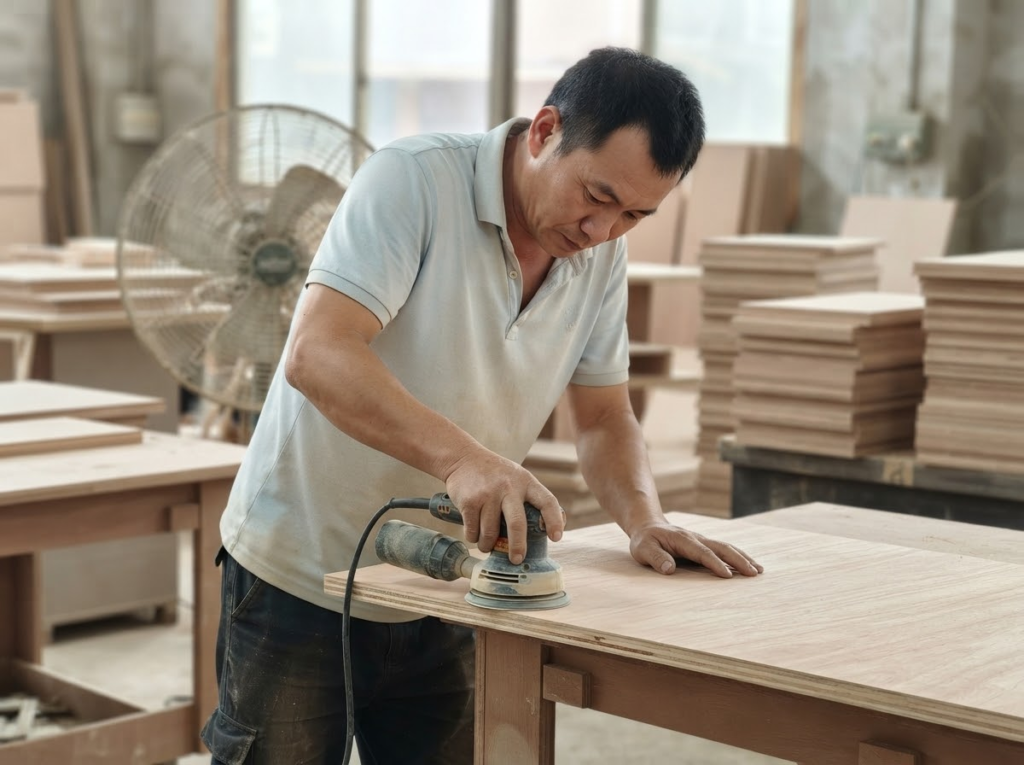
Your world runs on FF&E schedules and brand standards. You can’t absorb a 12% defect rate across 800 guest room pieces. Protocol: validate against your brand’s approved vendor list first. Not on it? Demand third-party audit — Bureau Veritas, SGS, something with teeth — before the PO leaves your desk. And don’t audit the showroom. Audit the specific production line that’ll run your order. Big Foshan factories often run multiple lines at different quality tiers. Specify your line. Put it in writing.
— Pre-production samples must come from actual production lumber, not showroom stock.
— AQL 2.5 at pre-shipment. Non-negotiable.
— Build 8% buffer into lead time for re-work. Don’t need it? You’re a hero. Need it? You’re not screwed.
Interior Designers
You’re chasing proportion, finish fidelity, and the fantasy that bulk will match the sample. Your biggest risk isn’t structural failure — it’s color drift and scale distortion. Factories often build your sample in the master craftsman’s bay, then move volume to junior teams.
Negotiate a “sample lock.” Approved sample gets broken down, photographed at every joinery stage, matched against random production pulls. And specify the finishing environment. Humidity changes stain absorption. A sample finished in rainy-season Foshan looks different from bulk finished in dry-season Foshan. I’ve seen walnut go from chocolate to burnt orange because of this.
— Approve finishes under your project’s actual lighting. CCT and CRI. Not factory fluorescents.
— Request a “destructive sample.” One chair you can tear apart to verify internal joinery.
— Custom pieces? Budget 20% over the first quote. Real cost shows up in revision rounds.
High-End Residential Buyers / Independent Importers
You’re buying for margin and exclusivity. Most dangerous position. Not enough volume for the A-team. Expectations of a luxury consumer. Your edge is direct access and relationship weight.
Find a factory that values your repeat business more than your single order. Usually mid-size shops doing $3–8 million annual export revenue. Big enough to be professional. Small enough that your account actually matters. Avoid the giants — you’ll be order #4,847. Avoid micro-workshops — they can’t scale or guarantee consistency.
— Negotiate mixed-container MOQs, not single-SKU minimums.
— Visit during production, not just before. Forty-eight hours mid-run catches drift early.
— 30% deposit, 70% against inspection photos. Never 100% upfront. Never L/C that releases before you verify.

The Questions Buyers Actually Ask (Not the Polished Ones)
Q: “I’ve heard Chinese furniture is all junk. True, or am I just looking at the wrong price point?”
A: Neither. It’s not about price. I’ve seen $400 wholesale sofas built to last fifteen years and $2,000 retail sofas that delaminate in eighteen months. The variable is factory discipline. A disciplined small workshop beats a sloppy big factory every time. What you’re doing wrong is the evaluation. Stop comparing price per piece. Start comparing process per piece.
Q: “How do I know the wood is actually what they claim? Can I trust the species certificate?”
A: Substitution happens. Usually partial, not total. Oak on visible surfaces, rubberwood or poplar inside. Standard practice if disclosed. The line gets crossed when they sell rubberwood as oak, or unseasoned plantation teak as legally harvested Burmese. General pattern? Request a sealed, labeled offcut from production and get it species-tested independently if the order’s over $50k. For smaller buys, learn the weight, grain, and end-grain pore structure of your specified wood. Trained eye catches most swaps at the sample stage.
Q: “My factory says they can match any finish from a photo. Realistic?”
A: Realistic if you send a physical sample, specify the substrate, and budget for two revision rounds. Fantasy if you’re emailing a Pinterest JPEG and expecting identical results across 200 pieces. Wood absorbs stain differently based on species, cut, moisture. Same walnut stain on flat-sawn American walnut looks nothing like it does on steamed European walnut or walnut veneer over MDF. Send a physical target. Accept a range. Not a mirror.
Q: “Should I just pay more and buy Italian? At least I know what I’m getting.”
A: You’re paying for certainty, not quality. Plenty of Italian-branded furniture is made in China and finished in Italy. The craftsmanship gap isn’t national. It’s operational. A well-run Chinese factory rivals anything from Brianza. A poorly run Italian factory produces overpriced junk. Geography is a proxy, not a guarantee. Real question is whether you have time and expertise to validate the operation behind the label.
Q: “So does Chinese furniture last 20 years, or does it break?”
A: It depends on which factory built it, which foreman supervised the run, and whether you verified the process or just admired the sample. The craftsmanship is there. The consistency isn’t. Some Chinese furniture lasts 20 years. Some breaks in 20 months. The gap between those two outcomes is knowable, preventable, and entirely on the buyer to close.
What Keeps Me Up at Night
Here’s the thing that bothers me after fifteen years of walking these floors. We’re training a whole generation of buyers to fear Chinese manufacturing not because the craftsmanship is missing, but because the verification muscle is atrophying. Everyone wants a dashboard. A third-party badge. A one-page guarantee. Nobody wants to spend three days in Longjiang smelling lacquer thinner and asking why the dowel holes don’t line up. But that factory visit — the uncomfortable one where you point at a joint and say “this isn’t what we agreed on” — that’s where 20-year furniture gets separated from disposable junk.
The craftsmen in Foshan, Anji, Dongguan — they know how to build for permanence. Question is whether you’re willing to pay for the time it takes, and whether you’ll show up to make sure they actually do it. So I’ll leave you with this: when was the last time you sat in a factory break room, drank the over-sweetened tea, and asked the foreman how long he’s been there? Under two years? Keep walking. Over ten? Pull up a stool. The real craftsmanship gap isn’t in the wood. It’s in whether you bothered to look.