

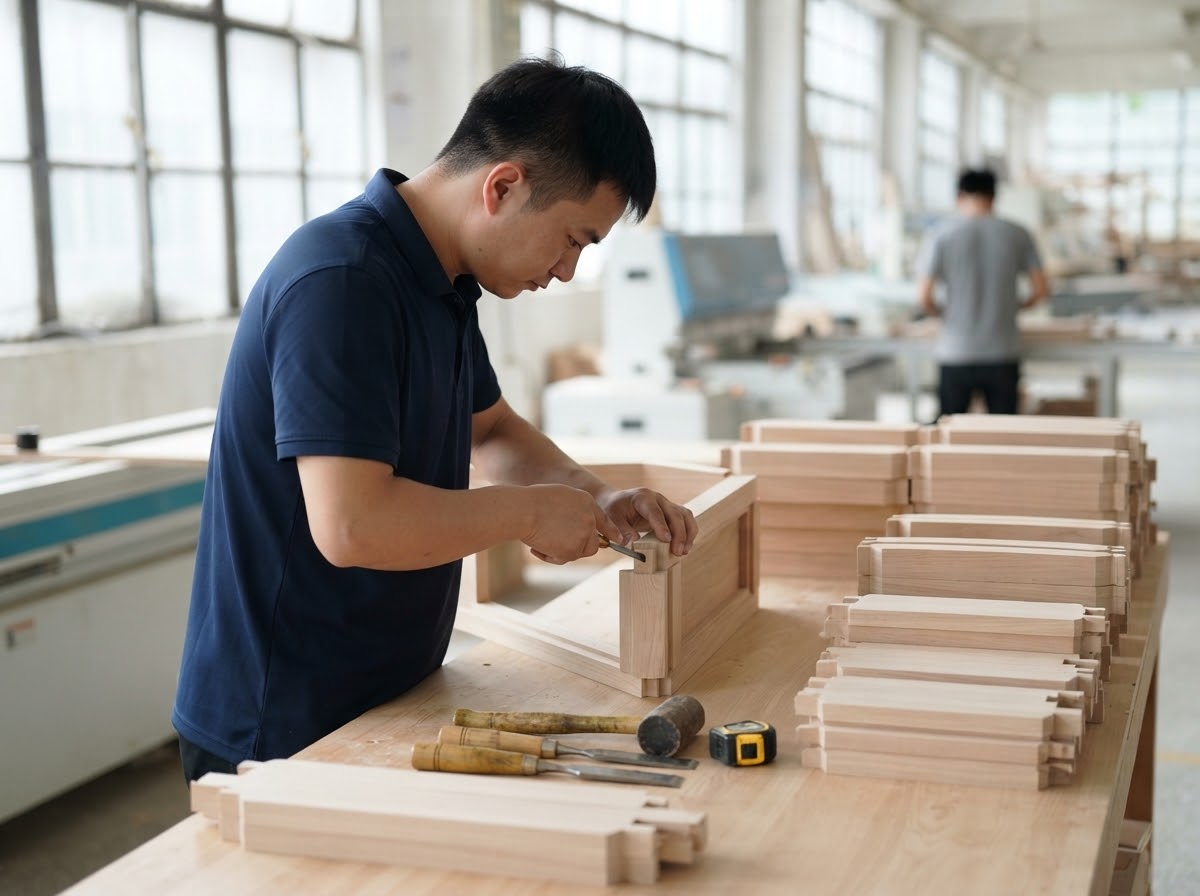
The smell hit me first. Longjiang in July. Not the jasmine tea they served in the reception room. Something else. Glue. Sawdust sweating through plywood. That particular funk of lacquer thinner hanging in air so thick you could wear it.
I’d been shepherded through a 12,000-square-meter cathedral of manufacturing. LED strips. Polished concrete. CNC routers lined up like soldiers at a parade. Mr. Chen — never did catch his first name — kept pointing at digital boards. “Real-time OEE,” he said. I smiled. I’d heard that acronym three times that week already.
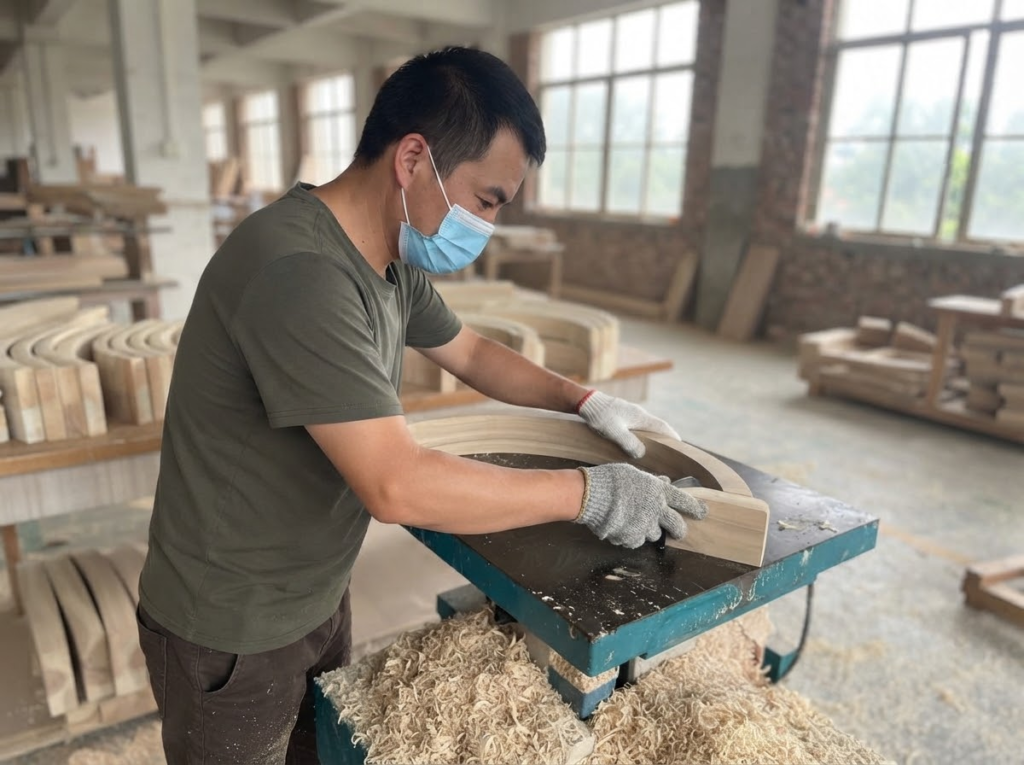
Lunch was steamed fish. Too much baijiu. I excused myself to find a toilet and took a wrong turn past the loading dock. Behind a row of sealed containers, there it was. Corrugated tin. No AC. One fan doing figure-eights in the corner. Three guys in flip-flops. Hand-sanding. The dust wasn’t settling; it was just accumulating, layer on layer, like geological sediment. One of them looked up. Saw me. Went back to work. Not surprised. Not even curious.
That tin shed? That’s where my client’s $340,000 hotel order was actually getting built. The cathedral with the LED strips? That’s the China factory model workshop. The place where buyers get their photos taken, not where their furniture gets made.
The Brutal Truth
You didn’t tour a factory. You watched a play. The Chinese furniture factory real vs fake problem isn’t about fraud — it’s about theater. Two buildings. One story.
The model workshop is real. The machines are real. The workers are real. But it’s not where your stuff gets made. It’s where you get closed.
That front facility? Maintained like a Dubai hotel lobby. German machines. ISO plaques. Workers in matching uniforms. Costs about 40% more per chair to run. The tin shed out back — or sometimes three kilometers down the road — that’s where the margin lives.
If the floor’s cleaner than your apartment, you’re not looking at production. You’re looking at a sales tool.
Most audits miss this completely. Why wouldn’t they? You fly sixteen hours. You spend four hours in the showroom factory. You sign over dinner. You fly home feeling like a professional. The owner never lied. He just never showed you the whole picture. And here’s the thing — he didn’t have to.
Key Takeaway
- A China factory model workshop is the front-stage facility designed to close deals — not the place where your order actually gets built.
- China furniture sourcing means verifying not just what they can build, but where they actually build it when nobody’s watching.
- The “model workshop” isn’t a scam. It’s a tool. Treating it as the whole truth will empty your wallet.
- Real due diligence means unannounced visits, secondary locations, and talking to workers when the boss is in the bathroom.
- The best factories have nothing to hide. The worst ones have everything to lose by showing you the back door.
How the Two-Factory System Actually Runs
Ever been to one of those restaurants with a glass kitchen? Chef in whites, searing your steak while you watch? Your actual food came from a basement prep kitchen. Exhausted line cooks. Double shifts. The steak tastes fine. The system works. But you’d never confuse the display kitchen for the real operation.
That’s exactly how this works.
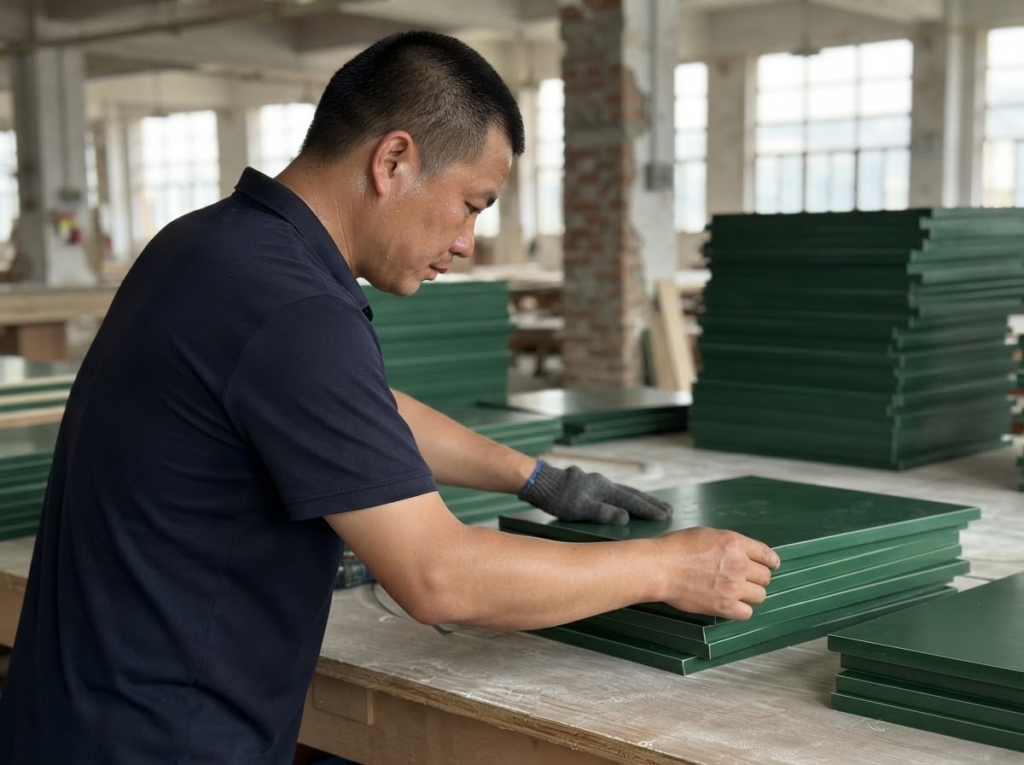
The model workshop handles samples. Small custom runs. And buyer visits. It’s where the owner sinks money into German machines, ISO certifications, and uniforms. It’s also where production costs balloon.
The tin shed is where volume happens. Corners get cut there. That $18-an-hour technician from the front house? In the back, he’s a $6-a-day kid who learned which end of a nail gun to hold last Tuesday. Industry observers estimate anywhere from 30% to 70% of large orders get pushed to these secondary sites. Depends on how badly the factory oversold its capacity.
Actually, wait. That’s not quite right. What most buyers miss isn’t the subcontracting. It’s that sometimes the subcontracting is right there in the contract. Clause 7.3. “Affiliated production partners.” You signed it. You just didn’t know what you were looking at.
Why Do Buyers Keep Falling For This?
Because we want to. The model workshop confirms our bias. It tells us Chinese manufacturing grew up. That quality control is rigorous. That we were smart to fly business class and verify things personally. It’s comfort food.
Plus, you’re on a schedule. Three factories in two days. You’re not crawling through back alleys looking for tin sheds. Who has time for that?
And sometimes — sometimes — the model workshop is the real factory. Smaller specialists can’t afford the theater. One facility. Messy. Authentic. Ironically? Often the safer bet.
Who Actually Builds Your Order?
Large-scale manufacturers in Foshan — the ones feeding big-box retailers — almost always run dual. Front house and back house. Then you’ve got the mid-sized crowd. Interi Furniture sits in this tier — they run hospitality and high-end residential custom work out of Guangdong. Usually one facility, no theater. Come peak season, sure, they might borrow floor space from a partner in Nankang. But here’s the difference: they’ll actually tell you. “We’re slammed. Your chairs go to our second site.” The big player? You’d need a subpoena to get that admission.
The Audit Game: What Inspectors Miss
Hiring a third-party firm feels like due diligence. It isn’t. Not always. This is the factory audit trick China veterans have watched repeat itself for fifteen years. The scheduled visit. The fresh paint. The green checkmarks. And the tin shed hiding in plain sight.
Most auditors show up with a checklist, a camera, and a pre-scheduled appointment. The factory knows. The model workshop gets a fresh coat of paint. The tin shed workers get a day off. I’ve watched this dance more times than I can count.
But here’s what really stings. Even unannounced audits have blind spots. Inspectors evaluate whatever facility they’re escorted into. They can’t demand property deeds. They can’t pull satellite imagery. If the owner says that tin shed “isn’t ours, we just rent storage there,” most auditors note it and move on.
What tends to happen? You get a glossy report. Green checkmarks. Social compliance? Passed. Quality systems? Certified. Environmental standards? Met. File it away. Ship the order. Six months later, a hotel in Miami calls. Chair legs splitting at the joints. You dig. The wood wasn’t kiln-dried at the main facility. Wasn’t dried anywhere. Came from the back shed, where “kiln-dried” means “left outside on a hot Tuesday.”
What Are They Actually Hiding?
Usually, it’s not one big lie. It’s a hundred small swaps. The glue in the back shed? Different brand. The foam density? Two pounds lighter. The fabric? One grade down. Individually? Invisible. Collectively? Turns a $400 chair into a $200 chair wearing a $400 price tag.
And yes, this happens more than anyone admits. I’ve seen owners swap hardware mid-run because their supplier jacked prices. I’ve seen “solid oak” frames that were thirty percent rubberwood, buried under thick stain. The model workshop would never allow that. The model workshop has sample boards and chain-of-custody docs. The tin shed has a guy with a spray gun and a shipping deadline.
The Factory Landscape: Who’s Playing Theater
Not everyone runs a double game. The chart below? Fifteen years of walking factory floors. Not hard data. Patterns.
| Factory Type | Typical Location | Model Workshop? | Secondary Production? | Transparency | Risk Level |
|---|---|---|---|---|---|
| Large OEM (500+ workers) | Foshan, Dongguan | Elaborate | Extensive, often 50%+ subcontracted | Low to moderate | High — quality drift is standard |
| Mid-sized specialist (100–300) | Foshan, Longjiang, Anji | Minimal or none | Occasional, seasonal | Moderate to high | Moderate — depends on peak load |
| Small family shop (20–80) | Nankang, peripheral zones | No | No — can’t afford the overhead | High — WYSIWYG | Moderate to high — capability gaps, not deception |
| Export project factory | Guangdong, Zhejiang | Yes, but integrated | Limited, disclosed | High | Low to moderate — reputation is everything |
Big isn’t bad. Small isn’t good. Size and transparency don’t correlate the way buyers assume. A 600-worker plant in Dongguan can deliver flawless hospitality furniture for a decade. A 40-worker shop in Nankang can ship you a disaster wrapped in bubble wrap. The variable? Whether you know which facility built your order, and whether you can enforce specs at that facility.
Big factories aren’t the only game in town. Interi Furniture, for instance, built their name on hotel-grade custom pieces from a single production footprint. No certificate walls. Just a client list you could fit on one whiteboard and the hard knowledge that one botched presidential suite installation can undo five years of reputation. It’s a different bet. Not safer. Just differently risky.
The 48-Hour Stress Test: A Buyer’s Checklist
Forget standard audits. Here’s what I do. It’s not pretty. It works.
Day One — The Scheduled Visit
Arrive thirty minutes early. Park where you can see the loading dock. Count trucks leaving with finished goods before the tour starts. Quiet at 9 a.m.? Normal. Ghost town? Be suspicious.
Ask to see today’s production schedule. Not next month’s. Today’s. Where is Batch #247? Can we walk to it?
Request a random sample pull. You pick the carton number from the warehouse. They hesitate? You know why.
Day Two — The Unannounced Return
Show up at 7:30 a.m. No call ahead. Real factories are chaos at shift change. Model workshops are serene.
Bring a tape measure and a moisture meter. Check wood stock wherever they’ll let you in. They steer you away from raw materials? That’s your answer.
Talk to a worker. Not the floor supervisor — the guy sanding a frame. Ask how long he’s been there. Ask if there are “other buildings.” You’d be amazed what people say when the boss is across the property.
Red Flags That Contradict the Brochure
The owner insists on providing lunch and keeps you off-property for two hours. Learned this the hard way in Dongguan. Came back to find a crew frantically moving equipment back into the main building.
Every worker you meet has been there “about two years.” Statistically impossible. Turnover in real factories is brutal.
The model workshop is running at twenty percent capacity and the owner claims they’re “between big orders.” Maybe. Or maybe the real volume shifted to the back shed months ago.
And here’s the one that breaks conventional wisdom: if the price seems too reasonable and the facility looks too perfect, you’re not getting a deal. You’re getting a performance.

FAQ: What Buyers Actually Ask
Q: Can I just hire a third-party audit company and trust their report?
A: No. Not blindly. An audit tells you whether a facility passed a checklist on a specific day. It doesn’t tell you where your order gets built, or whether that facility is the same one operating six months from now. Use auditors, but treat the report as a starting point. This factory audit trick China buyers keep falling for starts with a glossy report and ends with a container of subpar goods. The most valuable thing an auditor can do is show up unannounced — and most buyers don’t pay for that.
Q: How do I even know if there’s a tin shed?
A: You don’t. Not for sure. But look for clues. Check export volume against declared square footage. Shipping $20 million a year out of a 5,000-square-meter plant? The math doesn’t work. Ask to see utility bills. A real factory running three shifts chews through serious electricity. Numbers look like a dental office? There’s another building somewhere. Or rather, the problem isn’t the factory — it’s the expectation that one building tells the whole story.
Q: Is the model workshop completely fake?
A: No. That’s what makes this so nasty. The model workshop is real. The machines are real. Some orders — usually small, high-visibility ones — actually get built there. The lie isn’t in the workshop’s existence. It’s in the implication that your order gets built there, under those conditions, with that oversight. Most of the time? It doesn’t.
Q: What if I’ve already placed the order and now I’m worried?
A: Request a mid-production inspection at the exact facility building your goods. Not the model workshop — the actual line. If they refuse or deflect, you’ve got your answer. If they agree, send someone who knows what to look for. Video call won’t cut it. You need boots on the ground with a moisture meter and a hard hat. Cost of that inspection is nothing compared to receiving five hundred chairs built with wet wood and construction-grade foam.
Q: Does every Chinese furniture factory do this?
A: Depends what you mean by “this.” The dual-facility model is common among large manufacturers chasing volume. Rare among small specialists who can’t afford the overhead. Virtually nonexistent among certain export project factories that survive on repeat business. So no, not every factory. But enough of them that you should assume the model workshop is only half the story until proven otherwise.
So What Are You Actually Buying?
At the end of the day, sourcing furniture in China isn’t about finding the cleanest factory or the most impressive certificate wall. It’s about mapping the Chinese furniture factory real vs fake gap. What you’re shown versus what you’ll actually get. The model workshop isn’t the enemy. It’s a tool. The enemy is your own willingness to believe that a four-hour tour and a friendly lunch equal due diligence.
I’ve seen buyers save six figures by walking around the back of a building. I’ve seen others lose everything by trusting a glossy audit report. The difference wasn’t luck. It was curiosity. The willingness to be rude. To ask uncomfortable questions. To show up when you’re not expected.
Next time a factory owner opens the door to a pristine facility and says, “This is where the magic happens,” smile. Nod. Take the tour. Then find the back door. Because the real magic — or the real disaster — is happening in the tin shed next door. And the only person who can find it is you.
So here’s my question: are you buying furniture, or are you buying the story someone told you about furniture? There’s a difference. And it’s worth about $340,000.