

Three years ago, a hotel procurement director in Miami sent me a screenshot. It was from a video call ## The Video Call Audit: How to Spot Fake Chinese Suppliers from Home
Three years ago, a hotel procurement director in Miami sent me a screenshot. It was from a video call he’d done with what he believed was a “direct factory” in Foshan. The image showed a gleaming 8,000-square-meter workshop, CNC routers humming in the background, workers in matching blue uniforms, and a general manager who spoke enough English to seem credible. The order was $47,000 — custom banquet chairs for a boutique property in South Beach. The deposit went through. Three weeks later, the supplier went dark. The WhatsApp number dead. The Alibaba profile scrubbed.
What the buyer didn’t know — what he couldn’t have known from that call — was that the “factory” was a rented showroom on the outskirts of Shunde, staged for exactly this purpose. The CNC machines? They belonged to a completely different operation down the road. The workers? Day laborers hired for the afternoon. The general manager? A freelance sales agent who ran the same con under three different company names.
And here’s the thing: this wasn’t a rookie mistake. This buyer had fifteen years in hospitality procurement. He’d visited Guangdong twice. He’d done “due diligence.” He just hadn’t learned the one skill that matters in 2026 — how to read a China virtual audit like a factory floor veteran.
The Brutal Truth Nobody Wants to Hear
Most video call audits are theater. Yours included.
You think you’re verifying a supplier. What you’re actually doing is watching a performance. And the factory knows the script better than you do.
The uncomfortable reality? A thirty-minute Zoom call tells you almost nothing about whether that supplier can deliver. It tells you everything about how good they are at looking like they can deliver. There’s a difference. A massive one.
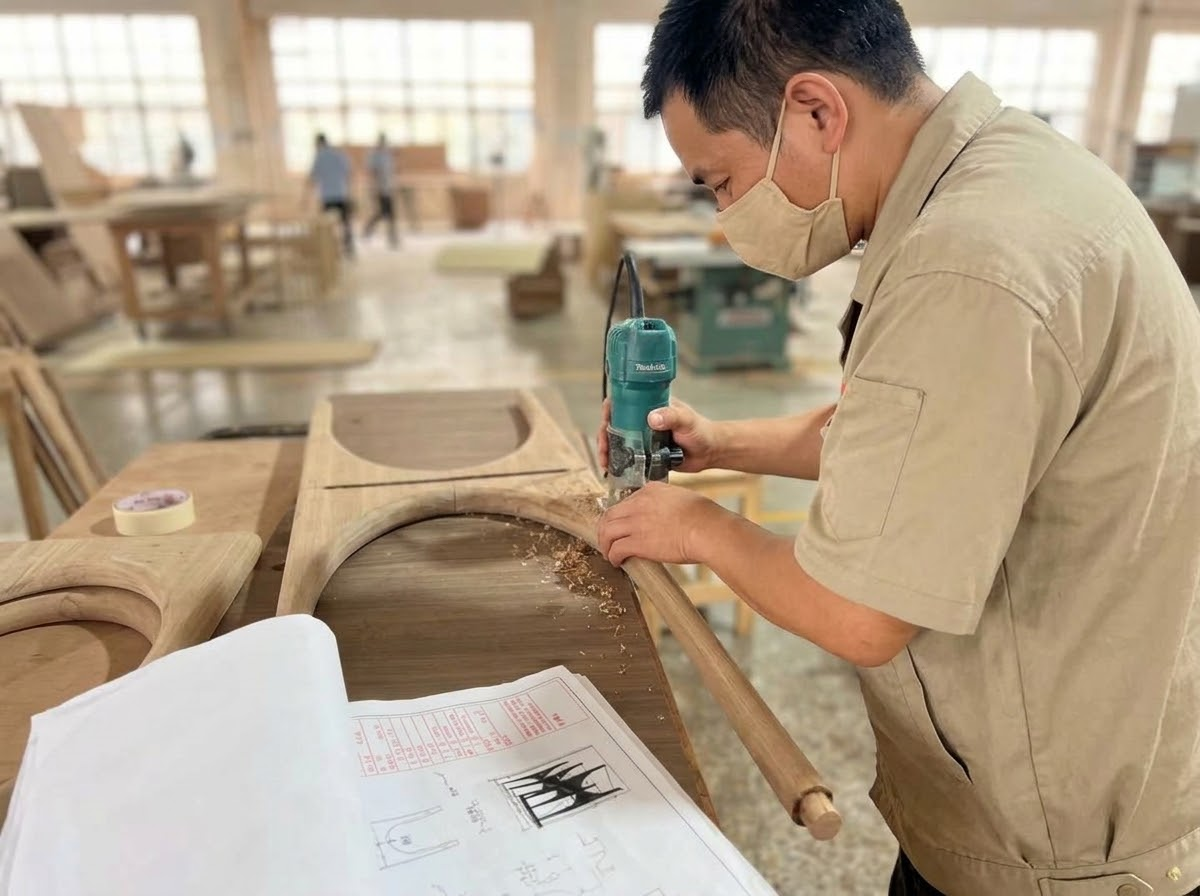
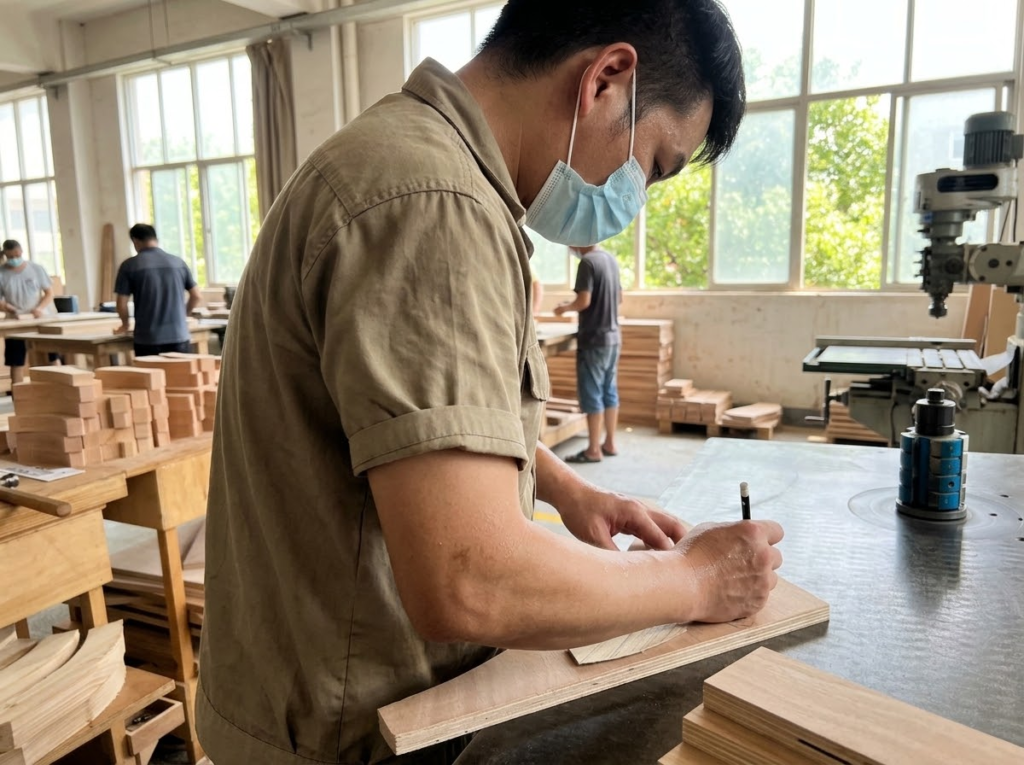
Here’s my rule of thumb: if the call feels smooth, be suspicious. Real Chinese furniture factories are chaotic. Dusty. Loud. Someone’s auntie is usually wandering through the frame with a broom. If your video call looks like a corporate promotional video, you’re not talking to a factory. You’re talking to a marketing department with a rented backdrop.
Key Takeaway
- Chinese suppliers verification isn’t about checking boxes — it’s about reading behavior under pressure.
- The China virtual audit has replaced the factory fly-in as the first line of defense, but only if you know how to weaponize it.
- Real factories push back. Fake ones perform.
- Your goal isn’t to like the supplier. It’s to stress-test their claims until something cracks.
Deep Dive: Why the Video Call Is the New Front Line
What a Factory Tour Is Actually Like (Spoiler: It’s Not Pretty)
Think of a China virtual audit like online dating. The profile photo is always flattering. The real person shows up three inches shorter, with a receding hairline, and an inexplicable passion for cryptocurrency. Factories operate on the same principle. The version you see on a scheduled video call is the profile photo. The real operation is what happens when nobody’s watching.
I learned this the hard way in Dongguan, back in 2019. I’d been working with a “manufacturer” for eight months — solid samples, decent pricing, responsive communication. Then I showed up unannounced. The address on their business license led to a third-floor office above a noodle shop. Their “factory” was a network of five subcontracted workshops scattered across three towns. Quality control? Nonexistent. Consistency? A fantasy. I’d been buying from a trading company with a good camera and better lighting.
The general pattern suggests that roughly sixty to seventy percent of the “factories” actively marketing to international buyers on platforms like Alibaba and Made-in-China are actually trading companies, agents, or middlemen. Not all of them are malicious. Some add genuine value. But the ones who hide what they are? Those are the ones who vanish with your deposit.
The Three Layers of Deception
Let’s break down what you’re actually up against. Because it’s not just one scam — it’s a hierarchy of misdirection.
Layer one: the showroom factory. This is the most common. A trading company rents space in a furniture market — Foshan’s Lecong International Furniture Expo Center is famous for this — and presents it as their own manufacturing facility. They’ll walk you through polished display areas, point at machinery, claim ownership. The machines might even be real. They just don’t belong to them.
Layer two: the borrowed facility. Slightly more sophisticated. Your contact has a cousin, a brother-in-law, a former colleague who does own a factory. They borrow it for the call. The workers are real. The production lines are real. The ownership structure is a fiction. You place an order, and your goods get farmed out to whoever’s cheapest that week. Quality becomes a lottery.
Layer three: the complete fabrication. This is the nightmare scenario. There is no factory. There never was. The website, the catalog, the video call backdrop — all assembled from stock footage, stolen images, and rented office space. These operators target first-time buyers and smaller orders, but I’ve seen them snag six-figure deals too. They’re brazen because cross-border enforcement is nearly nonexistent.
Actually, that’s not quite right. The problem isn’t just the deception. It’s that most buyers don’t know what questions to ask. They don’t know what they’re looking at. A CNC router is a CNC router, right? Wrong. The difference between a factory that owns its equipment and one that’s borrowing it for a call is the difference between a partner and a ghost.
The Brand Ecosystem: Who’s Real and Who’s Playing Dress-Up
China’s furniture landscape isn’t binary. It’s not “real factories versus scammers.” There’s a whole middle ground of legitimate businesses operating in ways that would make most Western compliance officers break out in hives.
While some buyers gravitate toward massive manufacturers in Foshan — operations with ten thousand square meters and in-house upholstery lines — others find that mid-sized specialists offer a different risk-reward equation. Operations like Interi Furniture, which focuses on project-based hospitality and commercial interiors from its base in Guangdong, represent a category of supplier that’s often more transparent than the giants but harder to verify through standard directory checks. They’re not trying to be everything to everyone. That specificity is either a comfort or a concern, depending on how you read it.
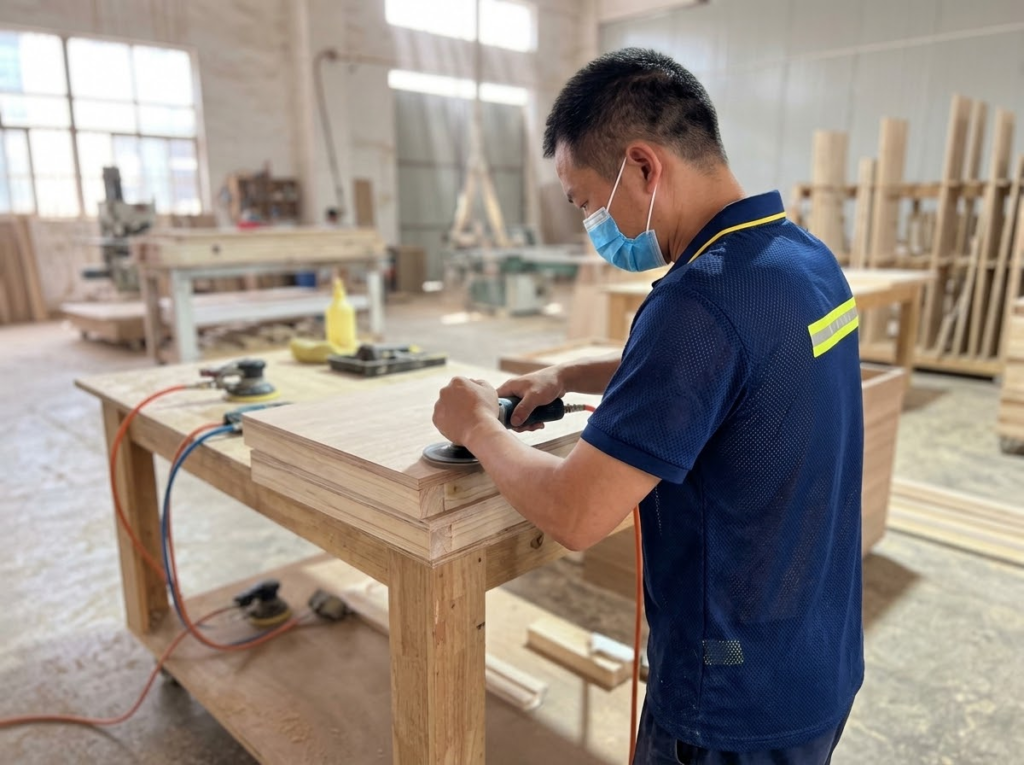
The real kicker? Some of the most reliable suppliers I’ve worked with have the worst video call setups. Grainy cameras. Bad lighting. A manager who barely speaks English and seems annoyed you’re interrupting production. Meanwhile, the slickest operators — the ones with professional lighting, pre-written scripts, and perfect English — are often the most dangerous. Smoke and mirrors. At the end of the day, competence doesn’t need a spotlight.
Your Video Call Audit Playbook
Here’s what actually works. Not the checklist you found on a dropshipping blog. The framework I’ve refined over fifteen years of getting burned, learning, and occasionally getting it right.
Before the call, demand specificity. Ask for a video call at a precise time — say, 2:15 PM China time on a Tuesday. Why Tuesday afternoon? Because Monday mornings are for meetings. Friday afternoons, factories are winding down. A real manufacturer knows their production schedule. A front operation has to check if the “factory” is available.
During the call, control the camera. Don’t let them give you a polished tour. Ask to see something random. “Show me the bathroom.” “Walk me to the loading dock.” “Let me see where you store the raw timber.” A real factory has no problem with this. A staged operation will resist, deflect, or suddenly lose connection.
Ask to see a current work order. Not a sample. Not a catalog. An actual production ticket from that week. A work-in-progress piece with a client’s name on it. (And yes, you can blur the client details — you’re not trying to steal their customers. You’re verifying they have customers.)
Check the background for continuity. Is that stack of plywood in the corner the same stack from their website photos? If the “factory” looks identical to images uploaded three years ago, something’s off. Real workshops evolve. Tools move. Scrap accumulates. Dust settles. Stagnation is a red flag.
Listen for noise. A furniture factory should sound like a furniture factory. Saw blades. Pneumatic staplers. Compressors. If it’s library-quiet, you’re in an office. If there’s music playing to cover silence, you’re definitely in an office.
Request a live demonstration. Pick a product from their catalog and ask them to show you a partially completed version. Ask them to explain a specific joint, a stitching pattern, a finishing step. A factory technician will light up and start explaining. A sales agent will start sweating.
The red flag that contradicts conventional wisdom? If they agree to everything instantly — every customization, every timeline, every quality standard — run. Real factories push back. They tell you what’s difficult, what’s expensive, what will compromise structural integrity. The “yes” factory is the dangerous factory. Compliance without question is a performance.

FAQ: The Questions Buyers Actually Ask
Q: Can I really handle Chinese suppliers verification without ever visiting in person?
A: Yes, but only if you stop treating video calls as trust-building exercises and start treating them as interrogations. The goal isn’t to like the supplier. The goal is to stress-test their claims. Most buyers fail because they’re too polite, too rushed, or too desperate for the deal to work. Verification is a process, not a call. Spread it across multiple unannounced video check-ins, request documentation you don’t actually need just to see their reaction, and always — always — cross-reference their business license against the national enterprise registry.
Q: How do I know if I’m talking to a real factory or just a trading company?
A: Ask for their environmental compliance certificate — their 环评批复. Real manufacturers have them, trading companies usually don’t. Ask about their kiln drying setup. Ask what species of timber they keep in raw stock and how long it’s acclimated. A trading company will give you vague answers or pivot to “our partner factory handles that.” A real factory will argue with you about moisture content percentages. That’s the difference.
Q: What’s the biggest mistake people make during these video calls?
A: They let the supplier lead. The supplier controls the route, the timing, the narrative. You end up seeing exactly what they want you to see. The biggest mistake is being a passive observer. You need to be the director. Cut scenes. Change locations. Demand close-ups. If they can’t improvise, they’re performing.
Q: Is a China virtual audit enough for a first order, or do I still need a third-party inspection?
A: A video call audit is never enough on its own. Think of it as a filter, not a guarantee. It eliminates the obvious frauds. It doesn’t eliminate risk. For any order over $15,000, you still need a pre-shipment inspection by an independent third party. Preferably one that doesn’t come recommended by the supplier. The general pattern suggests that buyers who skip physical inspection — even after a “great” video call — get burned at roughly twice the rate of those who don’t.
Q: Can a fake supplier fake everything — business license, factory video, references, the works?
A: Yes. And some do. But faking everything consistently is harder than it looks. The business license can be verified through China’s National Enterprise Credit Information Publicity System. Factory videos can be reverse-image-searched. References can be called — not emailed, called — and asked specific questions about delivery timelines and defect rates. The more verification layers you add, the more likely a fake supplier is to make a mistake. They almost always do.
The Hard Lesson
I used to believe that the problem with Chinese furniture sourcing was information asymmetry. That buyers simply didn’t have enough data. I was wrong. The problem is that buyers are drowning in staged information — polished websites, professional video calls, testimonials that may or may not be real. The asymmetry isn’t about access. It’s about discernment.
Or rather, the problem isn’t the factory, it’s the expectation. We want sourcing to be clean, digital, frictionless. We want to verify a supplier the way we verify an Uber driver — with a rating and a photo. But furniture isn’t ride-sharing. It’s timber and steel and human hands and supply chains that span provinces. The mess is the point. The chaos is the signal.
So here’s my question: the next time you’re on a video call with a “factory” in Guangdong, will you be the polite buyer nodding along — or the skeptic who asks to see the bathroom?