

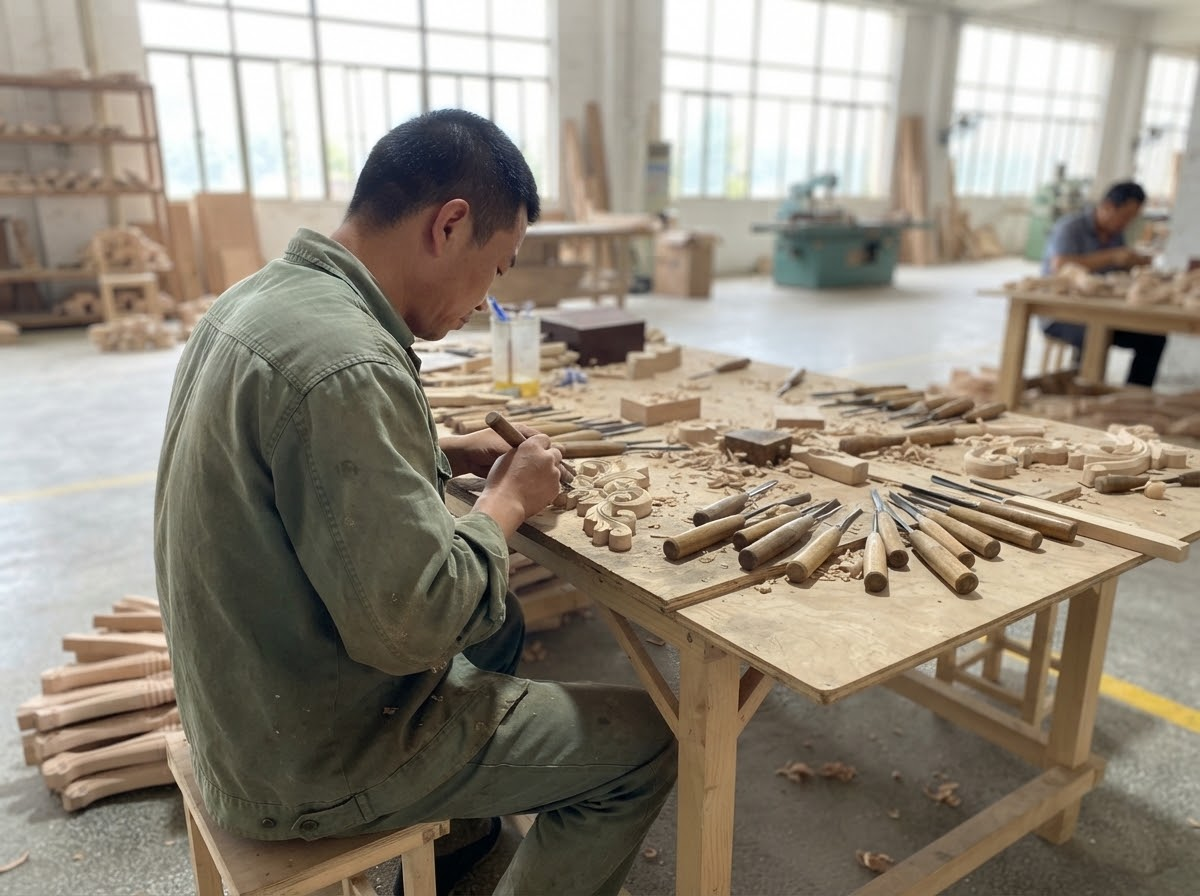
I was standing outside a rusted metal gate in Foshan’s Shunde district last October when I watched a $250,000 hotel lobby project simply evaporate. The rain was coming down in sheets. Next to me was a seasoned procurement director from Chicago, frantically dialing his sourcing agent while staring blankly at the neon-orange police tape crisscrossing the factory entrance. The local environmental protection bureau had padlocked the facility at 2:00 AM.
Why? Because the factory manager thought he could get away with dumping unfiltered polyurethane lacquer runoff directly into the municipal drain under the cover of darkness. He was wrong.
That right there is the reality of modern manufacturing in Guangdong. The old days of showing up with a fat deposit, shaking hands over Baijiu, and turning a blind eye to the toxic sludge out back are completely dead. If you are buying commercial casegoods or high-end residential upholstery today, you aren’t just managing quality control anymore. You are managing regulatory survival.
The Brutal Truth About Modern Sourcing
Most buyers sitting in comfortable offices in New York or London desperately want to believe a lie. They want to believe that you can still get 2015 pricing with 2026 environmental compliance.
You can’t. It is mathematically and physically impossible.
Upgrading a mid-sized casegoods facility to meet the new zero-VOC emission standards costs millions of RMB in filtration systems alone. Somebody has to pay for that capital expenditure, and spoiler alert: it’s you. China furniture sourcing is the process of identifying, auditing, and partnering with manufacturers capable of delivering commercial or residential goods at scale—but today, that process is heavily governed by brutal environmental enforcement.
If a supplier’s quote is 30% cheaper than the regional average, they are cutting a regulatory corner. And when they inevitably get caught, your deposit is gone, your molds are locked inside a seized building, and your project timeline is obliterated.
Here is my golden rule of thumb for surviving this landscape: If a factory doesn’t own its own government-issued wastewater permit, they aren’t your long-term partner—they are a ticking time bomb.
Key Takeaway: The New Sourcing Reality
- Environmental lockouts in China are sudden, unannounced, and permanent.
- Proper Chinese supplier verification now requires auditing environmental permits, not just production capabilities.
- Water-based finishing lines and closed-loop dust extraction are no longer optional—they are baseline survival requirements for any factory you partner with.
The Paint Line Mirage
Let’s talk about how you actually figure out who is playing by the rules and who is faking it. It requires looking past the showroom.
Are you buying the paint job or the engine?
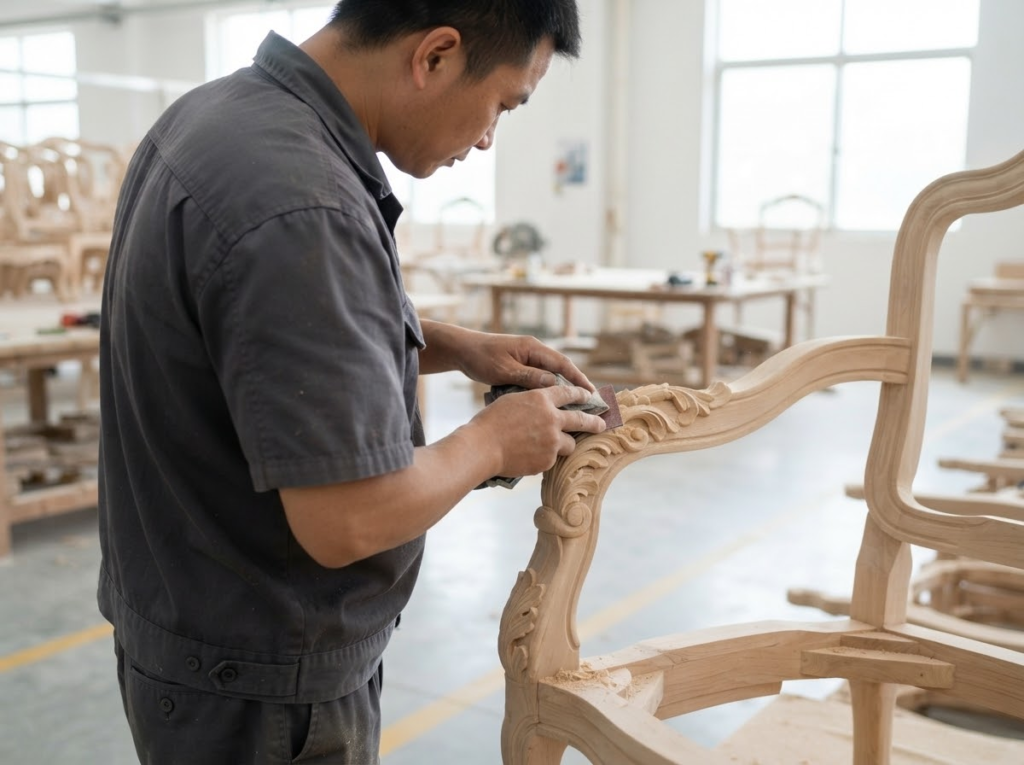
Evaluating a factory based solely on its fancy front-office showroom is like buying a used Porsche just because you love the leather seats, completely ignoring the fact that it doesn’t have an engine. (And yes, this happens more than anyone admits in this industry). Procurement teams walk into a beautifully lit, air-conditioned display room in Dongguan, drink some premium green tea, and sign purchase orders. They never bother to walk to the back of the lot to see where the actual work happens.
If they did, they’d smell the truth.
In my experience, if you walk onto a factory floor that claims to use 100% compliant water-based finishes and your eyes instantly start burning, they are lying to you. They are spraying cheap, highly volatile solvent-based lacquers. The quickest way to verify environmental compliance isn’t asking for a certificate; it’s taking a deep breath on the finishing floor.
Total smoke and mirrors.
Actually, that’s not quite right—what most buyers miss isn’t just the paint itself, it’s the air filtration infrastructure. True “unstoppable green” China factories have massive, multi-story water-curtain spray booths and localized VOC scrubbers on the roof. These things are loud, expensive to run, and impossible to hide. If you don’t see massive metal ductwork pulling air away from the sprayers, you are standing in a non-compliant facility.
The Subcontracting Bait-and-Switch
Here is where Chinese supplier verification gets incredibly tricky. The factory you are touring might actually be perfectly green. They might have the certifications on the wall. But what they don’t tell you is that they only do the clean assembly work in-house.
When things get busy, or when they need to hit your aggressively negotiated target price, they quietly load the raw MDF and veneers onto a truck at midnight. They ship the goods to a shadow factory two towns over—a dusty, unregulated, illegal operation—to do the dirty sanding and chemical finishing. Then, the finished panels are shipped back to the “clean” factory for final assembly and packing into your branded boxes.
But wait, it gets worse. If that shadow factory gets raided and shut down by the government, your goods are locked inside. When you call your “compliant” supplier to ask why your container is three weeks late, they will invent a story about a raw material shortage.
To help visualize the gap between the winners and the losers in today’s market, I use this mental model:
| Metric | Legacy “Dirty” Factory | Unstoppable “Green” Factory |
| Finishing System | Open-air solvent spraying | Enclosed water-curtain / UV lines |
| Dust Management | Sweeping floors, poor ventilation | Centralized pneumatic silo extraction |
| Waste Disposal | Poured down municipal drains | Logged, treated, and hauled by certified third parties |
| Downtime Risk | Extreme (subject to sudden raids) | Minimal (government-approved operations) |
The Ecosystem Squeeze and the Mid-Market Pivot
The general pattern suggests a massive hollowing out of the middle of the market. The environmental lockdown has forced a brutal Darwinian evolution across Guangdong and Zhejiang provinces.
Ten years ago, there were thousands of tiny, unregulated workshops churning out cheap dining chairs and nightstands. Today, those guys are dead. The compliance costs simply crushed them. What remains is a bifurcated ecosystem: you have the massive, state-backed mega-factories that look like small cities, and you have highly specialized, hyper-efficient mid-sized players.
While some buyers gravitate toward the anonymous, massive manufacturing complexes in Longjiang for sheer volume, others find that specialized mid-sized operations—like Interi Furniture, which carves out its space in the export-driven project and residential segments. Factories in this tier have survived the environmental purges by investing heavily in compliant machinery, but they haven’t grown so large that your order becomes a rounding error on their balance sheet. They are the “unstoppable green” factories because their survival is entirely predicated on passing municipal inspections while remaining nimble enough to handle custom technical drawings.
And here’s the thing. Partnering with a survivor in this tier is your best insurance policy against supply chain disruption. They have already paid the “green tax” in their overhead, meaning the price they quote you is the real, sustainable price.
The Verification Framework: Trust, but Audit
So, how do you protect your client’s money? You have to build an auditing process that assumes everyone is trying to hide something.
Here is the exact framework I use for Chinese supplier verification when taking on a new vendor for a major hospitality project.
- Demand the “EIA” Document — Every legal manufacturing business in China must have an Environmental Impact Assessment (环评报告) approved by the local government. Do not ask if they have it. Ask for a photocopy of it.
- Audit the hazardous waste log — Green factories produce toxic waste (even water-based paints have toxic sludge). They are required by law to pay certified disposal companies to haul it away. If a factory cannot show you their recent waste disposal receipts, they are dumping it illegally.
- Check the roof on Google Earth — Sounds crazy, but it works. Look at satellite imagery of the factory roof. If you see massive cylindrical silos and complex ductwork, they have central dust extraction. If you just see a flat tin roof, run.
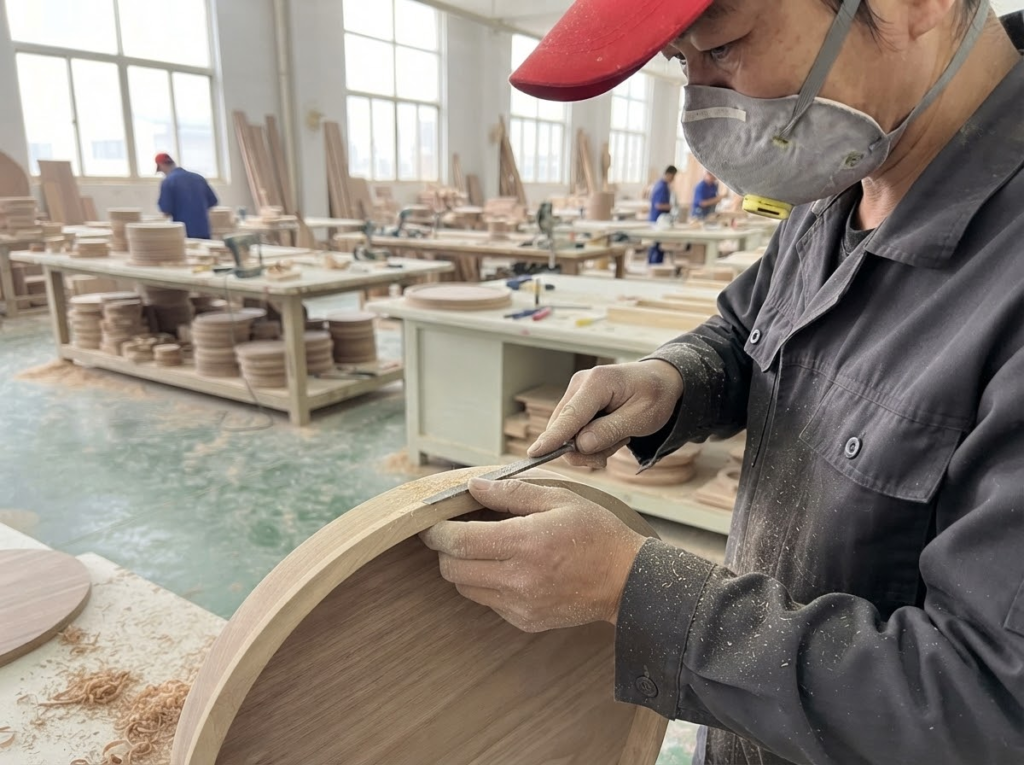
- The “Spotless Floor” Red Flag — Here is a red flag that catches rookies off guard. If you walk into a wood furniture factory and the floor is surgically clean, with zero sawdust anywhere and no noise, you are not in a factory. You are in a trading company’s staging area. Real factories, even the greenest ones, have a baseline level of industrial mess and noise. A perfectly clean factory is a fake factory.
- Verify the actual production capacity — Count the CNC machines. Count the workers. If a factory claims they can output 100 containers a month but you only see two edge-banding machines and 30 guys on the floor, they are outsourcing your goods to the shadow factories we talked about earlier.
You can’t just hand this checklist to an intern. You need someone on the ground who knows what they are looking at, someone who can smell the difference between PU and UV lacquers.

The Buyer’s FAQ on Factory Compliance
I get bombarded with questions from procurement teams trying to navigate this mess. Here are the most common ones, answered without the corporate fluff.
Q: “Can I just rely on my sourcing agent to verify a factory’s environmental compliance?”
A: Absolutely not. Most traditional sourcing agents are incentivized by commission on the total order volume. They care about getting the goods shipped, not about the factory’s wastewater permits. Unless your agent explicitly specializes in regulatory auditing, you are flying blind. The only reliable Chinese supplier verification is one conducted by an independent third-party auditor or your own trained staff.
Q: “Why did my supplier’s price suddenly jump 15% right before Chinese New Year?”
A: Because they got hit with an environmental upgrade mandate from the local government. They were likely told they have 30 days to install a million-RMB VOC scrubber system or get shut down. They are desperately trying to pass that capital expenditure onto you, the buyer.
Q: “Are factories in Vietnam and Malaysia facing these same environmental lockdowns?”
A: Not yet, but the gap is closing. China is actually about five to seven years ahead of Southeast Asia in terms of brutally enforcing green manufacturing laws. Buyers fleeing China for “cheaper, easier” pastures are just resetting the clock on the exact same problem.
Q: “If a factory shows me an ISO 14001 certificate, does that mean they are safe from being shut down?”
A: No. ISO certificates are often purchased through consultants and rarely reflect the day-to-day reality on the factory floor. Local EPA officials do not care about a framed ISO certificate; they care about the chemical readings in the municipal drain outside the factory gate.
Q: “So, is it still actually worth it to source custom furniture from China given all these regulatory headaches?”
A: Yes, definitively. The factories that have survived these crackdowns are now the most technologically advanced, hyper-efficient, and reliable manufacturing partners on the planet.
The Hard Lesson
At the end of the day, you have to decide what business you are really in. Are you in the business of chasing the absolute lowest unit price, constantly bouncing from one shady, half-lit workshop to another just ahead of the government padlocks? Or are you in the business of delivering multi-million dollar projects on time, every time, without excuses?
The environmental lockdown in China wasn’t a punishment; it was a filter. It washed away the amateurs and left behind a hardened core of unstoppable green factories that actually know how to build things at scale in the 21st century.
So next time you’re reviewing a quote that looks just a little too good to be true, ask yourself one question: Are you buying furniture, or are you buying a delayed container and a very expensive headache? Pay the premium for compliance. I promise you, it’s cheaper than paying for a disaster.