

I was up to my ankles in gray puddle water in Longjiang, Foshan, soaking wet from a freak November downpour. I stood there staring at a $150,000 hospitality seating order that, for all practical purposes, didn’t exist. My boots were ruined. My flight out of Baiyun Airport was in six hours. And I was speed-dialing my client in Chicago, trying to figure out how to break the news.
The vendor? They had spent three agonizing months feeding me glossy, high-res PDFs of their supposed “state-of-the-art” facility. They flaunted that coveted Alibaba Gold Supplier badge like a shield. ISO 9001 certificates plastered over every WeChat message. But the dirt-road address they finally gave my Didi driver? Not exactly a sprawling manufacturing campus. It was a poorly lit, crumbling warehouse where three teenage guys were frantically shrink-wrapping walnut veneer lounge chairs they had blatantly just trucked in from a wholesale market three blocks over. (And yeah, this happens way more often than any procurement director wants to admit at the annual trade shows.)
Welcome to the trenches. When you’re sitting comfortably in a high-rise office in London or Dubai, it’s dangerously easy to look at a slickly designed website and assume you’re dealing with a legitimate, vertically integrated manufacturer. But on the ground here? The lines between who actually cuts the wood and who just flips the boxes are incredibly blurry. Buyers get burned every single day. They wire massive 30% deposits to what they think is a factory, only to discover weeks later that they just bankrolled a middleman who is desperately shopping the PO around to the most unqualified bidder in the province.
The Brutal Truth About Guangdong “Manufacturers”
Here’s the ugly reality most buyers refuse to swallow. You’re practically begging these guys to lie to you.
You fly in with completely delusional expectations. You demand Italian heritage quality. You want Walmart-tier pricing. Oh, and you expect one single factory to effortlessly pump out intricately carved mahogany headboards right alongside minimalist acrylic barstools.
Newsflash: That factory is a myth.
When you push for the mathematically impossible, the market doesn’t say no. It just sells you a mirage. If a supplier enthusiastically nods at every insane customization you throw at them—without once complaining about tooling costs or engineering limits—you aren’t talking to a floor manager. You’re chatting up a hyper-motivated middleman. A white-label hustler gambling they can find a desperate subcontractor in a two-hundred-mile radius to scrape it together.
Rule of thumb? If they swear they can make absolutely anything, they actually make nothing.
Key Takeaways for the Red-Eye Flight
- Proper China factory inspection is about physically verifying a supplier’s raw material intake and scrap output to ensure they aren’t just a trading company playing dress-up.
- Industry observers estimate that roughly 30% to 40% of the online “manufacturers” you see are just brokers with zero physical production assets.
- Genuine factories stay in their lane. They do metal frames, or they do casegoods. Not both.
- You catch a fake Chinese factory by digging through their dumpsters and sawdust bins, not by admiring their showroom espresso machine.
The Ghost Kitchens of Furniture Sourcing
You know those ghost kitchens on UberEats? You scroll the app, seeing ten distinct restaurants. One sells “artisan tacos,” another does “gourmet sliders.” But track down the physical address, and it’s just one miserable guy in a windowless commercial basement, microwaving frozen chicken and swapping out the cardboard delivery bags.
A fake Chinese factory runs exactly the same playbook. Just swap the frozen chicken for million-dollar hospitality fit-outs.
One sharp, English-fluent operator sitting in a Shenzhen high-rise might control a dozen Global Sources storefronts. Each profile looks completely different. Different branding, different specialty. But the purchase orders all funnel back to the same cramped office of five chain-smoking reps, frantically scrolling WeChat groups to farm your order out to the lowest bidder.
Where is the damn dust?
When I do an audit, I never look at the finished samples first. I look straight down at my boots.
Nine times out of ten, these fake setups will try to parade you through this immaculate, weirdly quiet building. They’ll casually mention the workers are on a long lunch. Or they just shipped a massive container and spent the morning sweeping up.
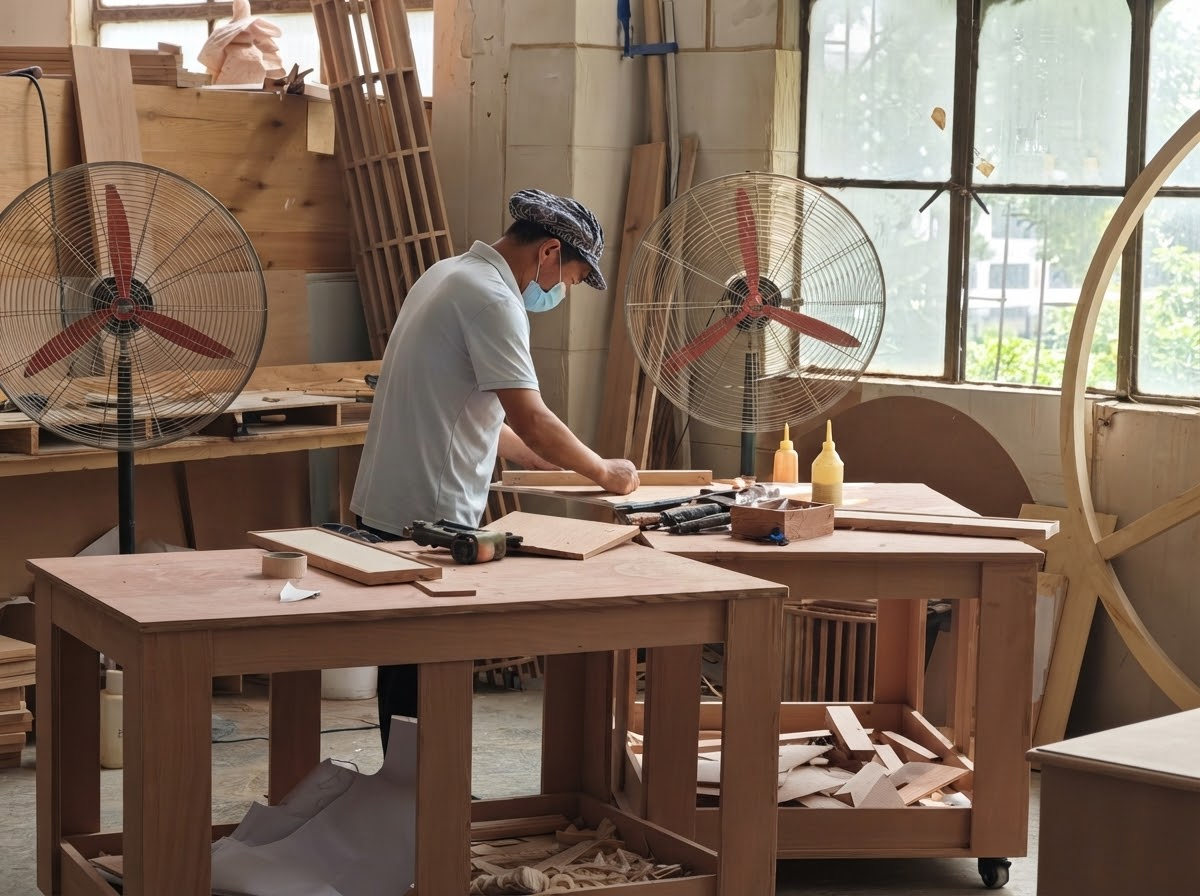
Total garbage. Real furniture manufacturing is violent. It’s loud, chaotic, and hazardous. The air smells aggressively like MDF dust, volatile adhesives, welding ozone, and stale sweat. If you step onto a woodworking floor and your lungs don’t instantly feel it—if your shoes aren’t instantly coated in a fine, powdery grit—turn around. Walk away.
Spotless floors. Dead giveaway.
Actually, wait, let me walk that back a bit. The biggest red flag isn’t just the missing dust. It’s the missing trash. A legit factory pumping out 5,000 dining chairs a month generates a staggering, ugly mountain of off-cuts. Bent metal tubing. Rejected foam blocks. Fake factories never have overflowing scrap bins because they don’t cut raw materials. They just assemble pre-bought kits. Or, worse, they literally just tape up boxes.
Following the Material Trail
Real manufacturing eats raw materials. Sounds stupidly obvious, right? But it’s the absolute fastest way to rip the mask off a broker. Buyers get so hypnotized by the shiny finished chair in the showroom that they forget to ask how the sausage gets made.
Show me the timber
Let’s say a supplier claims to manufacture solid white oak dining tables. Okay, cool. That means they need to buy and store tons of green white oak. They need a massive, hot kiln drying operation to dial in the moisture content so the wood doesn’t crack when it hits dry Nevada air. They need towering, banded stacks of lumber curing out back.
When a trading company borrows their cousin’s factory for your audit visit, they always screw up this detail. Always.
They’ll confidently march you through an active assembly line where underpaid guys are screwing together oak tables. But the second you veer off the approved path and demand to see the raw timber yard? Suddenly, their English comprehension plummets to zero.
Or maybe the issue isn’t even the factory’s deception, but our own lazy expectations. We want everything sanitized. We want the supply chain to look like an Apple store. But a genuine production floor is dictated by raw, ugly industrial logistics.
A beautiful showroom attached to an empty raw materials warehouse is a 100% guarantee you are being played by a broker.
The Ecosystem Reality Check: Mega-Parks vs. Specialists
The entire manufacturing ecosystem over here is geographically fragmented. Anji is office chair country. Nankang is solid wood territory. Foshan is the everything-bucket. Green buyers usually fly straight into Guangzhou, hire a private driver, and immediately start chasing those massive, monolithic campuses in Dongguan. They want the psychological safety blanket of a 500,000-square-foot compound and a thousand workers wearing matching polo shirts.
But massive size doesn’t equal safety. Frankly, some of the most brutal bait-and-switch nightmares I’ve seen happen in those mega-parks, where a trading company literally rents out a single floor of a giant building just to visually overwhelm foreign visitors.
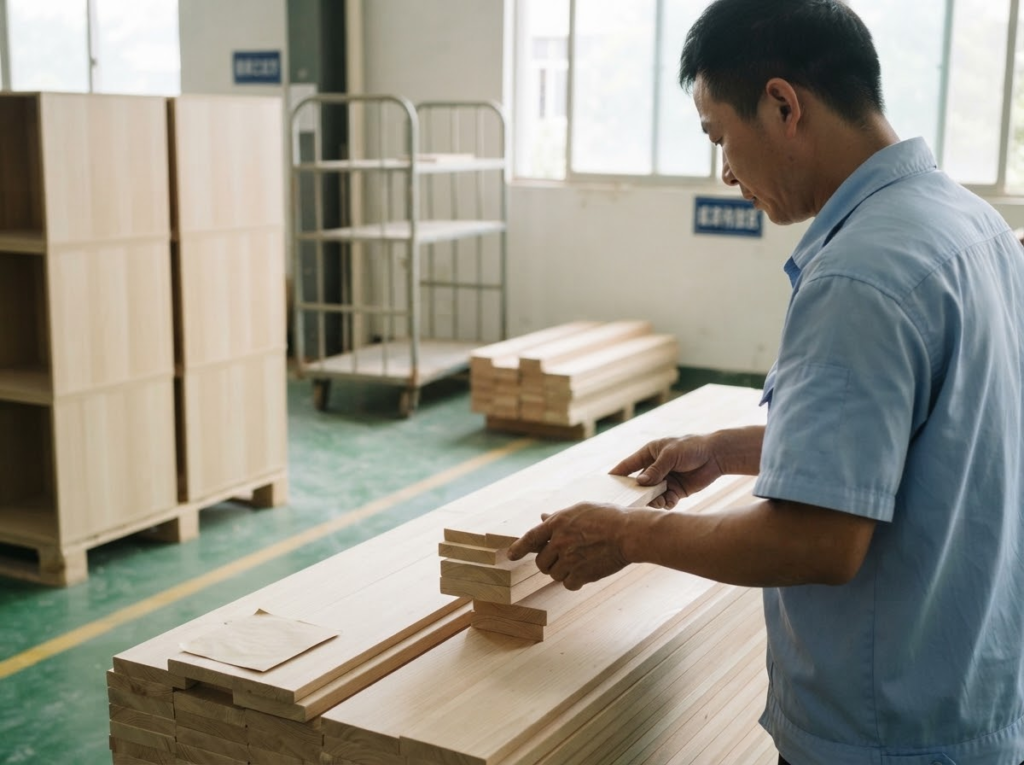
While some buyers obsess over the massive Dongguan giants, others figure out that mid-sized specialists—operations like Interi Furniture, which drills down hard into high-end project and hospitality seating. With a specialized manufacturer, you’re trading that intimidating mega-factory illusion for actual, tight quality control and direct-to-owner communication. They aren’t trying to make everything in the catalog. They’re obsessing over specific mortise-and-tenon joints, sourcing exact high-resilience foams, and staying strictly in their lane.
That intense, narrow specialization? That’s your safety net. When a factory actually knows what it’s doing, the heavy machinery bolted to the floor perfectly matches the very specific products they’re pitching you.
The Fake Factory Audit Framework
So, if you’re holding a visa and boarding a flight to Shanghai next week, print this out. Don’t leave it in your hotel room. This is the exact mental framework I use when I walk into a fresh facility to separate the actual builders from the parasitic brokers.
- The Machine Temperature Test — I figured this out the hard way at a metal fabrication shop in Zhejiang. When you walk past the edge-banders, the CNC routers, or the welding rigs, just casually hold the back of your hand near the motor housing. (Don’t touch the moving blades, obviously). Is it warm? Can you feel the ambient heat of recent friction? If they claim they’re running double shifts to meet demand, but the heavy machinery is ice cold at 2:00 PM on a Tuesday… congratulations, you’re watching a theatrical performance.
- The Floor-to-Desk Ratio — Real manufacturing is shockingly heavy on blue-collar labor and surprisingly light on administrative overhead. You pull up to a place with forty kids in suits sitting in a slick glass office on computers, but there are only fifteen older guys on the dusty floor putting together chairs? That’s a trading company. You’re funding their marketing budget, not their manufacturing capacity.
- The Ambush Sub-Assembly Interrogation — Grab a random, half-finished component off a cart. A sofa frame, a table leg, whatever. Ask the floor manager—specifically not your smooth-talking sales rep—which exact machine cut it and what the cycle time is. If they blink, hesitate, or just vaguely point “over there,” they didn’t make it. They bought it from a shadow supplier three alleys away.
- The Uniform Disconnect — Do the dirty shirts on the floor workers actually match the shiny corporate logo on the building? More importantly, watch the body language. Do the workers recognize your sales rep? In a real factory, floor supervisors and sales guys bicker constantly about lead times. If they look at each other like complete strangers, your “rep” just rented the floor for the afternoon.
- The Math Doesn’t Math — Look at the massive daily output they claim on paper, then look at the loading dock. If they say they ship twelve 40-foot HQ containers a month, but you only see a sad little pile of four fabric rolls in the back room? The math is catastrophically broken.
- The “Look Out the Window” Check — Industrial zones in China are wildly clustered by material type. Step outside. Look at the neighbors. If your supplier claims to do heavy steel stamping, but they’re sitting in a light-commercial high-tech park surrounded by software startups and garment sewers? It’s a lie. Local zoning laws wouldn’t even let them plug in a welding rig.
- The Cleanliness Paradox — Here’s the one that breaks conventional wisdom. If the factory floor is too clean, you’re in trouble. Sure, 5S lean manufacturing is a real thing, but high-volume furniture production is fundamentally chaotic. Spotless aisles and perfectly aligned wrenches usually mean idle machines and staged photo-ops.
Cheat Sheet: Spotting the Phantoms
| What You’re Looking At | Real Manufacturer | Trading Company (Fake Factory) |
| Catalog Focus | Stays in their lane (e.g., only solid wood) | Offers everything from beds to patio sets |
| The Floor Vibe | Loud, dusty, hot machines, forklift traffic | Quiet, pristine, looks staged for visitors |
| Headcount Reality | 80% blue-collar, 20% office staff | 80% sales/marketing, 20% warehouse staff |
| The Backyard | Massive stockpiles of wood, metal, foam | Little to no raw material inventory visible |
| The Dumpsters | Overflowing bins of off-cuts and rejected parts | Clean empty bins, no visible production waste |

Things Buyers Ask When They’re Panicking
Q: But their Alibaba profile specifically says ‘Verified Manufacturer.’ Doesn’t that mean someone from Alibaba already did the audit?
A: No. A ‘verified’ badge literally just means some third-party auditor confirmed the business license is real and they visited a physical location. It does absolutely nothing to guarantee they own the machines, buy the raw materials, or actually build the specific chairs you are ordering. They could easily just be verifying a rented assembly room the broker uses for show.
Q: Can I just jump on Fiverr and pay a local inspector $150 to go check it out?
A: You can, but you’re gonna get exactly what you pay for. Cheap third-party QC guys run through generic, brain-dead clipboards. They check if the lightbulbs work and if the bathrooms are clean. They don’t know the mechanical difference between a high-frequency wood press and a cold press. Which means they have zero clue if the factory can actually build your furniture.
Q: Look, does it actually matter if they’re a trading company, as long as I get my stuff?
A: It depends on your risk tolerance, but usually, yeah, it’s a disaster if they lied about it upfront. Some transparent trading companies are great—they handle nightmare logistics and consolidate shipments. But if a broker looks you in the eye and claims to be a factory, they are going to cut corners the absolute second raw material prices spike to protect their hidden margin.
Q: I can’t fly to Asia right now. Should I ask them to FaceTime me from the production line?
A: 100% yes. If you are stuck at your desk, an unannounced video ambush is your best weapon. Tell your rep to walk from their desk in the showroom, out the door, and onto the noisy production floor in one continuous, uncut camera shot. If they suddenly start whining about bad Wi-Fi or “strict safety regulations,” hang up and find a new vendor.
The Final Cut
At the end of the day, securing a supply chain that won’t blow up in your face isn’t about finding the prettiest Global Sources storefront. It’s definitely not about getting the absolute cheapest quote from a guy with flawless English on WeChat. It is about aggressively looking past the smoke, the mirrors, and the polite smiles to see what’s actually happening on the concrete floor.
I’ve watched multi-million dollar brands get absolutely gutted because some procurement director trusted a shiny PDF instead of demanding to see the scrap bins. You don’t need to be endlessly paranoid, but you absolutely cannot afford to be blind. The clues are sitting right there—in the ambient heat of the motors, the toxic smell of the air, and the grime on the floor.
So before you authorize that massive 30% wire transfer to a vendor you barely know, ask yourself the hard question. Are you funding a legitimate production line, or did you just buy front-row tickets to a really expensive theatrical performance?