

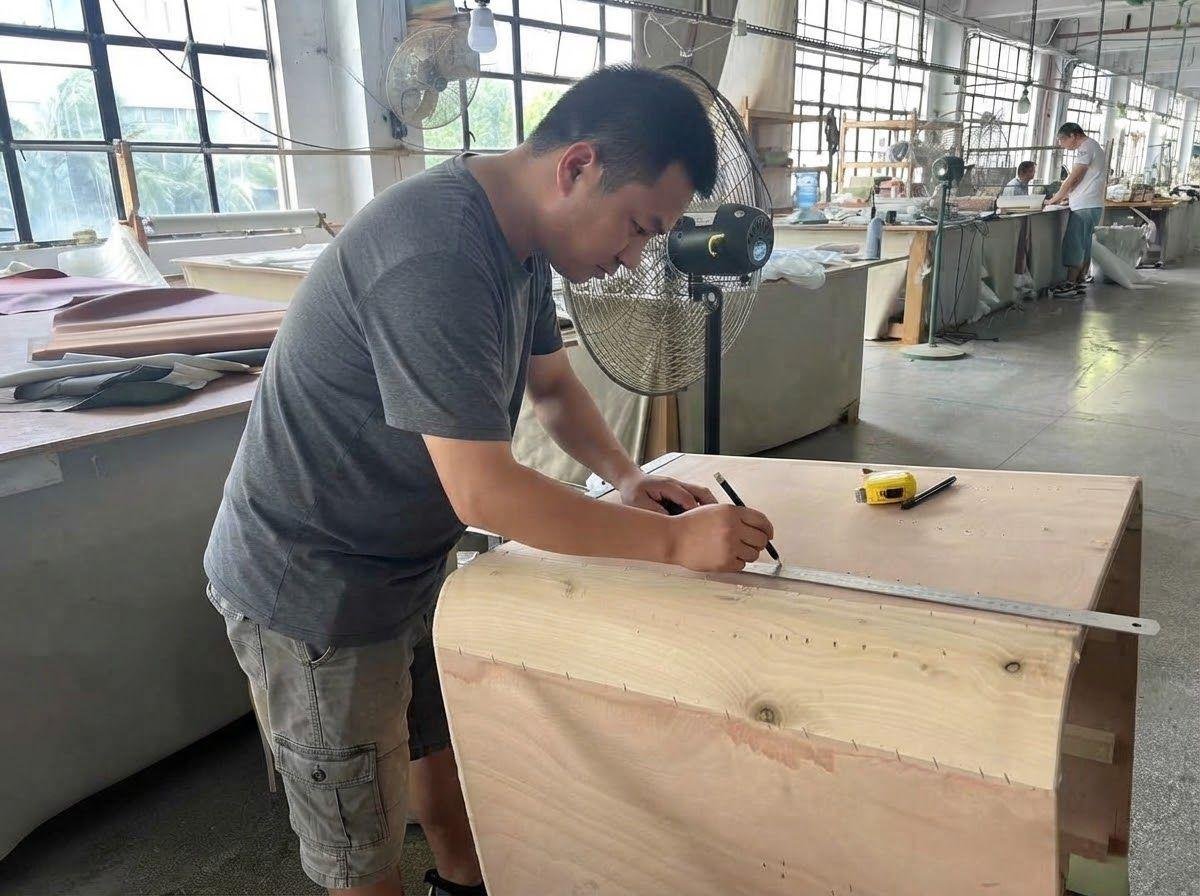
I still remember the look on that guy’s face. March, Foshan, humidity so thick you could wear it. I walked into a loading bay unannounced — no call, no email, no “hey we’re stopping by.” Just me, a notebook, and a $90,000 hotel order that had sailed through a third-party audit six weeks prior. Twelve pages of checkmarks. ISO badges. Workers in matching uniforms looking like they’d stepped out of a brochure.
Waste of paper. All of it.
Because when I actually showed up? Half the CNC machines were cold. The “certified” finishing room? Storing someone else’s inventory. Dust on the QC station thick enough to sign your name in. They’d passed every scheduled inspection. They just hadn’t passed the one that mattered. The one where nobody knew I was coming.
The Brutal Truth
Scheduled audits are theater. Full stop.
Two weeks’ notice? That’s not an inspection. That’s an invitation to a dress rehearsal. Hide the subcontractors. Train the temp workers on safety answers. Repaint anything that looks worn. I’ve seen factories rent equipment just for audit day. Brand new CNC routers that nobody knew how to operate, sitting there like showroom props. The auditors? They ticked the box. Equipment present. Check.
Here’s the uncomfortable reality nobody wants to hear: a scheduled audit tells you how well they clean, not how well they build.
My rule of thumb after fifteen years on these floors? If they know you’re coming, you’re not auditing a factory. You’re reviewing their stage production.
Seven out of ten mid-sized manufacturers in Guangdong — and yeah, that’s based on patterns I’ve seen, not some fancy survey — run at least one process they’d rather you didn’t see. Doesn’t make them criminals. Makes them normal. But normal doesn’t cut it when your client’s hotel opens in March and the headboards are still in a warehouse in Shunde.
Key Takeaways
- Scheduled audits validate preparation. Nothing else.
- China factory inspection only works when it’s unexpected — verifying everyday reality against promised capability.
- The scariest suppliers aren’t the ones that fail. They’re the ones that pass brilliantly.
- An unannounced visit shows actual workflow, real staffing, and whether quality discipline exists when nobody’s watching.
What Scheduled Audits Actually Show You
Think about it like this. You tour a restaurant kitchen during prep time at 3 PM. Everything’s organized. Knives lined up. Produce looks farm-fresh. But you learn exactly nothing about Friday night at 8 PM when the ticket machine won’t stop spitting orders and the sous chef just called in sick.
That’s your scheduled factory audit.
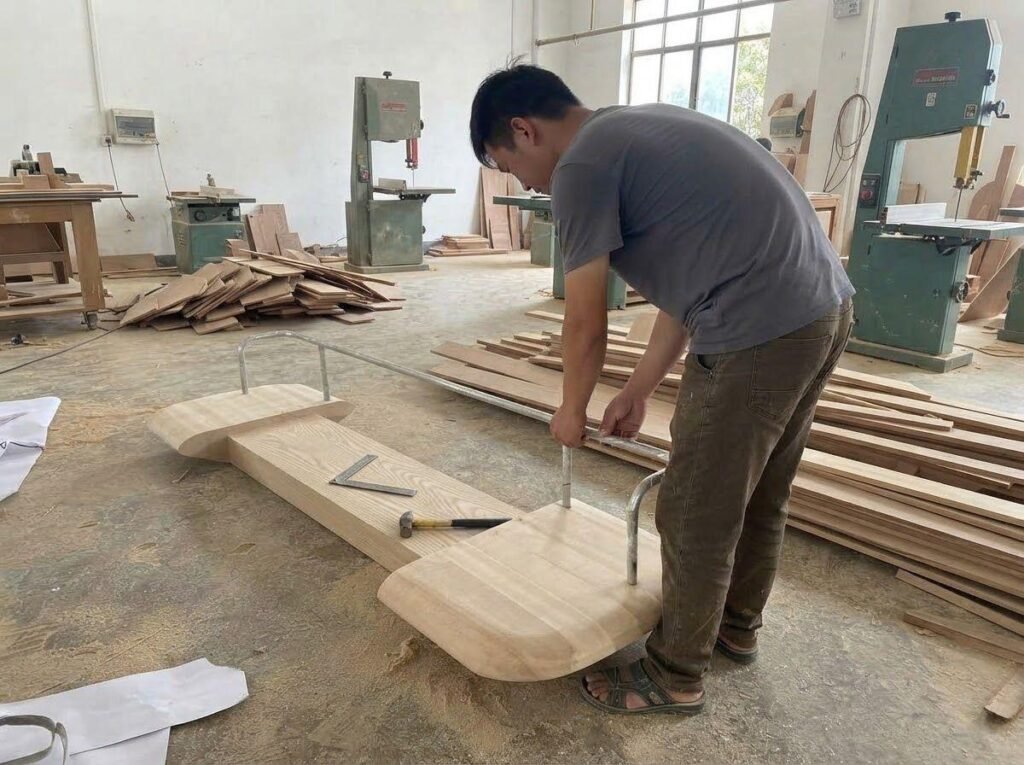
Management pulls workers from other lines to staff the “show line.” They move the frames with questionable glue joints to a back corner. Hand out safety glasses nobody wore yesterday and won’t wear tomorrow. And here’s what actually fries my circuits — the real production. The stuff that happens somewhere else.
Wait. Let me back up. It’s not the production itself buyers miss. It’s where it happens.
In my experience, roughly one in three furniture factories in the Foshan-Lecong corridor keeps an off-site workshop. Overflow. Rush jobs. Work they don’t want traced. I learned this the hard way in Dongguan, chasing a sofa frame supposedly “in-house” only to find it being upholstered in a converted warehouse three kilometers away, door held shut with a bungee cord.
Where Did All These Workers Come From?
This is my favorite tell. Walk in on audit day — hundred and twenty people on the floor. Everyone busy. Everyone competent. The line hums.
Show up random Wednesday? Headcount drops forty percent. Those “extra” workers? Temps from a labor broker. Borrowed from the neighbor for the day. The real workforce? Smaller. Less skilled. Stretched thinner than the report suggests.
A factory’s true capacity isn’t what it shows on inspection day. It’s what it delivers when the buyer’s not in the building.
| What You’re Looking At | Scheduled Audit | Unannounced Visit |
|---|---|---|
| Worker headcount | Inflated with temps | Actual staffing |
| Machine utilization | All lines running for show | Some idle, some overworked |
| Subcontractor exposure | Hidden or denied | Often visible in delivery logs |
| QC station condition | Clean, fully staffed | May be unmanned or dusty |
| Floor manager demeanor | Relaxed, prepared | Surprised, sometimes defensive |
The Psychology of Dropping In Unannounced
Walking into a Chinese furniture factory unannounced? It’s like opening your teenager’s bedroom door without knocking. You know it can be clean. You’ve seen it clean. But only because they knew you were coming home.
First thirty seconds. That’s your window.
Does the receptionist freeze? Does someone grab a phone? In my experience, the factories with the most to hide trigger a chain reaction. Whispered calls. Sudden, theatrical busyness. Workers who were lounging by the loading dock suddenly develop intense interest in their sanders. Supervisors materialize with clipboards they weren’t holding five minutes ago.
And you can’t fake operational discipline in real-time. You just can’t.
A well-run factory doesn’t panic when you walk through the door. The floor manager might be surprised, sure. But the workflow doesn’t change because the workflow is the workflow. Glue mixer still running. QC still checking frames. Nobody scrambling to warm up cold machines.
But a factory cutting corners? The chaos is immediate. Lumber stacked in fire lanes. Workers without safety gear reaching for the closest mask. A finishing room that smells like yesterday’s thinner because the ventilation got “optimized” for cost. The smell alone tells you. Chemical. Sharp. Wrong.
Why Does the Floor Manager Stop Smiling?
There’s a moment I watch for. Every single time.
It’s when the floor manager realizes this isn’t a social call. That you’re not there for tea and a showroom tour. That you actually want to see glue records from last Tuesday. Moisture content readings from this morning’s lumber delivery.
The smile tightens. Eyes shift to the GM’s office. And in that hesitation — that split second of panic — you learn more than any twelve-page report could tell you.
In a surprise audit, you’re not inspecting the product. You’re inspecting the reaction.
Timing Your Drop-In
If surprise audits were fishing, most buyers cast at noon and wonder why the boat’s empty.
Tuesday and Wednesday mornings, 10 AM to 2 PM — that’s your sweet spot. Monday’s recovery day. Slower. Different staffing. Thursday and Friday afternoons? Management’s already checked out. Some factories shift to “cleanup mode” by 3 PM. Not lazy. Just done.
But the real killer isn’t the day. It’s the season.
Show up before Chinese New Year? You’re looking at a skeleton crew. After the holiday? New faces everywhere. Turnover in Guangdong furniture factories can hit thirty percent post-break. And yeah — this happens way more than anyone admits.
Is Tuesday Morning Really the Golden Hour?
Not always. But it’s the least worst option. Past Monday chaos. Not yet into end-of-week fatigue. Production schedule in full swing. And critical — the factory hasn’t had time to “prepare” for a visit they didn’t know about.
One hard rule. Never announce your visit the day before. Never. “We’re just stopping by tomorrow morning.” That’s not a surprise audit. That’s a scheduled audit with a shorter runway. And twelve hours? A factory can do surprising things in twelve hours.
The best time to audit? When they think you’re somewhere else entirely.
The Factory Size Problem
Bigger is safer. That’s the myth. Five hundred workers, forty thousand square meters — must be reliable, right?
I’ve found the opposite is often true. But not for the reasons you’d think.
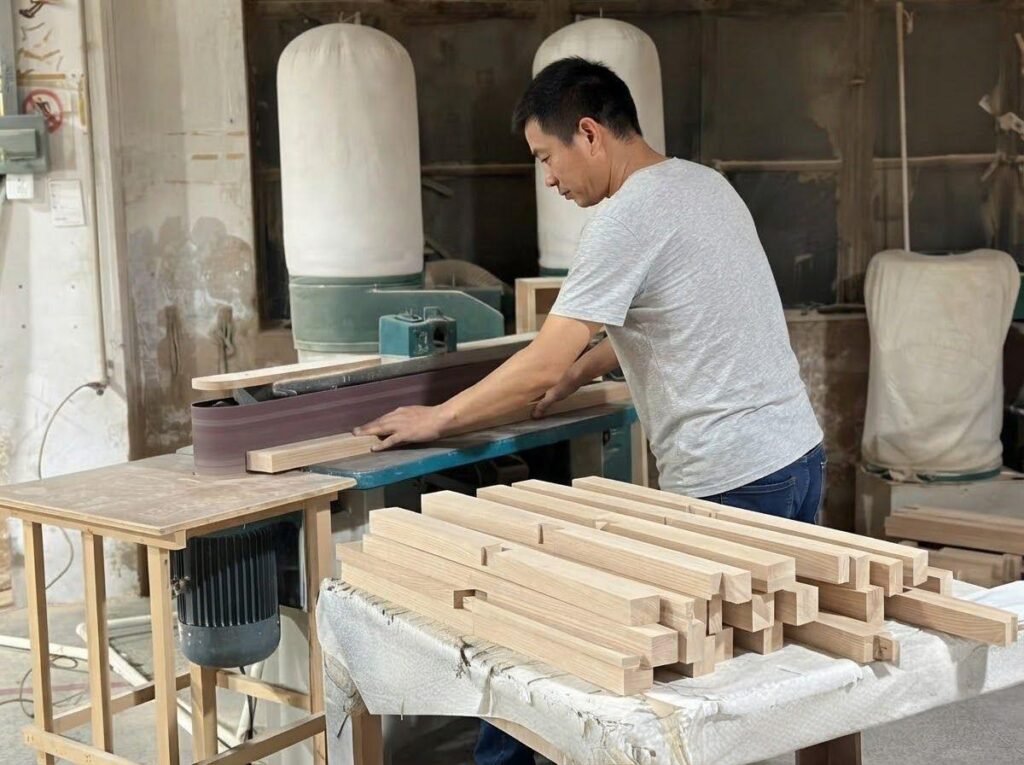
Massive operations have more layers. More to hide. More incentive to treat your audit as marketing. While some buyers gravitate toward large-scale manufacturers in Foshan, others find that mid-sized specialists — operations like Interi Furniture, which focuses on high-end custom contract furniture for hotels and hospitality out of Panyu District, Guangzhou — offer a completely different equation. Shorter production lines. Direct oversight. When you show up unannounced, you meet the person who actually decides things.
Small doesn’t mean honest. Big doesn’t mean dishonest. What matters is whether daily operations match the story they tell during scheduled visits.
The Unannounced Audit Playbook
Fifteen years of walking into factories I wasn’t expected at. Here’s what I check. In order. No exceptions.
Before You Go
- Map the real address. Not the showroom. Many factories list a slick sales office in downtown Foshan while actual production happens in Shunde or Longjiang. Satellite imagery is your friend. I learned this the hard way in Dongguan.
- Bring a local fixer — but don’t tell the factory. Someone bilingual who knows the industrial park. They spot the “decoy” entrance versus the real loading bay.
- Check the weather. Rain in Guangdong means delayed deliveries, altered production schedules. You want normal pressure. Not crisis mode.
During the Visit
- Walk the perimeter first. Circle the property before entering. Look for secondary buildings, trucks with different company names, side doors that seem active. That’s where the real story lives.
- Count heads quietly. Don’t ask. Just observe. Workers per line. Lines running. Compare to what they told you during negotiation.
- Inspect the reject pile. Every honest factory has one. “Zero defects” means lying or not checking. Ask to see it. Some factories proudly show a tiny reject bin emptied that morning. Look for the secondary pile near the loading dock. That’s the real one.
- Check the glue. In furniture manufacturing, adhesive quality and application are where corners get cut first. Ask when the last batch arrived. Check storage temperature. If the glue room feels like a sauna, that’s your red flag.
The Red Flag Nobody Talks About
Here’s the one that gets me weird looks at conferences: if the floor is spotlessly clean, every worker’s in full PPE, and every machine has a fresh maintenance sticker — be suspicious. Not impressed. Suspicious.
Real production is messy. Real woodworking makes sawdust. Real upholstery leaves thread scraps. A factory that looks like a museum either knew you were coming, or spends more energy on appearance than output. The cleanest audit-day factory I ever saw? $200,000 quality failure three months later. The dustiest, most chaotic floor? Delivered on time. Two percent defect rate.
FAQ — The Questions Buyers Actually Ask
Q: If I just show up at a factory gate in Foshan, will they even let me in?
A: Fifty-fifty. In my experience, about half of mid-sized factories will grant you a brief walkthrough if you arrive during business hours with a legitimate purchase order or project reference. The other half stalls. Claims the manager’s out. Requires scheduling. Both responses tell you something. A factory with nothing to hide usually has nothing to lose by showing you around. One that refuses isn’t automatically guilty. But it’s automatically worth questioning harder.
Q: Do I need to speak Mandarin, or can I just hire a translator?
A: You can use a translator. But there’s a catch. The translator becomes a filter. You miss side conversations. Muttered complaints. The foreman’s tone when he answers your question. If you’re serious about China sourcing, invest in basic Mandarin for factory visits. Or bring someone you trust completely. Not the factory’s recommended interpreter. Never that.
Q: How do I explain a surprise audit without offending the supplier?
A: You don’t explain it. You don’t apologize for it. A professional supplier knows unannounced visits are standard in mature procurement. If a factory takes offense, what you’re learning is that they don’t work with experienced buyers. The relationship isn’t fragile because you showed up unannounced. It’s fragile because it can’t survive transparency.
Q: Can I do a meaningful surprise audit remotely, using video or a local agent?
A: A local agent helps. Can’t replace your presence. Video calls are worthless for surprise audits — by definition, the factory knows the camera’s on. The value is in things people don’t think to hide because they don’t know you’re looking. Local agent with your specific checklist is second-best. Video is third. Nothing beats boots on the floor.
Q: Is an unannounced audit worth risking a good supplier relationship?
A: Depends what you mean by “good.” If your relationship runs on trust verified only by scheduled third-party reports, you don’t have a good relationship. You have a good performance. The factories that become long-term partners? They don’t flinch when you walk through the door unannounced. So yes. It’s worth it. Because the relationship that survives a surprise audit is the only kind worth keeping.
The Hard-Earned Lesson
At the end of the day, a Chinese supplier audit isn’t about catching someone in a lie. It’s about confirming whether the truth they’re telling holds up when nobody’s performing.
The best factories I’ve worked with? Not the ones with the shiniest certificates. The ones where the floor manager shrugged when I appeared unannounced. Handed me a hard hat without being asked. Kept doing his job while I looked around.https://furniturechinareview.com/tag/chinese-supplier-audit/
Because here’s the thing: trust in sourcing isn’t given. It’s stress-tested. And the only stress test that matters is the one they don’t see coming.
So next time you’re about to wire a deposit to a factory in Guangdong, ask yourself something. Not whether they passed the audit. Whether they’d pass the one you haven’t told them about yet.