

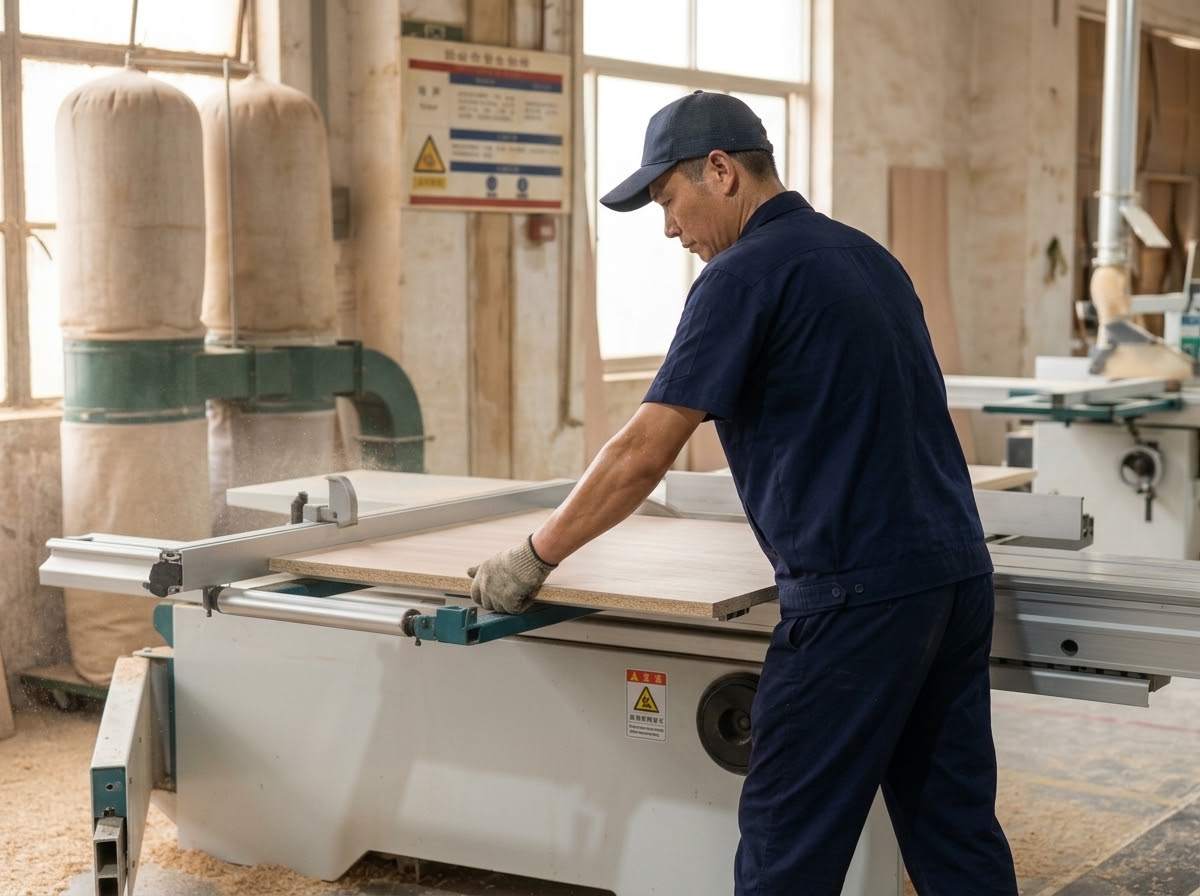
The WeChat message came through at 11 PM. “Factory very honest. No problem. You come visit next week.” My colleague in Chicago had been chatting with this Foshan supplier for six weeks. Samples looked decent. Price was almost suspiciously sharp. The deposit was $47,000 — not massive, but not pocket change either. Something felt off. Not the product. The vibe. The owner sent videos of a workshop floor that looked like a showroom, which, if you’ve spent any time in Longjiang, you know is usually a red flag. Real factories are loud. They smell like glue and sawdust. They don’t have mood lighting.
So my guy did something most buyers never think to do. He didn’t ask for another sample. He didn’t negotiate terms. He decided to verify Chinese supplier credentials the old-fashioned way — paid a translator twenty bucks to search the factory’s Chinese legal name. Three hits. Two unpaid judgments. One enforcement case from a Dutch buyer who’d flown home empty-handed. The “honest” factory? Hadn’t been honest with everyone.
And here’s the kicker — that factory is probably still taking deposits today. Because most international buyers don’t know how to look. Or where. Or they simply don’t think a lawsuit in Rotterdam has anything to do with their order in Chicago.
The Brutal Truth: Your Due Diligence Is Probably Useless
Let’s not sugarcoat this. The checklist most buyers run through? It’s theater. Factory tour. Sample approval. Price negotiation. Wire transfer. Cross fingers. That sequence works great until it doesn’t. And when it doesn’t, it fails spectacularly.
You want a hard rule? Here it is. If a supplier won’t send their business license within two days, they’re either hiding something or they’re not organized enough to be worth your time. Either way, you’re out. No debate. I’ve seen buyers wait two weeks for a license PDF that never comes. Two weeks of polite excuses. “Boss is traveling.” “Secretary is sick.” Please. It’s a PDF. Send it.
But the deeper issue isn’t laziness. It’s misdirection. Buyers fixate on what they can see — machines, workers, veneer samples — and ignore what they can’t. Court records. Enforcement databases. Cross-border litigation that leaves permanent scars on a company’s legal DNA. A factory can weld perfect chair frames and still be a legal dumpster fire. Those two realities coexist more often than anyone in the sales department wants to admit.
Key Takeaways
- China furniture sourcing is the process of identifying, vetting, and contracting manufacturers in China to produce furniture for commercial or residential projects — and the vetting phase is where most buyers quietly lose their shirts.
- A gleaming workshop floor tells you nothing about whether the owner has been sued in Hamburg.
- Court judgments and enforcement records predict future headaches better than any factory audit ever could.
- The buyers who get burned aren’t the ones who asked too many questions. They’re the ones who asked too few.
Why the Lawsuits You Can’t See Matter More Than the Factory You Can
It’s Like Marrying Someone Based on Their Dating Profile
You see the highlight reel. The curated photos. The carefully worded bio. What you don’t see is the ex-wife, the defaulted car loan, the restraining order. A Chinese furniture factory’s English-language website is basically a dating profile. Polished. Optimized. Designed to make you swipe right.
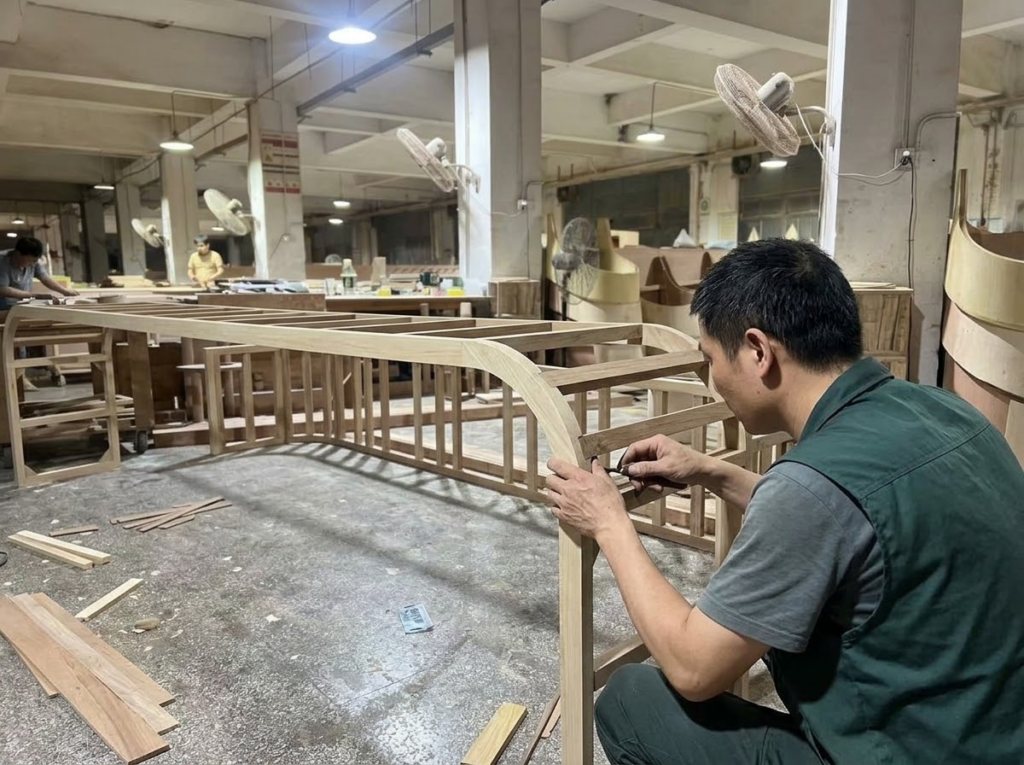
I learned this the painful way back in 2019. Walked into a solid wood dining chair operation in Longjiang that looked like something out of a design magazine. Dust collectors humming. Workers in matching blue jumpsuits. The owner — let’s call him Mr. Chen — even had a framed photo of himself shaking hands with a German buyer. Very legit. Very reassuring.
What Mr. Chen didn’t mention? His previous company — same machinery, same staff, different Chinese name — had been sued in California federal court over antidumping duties on wooden bedroom furniture. Settled. Buried. Rebranded. The new entity had a spotless record because it was six months old. The old one? Toxic. But good luck finding that connection from an Alibaba page.
This happens more than anyone admits. Spin up a new company. Transfer the equipment. Keep the clients. Leave the lawsuits behind. It’s not illegal if you structure it right. For a foreign buyer, though? It’s a trap dressed up as a fresh start.
But What If They’ve Never Been Sued in China?
Here’s where most buyers get it backwards. They think, “No Chinese court cases? Must be safe.” Wrong. Chinese manufacturers doing export business get hauled into foreign courts constantly. U.S. federal courts. EU commercial tribunals. Australian state courts. Patent fights. Trademark theft. Product liability. Breach of contract. The whole menu.
A trade lawyer I know in Washington — sharp guy, handles a lot of Chinese manufacturer defense — told a room full of factory owners something blunt: “We tell our clients that if you do business in the U.S., you’re very likely going to get sued at some point.” That warning cuts both ways. If your factory has already been sued abroad, you need to know why. Because whatever got them in trouble last time — dodgy materials, missed deadlines, stolen IP — is probably still in their DNA.
What “Sued Abroad” Actually Looks Like on the Ground
The Four Flavors of Factory Litigation
The lawsuits aren’t random. They cluster. Like warning lights on a dashboard — once you know what the lights mean, you know whether to keep driving or pull over.
Product liability and safety standards. Factory ships bunk beds to the U.S. that don’t meet CPSC guidelines. Kid gets hurt. American retailer gets sued, then turns around and sues the Chinese manufacturer in federal court to recover damages. These cases rarely make the news, but they leave paper trails in PACER — the U.S. federal court records system — that anyone can pull for a few cents a page.
IP theft. Factory copies a European designer’s lounge chair. Changes three minor details. Starts selling it to American hotel chains under a different SKU. Original designer files suit in the EU or U.S. I’ve watched this unfold with upholstery patterns, metal frame geometries, even the damn packaging. Factory usually settles quietly. Keeps producing for buyers who don’t know to ask.
Antidumping and customs fraud. This one’s uglier. The U.S. government has filed civil suits against importers who lied about which Chinese factory made their furniture — in one case, claiming goods came from entities facing 7% duties when they actually came from manufacturers hit with 216%. When the feds come after the importer, the importer comes after the factory.
Contract and payment disputes. Factory takes a deposit. Misses delivery by four months. Buyer cancels. Factory sues the buyer for breach. Or vice versa. These cases stack up fast in Hong Kong, Singapore, and London — the usual venues for international trade contract disputes.
Why This Stuff Never Shows Up on Google
Most of these cases are invisible on the factory’s English website. Not on the Alibaba profile. Not in the WeChat intro. Buried. Fragmented. Multilingual. Boring as hell to sort through. Chinese domestic records sit on Mandarin-only databases. U.S. federal cases hide in PACER behind a paywall. EU judgments are scattered across national registries. The information isn’t hidden. It’s just fragmented, tedious, and multilingual. Which is exactly why most buyers never bother.
So How Do You Actually Dig This Up?
Can You Really Do This from Your Laptop?
Honestly? You’re not flying to Guangzhou to camp out at the courthouse. (Though if you ever find yourself near the Guangzhou Intermediate People’s Court, their records terminal is surprisingly modern. Coffee’s terrible. Bring your own.)
For most buyers, the practical approach is layered. Start cheap. Go deeper only if the money on the table justifies it.
The free tier. Google the factory’s English name plus “lawsuit,” “scam,” “dishonest.” Search their Chinese name on China Judgements Online if you can get a translator involved. Cross-reference their Unified Social Credit Code against the National Enterprise Credit Information Publicity System, which includes court judgments and enforcement actions. These databases are clunky, entirely in Chinese, and crash half the time. But they’re official. And official data doesn’t lie.
The paid tier. Commission a proper China business background check. Firms like ChineseCheck pull data from 24-plus government databases — court records, tax ratings, enforcement actions, administrative penalties — and deliver an English-language risk assessment. For a $50,000 order, spending $200 to $500 on verification isn’t paranoia. It’s math.
The nuclear option. Hire a Chinese lawyer to run a full litigation search across multiple jurisdictions. Makes sense for six-figure hospitality contracts or long-term manufacturing agreements. Costs more. Tells you everything.
When Does a Clean Record Become a Red Flag?
Actually, that’s not quite right. What most buyers miss is that the absence of lawsuits can be just as telling as their presence. A brand-new company with zero litigation history and a slick website is sometimes more dangerous than a fifteen-year-old factory with one settled dispute from 2017. At least the old factory has a track record. The new one might be a phoenix. Same owner. New name. Old problems. Clean slate.
The Factory Ecosystem: Size Isn’t Safety
Walk the halls of CIFF Guangzhou and you’ll hear names like Interi Furniture tossed around in hushed tones — a Guangzhou operation that built its reputation on custom hotel and villa pieces without demanding a container-load minimum. They’re not a billion-yuan conglomerate, and that’s exactly the point. Their smaller footprint often means you’re dealing directly with the owner, not a sales rep reading from a script. But here’s the catch — that same intimacy means they rarely show up on international litigation databases the way publicly listed exporters do. Less legal visibility isn’t a green light. It’s just a different shade of yellow.
The point isn’t that big factories are bad and small ones are good. Legal risk scales differently than production capacity. A forty-thousand-square-meter operation can have cleaner court records than a five-thousand-square-meter shop, or the exact opposite. You can’t tell from the brochure.
Your Stealth Background Check Playbook
Enough theory. Here’s what you do Monday morning.
Phase One: The Five-Minute Sweep (Free)
- Google with malice. Search “[company name] + lawsuit,” “[company name] + scam,” and “[Chinese company name] + 被执行人” (enforcement debtor). If you don’t have the Chinese name, you don’t have enough information to proceed. Full stop.
- Check the business license. Ask for it. Verify the Unified Social Credit Code on the National Enterprise Credit Information Publicity System. If the registered capital is ¥100,000 and they claim to pump out $2 million in furniture annually, something’s off.
- Reverse-search their photos. Drag that gleaming showroom image into Google Images. If it shows up on three other factories’ websites, you’re not talking to a manufacturer. You’re talking to a middleman with a camera.
Phase Two: The Deep Dive ($200–$500)
- Order a third-party verification report. Look for court judgments, tax credit ratings, administrative penalties, and enforcement records. A tax rating of “C” or “D” is a screaming red flag — it means the government already doesn’t trust this company to pay its bills.
- Search PACER for U.S. litigation. If your factory has shipped to American buyers before, there’s a decent chance their name appears in federal court records. Costs almost nothing per search.
- Verify their bank account. When you pay the sample fee, wire it to their company account, not a personal account. If they can’t provide one, stop. Don’t negotiate. Stop.
Phase Three: The Pre-Order Verification ($1,000+)
- Commission a real factory audit. Not a walkthrough where the sales rep shows you the nice machines. A real audit by SGS, Bureau Veritas, or a reputable local firm. Check production capacity against their claims.
- Call trade references. But don’t ask “Are they good?” Ask “When did they last miss a delivery, and how did they handle it?” Specific questions get honest answers. Vague questions get PR spin.
| What Most Buyers Check | What Actually Matters | Why It Matters |
|---|---|---|
| Factory photos and videos | Court judgment records | Photos can be staged; judgments are permanent |
| Alibaba Gold Supplier status | Tax credit rating (A/B/C/D) | Platform badges are purchased, not earned |
| ISO certificates | Enforcement actions (被执行人) | Certificates expire; enforcement means they lost and didn’t pay |
| MOQ and pricing | Cross-border litigation history | Past lawsuits predict future behavior |
| Trade references | Unified Social Credit Code verification | References are curated; government data is not |
The red flag that contradicts conventional wisdom: A factory that volunteers their litigation history unprompted is usually safer than one with a perfectly clean record. The clean record might mean they’re new. Or renamed. Or good at burying the past. A factory that says, “We had a dispute with a German buyer in 2019 over veneer grading, here’s how we resolved it,” has skin in the game. Transparency beats perfection.
The Questions Buyers Actually Ask (And the Answers They Need)
Q: Can I just straight-up ask the factory if they’ve been sued?
A: You can. And you should — it’s a great litmus test. A legit factory with nothing to hide will answer directly, even if the answer stings. A factory that dodges, changes the subject, or claims “this is not common in China” is waving a flag you shouldn’t ignore. In my experience, roughly half will be honest about domestic disputes. Almost none will volunteer foreign litigation unless you ask the exact right question. So ask the exact right question.
Q: Is one old lawsuit an automatic dealbreaker?
A: No. A single contract dispute from five years ago that was settled or adjudicated is often just business. Furniture manufacturing is messy. Wood warps. Ships get delayed. Misunderstandings happen. What you want to avoid is a pattern. Multiple lawsuits. Enforcement cases where the factory lost and failed to pay. That’s not a misunderstanding. That’s a business model.
Q: How much does a real background check actually cost?
A: The free stuff costs you an hour and a Mandarin-speaking friend. A professional third-party report runs $199 to $500. A full legal due diligence by a Chinese law firm can hit $2,000 to $5,000. For a first order under $10,000, do the free stuff. For a $100,000 hotel project, spend the money. The cost of not knowing always exceeds the cost of finding out. Always.
Q: What’s the fastest way to check if my supplier has court cases?
A: Get their exact Chinese company name and search it on China Judgements Online (wenshu.court.gov.cn) and the enforcement database at zxgk.court.gov.cn. Can’t read Chinese? Pay a translator $30 to interpret the results. Takes one business day. Reveals more than a week of factory tours ever could.
Q: If I find out my Chinese furniture factory has been sued abroad, should I walk away immediately?
A: It depends on what the lawsuit was about, who filed it, and whether the factory settled honorably or was forced into enforcement. A single product liability case from a U.S. retailer might reflect more on the retailer’s quality control than the factory’s. Three unpaid debt judgments and an active enforcement record? Walk. Don’t look back.
The Hard-Earned Lesson
At the end of the day, furniture sourcing isn’t about finding the perfect factory. It’s about finding the factory whose problems you can live with. Every manufacturer in Guangdong has skeletons. The question is whether those skeletons are going to fall out of the closet and land on your balance sheet.
The buyers who sleep well aren’t the ones who found the cheapest quote or the prettiest showroom. They’re the ones who did the boring work. The court searches. The license verifications. The awkward questions about past lawsuits.
So here’s my question to you: would you rather explain to your client why the delivery is six months late, or explain to your factory why you’re running their Chinese name through a litigation database?
I know which conversation I’d prefer.