

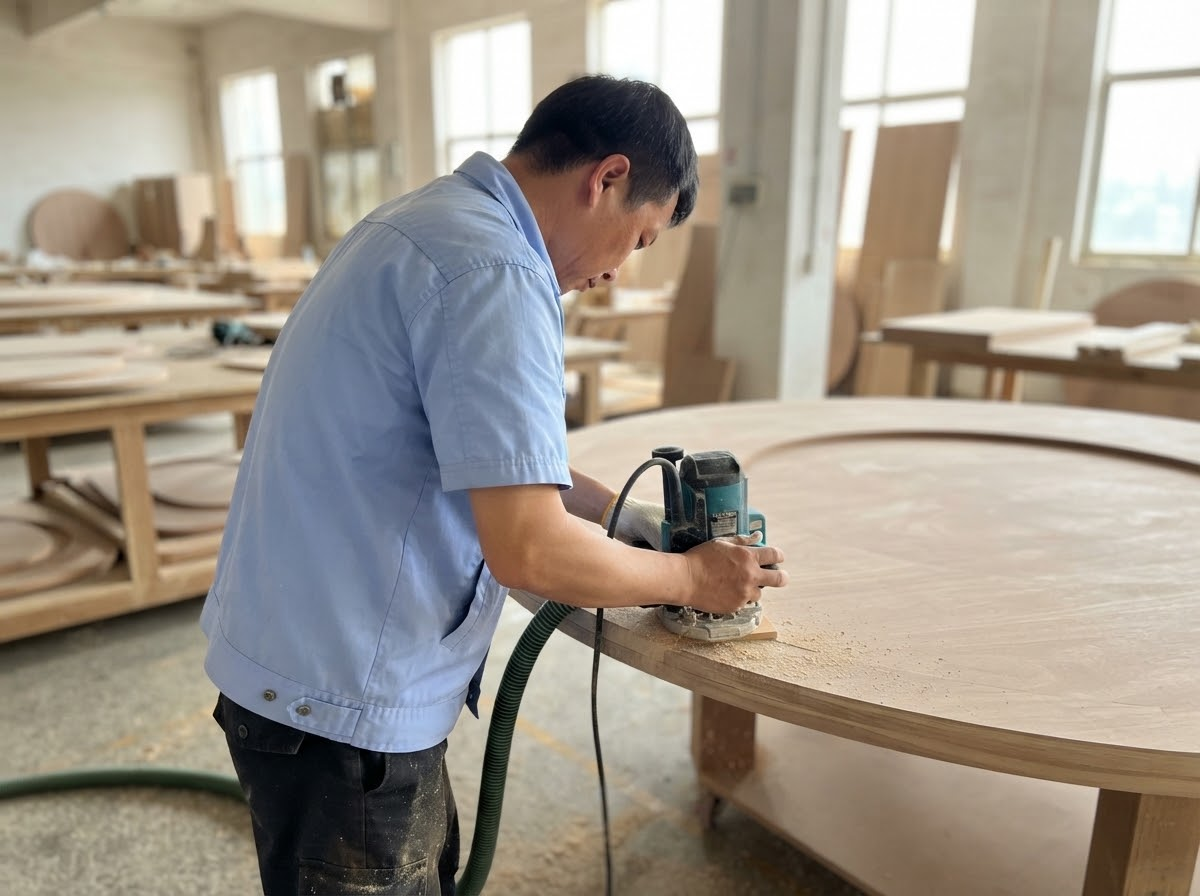
You’re wiping cheap toluene thinner sweat off your neck on a miserable, suffocating Tuesday afternoon in Longjiang. You’re standing dead center in a 50,000-square-meter facility, and your stomach is in knots. Something is entirely wrong. It’s too quiet. The sharp, toxic smell of fresh adhesive is missing—replaced by the stale scent of oxidized sawdust and dead air. Next to you, the slick sales rep in the oversized suit keeps nervously physically steering you away from Production Line 3. He flashes a strained, sweaty smile, aggressively insisting the line is just “down for routine sensor calibration.”
Right. Sure it is.
You can clearly see the thick, completely undisturbed layer of dust settled over the Homag edge banders. Nobody has flipped the power switch on those machines in at least a week. You wired a $45,000 deposit for 300 custom upholstered lounge chairs exactly twenty-one days ago. The raw ash wood frames aren’t even rough-cut. Meanwhile, the PU leather swatches they’re currently shoving across the scratched conference table? Pure garbage. They don’t match the master sample you signed off on last October. Not even close.
(And yeah, this exact nightmare plays out every single week. Nobody in procurement talks about it openly, but we all live it.)
Your boutique hotel opening in Miami is staring you down. 90 days left. Panic sets in. That acidic burn in your gut is telling you the ugly truth: this Chinese furniture mill isn’t just running a little behind schedule because of a “typhoon in Shenzhen.” They are completely broke. They’re taking your $45k deposit to pay off a hostile hardware supplier for a totally different client’s screwed-up order.
Industry Reality Check: The Showroom Trap
Most green buyers arrive in Foshan, see a massive, multi-level showroom with imported Italian marble floors, a barista station, and recessed track lighting, and immediately think they struck gold. Wow, these guys are financially bulletproof.
That is the biggest, most expensive lie in the Pearl River Delta.
The uncomfortable floor reality? That massive square footage is usually a lethal liability. It’s leveraged to the hilt. Half these guys are floating on high-interest, short-term bridge loans from local shadow lenders just to keep up appearances. When a mill starts circling the drain, the showroom stays immaculate while the raw materials warehouse out back gets quietly gutted. A beautiful facade masks a totally hollowed-out supply chain. To be brutally honest—the facade is actually funded by bleeding their sub-suppliers dry. They stiff the local foam guy just to keep the lights on for visiting overseas designers.
Here is your baseline survival rule: If the elaborate tea ceremony happening in the boss’s air-conditioned office is working harder than the CNC routers out on the floor, you are standing on a sinking ship.
Key Takeaway: The Hard Insolvency Indicators
- The Shell Game: Your fresh, hard-earned deposit is immediately hijacked to clear delinquent debts from a completely unrelated past project.
- Sub-Supplier Starvation: Material quality tanks overnight. Why? Because top-tier vendors cut off their credit lines, forcing the factory to buy scrap materials from shady tier-3 vendors strictly in cash.
- The Talent Drain: Master joiners and skilled upholsterers aren’t stupid. When payroll is late by even three days, they jump ship to the factory next door. You’re left with untrained day laborers gluing your frames together.
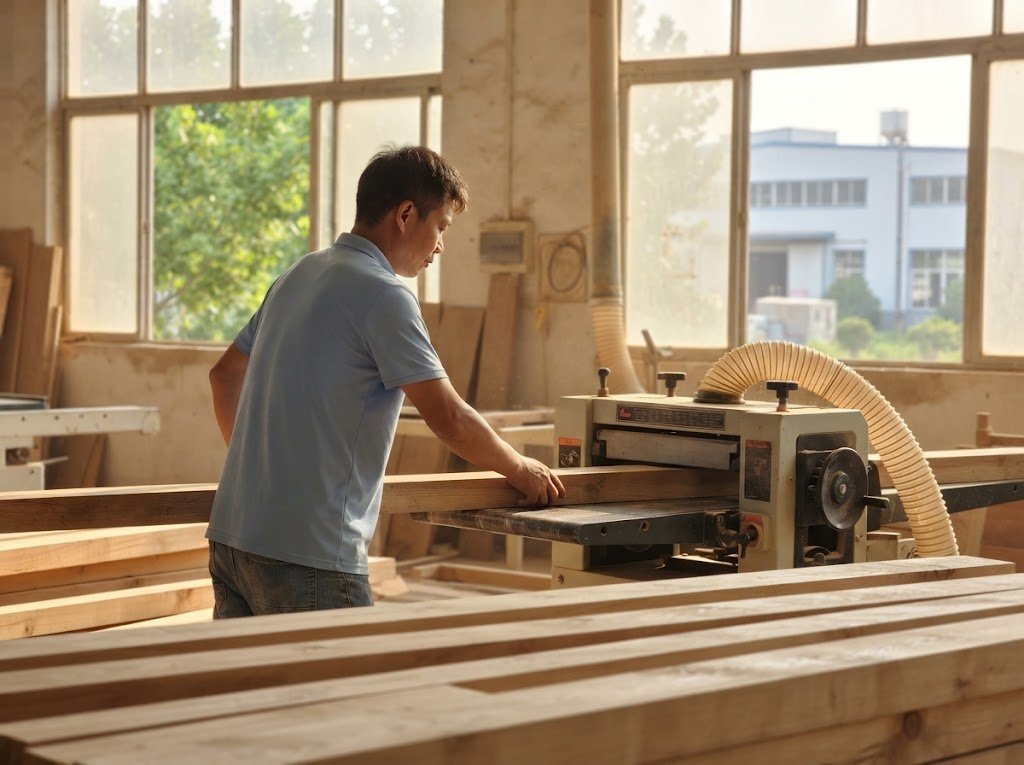
- Ghost Town Floors: Heavy machinery sitting completely idle at 2:00 PM on a Wednesday. Forget the “maintenance” excuse. They simply can’t afford the raw timber to run the line.
The Mechanics of a Collapse
Mechanism: The Bait-and-Switch Survival Tactic
Sourcing overseas is basically a massive, high-stakes synchronization act. You find partners, qualify them, and try to manage production across highly specialized industrial clusters. But when a factory runs out of operating cash, this entire ecosystem implodes spectacularly.
Think of a struggling neighborhood restaurant on the verge of eviction. The panicked chef starts watering down the soup. He swaps the fresh snapper for frozen tilapia weeks before the “Closed for Good” sign actually hits the front door.
Factories do the exact same thing. Say you’re buying out of the Anji bamboo cluster or maybe the Nankang solid wood belt. Suddenly, your specified premium, commercial-grade fabrics are quietly swapped for cheap, off-the-shelf poly-blends. The factory rep will swear to your face that it’s a structural “upgrade” for better abrasion resistance. Don’t buy it. They just lost their 60-day credit line with the textile mill down the road.
If a factory unilaterally changes a core material spec without trying to negotiate a price change with you first? They are screaming that their bank accounts are empty.
I watched this exact dynamic butcher a buyer in Dongguan last year. A high-end residential guy dropped a $120k deposit for a massive container of custom American walnut casegoods. The factory was secretly bleeding out, getting crushed by local debt collectors. So, they quietly swapped the imported walnut veneer for heavily stained, domestic birch. Cheap, nasty stuff that warps in humidity. The client only caught it because he demanded a high-resolution video inspection of the raw frames just before the topcoat went on. The factory formally went under three weeks later. The boss vanished overnight, taking the 30% deposit with him, and leaving the buyer with a pile of unsalvageable firewood.
Benchmark: Lead Time Elasticity
Let’s look at the raw, unfiltered operational math. Healthy, functional factories give you a 45-day lead time and they actually hit it. Maybe give or take a week for port logistics or a missing booking window. But a dying mill? They stretch time like a rubber band.
First, it’s a minor two-week delay. They’ll blame “unexpected provincial environmental inspections.” (Always a classic). Then they suddenly need another week because of “rolling power blackouts.” Then the excuses start getting weirdly specific, defensive, and totally unverifiable.
The issue isn’t even the factory anymore; it’s your flawed expectation of how a factory works. We expect logical, linear production. Insolvent mills do not do linear. They do daily, panicked triage.
Look at well-capitalized operations—take Interi Furniture, for example. When they handle large-scale export and hospitality projects out of the southern belts, their production scheduling stays predictably boring and rigid. Why? Because they maintain deep liquidity and actual trust with their raw material vendors. The high-density foam arrives exactly when the timber frames are clamped. But when a supplier goes broke and loses that vendor trust, every single component delivery turns into a frantic, cash-on-delivery hostage negotiation.
| Operational Reality | Stable Factory Baseline | Insolvent Mill Red Flags |
| Material Staging | 2-3 weeks of core materials visibly sitting on the floor | Total zero. Strictly hand-to-mouth, scrambling for scraps |
| Machine Utilization | 70%+ activity during standard daytime shift hours | Key machines dead silent; perpetually “waiting on a part” |
| Shadow Contracting | Only used for hyper-specialized finishes | Core joinery and basic upholstery secretly farmed out to sheds |
| The Money Ask | Standard 30% upfront, 70% against the BL | Begging for 50-70% upfront; desperate liquidity grab |
| Sample Revisions | 10-14 days. Precise matching to your tech pack | 4+ weeks. Full of “temporary” substitute materials |
Variable: Reading the Sub-Tier Trash
If you really want to gauge the health of a facility, ignore the boss in the tailored suit. Watch the delivery drivers.
This entire manufacturing ecosystem runs on an invisible web of localized, handshake credit. The guy making the corrugated cartons, the hardware distributor, the foam pourer—they usually extend 30 to 90 days of credit to established mills.
So, when you walk a factory floor, go look at the garbage and the staging areas. Look at the packaging materials stacked near the loading docks. If the cardboard boxes have some other factory’s name literally crossed out with a black Sharpie, or if the drawer hinges are arriving in unbranded, generic plastic baggies instead of standard DTC or Blum boxes? Run.
That means their primary, trusted vendors cut them off entirely. They are scavenging the open market for whatever they can buy with the loose cash in their pockets. A sudden, unexplained shift to generic sub-components is the loudest alarm bell in global procurement.
Risk Matrix: Crossing the Red Lines
Look, not every single delay means a collapse is imminent. Stuff happens. Typhoons hit the ports. Truckers go on strike. But there are unforgiving, hard red lines in this industry. Cross them, and you lose your shirt.
The Upfront Cash Grab.
Standard export terms are 30% upon order, 70% against the Bill of Lading. That hasn’t changed. If your vendor suddenly emails you demanding 50% or 70% upfront because they need to “secure raw materials in a highly volatile commodities market,” immediately pull the plug. They aren’t securing timber. They are using your cash to pay off local loan sharks, or trying to make payroll from two months ago so their workers don’t riot.
The Disappearing Middle Management Act.
You visit the Nankang facility and notice something odd. Your fluent, hyper-responsive English project manager? Gone. The grumpy veteran production supervisor who knew your specs by heart? Replaced by some 22-year-old kid who doesn’t know a dovetail from a dowel.
— When salaries don’t get paid, the highly employable, competent staff leave first. Always.
— The factory boss suddenly steps in to handle your mundane, day-to-day WeChat messages.
— Messages that used to get a reply in five minutes suddenly sit unread for 48 hours.
Phantom Sub-Contracting.
You flew out. You did the audit. You approved a gorgeous, high-tech facility. But behind your back, your goods are secretly being glued together in a dirt-floor shed three villages over. When a primary mill can no longer afford to pay its own in-house labor or run its heavy machinery, they shadow-contract the work to unregulated micro-workshops to save a few pennies.
The Counter-Indicator: The “VIP Rush Order” Trap.
This one kills so many buyers. They think it’s a massive win. The factory suddenly emails saying, “Great news! We can push your order to the absolute front of the line. We just need a slightly faster deposit transfer or a small surcharge.” Buyers feel like VIPs.
Don’t fall for it. It’s a desperate liquidity grab. A factory offering wildly uncharacteristic speed in exchange for faster cash is usually days away from local authorities padlocking their front gates.

Segmented Playbook: Stop Playing Defense
You cannot mitigate insolvency risk with some generic checklist you downloaded off a sourcing blog. A guy buying 500 rooms for a luxury resort has vastly different exposure than a designer doing a 10-piece bespoke villa. Here is how you actually protect your downside.
Hotel Procurement Directors
Your absolute worst enemy is the property opening timeline. Volume buyers get slaughtered when a factory hides its insolvency until month three, leaving your hotel with empty lobbies and un-rentable rooms.
— Stop accepting generic factory B-roll videos. Demand raw, continuous, unedited weekly video walkthroughs showing your specific goods on the line. Make them hold up a newspaper or a piece of paper with today’s date if you have to.
— Tie your deposit structures to physical reality. Pay based on verifiable milestones (e.g., “frames assembled,” “foam poured”) rather than arbitrary calendar dates.
— Pre-vet a backup vendor. Period. Keep them warm for the critical FF&E items.
Interior Designers
You care about proportion, scale, finish matching. Insolvent factories do not care about your design integrity. They will destroy your aesthetic to save 50 RMB on a chair.
— Put your own third-party QC inspector on the floor during the first production run. Not at the end when everything is packed and mistakes are successfully hidden inside a box.
— Sign and seal physical master samples. Write it explicitly into your PO that any deviation from the physical sample voids the final 70% payment.
— Watch the hidden hardware. Cheap drawer glides and feather-light, unbranded hinges are the absolute first casualties of systemic cost-cutting.
Independent Importers / High-End Residential Buyers
You live and die on margin and direct-factory access. This means you’re often dealing with smaller, highly fragile workshops operating on a razor’s edge.
— Stop wiring five-figure deposits blind. Pull a recent Chinese credit report through a legitimate third-party service first. It costs practically nothing.
— Watch the MOQs. If a factory used to strictly demand 50 pieces, and suddenly they tell you “literally whatever you want to order is fine,” they are starving. They just need cash, any cash.
— Keep your 3D models, CADs, and molds aggressively documented. If the factory owner does a midnight runner, you need to be able to shift production to another facility the next morning.
The absolute smartest defensive move? Retain the contractual right to send a truck and pull your tooling, molds, and raw materials off their floor within 24 hours of a missed production deadline.

Procurement FAQ: The Fallout
Q: My Foshan supplier just stopped replying to my WeChat after I sent the 30% deposit. Should I hop on a flight to Guangzhou and confront them at the factory?
A: Absolutely not. Call a local fixer. By the time a factory goes completely dark on WeChat, the game is usually already over. Aggressive creditors or the local government have probably already chained the doors. Flying over there just wastes a week of your life and $2,000 in airfare. Verify if the legal entity even exists anymore before you try knocking on a locked, empty gate.
Q: They’ve delayed my shipment twice, blaming a “strict government environmental crackdown” on the paint lines. Is this real, or are they just playing me?
A: It’s a real thing that factories use as a completely fake excuse. Yes, local bureaus do shut down paint lines for VOC emissions. But these crackdowns are heavily publicized and highly localized within a district. If the factory next door is spraying topcoats and yours isn’t? They are lying. They are stalling because they owe the paint vendor money and got cut off.
Q: We have custom, proprietary molds sitting inside a factory that we are 99% sure is going under. How do we extract them?
A: You show up with a rented truck, cash, and zero warning. Do not send a polite email asking for them back. Send a local rep to physically grab the assets immediately. If that mill officially enters liquidation, your proprietary molds get lumped into the general asset pool. They will be auctioned off to pay the boss’s local debts, and you will never see them again.
Q: If I spot three or four of these red flags, is a China supplier bankruptcy a 100% guarantee?
A: It depends heavily on the boss’s local guanxi (network) and whether he can tap into more shadow debt. But mathematically? Yes. Once the material sub-suppliers cut a factory’s credit lines, it is a walking corpse.
Forward Query
Navigating the gritty side of these manufacturing belts isn’t for rookies. Especially right now. Margins are getting crushed, global shipping is a headache, and factories are stressed. I’ve watched brilliant, well-funded procurement teams lose hundreds of thousands of dollars just because they put their faith in a slick CAD rendering and a smooth-talking rep instead of looking at the raw reality of the factory floor.
Next time you are walking a production line, do yourself a favor: ignore the immaculate showroom. Skip the tea ceremony. Walk straight to the back alley where the raw timber and veneer are stored. Is it stacked high? Are guys actively sorting it? Or is that concrete floor swept suspiciously, perfectly clean?
You have to ask yourself the hard question before you wire the money: Are you financing a manufacturer’s future, or are you just paying off their past?
Drop a comment below if you’ve ever had to frantically pull an order mid-production. I genuinely want to hear how you handled the extraction.