


I’m sweating through my shirt in a 105-degree Dongguan warehouse, staring at $120,000 worth of curved velvet sectionals. My phone is throwing a total fit. It’s a Vegas procurement director blasting me with all-caps WhatsApps because his grand opening is six weeks out and he needs the green light right now.
The factory boss? He’s leaning against a forklift, blowing ChungHwa smoke at the ceiling and scrolling WeChat. “Perfect, my friend. We load the truck?” he says.
I’ve walked these floors for fifteen years. You learn to ignore the smile. And you definitely don’t drink the expensive tea they pour in the showroom until the containers are actually sealed.
I grab a box cutter. I skip the neatly arranged cartons near the door and slice open one from the dusty bottom of a back pallet. The velvet is actually gorgeous. Seams are dead straight. But the second I flip that sofa over and rip the bottom dust cover off, the truth spills out. The frame looks like it was cobbled together from discarded shipping pallets. Unseasoned, wet wood. A million staples instead of screws. Not a single corner block in sight.
You can squeeze the sales rep for every last FOB penny, but if your China PSI inspection misses this garbage? You’re basically paying ocean freight on firewood. Let’s strip away the corporate BS and talk about how quality control actually goes down on the factory floor.
The Brutal Truth About Factory Inspections
KEY TAKEAWAYS: The Reality of Chinese Furniture QC
- Late means dead: A China PSI inspection is your absolute last line of defense, not your strategy.
- Pretty surface, ugly bones: High-grade fabric easily hides dangerous, hollow joinery.
- Specs equal survival: If your tech sheet doesn’t mandate exact wood moisture content, inspectors can’t enforce a damn thing.
- Failing is winning: A massive fail rate on your first go-around isn’t a crisis. It means your trap actually worked.
Half the buyers out there treat quality control like a minor DMV form. Pay an agency three hundred bucks. Get a 50-page PDF three days later filled with blurry photos of guys holding tape measures. A report that basically says, “Yes, the chair is brown.”
Wire the cash. Ship it.
Then the container hits L.A. and gets unpacked.
Suddenly, dining chairs are wobbling like seesaws. Walnut veneers are peeling in the air conditioning. Screws shear off when the install crew tries to torque them. Why? Because the standard procurement loop is a lie. Nobody wants to be the guy holding up the shipment.
Or rather, it’s not always a deliberate scam. Mostly, the factory is just suffocating under margin pressure. Their definition of “good enough” is vastly different from yours. If a chair holds a guy for five minutes without snapping, it passes their internal test.
My golden rule: Check it before they tape the carton, or assume it’s broken. The supplier’s job is to stuff the box and get paid. Your job is to not get fired. Those goals are at war.
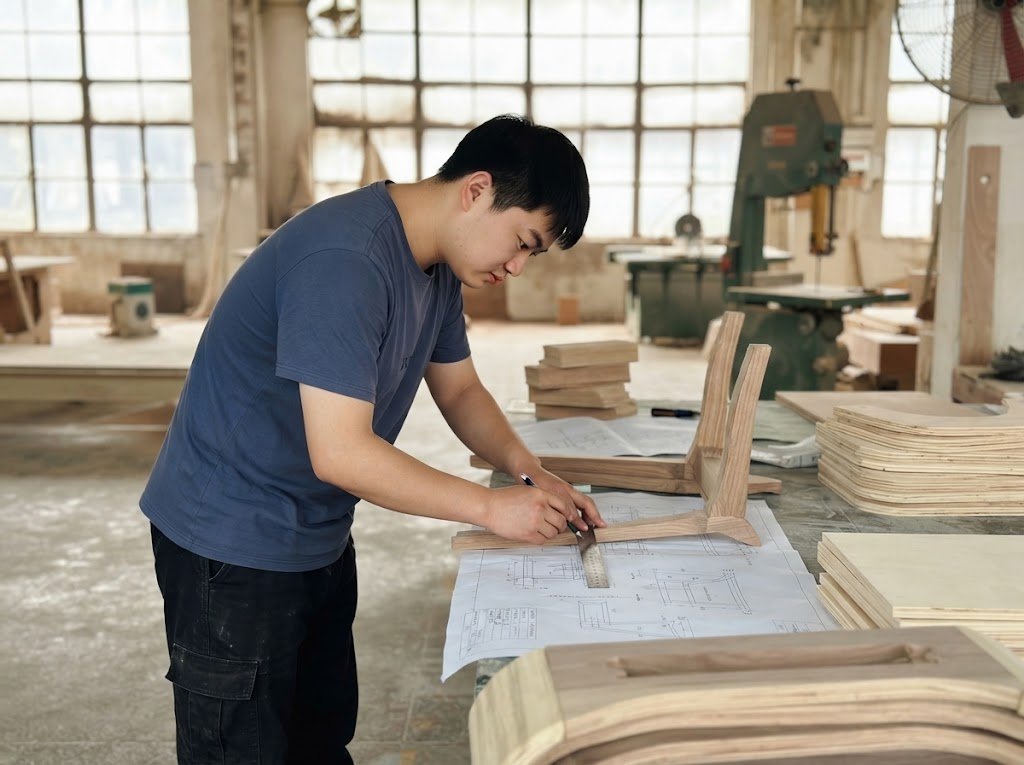
The Smoke and Mirrors of Sample Approval
China furniture sourcing is basically a massive bait-and-switch. That pristine “golden sample” you signed off on in March? It has absolutely zero relation to what comes off the line in August.
Think of it as a bad first date. The prototype was built in a quiet, climate-controlled R&D room by two guys who’ve been doing woodworking for thirty years. Flawless sanding. Upholstery pulled drum-tight.
Mass production is year five of a miserable marriage.
Those master carpenters are gone. The assembly line is run by piece-rate workers sweating to hit daily quotas so they can catch a bus home. (And yes, this happens at the “premium” factories constantly). A guy making pennies per chair back doesn’t care if the glue is fully cured before he clamps it. He just needs volume.
Last year, I caught a massive outfit in Anji pulling the oldest trick in the book. Two thousand outdoor loungers. They swapped the specified 304 stainless steel hardware for dirt-cheap 201 steel. Visually? Totally identical. But leave that 201 steel near a humid resort pool for six months, and it’s bleeding rust streaks onto the patio.
They will substitute ash for rubberwood to save a buck. They will shave the foam density down to 25kg/m³ to claw back a dollar per cushion. Skip a lacquer coat because it rained that week. Never, ever assume the mass production line is using the bill of materials from your prototype; it is a fatal mistake in Chinese furniture QC.
Are You Buying Wood or Expensive Sawdust?
Let’s talk about the silent killer: moisture.
I’d bet my own money that nearly half of all solid wood furniture claims out of North America come down to cracking or warping. Why? Because the factory botched the kiln drying. Kiln time costs serious money. So when the production line is a week behind—and it’s always a week behind—the kiln manager gets screamed at. He pulls the wood out early. It feels dry on the surface, but the core is a wet sponge.
If your inspector isn’t aggressively stabbing a calibrated moisture meter deep into the thickest part of a table leg, fire him immediately. That inspection is a total waste of paper.
The Cardboard Collapse
And don’t get me started on cartons. You could build a bulletproof mahogany credenza, but put it in single-wall recycled cardboard and it arrives looking like mulch. I’ve opened containers in Miami where the bottom row of boxes had completely collapsed into wet pancakes. The furniture inside was crushed. Not because of bad joinery, but because a floor manager saved eighty cents on a weaker box.
Navigating the Ecosystem: Finding Your Weight Class
Stop taking your boutique, two-container hotel project to a massive mega-factory in Foshan.
They. Do. Not. Care. Your order is a rounding error. They’ll dump your account on a 22-year-old sales rep who just graduated, push your production to the graveyard shift, and ignore your tech specs because you have absolutely no leverage to enforce them.
The smart money plays in the middle tier. Certain mid-sized specialists operate in a totally different reality. Take operations like Interi Furniture, which are dialed into custom hospitality and premium residential builds. Their risk profile forces them to behave differently. Factories that survive on remote resort rollouts—like sending hundreds of pieces to the Maldives or Zanzibar—usually have internal QC habits that align closer to Western standards out of the gate.
Why? Because air-freighting a single replacement bed frame to an island in the Indian Ocean wipes out the profit margin for the entire room. The sheer pain of fixing mistakes makes them better.
But don’t get lazy. Even with a solid mid-tier factory in Zhejiang, trust will ruin you. You earn trust through verified purchase orders, not because the boss bought you expensive hotpot and karaoke in Guangzhou.
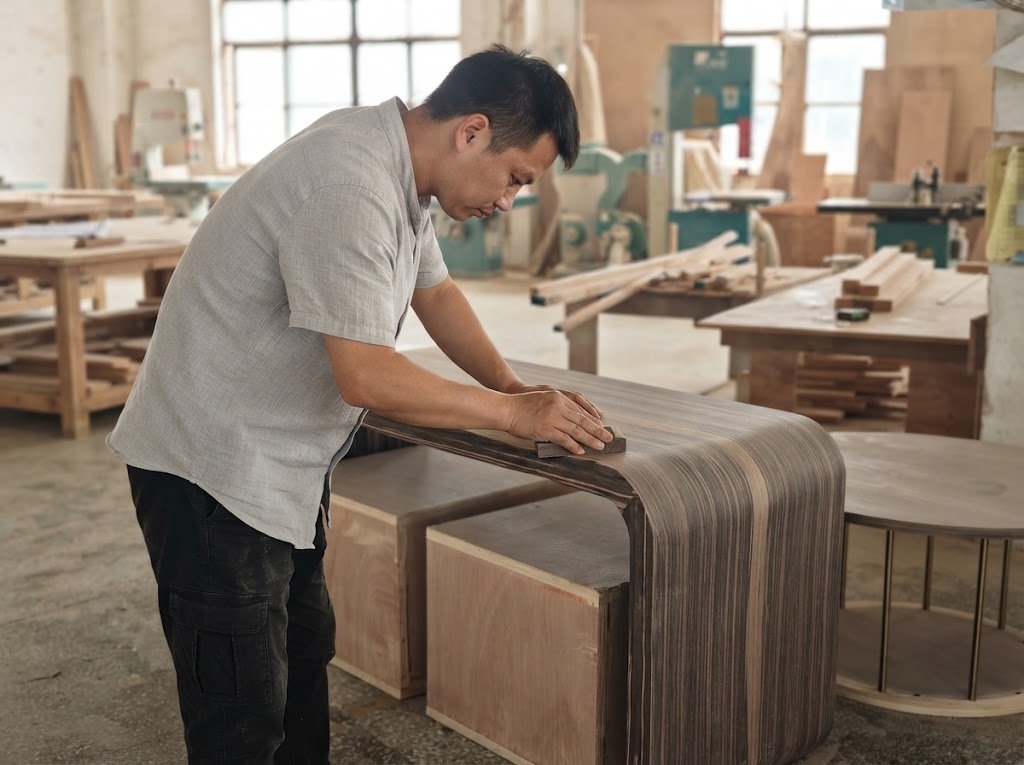
Structural Integrity vs. Surface Beauty
Factories hide the trash where the client won’t look.
Take a standard lobby chair. The fabric pattern lines up beautifully. The piping is crisp. Underneath? They’ve swapped hardwood corner blocks for random plywood offcuts, stapled together five minutes ago. Six months of heavy use and those staples rip out. The frame squeaks. Then it snaps in half.
I never walk a factory floor without a heavy-duty flashlight, a Stanley tape measure, and a Leatherman tool.
During a high-end resort inspection this past April, I told my auditor to rip the bottom dust cover completely off a finished sofa. The factory owner lost his mind. Screaming in Cantonese, waving his arms, accusing me of destroying his art. I didn’t blink. I told him: if it meets the spec sheet, I pay for the sofa in cash right now. If it fails, I reject all 200 units on the spot.
We tore it open. We spec’d two-inch spacing for the webbing; they spaced it six inches to save material. No serpentine springs anywhere. Just cheap elastic bands stapled to the wood.
A real China PSI inspection requires you to butcher at least one finished piece to see the skeleton.
The Chemical Cocktail
And the chemicals. Nobody wants to talk about the off-gassing.
You can’t furnish a luxury villa with dressers that reek of formaldehyde. Your inspector must walk the paint curing rooms—which, by the way, are suffocating in July. If they pack that furniture while the clear coat is still “green,” that shipping carton becomes a toxic gas chamber for a month at sea. Your install crew opens it in London, and the chemical punch to the face will literally knock them over.
The Ultimate Actionable Framework
Want to stop bleeding cash on bad shipments? Build an impenetrable wall. Relying on the factory’s goodwill is how you go bankrupt. Here’s the playbook I use on the ground:
- The 10% Blood Oath: AQL 2.5/4.0 is a joke for premium goods. Demand a strict 10% random sampling. If they make 500 chairs, you are physically tearing apart 50 of them.
- Moisture is non-negotiable: Solid wood has to read 8% to 12%. No exceptions. Ignore the endless crying about the “plum rain season in southern China.”
- The Concrete Drop: Pick up a packed carton. Drop it from your waist onto the bare concrete floor, directly on the corner. If the box fails a three-foot drop, an angry forklift driver in Long Beach is going to obliterate it.
- Count the hardware: They always short the screws. Make your guy empty five hardware packs and count every single washer. Being short one bolt means a $2,000 bed can’t be assembled.
- The Solvent Rub: Dip a white rag in hot water or solvent. Rub it aggressively on the stained wood. If color bleeds onto the rag, the clear coat is completely useless.
- The FaceTime Trap: Don’t let them walk you around on video to “save you an inspection fee.” They point the camera exactly where they want. It’s pure theater.
And here is the biggest red flag of all: If you walk in and there are ten pristine cartons waiting by the front door, with the boss holding a box cutter? You are being played.
They spent all night making sure those specific boxes were flawless. Walk right past them. Point to a pallet buried under thick plastic in the darkest corner of the warehouse and say, “Pull that one.” Watch the absolute panic in their eyes.

The Real-World FAQ
People lose their minds when a container is on the line. I get the same frantic calls every month. Here are the answers you actually need when things go sideways.
Q: The factory is screaming that a China PSI inspection will delay my ship date by two weeks because unpacking is too hard. Normal?
A: Total bluff. Reputable places bake inspection days into the master schedule. If they are whining about delays, they’re trying to shove garbage onto a truck before you catch them. Do not cave.
Q: What should I actually be paying for a Chinese furniture QC inspector who isn’t blind?
A: You’re buying eyes, so pay for them; anything under $250 to $350 a day buys you a rubber-stamp report. Those $100-a-day guys are absolutely pocketing red envelopes from the factory boss to look the other way.
Q: Factory won’t let my third-party guy in the door. Now what?
A: Cancel the order. Dead serious. If they block an inspector, they are hiding a catastrophe. Nine times out of ten, they subcontracted your PO to a dirty, unvetted sweatshop down the street to save a dime.
Q: We found a 15% defect rate. Factory offered a 5% discount if we just ship it. Take the money?
A: Never. If 15% of a random sample is trash, the whole run is poisoned. That 5% discount buys you a massive customer service nightmare when the goods reach end-users. Force a rework on their dime.
Q: Do I really need to inspect an order if I’ve used this exact factory for six years without a hiccup?
A: Yes. Managers quit. Wood suppliers go under. They silently swap sub-contractors to save money and won’t tell you. Complacency kills quality faster than anything else.
The mythical, mistake-free Chinese factory doesn’t exist. Stop hunting for it. Your only job is to build a fortress of verification around the supply chain you actually have.
You can be the absolute nicest guy in the room over a spinning table of dim sum. Drink with the boss, swap photos of the kids. But the second you step onto that production floor, you need to turn into an absolute nightmare. Are you entirely sure what’s hiding inside that shipping carton? Or are you just crossing your fingers?
Hope doesn’t pay the bills in global trade. It just loses them. Pull the staples, drop the boxes, and never sign off on a container until you have hard, empirical proof.
Stay sharp out there.