

Marcus flew into Guangzhou last March. Excel sheet. Hotel chain budget. And that smile — you know the one. The smile of a guy who thinks he’s cracked the code because he found a “factory” on Alibaba. Her name was Lily. “Dear friend” in every email. Headboards looked sharp. $340, FOB Shenzhen. Signed the PI in the hotel lobby. Done deal, right?
Three months later, the containers hit Long Beach. The veneer? Off. Not a little — noticeably, embarrassingly off. Hardware? Switched to something cheaper that looked similar in a photo. When Marcus traced the shipping docs back, the “factory” he’d toured on Lecong Avenue turned out to be a showroom. The actual build happened in Shunde, some 12,000-square-meter plant he’d never heard of, run by a completely separate company. Lily wasn’t a manufacturer. She was a trader. Twenty-eight percent markup. That wasn’t the crime. The crime was he never knew whose hands were actually on the tools.
This isn’t a horror story. In this business, it’s Tuesday.
The Brutal Truth Nobody Writes
Here’s what those sourcing blogs won’t tell you — because they need their affiliate links.
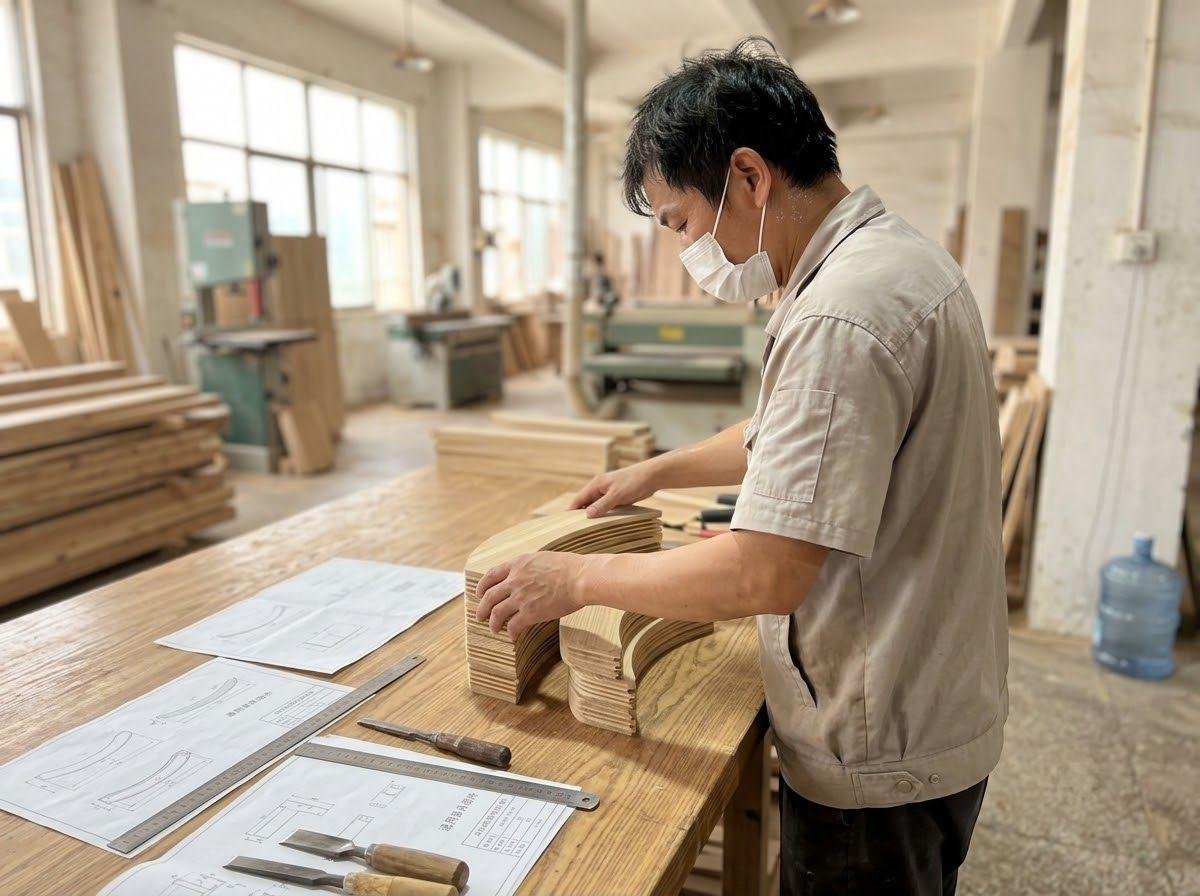
The Chinese furniture factories that answer your Alibaba inquiry in two hours? The ones with glossy PDF catalogs and perfect English? They’re almost never the ones you want. The real manufacturers — vertical production, in-house QC, CNC operators who’ve been there eight years — they’re not sitting around optimizing keywords at 9 AM. They’re on the floor. Arguing with a veneer supplier who delivered walnut that’s half a shade too red. Trying to figure out why the edgebander keeps throwing tape halfway through a run.
Industry observers estimate that maybe seven in ten “manufacturers” actively pitching overseas small-to-medium buyers are actually traders, showrooms, or hybrid operations farming out the majority of what they sell. Not a scandal. Just math. Your fifty-piece order is a headache to a real factory. To a trader? It’s lunch money. And the trader speaks better English, replies faster, and takes prettier photos than the workshop ever will.
Rule of thumb: if they reply too fast, with too perfect a brochure, and call you “dear friend” — you’re not talking to the workshop. You’re talking to the filter.
Key Takeaways
- China sourcing strategy isn’t about finding the cheapest quote. It’s about identifying, vetting, and contracting directly with manufacturers who own their production lines — not brokers who aggregate orders and quietly subcontract the work.
- The Chinese furniture factories that are easiest to find online are usually the most expensive and the least transparent.
- Being close to a showroom cluster like Foshan Lecong doesn’t mean you’re close to actual production.
- The real cost of middlemen isn’t the markup. It’s the loss of technical control and supply chain visibility.
Why the Real Workshops Hide in Plain Sight
What “factory direct” actually means over here
Finding a genuine manufacturer in China is like trying to eat where the locals eat in a tourist city. Skip the place with the laminated menu in six languages and the hostess pulling tourists in off the sidewalk. Walk past it. Down the alley. Behind the loading dock. Metal door. No sign. Maybe a guy smoking outside who looks at you like you’re lost. That’s where your taxi driver eats. That’s where the food actually happens.
The furniture industry works exactly the same way. The gleaming showrooms on Lecong Avenue in Foshan — marble floors, LED spotlights, sales staff in blazers — are retail theaters. Some are factory-owned. Plenty aren’t. The actual millwork might be forty minutes away in Shunde. Or across the provincial border in Jiangmen. Or in some converted warehouse in Dongguan where the rent is cheaper and the environmental inspector hasn’t shown up in months. Buyers walk into these showrooms, see beautiful staging, and assume they’re standing at the source. They’re not. They’re at the gift shop.
But here’s the thing that took me years to figure out. The factory isn’t hiding from you because they’re crooks. They’re hiding because they don’t need you. Not yet. Take a mid-sized solid wood shop in Longjiang — maybe 150 workers, steady export volume. They’re already drowning in orders from trading companies they’ve worked with for a decade. Your cold email asking for “best price and MOQ” isn’t just noise to them. It’s a billboard that says “I have no idea how this industry works.” And that makes you expensive to educate and risky to take on.
Actually, wait. That’s not quite right. It’s not that they don’t need you at all. It’s that your order size, your timeline, and your lack of Mandarin make you a bad bet compared to the trader who handles the headache for a smaller margin. Can you really blame them?
The Chinese furniture factories that scream for overseas business — the ones with aggressive ads and polished websites — usually have capacity problems, quality inconsistencies, or both. Sometimes all three.
The showroom test that separates factories from traders
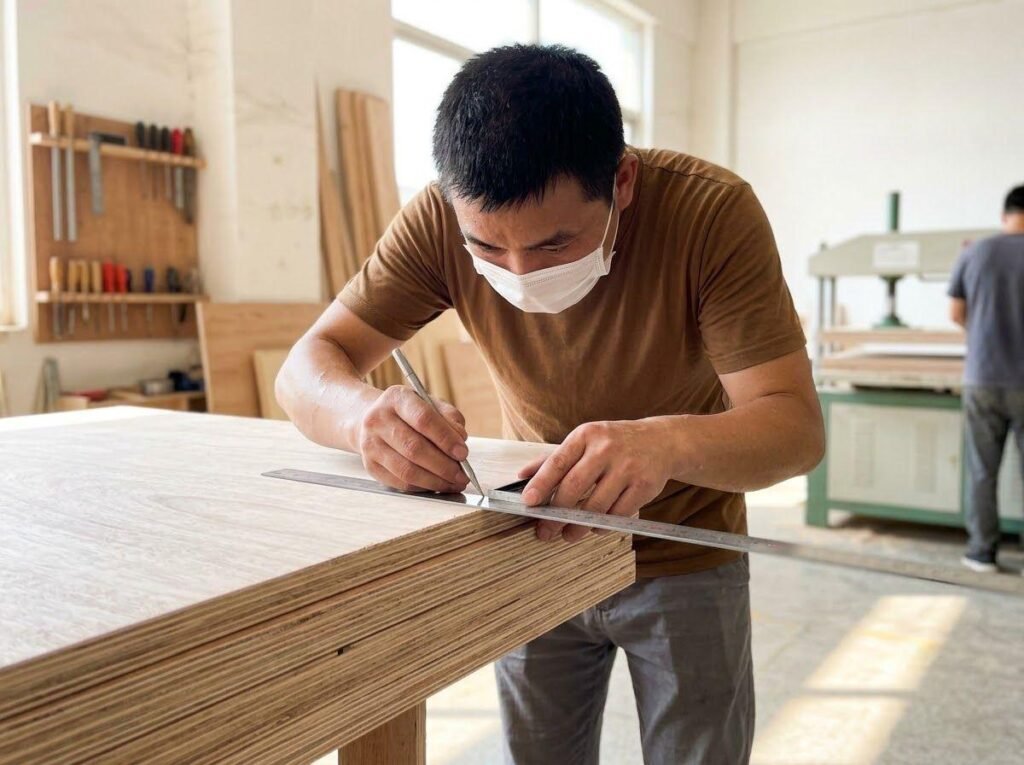
Walk into a facility and everything looks immaculate? Be worried. Real factories have sawdust. Offcuts stacked in corners. A rejected headboard in burgundy because the client said it was half a Pantone off and they meant it. Dust. (And yes, the dust is real — anyone who tells you a working woodshop is clean is selling you something. And it’s not furniture.)
A trader’s showroom, by contrast, is a museum. Every piece is flawless because every piece is a sample. The trader doesn’t build anything. They curate. So when you ask for a modification — “Can we widen the nightstand by 40mm?” — the factory says “let me check with the shop foreman” and comes back with a technical reality. The trader says “no problem” — then scrambles to see if anyone in their network can actually do it.
And here’s the part that still makes me laugh. Sometimes the trader doesn’t even know they got bumped to a different factory until the production order clears. Dongguan, a couple years back. A trading firm I know — composite observation, not naming names — had a five-year “partnership” with their “factory.” Big hospitality job. The “partner” quietly shoveled 40% of the casegoods to a smaller workshop in Nankang because they were slammed. Nobody told the buyer. The veneer mismatch was bad enough that the hotel client rejected an entire floor’s worth of furniture. The trader ate the cost. The buyer ate three months of delay.
Where the Real Work Gets Done
Foshan isn’t the only game in town
Everyone knows Foshan. It’s the Hollywood sign of Chinese furniture. But if you’re sourcing for a specific segment — high-end hospitality, custom residential, boutique hotel fit-outs — you need to understand that the map is way bigger than the brand.
Think of it like the American music scene in the 1960s. Nashville gets the marquee. But Muscle Shoals, Memphis, Stax — that’s where the sound was actually cut. Same logic applies here.
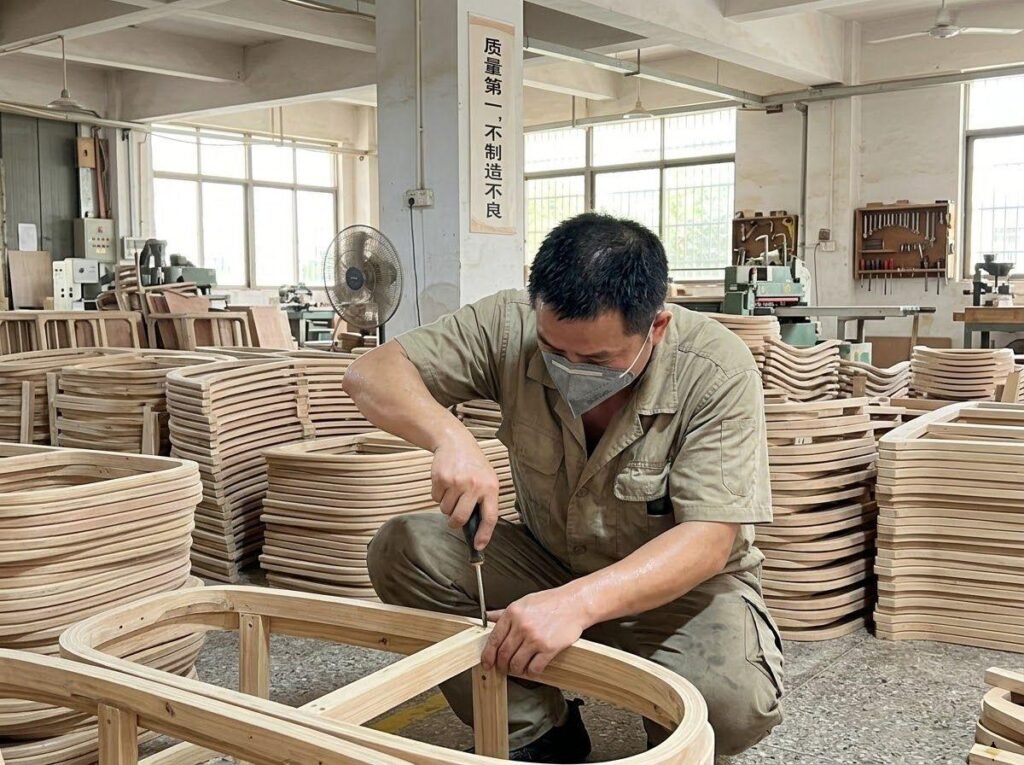
For upholstered hospitality pieces — headboards, banquettes, lounge seating — some of the steadiest workshops I’ve encountered aren’t in Foshan at all. They’re in Dongguan, tucked behind electronics factories in towns like Dalang or Houjie. Why? Because ten years ago, that labor pool was cutting leather for shoes. Now they’re cutting foam and fabric. The skill transferred, and these shops know hospitality soft goods better than some of the big names.
Bamboo and rattan? Anji, Zhejiang. Mid-market solid wood? Nankang, Jiangxi. Whole county runs on furniture. You smell the lacquer before you see the town. Metal-and-wood hybrid pieces — the kind you see in boutique hotel lobbies? Longjiang in Shunde has clusters that most overseas buyers never visit because they don’t show up on the first page of Google. They don’t need to.
The best Chinese furniture factories are rarely the ones with the best SEO.
The ecosystem: big, small, and everything between
Some buyers gravitate toward the massive operations in Foshan — 500 workers, ISO certifications, dedicated export departments. I get it. Feels safe.
But others find that mid-sized specialists offer a completely different risk-reward equation. Operations like Interi Furniture — Guangdong-based, focused on custom hospitality and residential casegoods — sit in that middle tier. Big enough to handle consistent veneer matching and batch quality across an 80-room hotel project. Small enough that you can still get the production manager on WeChat and ask why the pull handle is sitting 2mm off-center. You won’t find them running aggressive Alibaba campaigns.
The mistake buyers make is assuming bigger equals safer. It doesn’t. Drop a 200-piece hotel package on a giant manufacturer. That’s maybe 2% of their monthly output. You don’t get their A-team. You get whatever line has capacity. Whatever shift is available. The mid-sized specialist, though? Your repeat business might actually matter to them. That changes the incentive structure. It changes who answers your emails at 2 AM when the container shows up missing hardware. And trust me — something always goes wrong.
A Framework That Actually Works
Forget the glossy “Ultimate Guide to Sourcing” garbage. Here’s what I actually do. Fifteen years. Not elegant. But it separates real manufacturers from middlemen.
Ask questions that make a sales rep sweat. “What’s your kiln schedule for walnut before it hits the router?” “Foam cutting — in-house or sent out?” If every answer is “I will check with engineer,” you’re talking to a kid who’s never smelled lacquer thinner and never set foot on the production line.
— Check the worker bathroom. I’m dead serious. The state of the workers’ facilities tells you more about management culture than any ISO certificate hanging on the wall. Clean bathrooms mean someone with authority cares about retention and discipline. Filthy bathrooms mean corners get cut where you can’t see them. And if they cut corners on their own people, they’ll cut corners on your headboard.
A red flag that goes against everything the gurus say: A factory claiming to have no MOQ is more dangerous than one demanding a high minimum. “No minimum” means one of two things. Either they’re a trader farming your order across three small workshops. Or they’re so cash-starved they’ll take anything — including your tiny order — and figure out how to build it later. A real factory knows their break-even point. They’ll tell you “one container” or “not this quarter” or “come back when you have 300 pieces.” That honesty is a feature. Not a bug.
| What Traders Usually Say | What Real Factories Actually Do |
|---|---|
| “We have our own factory” (but never invite you to see it) | Invite you to visit. Sometimes insist on it. |
| Instant quotes for any customization you ask for | Ask technical questions before they price anything |
| Perfect English, 24-hour response time | Slower replies. Sometimes through WeChat translation. |
| No MOQ. Any quantity welcome. | Clear MOQ tied to actual production line minimums. |
| Every product looks flawless in photos | Show you the reject pile and explain what went wrong. |

The Questions Buyers Actually Ask
Q: I’ve been messaging a supplier on Alibaba for three weeks. They sent samples, the price looks good, and they call themselves a manufacturer. How do I actually know for sure?
A: Get their factory address. Plug it into Baidu Maps. Switch to satellite view. If the pin drops on a high-rise office building or a shopping district, they’re not making furniture. If it’s on the edge of town in an industrial zone, you might have something. Then demand a live video call. Not the showroom — the production floor. Have them walk past machines with their company name on them. Show you the sawdust. A trader can fake a photo album. They can’t fake a live walkthrough of a facility they don’t own.
Q: Is it worth flying to China just to visit factories, or can I handle this from my desk?
A: Under $50,000, remote vetting can work. Video calls, third-party inspections, sample approvals. Above that threshold, get on a plane. Not because you can’t verify quality remotely — you can, with the right inspector. But because the factory needs to believe you might show up at their door unannounced. That possibility changes their behavior. It’s the difference between being a WeChat avatar and being a real account they can’t afford to screw up.
Q: What’s a realistic markup if I’m buying through a trading company instead of going direct?
A: Based on export data patterns I’ve watched across multiple categories, trading company markups on furniture typically run 15% to 35%. Simple, high-volume stuff like dining chairs might be 12% to 18%. Complex hospitality casegoods with custom finishes? 25% to 40% isn’t unusual. The question isn’t whether the markup is fair. It’s whether the trader is earning it. Technical translation, order consolidation, QC oversight — that’s value. Just inserting themselves into an email chain you could have handled yourself? That’s rent-seeking.
Q: Everyone says visit the factory floor. I get it. But what am I actually looking for when I’m there?
A: Find the reject pile. Every real factory has one. If they claim they don’t, they’re lying. Ask to see pieces that failed QC and ask why. Look at whether the workshop is organized by process — cutting, sanding, assembly, finishing — or whether everything is happening in one chaotic room. Check if workers are wearing masks and ear protection. Not because you’re an OSHA inspector, but because safety compliance correlates with management discipline. And management discipline correlates with whether your order ships on time or becomes a six-month nightmare.
Q: Can I really bypass middlemen completely, or is some level of intermediary always necessary?
A: It depends on what you’re buying and who you are. If you’re a major hotel group with a Shanghai procurement office and staff who speak Mandarin, you can go direct on almost everything. If you’re a boutique interior designer in Denver sourcing 30 custom pieces for a residential client, a specialized agent might save you money even with their fee — because a real factory won’t take your call seriously at that volume, and you’ll burn six months chasing answers that a good intermediary can get in a day. Bypassing middlemen isn’t about eliminating every intermediary. It’s about eliminating the ones who don’t earn their place.
The Hard Lesson
Marcus flew back to Foshan six months later. No Alibaba. No “dear friend.” He spent two days in Shunde industrial parks, got lost twice, ate noodles from a plastic stool next to a plywood broker, and found a factory that made him sign the contract in Chinese. The MOQ was higher. The lead time was longer. But his second order cost 18% less, the veneer actually matched, and when a delay hit, the factory boss called him directly instead of forwarding an email.
The lesson isn’t that middlemen are evil. They’re grease in a machine built on guanxi and language barriers. The lesson is that you can’t outsource your judgment. At some point, you look across a table — maybe over tea, maybe over cigarette smoke — and you decide: does this person actually own the machines? Or are they just really good at forwarding emails?
So here’s my question. If you can’t explain to your client why one factory’s dowel joint is better than another’s cam-lock assembly on a headboard that’s going to get slammed by housekeeping carts for ten years — do you really want to be the person picking the supplier? Or are you just praying the guy in the middle knows the difference?