

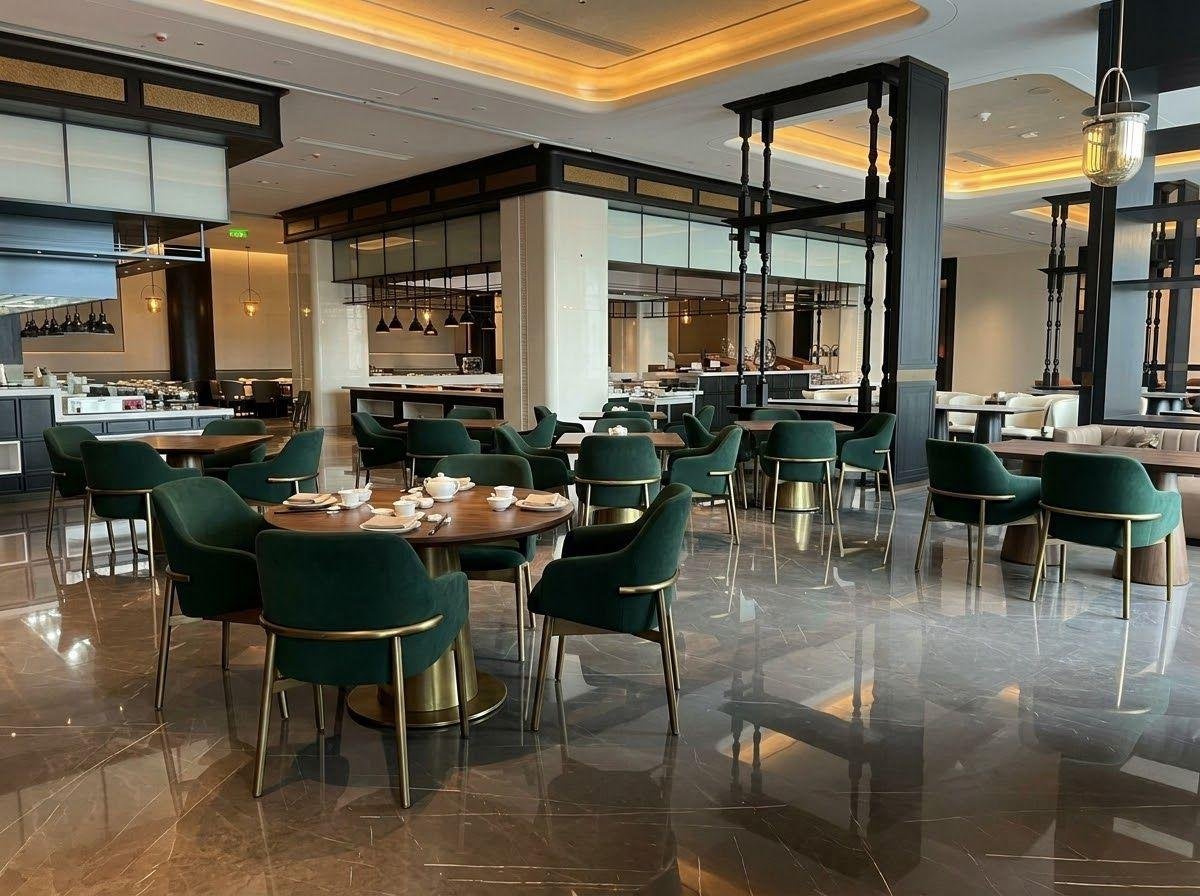
The phone buzzed at 11 p.m. Dubai number. I knew before picking up — nobody calls at that hour with good news.
“My European guy vanished,” the voice said. No hello. “Opening’s in six weeks. I need five hundred seats, barstools, booth units, the works. Can you pull this off in thirty days?”
I laughed. Not because it was funny. Because I’d been here twice. First time, Foshan, 2019. Air-freighted two hundred chairs and paid more for the plane ride than the damn chairs cost. Second time, Longjiang, last spring. Squeezed a full 40-foot high-cube through in twenty-two days flat. Both jobs were ugly. Both bled money in ways the P&L never quite captured. But the restaurants opened. Doors unlocked. Guests sat down.
Here’s what the trade magazines won’t tell you: that 30-day sprint? It’s not sourcing. It’s triage. Controlled chaos with a wire transfer attached.
The Brutal Truth
You don’t “source” five hundred restaurant seats in a month. You scavenge.
Most buyers think the factory’s the bottleneck. Wrong. The factory’s ready. Your mood board is the bottleneck. Your “let me check with my designer” is the bottleneck. Your obsession with being special.
Hard rule — and I say this having watched dozens of projects crater — if you’re at thirty days, you don’t get to be original. You get to be fast. That means stock on the floor, finishes already mixed, jigs already set. Custom fabric? Forget it. Custom dimensions? Only if they own the mold and it’s sitting right there. You’re not curating a space. You’re filling a hole with furniture that exists today.
Can the factories do it? Foshan’s warehouse district alone holds enough restaurant seating to outfit every hotel opening in Southeast Asia this quarter. Capacity isn’t the issue. Coordination is. One email thread where “walnut” becomes “walnut-veneer.” One WeChat message misread at 2 a.m. One customs declaration with a HS code typo. Poof. Your thirty days evaporate.
And the kicker? Speed costs. Not a little. A lot. Rush fees. Overtime welding. Air freight that makes your accountant cry. The math is brutal — the faster you need it, the more you pay for the privilege of panic.
What “30 Days” Actually Means on the Ground
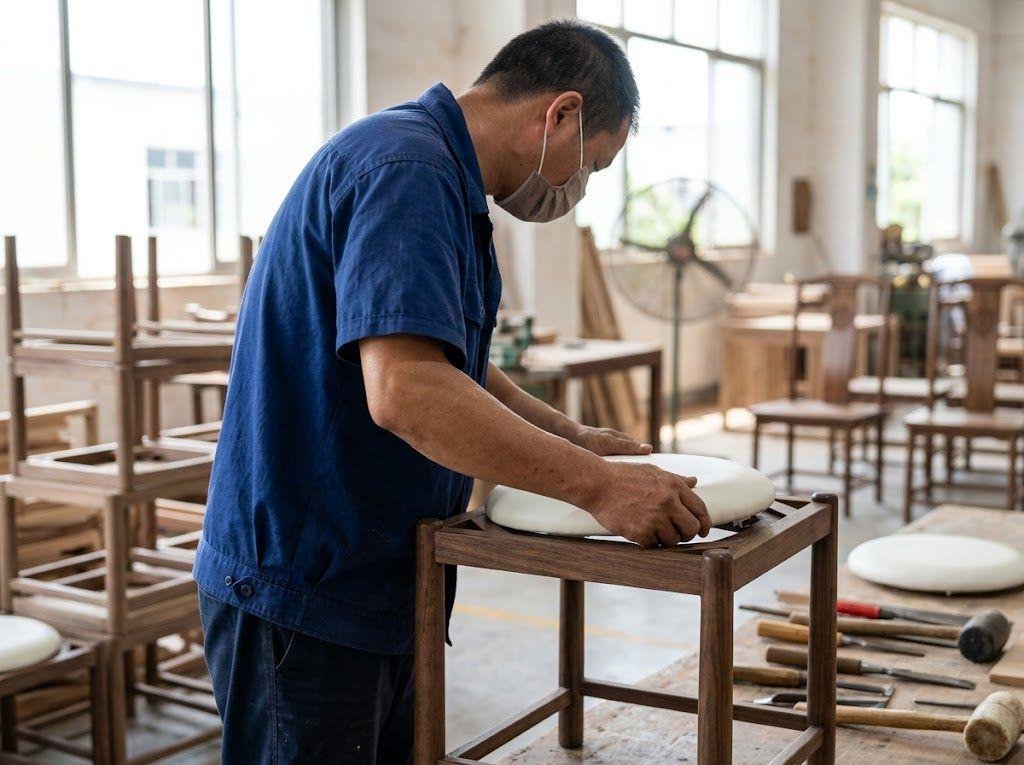
China restaurant furniture sourcing, when you’re talking about a real deadline, isn’t some elegant procurement cycle. It’s you, a laptop, a factory sales rep who hasn’t slept in two days, and a ticking clock. Textbook definitions say it’s about identifying, vetting, and procuring commercial-grade seating from manufacturing clusters in Guangdong or Zhejiang. Reality? It’s a fire drill with wire transfers.
Think of it like this. You walk into a bakery the night before a wedding and demand a cake. You don’t choose the flavor. You point at whatever’s under the glass and say “that one.” And you say thank you.
What Can You Actually Get?
In my experience — and I’m ballparking here based on what I’ve seen move through Foshan in a hurry — maybe seven out of ten “emergency” restaurant pulls fall into three buckets:
Stock goods. Finished. Sitting in a Dongguan or Longjiang warehouse. Limited styles. Limited quantities. You take what they got, or you don’t eat.
Semi-custom. Existing frames. Your pick from their pre-approved fabric cards or laminate swatches. Two weeks if the line isn’t choking on other rush orders.
Full custom on crash overtime. Only works if you’ve bought from the factory before and they trust your deposit. New buyer asking for this? They’ll smile, take your money, and miss your date.
But here’s the part that kills me. Most buyers don’t even know which bucket they’re in until day five. They fire off a Pinterest link to some trading company on Alibaba and wait for magic. Magic doesn’t happen. A clerk in a WeChat group happens. Maybe.
Key Takeaway
- Thirty days isn’t design time. It’s logistics warfare.
- Your finish options shrink to whatever’s already on the shelf.
- Air freight is usually the only play for a full opening; budget three, four, maybe five times your normal shipping rate.
- The buyer who replies fastest wins. The buyer who “needs to sleep on it” gets left behind.
The Factory Floor at Midnight
I was in Longjiang last year, ten p.m., metal-frame factory. Lights blazing. Welders going. Manager looked like he’d been living on Red Bull and cigarettes for a week. “Saudi hotel order,” he grunted. “Triple shift.” I asked about my guy’s five hundred chairs. He didn’t even look up. Just waved a laminated card — six styles, six finishes, take it or leave it. “Pick from this, we ship in fourteen days. Want something else? Call me next quarter.”
That laminated card. That’s your universe of possibility right there.
Now, some buyers love the big boys. The Foshan showrooms with floors like airport hangars. Thousands of SKIs, mile-long catalogues. Others — and I’ve seen this work — gravitate toward mid-sized outfits that live and breathe tight deadlines. Operations like Interi Furniture, for instance. They focus on hospitality and commercial project seating. Tighter lines. Faster WeChat replies. Used to buyers who don’t have three months to stroke their chins. You won’t get lost in a thousand options. You’ll get forty that actually leave the dock. Different math. Different risk.
But listen — the factory’s only half the war.
The Supply Chain Nobody Talks About
Sourcing restaurant furniture out of China isn’t a transaction. It’s a relay race where every runner’s holding a baton dipped in gasoline.
Why Shipping Eats Your Lunch
Ocean freight, Shenzhen to Jebel Ali? Eighteen to twenty-two days. That’s your whole window, and you haven’t even cut wood yet. So the thirty-day job comes down to one ugly question: how much cash are you burning to avoid that boat?
Air freight a full container equivalent? Don’t even think about it. You’d need a cargo plane and a customs broker with questionable ethics. What actually happens in the real world is messier. Hybrid. Air-freight the VIP section — the bar, the feature wall seating, the pieces that end up on Instagram. Ocean the rest. Accept a soft opening with half your seats covered. Or split into two containers and pray the first one doesn’t sit in transshipment at Singapore for a week because of a port strike you didn’t know about.
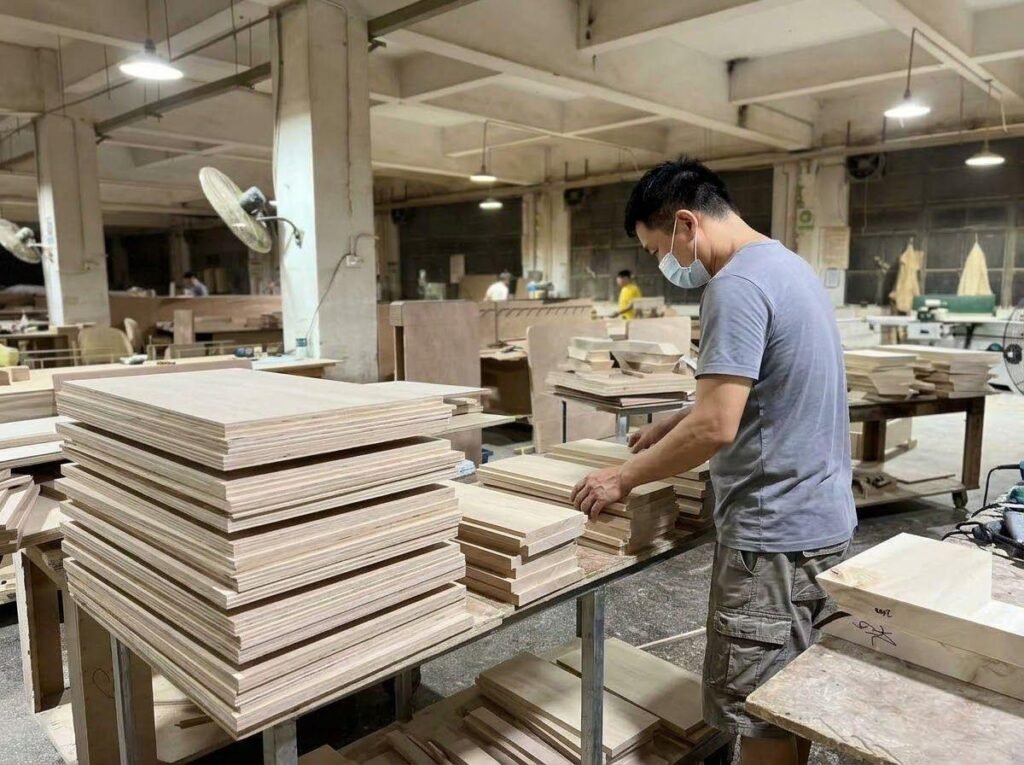
Actually, wait — that’s not even the real delay. The real killer is consolidation. Your five hundred pieces? Probably coming from three, four factories. No single plant makes everything. So a trading company, or your project guy on the ground, bundles it. Every handoff costs a day. Every handoff is a chance for something to go sideways.
The QC Problem Nobody Solves
You want third-party inspection. Sure. Everyone wants it. But in a thirty-day window, inspection happens after the container seals. Or it doesn’t happen at all. You get factory self-photos over WeChat. A video of a guy wiggling a chair leg. And then you roll the dice.
I learned this the hard way in Dongguan. Two-hundred-seat hotel lounge. Factory sent photos. Looked fine. Container landed. Ten percent of the chairs had wobble. Not broken. Just… not quite right. We fixed them on-site with shims and a power drill. Took a day. Cost nothing in parts. Cost everything in dignity. (And yeah, this happens more than the factories admit. Way more.)
Who You’re Actually Dealing With
The landscape isn’t one thing. It’s layers. And the layer you pick decides whether your thirty-day timeline is real or fiction.
| Who You’re Calling | What They Do | Speed | The Catch | Best For |
|---|---|---|---|---|
| Direct factory (Foshan/Longjiang) | Sales rep on WeChat, probably in the factory dorm | Fastest if they got stock | No safety net. You miss a spec, it’s on you. | Repeat buyers who know how to read a production photo |
| Trading company / showroom | Agent in a suit, slick catalogue | Medium — they bundle your mess | They mark it up. Sometimes a lot. | First-timers, mixed orders from multiple plants |
| Project sourcer on the ground | Independent guy with a scooter and connections | Depends on his network | You’re buying his relationships | Buyers who need someone to yell at the factory in person |
| Online wholesale platform | Alibaba, Global Sources, etc. | Slow. Built for volume, not velocity | Spec drift. The photo and the box don’t always match | Small stuff. Low stakes. Not your flagship opening. |
The pattern I’ve seen? Buyers with tight deadlines overpay at trading companies and under-manage direct factory relationships. There’s no free lunch. Just expensive lunch, and risky lunch, and lunch that shows up late and cold.
Now, while some buyers gravitate toward those massive Foshan showrooms with the airport-hangar floors, others find that mid-sized specialists — outfits like Interi Furniture, which focuses on hospitality and commercial project seating — offer a different risk-reward equation. Their lines are tighter. Their reply times faster. They’re used to buyers who don’t have twelve weeks to deliberate. You won’t get a thousand SKUs. You’ll get forty that actually ship. Different math. Different risk.
The 30-Day Playbook: What Actually Works
This isn’t some consultant’s framework. This is the scribbled checklist I use when a client calls me sweating.
Days 1–3: Kill the Dream
- Three styles max. Send them to four contacts at the same time. Not sequentially. Simultaneously.
- Ask exactly one question: “How many can you ship by [date]?” Not “what’s your MOQ?” Not “can you customize?” Just numbers and a date.
- First factory that answers with hard quantities — not “no problem, friend” — gets a video call.
Days 4–7: Lock It Down
- Get your architect to sign off on dimensions. Today. Not tomorrow. Today.
- Pick finishes from the factory’s existing swatch book. Custom dye lots need two weeks. You don’t have two weeks.
- Send the deposit. Thirty percent. Sign the PO. Hesitation is a luxury you can’t afford.
Days 8–14: Production Hell
- Demand mid-production photos. Not just the “finished goods” glamour shots.
- If you’re air freighting anything, book the cargo space now. Space vanishes. Especially in Q4 when everyone’s rushing for Christmas and Chinese New Year.
- Get your customs docs ready. Commercial invoice, packing list, certificate of origin. One typo and your container sits in customs purgatory while your opening date laughs at you.
Days 15–21: The Squeeze
- Multiple factories? Confirm your consolidation warehouse actually has a container slot. Sounds basic. People forget.
- “Final QC” means “looks basically right in a photo.” Accept it. (And yeah, this happens more than anyone admits.)
- Seal it. Ship it. Pray a little.
Days 22–30: Transit and Terror
- Track daily. Not because you can make the plane fly faster. Because the second it lands, you need to clear customs.
- Have your install crew on standby. Not “available next week.” Standby. Ready to rip crates open at midnight if that’s what it takes.
Red Flags — The Stuff That Should Make You Walk
- Any factory that says “no problem” to every request. That’s not confidence. That’s either a language barrier or they’re lying to your face. Possibly both.
- The urge to fly over and “see for yourself.” In thirty days? A flight and jet lag eat four days minimum. Video call. Courier a sample. Decide. Move on.
- The cheapest quote. In a rush, the cheapest quote is the one that arrives late, wrong, or doesn’t arrive at all. I’ve seen it. Multiple times.

FAQ: The Questions Buyers Actually Ask Me
Q: Is this thirty-day thing real, or just marketing BS?
A: Real. But limited. You can get five hundred chairs. You cannot get your dream five hundred chairs. If you pull from existing stock or semi-custom lines in Foshan or Dongguan, fourteen to twenty-one days production is doable. Add a week for air freight to most major hubs. Ocean freight? Only works if the goods are already sitting in a bonded warehouse near your port. So yes — possible. But only if you kill the idea that this is a design exercise. It’s not. It’s a rescue.
Q: Should I buy from China wholesale platforms like Alibaba, or go straight to factory?
A: Platforms are fine for samples. Small stuff. Testing the water. For a five-hundred-seat restaurant on a thirty-day fuse? You need a voice on the phone at 9 p.m. China time when a container goes missing. That voice is never a platform chatbot. Go direct, or hire a project coordinator with boots on the ground in Guangdong. The platform might save you eight percent. A missed opening costs you your reputation, your lease penalties, and probably your job.
Q: How bad’s the damage if I have to air freight the whole lot?
A: Bad. Industry observers estimate air freight runs three-and-a-half to five times the cost of a 40-foot high-cube container. For five hundred seats and tables, you’re looking at the difference between a thirty-five-grand shipping bill and one that hits a hundred forty. Smart money? Air freight the visible twenty percent — the bar, the feature pieces, the stuff guests photograph. Ocean the rest. Open soft. It’s not elegant. It’s arithmetic.
Q: How do I know the factory won’t just take my deposit and ghost me?
A: You don’t. Not with absolute certainty. What you can do: verify their export license through public records. Demand a live video factory walkthrough — not a slick marketing reel, a live shaky-cam walk through the workshop. And never send more than thirty percent upfront. If they demand fifty percent and have no verifiable export history? Walk. There are a thousand factories in Foshan. Find another one.
Q: Thirty days. Five hundred seats. Is it actually doable?
A: It depends on what you mean by “furnish.” If you mean “fill the space with solid commercial-grade seating and tables that look cohesive enough, arrive before the health inspector, and don’t collapse when someone sits down” — then yes. If you mean “craft a unique design statement with hand-selected timber and bespoke upholstery” — then no. Thirty days is a rescue mission, not a design journey. Pick one.
The Parting Shot
At the end of the day — and I hate that phrase, but it fits here — the buyers who win the thirty-day sprint aren’t the ones with the deepest pockets or the best taste. They’re the ones who decide fast, communicate like their life depends on it, and accept that “good enough and shipped” always, always beats “perfect and stuck in a container at the Port of Singapore.”
The Chinese factory ecosystem is massive. Hungry. Capable of miracles. But miracles need clarity. And clarity — in my experience — is the rarest material in any restaurant build-out.
So here’s my question: if your opening date is carved in stone and your European supplier just vanished into thin air, do you have a laminated card with six styles ready to go? Or are you still scrolling Pinterest?
Because in Foshan, it’s already 9 p.m. The welders are still at their stations. And that laminated card? It’s waiting.