


March 19th. Pazhou. Gate B. I’m on a concrete step, cigarette burning down to the filter, when this woman from some Manhattan studio nearly falls onto the step next to me. Not drunk. Worse. Three days of fair. Forty-something klicks of halls. Four grand gone — flights, hotel, the works. And that “exclusive” sofa she loved? She image-searched it last night. Seventeen hits on Alibaba. Same frame. Same stitch pattern. Different logo on the headrest. That’s it. That’s the whole game.
She’d done the prep. Color-coded maps. Hotel translator. Buyer badge registered two months out. But nobody told her the one thing that matters. China furniture fair 2026 isn’t a catalog. It’s a recruiting trip. You’re not shopping. You’re hiring. Big difference. Huge.
The pieces she actually ended up placing? Found them in Longjiang, Foshan, night of the 22nd. No sign. Fluorescent lights. Owner pulls out leather swatches from a drawer that never saw the inside of an exhibition hall. Fair got her to Guangzhou. Factory got her the job. That’s the split. Everything else is noise.
The Brutal Truth
CIFF Guangzhou. 5,100 brands. 353,000 people. Sounds great. It isn’t. Not for you.
This thing was built for volume buyers. Container guys. Retail chains. The guy who says “forty units, beige” and pulls out a checkbook. You walk in talking about custom arm angles and non-standard finishes? You’re speaking a language they don’t care about. They’ll smile. They’ll nod. Then they’ll quote you like you’re ordering two hundred units. Because that’s their world. That’s the only math they know.
Bottom line: if you’re moving less than $200K a year in furniture, you’re plankton in an ocean built for whales. Doesn’t mean you can’t eat. Means you gotta stop pretending the ocean was built for you.
Actually — hold up. That’s not quite right. What most buyers miss? The fairs are useful. But only if you quit acting like a shopper and start acting like a talent scout. You’re not there to buy a chair. You’re there to audition a factory. That one shift? Changes everything.
Before you book that flight, chew on this:
- Chinese design sourcing means finding a guy with a workshop who can build your drawing, not picking stuff off a rack. You’re buying capability, not inventory.
- CIFF Guangzhou (March 18–21 for home stuff, March 28–31 for commercial and hotel) is where you map who actually makes what. Design Shanghai (March 19–22) is where you see what’s coming next. CIFF Shanghai (September 5–8)? Honestly? More retail than raw manufacturing. Skip it unless you’re just browsing.
- The designers I know who actually win at this? They spend half their trip in factories, not halls. Foshan. Dongguan. Panyu. The fair gets you names. The factory floor tells you if those names are worth a damn.
- A custom shop with no MOQ and a guy who’ll modify your headboard sketch three times? That’ll save your project more than any glossy booth with an espresso machine.
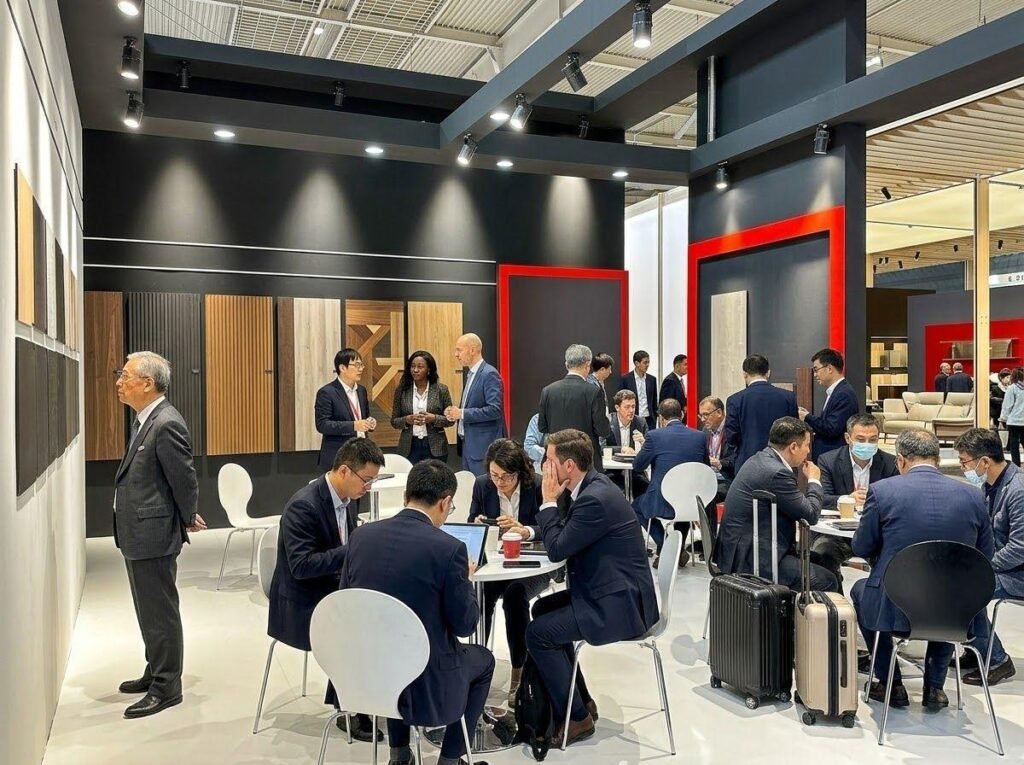
The Fair Calendar: Three Different Rivers
People treat these fairs like a buffet. Grab a little here, grab a little there. Doesn’t work. Think of it like fishing three different rivers. CIFF Guangzhou in March? That’s the Yangtze. Massive. Muddy. Everything from minnows to stuff you don’t want to know about. Design Shanghai? Mountain stream. Cold. Clear. Fish you’ve never seen. CIFF Shanghai in September? A reservoir. Same water. Different rules.
Different nets. Different bait.
CIFF Guangzhou: Is the Jet Lag Worth It?
Hotel job? Restaurant? Multi-unit residential? Yeah. But with caveats.
March 18–21: home furniture, outdoor, textiles. Ninety halls. Canton Fair Complex. Pazhou.
March 28–31: office, commercial, hotel furniture. Plus machinery and raw materials.
But here’s what three trips taught me. The good stuff? It’s in the machinery halls. The guys showing CNC routers and veneer presses? A lot of them own the factories feeding the “designer” brands up front. They’re not selling sofas. They’re selling the capability to make sofas. Speak their language — joint tolerances, veneer matching — and they’ll introduce you to their OEM clients.
The kicker? Those OEM clients? Front hall. Triple the booth. Triple the attitude.
| Fair | 2026 Dates | Best For | What You’ll Actually Find | Skip It If… |
|---|---|---|---|---|
| CIFF Guangzhou | Mar 18–21 (Home/Outdoor); Mar 28–31 (Office/Commercial/Hotel/Machinery) | Mapping supply chains, hotel FF&E, finding hidden OEMs | 5,100+ brands, machinery halls with real makers, trading companies playing dress-up | You need one-off statement pieces or crowds make you want to scream |
| Design Shanghai | Mar 19–22 | Reading the wind, collectible design, material innovation | 500+ brands from 20+ countries, craft curation, actual designer conversations | You’re broke or need to place orders on the spot |
| CIFF Shanghai | Sep 5–8 | Retail trends, smart home, design-meets-manufacturing | Design Eden (50K sqm), New Retail Hall, digital matchmaking | You’re sourcing for Q4. By September, you’re late. |
Design Shanghai: Why Bother?
Not a furniture fair. Design fair that happens to have furniture. March 19–22. Shanghai Exhibition Centre. 13th edition. Heavy on collectible design, material experiments, modern Chinese living through traditional craft.
Luxury residential? Boutique hotel? This is where you find the pieces that make a project sing. FNJI lacquer. U+ forms. Stuff that photographs well and holds up when someone actually sits in it.
But. Big but. Don’t walk out thinking you’ll place a PO. This is relationship territory. Designers, not factory managers. Manufacturing talks happen later, through an intro, almost never at the booth. Prices? Gallery prices. Not factory. The design IP markup is real. Non-negotiable.
So how do you use it? Go to read the wind. See what leather textures are coming. What metal finishes feel fresh. What proportions are shifting. Take notes. Then go back to Guangzhou and ask a factory: “Can you make this? What would it cost?” That’s the play.
CIFF Shanghai in September: Too Little, Too Late?
September 5–8. Design Eden. Fifty thousand square meters. Smart home. New Retail Hall. Good stuff. But the timing’s awkward.
By September, factories are booked solid for holiday retail. March’s fresh collections? Revised or replaced. Six-month lead time? You’re pushing it hard. My take: March is for placing bets. September is for checking scores. Sourcing Q4? You’re already behind.
What the Booth Won’t Tell You
Walking these halls is like speed-dating in a room full of guys who all say they’re founders. Booth looks sharp. Samples feel expensive. Rep speaks better English than your contractor. But the gap between fair-floor fantasy and factory-floor reality? It’ll eat your project alive.
“Factory Direct” Is Usually a Lie
Fifteen years. I’ve seen trading companies rent booths, hire actors, pose as manufacturers. (Happens more than anyone admits.) The tell isn’t the card. It’s one question: “Can I visit your factory tomorrow?”
Real manufacturer? Pulls out his phone. Books a driver. Trading company? Hesitates. “Factory’s in another province.” “Under renovation.” “We’ll bring samples to your hotel.” Don’t bite.
Real factories cluster where you can verify them. Foshan Shunde. Upholstered. Solid wood. Dongguan. Metal framing. Commercial casegoods. Guangzhou Panyu. High-end custom. Hospitality FF&E. Can’t name a district on Baidu Maps? You’re not talking to a factory. You’re talking to a middleman with a nice backdrop.
The Lead Time Lie
Or rather, the problem isn’t the factory. It’s your expectation. Fair rep says “six weeks” because that’s what you want to hear. What he means? Six weeks after deposit clears, materials arrive, sample’s approved, line opens up. In my experience, eight to fourteen weeks is honest for custom hospitality furniture from a mid-tier Guangdong shop. Less than that? Somebody’s cutting corners on drying time or finish curing.
The guy who tells you twelve weeks upfront? That’s your guy. He’s been burned by rush jobs. Warped tabletops. He’d rather lose the quick order than eat a remake.
And here’s the thing nobody says. That perfect chair under the spotlight? A-team. Hand-selected materials. Zero production pressure. The chair in your client’s lobby six months later? Night shift. Whatever lumber was on top of the stack. The gap between fair sample and production reality? Oldest trick in the book. (Learned it the hard way in Dongguan. Legs off by two millimeters. Wobbled like a drunk on payday.)
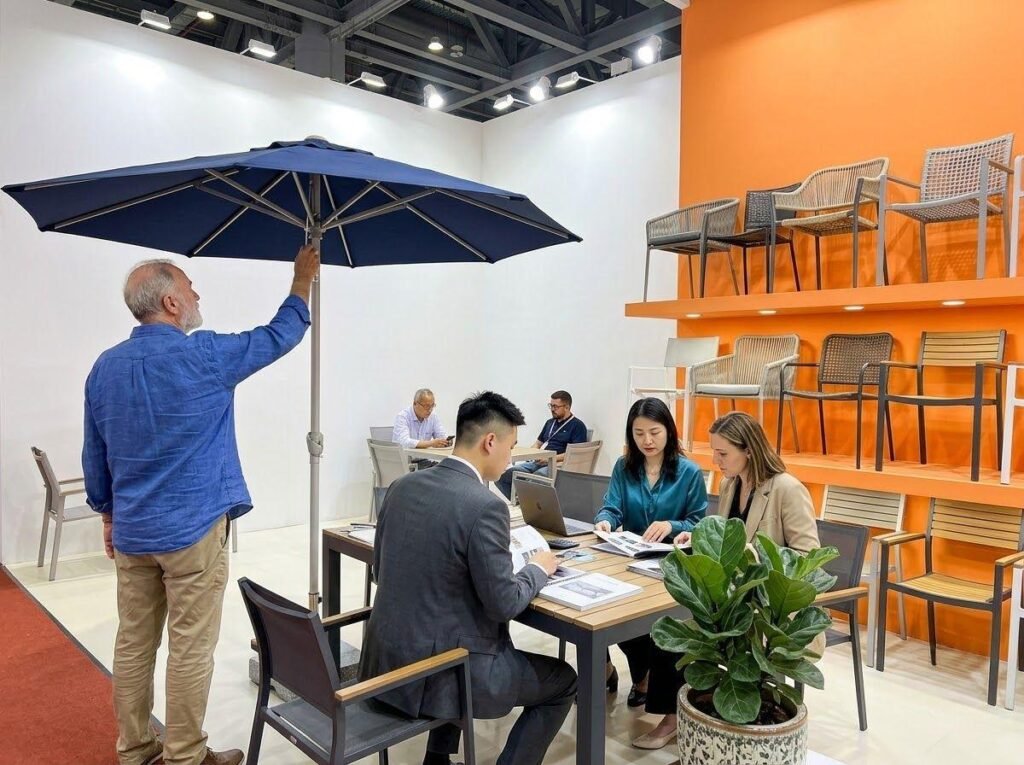
The Factory Behind the Fair
Some buyers gravitate to massive Foshan manufacturers. Container minimums. Volume or nothing. Others find mid-sized specialists — like Interi Furniture, running 40,000 square meters in Guangzhou’s Panyu district, doing custom contract work for hotels and residential with no MOQ — and get a completely different deal. They don’t compete on booth size at CIFF. They compete on taking your sketch and turning it into a finished headboard with integrated lighting and leather-wrapped pulls. For project-based designers, that capability beats a glossy display every time.
The bigger point? This ecosystem isn’t one thing. It’s layered. Exhibition giants. Quiet custom shops. Material innovators in Anji. Metalworkers in Longjiang. Figure out which layer you need. Which fair points you toward it. That’s the whole game.
The Playbook: Don’t Treat This Like a Vacation
Military operation. Better coffee.
Before you fly:
- Get that invitation letter early. CIFF Guangzhou and CIFF Shanghai are trade-only. No docs, no badge. No exceptions.
- Book factory visits for Monday and Tuesday before the fair. You’re fresh. Factories aren’t drowning in fair traffic yet. You’ll walk the fair with context instead of confusion.
- Bring physical samples. Three-inch leather swatch beats a Pantone code every time. Chinese factories reverse-engineer from touch, not PDFs.
- Download Baidu Maps. Google doesn’t work reliably in China. You’ll need to verify addresses yourself. Trust me.
Walking the halls:
- Hit CIFF Guangzhou Phase 1 (March 18–21) for residential, outdoor, soft goods. Broadest range of OEM manufacturers open to custom work.
- Block one full day for Design Shanghai (March 19–22) if you’re curating statement pieces. Don’t rush. Value is in conversations, not transactions.
- Skip center aisles day one. Everyone goes there. Start at the back walls. Smaller factories. Can’t afford premium placement. That’s where your diamonds are.
- Photo booth numbers, not just cards. Cards get lost. Photo with number visible? Insurance policy.
Before you wire money:
- Ask for factory address. Check Baidu Maps. Industrial park you’ve never heard of? Fine. Won’t give you an address? Not fine.
- Ask for workshop photos, not showroom. Clean showroom plus dusty workshop? Trading company. Messy workshop with organized material racks? Real factory.
- Red flag: One booth. Mid-Century Modern. French Provincial. Industrial Loft. All in ten by ten. Broker. Not a maker. Real factories have DNA. They specialize. Generalists are middlemen.

FAQ: The Stuff People Actually Ask
Q: Do I need Mandarin?
A: No. Most CIFF and Design Shanghai exhibitors have English speakers. Problem isn’t language. It’s specification. You say “walnut finish.” You mean American black walnut, matte lacquer. They mean walnut-stained rubberwood, UV coat. Bring a physical sample. Point. Touch. Compare. Universal language.
Q: Can I buy single pieces, or do I need a container?
A: Can’t buy anything at the fair. Exhibition space. Negotiation space. Not retail. MOQs vary. Mass-market guys want a 20-foot container. Boutique custom shops — hotel FF&E, high-end residential — often work project-based. Flexible MOQ. No MOQ per SKU. Depends who you’re talking to and how you frame it.
Q: Real factory or trading company?
A: Ask for the address. Propose a visit. Real manufacturers cluster in Foshan Shunde, Dongguan, Guangzhou Panyu. They deflect? Offer to “handle everything”? Can’t name a district? Middleman. Real factory hands you a card with a street address. Verifiable.
Q: March or September?
A: March. CIFF Guangzhou plus Design Shanghai. Factories launch annual collections. Raw materials fresh. By September? Revisions. Clearance. Holiday retail slots booked solid. Six-month lead time? March is when you see what’s actually available.
Q: Is China still cheap for high-end work?
A: Compared to Italian or Portuguese? Yeah. 40–60% less for equivalent specs. Compared to mass-market American retail? Gap’s narrowed. But the real value was never just price. It’s flexibility. Speed. Bespoke hospitality or residential work? That flexibility justifies the trip before the price gap even matters.
What You’re Really Buying
You’re not flying to Guangzhou to buy furniture. You’re flying there to buy certainty. That the bed frame won’t show up with checked veneer because the wood wasn’t kiln-dried right. That the brass inlay matches the sample you approved. That when your client walks into their finished penthouse, nothing wobbles. Nothing gaps. Nothing disappoints.
Fairs are the handshake. Factory floor is where you earn it.
So here’s the question. Are you building a trip around what looks good under convention lights? Or around the hard, dirty work of finding someone who can build exactly what you drew?
Your call. But your reputation? That’s the one thing no factory in Guangdong can manufacture for you.