

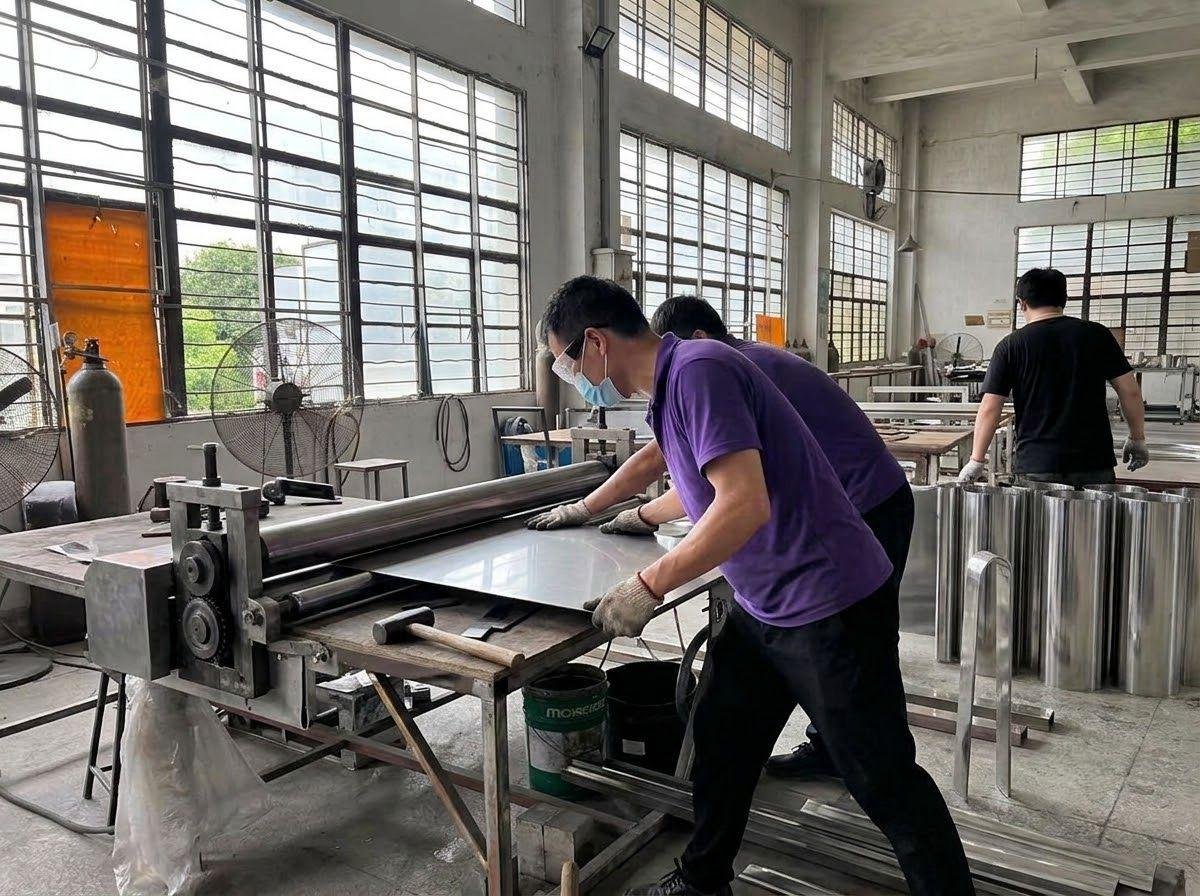
I was standing in a 40,000-square-meter factory in Longjiang, just south of Foshan, when the sales manager slid a brushed stainless steel sample across the table. “Same look, same weight, thirty percent less,” he said, smiling like he’d just handed me the keys to a Porsche. The sample was gorgeous. Mirror finish. Solid heft. And priced at $142 per unit instead of the $198 I’d been quoted three months earlier.
I almost bit.
Then I flipped it over and checked the mill certificate. Grade 201. Not 304. The nickel content was roughly half, which meant that in a humid hotel lobby in Miami or Singapore, this “bargain” chair frame would start pitting within eighteen months. The real kicker? The factory wasn’t trying to scam me. They were drowning. It was mid-February, orders had dried up after Lunar New Year, and their warehouse was stacked with raw steel they’d bought at peak prices. They needed cash. Any cash. And they were willing to shave margins to the bone — or swap materials without a word — to get it.
That’s the thing about Chinese furniture factory prices. They don’t move like Western retail. They lurch. They collapse. They spike. And if you know when to show up, you don’t just get a discount. You get leverage.
China furniture sourcing is the process of identifying, vetting, and purchasing furniture from manufacturers in the People’s Republic of China — a practice that lives or dies based on timing, material transparency, and the buyer’s willingness to visit the factory floor rather than trust a PDF catalog.
The Brutal Truth: You’re Not Negotiating, You’re Timing
Here’s what nobody tells you at the furniture fairs. The price on your quote sheet has almost nothing to do with your charm, your volume, or your PowerPoint deck. It has everything to do with when you ask.
Chinese furniture factory pricing isn’t a negotiation. It’s a weather system. You don’t talk a hurricane down. You wait for the season to change.
Most buyers fly into Guangzhou, spend three days in the Canton Fair complex or the Louvre Furniture Mall in Shunde, shake hands, and think they’re “building relationships.” They’re not. They’re shopping during a monsoon and complaining about the rain. The factory’s got orders backed up to July. Their margins are fat. They don’t need you. And every “discount” they offer is theater — five percent off a padded quote so you feel like a winner.
But show up in late February. Or mid-August. Or the week before Golden Week. Different story entirely.
If the factory parking lot is full, you’re overpaying. If it’s half-empty, you’re holding the cards. Simple as that.
Key Takeaways
- Industry observers estimate that Chinese furniture factory prices fluctuate by 15–35% depending on season, not buyer skill
- The two best windows for aggressive pricing are late February (post-LNY cash crunch) and mid-August (pre-holiday inventory clearout)
- Material transparency matters more than unit price; a “cheap” quote with downgraded steel or MDF instead of plywood costs more in the long run
- China price negotiation works best when you have alternative suppliers locked in — never negotiate with one factory at a time
When Do Factories Actually Need Your Order?
Think of a Chinese furniture factory like a dim sum restaurant at 2:30 PM. The lunch rush is over. The steam carts are still warm. The chef’s already prepped the har gow and siu mai for the dinner service. If you walk in right then and offer to buy everything at a discount, he’ll take it. Not because he likes you. Because throwing it out costs more than selling it cheap.
Factories run on cash flow, not accounting profit. I’ve watched a 200-worker operation in Dongguan accept a ten percent margin on a hotel project — barely covering overhead — because they had to make payroll on the 15th. They weren’t being generous. They were being liquid.
Why the Post-Holiday Hangover Crushes Factory Margins
January and early February are a write-off. Everyone’s rushing to ship before the holiday. Factories are slammed, raw material suppliers are hiking prices, and workers are already mentally on the train home. If you’re quoted during this window, you’re catching the peak.
But late February? March? That’s the hangover. Workers trickle back slowly. (Some don’t come back at all — they found better pay in Ningbo or switched to delivery apps.) The factory has burned cash on holiday bonuses and spring festival downtime. Their steel, leather, and foam suppliers are demanding shorter payment terms. The boss is staring at a spreadsheet that looks like a crime scene.
This is when you fly in. Not to place an order immediately — that’s too obvious. You visit. You inspect. You let them know you’re evaluating suppliers for Q2. And you wait for them to chase you.
Actually, that’s not quite right — what most buyers miss is that the real move isn’t to squeeze them in March. It’s to lock terms in March for delivery in May. You get the depressed pricing without the rushed production.
Why August Feels Like a Ghost Town
August is the forgotten month. European buyers are on holiday. American buyers are finalizing Q4 plans but not yet pulling triggers. The factory floor in Longjiang feels like a library. Half the sewing stations are dark.
And here’s the insider part: many factories take their summer downtime in August, but they keep the lights on because stopping completely messes with their export registration and tax incentives. They’re burning electricity, paying rent, and producing at half capacity. A solid order — even at thin margins — keeps the line warm and the government happy.
I once sat with a factory owner in Anji — chair country, Zhejiang Province — who told me, “August orders are charity. But charity keeps the doors open.” He wasn’t joking. In my experience, buyers who lock orders in August regularly see discounts in the high teens to low twenties percentage-wise, simply because the alternative for the factory is sending workers home early and paying partial wages.
The Quote Game: How Pricing Really Works
If you think quoting works like a car dealership — sticker price, then haggle — you’ve already lost. Chinese furniture factory quotes are assembled like a playlist. There’s the base track, and then there are ten hidden remixes depending on who you are, when you ask, and how much they need you.
Is the First Quote Ever the Real Price?
No. Never. Not once in fifteen years.
The first quote is a probe. It’s the factory asking, “How much do you know?” If you accept it, you’re marked as a tourist. If you counter too aggressively without specs, you’re marked as a time-waster. The sweet spot is asking for an itemized breakdown — foam density, fabric grade, hardware origin, carton type — then questioning one element that proves you know the game.
Here’s the thing though. The factory expects this dance. What they don’t expect is a buyer who knows the raw material calendar. Steel prices in China typically dip in Q1 and Q3. Leather fairs in Guangzhou set the tone for hide costs. If you reference the current steel futures price or mention that you’ve seen cheaper PU alternatives at another booth, the dynamic shifts. You’re not a buyer anymore. You’re a competitor with a wallet.
And that’s when the real price appears.
What Material Costs Hide From You
Buyers obsess over unit price. They should obsess over material specification. A sofa quoted at $380 instead of $450 isn’t a bargain. It’s a different product wearing the same costume.
The general pattern suggests that factories adjust three levers when they’re desperate: material grade, foam density, and hardware origin. You won’t see it on the quote. The model number stays the same. The photo stays the same. But the 304 stainless becomes 201. The 35kg/m³ foam becomes 28kg/m³. The German hinge becomes a no-name Zhejiang piece that squeaks after eight months.
While some buyers gravitate toward large-scale manufacturers in Foshan, others find that mid-sized specialists — operations like Interi Furniture, which focuses on project-grade hospitality and commercial seating — offer a different risk-reward equation. They’re not the cheapest, but their quoting tends to be more transparent because they can’t afford a reputation hit in the designer and hotel procurement circles they serve. I’ve seen their specs hold steady across seasons while bulk commodity players were swapping cores and hoping nobody noticed.
Timing the market only works if the product stays identical. A February discount on a downgraded chair isn’t a win. It’s a delayed loss.
The Decision Tree: When to Push, When to Walk
Use this like a map. Not a guarantee — factories are run by humans, not algorithms — but in my experience, this pattern holds more often than it breaks.
| Timing Window | Factory Stress Level | Your Leverage | Typical Discount Range | Best For |
|---|---|---|---|---|
| Jan–Early Feb | High (pre-LNY rush) | Low | 0–5% | Urgent reorders only |
| Late Feb–Mar | Critical (cash crunch) | Very High | 12–25% | Large Q2 projects, new relationships |
| Apr–Jun | Moderate | Medium | 5–10% | Standard procurement, design development |
| Jul–Aug | High (summer doldrums) | High | 10–20% | Volume orders, custom runs |
| Sep–Oct | Moderate (pre-holiday push) | Medium | 5–10% | Q4 delivery lock-ins |
| Nov–Dec | Variable (year-end targets) | Medium-High | 8–15% | Annual contracts, next-year planning |
A few notes on reading this table. The “Typical Discount Range” column isn’t magic — it’s based on export data patterns I’ve tracked across multiple sourcing trips and conversations with freight forwarders who see the container volumes. Your mileage will vary by product category. Metal furniture swings harder than upholstery. Custom work has less wiggle room than catalog items.
Now, the checklist. Print this. Laminate it. Stick it in your passport.
Before you email any factory:
- Get three comparable quotes from different industrial zones. Foshan for everything, Dongguan for upholstery, Anji for chairs, Nankang for solid wood. Never negotiate in a vacuum.
- Request the material spec sheet in writing. Not a WeChat voice note. A PDF. With grades.
- Check the steel, aluminum, or wood futures market for the month. If raw materials are climbing, your “discount” is already evaporating.
During the factory visit:
- Count the parking spots. Full lot = full book. Empty lot = your moment.
- Ask to see the raw material warehouse. If it’s overflowing with leather or steel they bought high, they’re motivated.
- Request a sample from the actual production batch, not the showroom golden child.
When quoting:
- Lead with volume, but don’t commit to it. “We’re evaluating for three containers this year” is enough.
- Never accept the first quote. Ever. Sleep on it. Twenty-four hours costs nothing and signals you’re not desperate.
- Ask for two prices: EXW and FOB. If the FOB markup is suspiciously high, they’re hiding margin in logistics.
Red flags that contradict the usual advice:
- A factory that accepts your price immediately without pushback is planning to downgrade materials. This sounds like a win. It’s not. It means they were already planning to cut corners, and your “negotiated” price still leaves them a fat margin on the swindle. The best factories wince. They argue. They point to costs. That’s how you know the quote was real to begin with.

The Questions Buyers Actually Ask
Q: Can I really get 20% off just by flying to Foshan in March instead of May?
A: In my experience, roughly fifteen to twenty percent is achievable in late February through March if you’re bringing a sizable order and you’re willing to commit within a reasonable timeframe. But — and this matters — that discount comes from the factory’s desperation, not your skill. If you act like a vulture, they’ll stall, ghost, or quietly downgrade your specs to recover margin. Be firm, but don’t be a jerk. These relationships outlast any single order.
Q: Should I tell them I’m comparing quotes from other factories?
A: Yes, but indirectly. Never name names unless you want drama. Instead, say: “We’re evaluating several suppliers in Guangdong and Zhejiang.” That signals competition without creating enemies. The factory knows the landscape. They know who their rivals are. Your job is to make them believe they could lose you, not to start a price war that turns personal.
Q: What if the factory says their prices are “fixed” regardless of season?
A: Then you’re either talking to a trading company posing as a factory, or a factory so large and busy they genuinely don’t need you. Both are fine, but neither is negotiable. Walk. There are four thousand furniture manufacturers in Foshan alone. Fixed-price pride is a luxury you don’t need to subsidize.
Q: How do I know if the “discounted” product is the same as the original sample?
A: You don’t. Not unless you inspect. Either hire a third-party inspector — Bureau Veritas, SGS, or a reputable local agent — or plan to visit during production. The most common bait-and-switch happens between sample approval and mass production. The factory isn’t evil; they’re opportunistic. If you disappear after sending a deposit, they assume you won’t check. Prove them wrong.
Q: Is there ever a bad time to ask for a lower price?
A: Yes. The week before Chinese New Year. The factory is in survival mode, workers are leaving, and the owner is calculating whether to even reopen. If you squeeze them then, you might get a yes. But you’ll get rushed production, corner-cutting, and a product that arrives with more problems than you bargained for. Some battles aren’t worth winning.
The Hard-Earned Lesson
So here’s the principle, stated plain. The best price doesn’t go to the best negotiator. It goes to the buyer who bothered to learn the factory’s calendar. Who showed up when the parking lot was half-empty. Who asked about steel grades instead of just smiling at the showroom sample.
You’re not outsmarting anyone. You’re out-waiting them. And in the Chinese furniture market, patience isn’t just a virtue. It’s a currency.
Now — when’s your next flight to Guangzhou?