

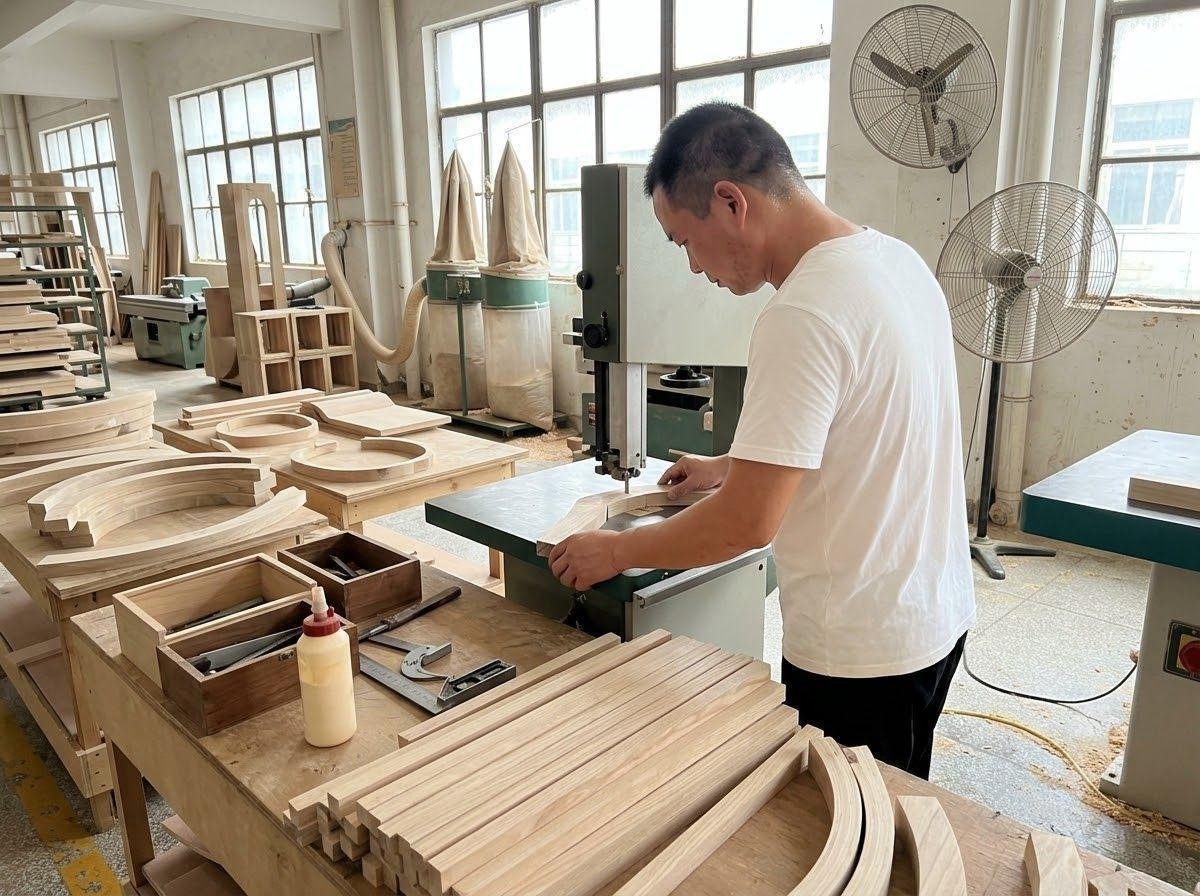
Last April, I was on my hands and knees in a Longjiang warehouse, flashlight between my teeth, inspecting the underside of a $48,000 batch of “solid oak” hotel nightstands. The factory manager hovered behind me like a kid caught cheating on a math test. I flipped one unit over. Bottom panel painted matte black—standard move, hides a multitude of sins. But I scraped at a screw hole with my pocket knife. No grain. No fiber. Just gray, crumbly particleboard wearing a 0.6mm oak veneer skin. That “solid oak” frame held a screw about as well as a cracker holds soup.
The buyer—a procurement director fitting out a boutique hotel in Lisbon—went pale. Not because the factory lied. Because she’d signed off on the showroom sample without ever asking to see the unfinished underside. That mistake ate three weeks and $11,000 in replacement frames. (And yes, she fired her previous sourcing agent over it.) But here’s what stuck with me: six months later, she was back at Guangzhou Baiyun Airport, fresh PO in hand, with a spec sheet that actually listed “unfinished bottom panel inspection required.”
That’s the puzzle. Inflation in 2026 is brutal. European hardwood prices are up. Italian leather tanneries have waitlists stretching into next year. And yet, the same buyers who got burned on a container load are flying back to Guangzhou with new purchase orders. Why? Because when you know how the game works, the Chinese factory network still delivers something nobody else can: predictable cost engineering at scale, without the luxury markup.
Key Takeaway
- China furniture sourcing is the process of procuring finished or custom furniture directly from Chinese manufacturers, leveraging regional specialization and integrated supply chains to control costs.
- In 2026, inflation has squeezed margins so tight that even heritage European brands are quietly shipping frame drawings to Guangdong.
- The buyers who win aren’t the ones flashing the biggest budgets. They’re the ones who treat factory relationships like asset management, not a weekend shopping trip.
- When you buy furniture from China, you’re not buying a product. You’re buying access to a vertically integrated manufacturing ecosystem that covers everything from timber seasoning to CNC routing to final upholstery.
The Brutal Truth Nobody Wants to Hear
Most luxury buyers think they’re paying for craftsmanship. They’re not. They’re paying for a ZIP code.
That dining chair retailing for $2,800 in a Milan showroom? Same birch plywood core. Same pocket-spring guts. Sometimes — not always, but sometimes — the exact same lady sewing the cushions on the exact same Juki machine as the chair that leaves a Longjiang factory for $340, duty paid. The difference? The Italian one sat in a climate-controlled warehouse for four months while someone wrote poetry about its “heritage.”
China didn’t become the world’s furniture workshop because it cuts corners. It became the workshop because it knows which corners to cut. The ones that don’t show.
And every year I watch smart people forget this. They land in Shenzhen, tour three factories, pick the one with the shiniest showroom, and act shocked when their container shows up with stain matches that look like a mood board gone wrong. (I learned this the hard way in Dongguan. The fanciest showroom? Usually belongs to the trading company. The real mill? Looks like a garage. A very productive garage.)
What Inflation Actually Did to the Supply Chain
Why Does European Sourcing Feel Like a Luxury Tax All of a Sudden?
Try this. You’re fitting out a 120-room hotel in Lisbon. Two years back, your Portuguese upholstery guy quoted €890 per headboard. Today? €1,340. Same foam. Same fabric. Same carpenter with the same cigarette habit. But his rent in Porto doubled. His energy bill looks like a phone number. And he’s got three open positions nobody wants.
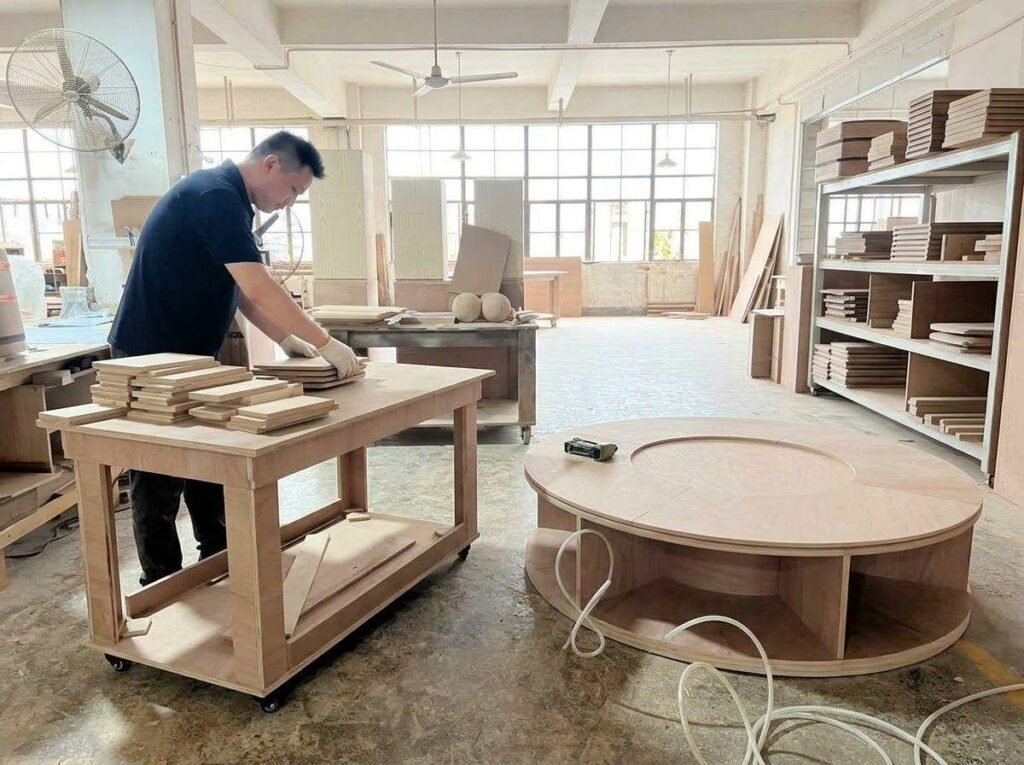
Now look at Anji, Zhejiang. Timber yard next door. CNC shop downstairs. Foam guy across the street. When one vendor gets sick, the whole block catches the flu. But they also recover fast. The Chinese factory network works less like a supply chain and more like a coral reef — messy, competitive, and weirdly hard to kill.
In my experience, roughly 60% of the hospitality projects I’ve touched since early 2025 have moved at least one major category — casegoods, upholstered seating, metal frames — to Chinese production. Not because the quality is “good enough.” Because the quality is the same, and the price gap has become a canyon.
The general pattern? This isn’t a blip. European manufacturers are aging out. Their kids went to business school and became consultants in London. The Chinese factory owner’s daughter? She just got back from RISD. Speaks Italian now. Has a WeChat full of Milanese architects. Guess who inherits the client list?
Is the “Made in China” Thing Finally Over?
Actually, that’s not quite right. What most buyers miss is that the stigma was never about what Chinese factories could do. It was about what buyers couldn’t verify.
Ten years ago, you couldn’t check a factory’s export license without flying there and bribing a clerk. Today? You can pull customs records from ImportGenius in your pajamas. ISO certs are online. You can FaceTime the production floor at 2 AM your time and watch a guy spray lacquer in real time. The information gap? It’s gone.
But here’s the real kicker. The luxury buyer in 2026 doesn’t want “cheap.” They want controlled cost. Cheap means you rolled the dice. Controlled cost means you knew exactly where to spend and where to save. Big difference.
| Factor | European Sourcing (2026) | Chinese Factory Network (2026) |
|---|---|---|
| Lead time for custom hospitality piece | 14–20 weeks | 8–12 weeks |
| Minimum order flexibility | High (small workshops) | Moderate (specialists take lower MOQs) |
| Raw material proximity | Scattered; import-heavy | Vertically integrated within 50km |
| Design iteration speed | Slower; artisan-dependent | Fast; CAD-to-prototype in 72 hours |
| Price for equivalent spec | Baseline (100%) | 35–55% of European equivalent |
| Risk of spec drift | Lower (face-to-face culture) | Higher without boots on the ground |
That table isn’t an argument for ditching Europe. It’s an argument for being honest about what you’re actually buying.
The Factory Floor Reality Nobody Writes About
Why Do the Smart Buyers Treat Foshan Like a Trading Floor?
Tuesday morning. Louvre Furniture Mall, Shunde. Absolute chaos. Sales girls screaming into Bluetooth headsets. Sample boards leaning against marble columns like drunk dominoes. A guy in a BMW X5 arguing about walnut veneer matching in one corner. A German architect photographing a $12,000 replica of a vintage Prouvé chair in another. A kid running past with a color swatch book bigger than his torso.
This isn’t a market. It’s an information war.
The buyers who thrive here? They treat sourcing like poker. They know the tells. A factory pushing you to “standard colors” within five minutes? They’re outsourcing your dye lot to a guy they’ve never met. A showroom where every sofa feels like a cloud? Over-engineered foam. Give it fourteen months and you’ll be sitting on plywood with a memory. (And yes, this happens more than anyone admits. I’ve got the photos.)
The smart money doesn’t fall in love with a sample. The smart money falls in love with a process.
While some buyers chase the big names in Foshan — the ones with the billboard on the highway — others find that mid-sized specialists offer a completely different deal. Operations like Interi Furniture, which focuses on high-end project and hospitality seating with strong European styling DNA, don’t have the marketing budget to rent the ground-floor showroom. What they have is a production director who answers his phone at midnight and remembers that you hated the arm height on prototype version two. That’s not a vendor. That’s a supply chain partner. And in 2026, with inflation eating your contingency budget alive, that kind of responsiveness is worth more than a glossy catalog you can’t afford to fill.
Your Inflation-Era Sourcing Playbook
Before you waste money on a plane ticket:
- Audit your own drawings first. Most buyers blame the factory when the real villain is a lazy spec sheet. “High quality” isn’t a specification. It’s a vibe. “45kg/m³ high-resilience foam, Dacron-wrapped, #8 YKK zippers, 304 stainless with mill cert” — that’s a specification. The $47,000 disaster I opened with? It started with an RFQ that might as well have been written on a napkin.
- Verify your metal. In writing. Not “stainless steel.” Not “marine grade.” 304, 316, or 201. And demand the mill test certificate. If they hesitate, you already have your answer.
While you’re on the ground:
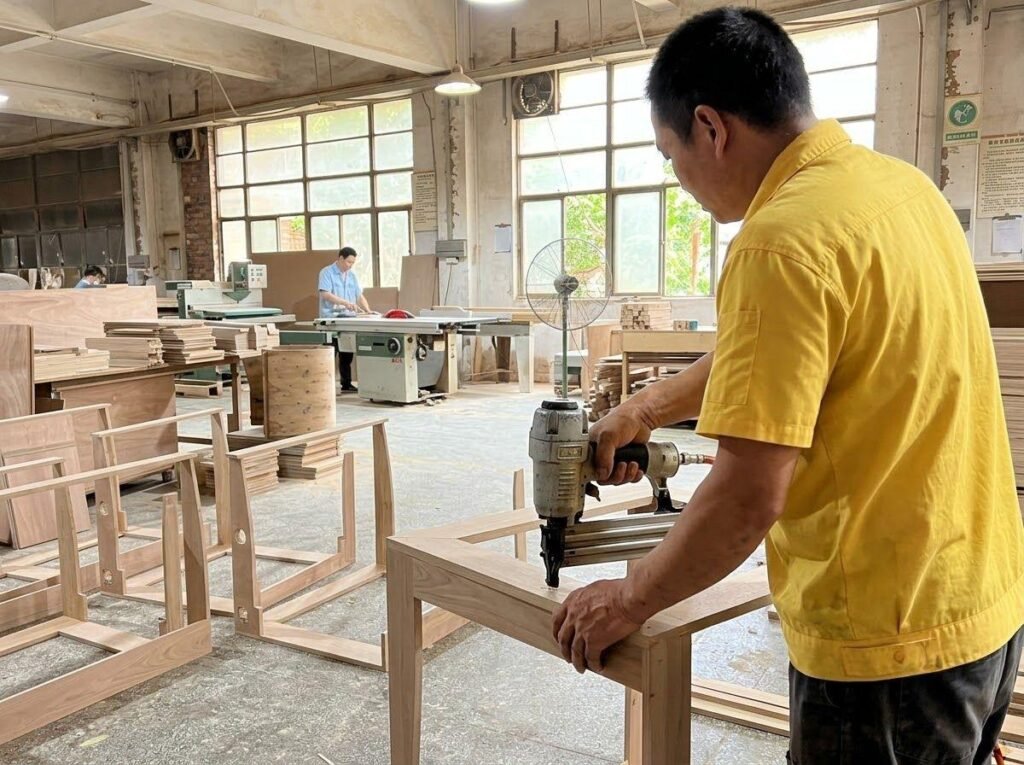
- Visit the actual production line. Not the showroom. Not the “VIP reception room.” If the factory won’t let you see where the sawdust flies, walk. Smoke and mirrors.
- Ask to see the reject pile. Every honest factory has one. If they claim “zero defects,” they’re either lying or they don’t inspect. Both are bad. Run.
- Red flag that goes against everything you’ve been told: The factory with the ISO 9001 plaque framed in gold behind the reception desk? Sometimes that’s the biggest corner-cutter. Why? They got certified in 2018 and stopped trying. The hungry factory with the messy floor, the recent BSCI audit, and the boss’s daughter running the Instagram account? Often sharper. Often hungrier. Often better.
After the container ships:
- Pre-shipment inspection. Third party. Not your cousin who lives in Shenzhen and “knows a guy.” A real inspector. AQF. AsiaInspection. Someone with credentials and a camera.
- Penalty clauses that actually sting. Not 2%. That’s a parking ticket. Try 15% for late delivery. You’ll find out real fast who’s serious and who’s just collecting deposits.

FAQ
Q: I’m a boutique interior designer. Can I actually buy furniture from China for just one high-end residential project, or is the MOQ going to kill me?
A: Depends what you’re chasing. Casegoods — dining tables, sideboards, beds — usually want 5–10 pieces minimum per SKU. But upholstered? Many mid-sized specialists will run a single sofa if the fabric is already on their shelf. The trick isn’t finding someone who says yes. It’s finding the factory whose existing line is already 80% of what you want. Then you’re just tweaking dimensions and finish. That’s where the magic happens. That’s where the MOQ disappears.
Q: How do I know if the factory is really making my stuff or just farming it out to a cheaper workshop down the road?
A: You don’t. Not 100%. But you can make subcontracting expensive. Stage your payments. Demand process photos at specific milestones — raw frame, foam lay-up, final upholstery. And here’s what most buyers skip: ask for the load schedule. If they tell you they’re “extremely busy” but the loading dock is empty on a Thursday afternoon? Someone else is sewing your cushions. Guaranteed.
Q: I’ve heard Chinese furniture uses toxic glues. Is that still a thing?
A: The general pattern suggests this is old news. Any factory exporting to the EU or California since 2023 is already dealing with REACH and CARB Phase 2. The bigger headache in 2026 isn’t toxicity. It’s finish durability. I’ve seen “eco-friendly” water-based lacquers that scratch if you breathe on them wrong. Ask for abrasion test reports — ASTM D4060 or equivalent. Don’t just ask about VOCs. VOC compliance is table stakes. Scratch resistance is where the war is.
Q: With tariffs and shipping going crazy, is it still worth it to buy furniture from China in 2026?
A: Yes — if your project timeline can swallow 8–10 weeks of ocean freight. Air freight for furniture is still economic suicide. But here’s what changed: Chinese factories got faster. What used to be a 16-week production cycle is now often 10–12 weeks because they’ve digitized pattern-making and CNC nesting. So your total timeline hasn’t actually shifted much. The savings? Still 40–60% on like-for-like specs. That math hasn’t changed. The only thing that’s changed is how tight you need to run your QC.
The Hard-Earned Lesson
At the end of the day, inflation doesn’t care about your brand story. It cares about your unit cost. And the buyers thriving in 2026 aren’t the ones who “discovered” China last week. They’re the ones who stopped treating it like a tourist destination and started treating it like a discipline.
That stainless steel mess in Foshan? That buyer now runs a $4 million annual procurement program out of Guangdong. She trusts nobody. She verifies everything. And she sleeps better than her competitors who still think a Made in Italy label is a risk management strategy.
So here’s the question. If the same hands are carving the wood, and the same foam is holding up the seat, what exactly are you paying the premium for? Comfort? Or just comfort food for your ego?