

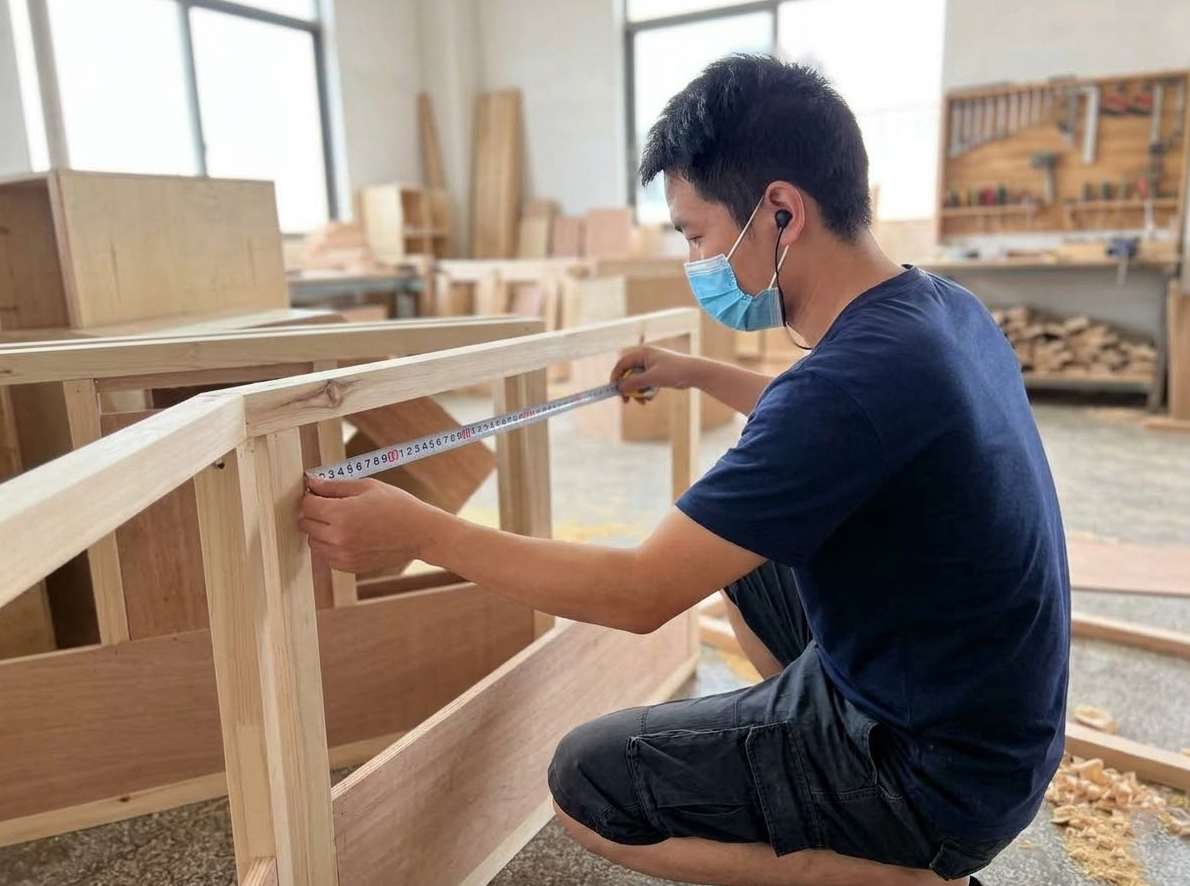
March, last year. Edge of Longjiang. Factory floor, maybe twelve thousand square meters, and it smells like sawdust, solvent, and yesterday’s lunch. I’m watching a production manager scream into his WeChat voice messages at a foam supplier. Frames are cut. Fabric’s dyed. And the 35-density foam — the stuff that keeps a hotel lobby sofa from collapsing in eight months — just jumped ¥4.20 per meter. Fifty-eight cents. Sounds like nothing till you multiply by four hundred units.
The owner turns to me. Shrugs. “We gave the American buyer a China furniture quote six weeks ago. What do you want me to do? Eat it?”
He didn’t eat it. Buyer got an email. Two days later. Price revision: up 8.3%. Take it, or the line gets reallocated to a Dubai hotel project that pays cash upfront.
This isn’t a nightmare. It’s Tuesday. And if you’re sourcing anything heavier than a folding chair from China, you’ve either lived this or you’re about to get punched in the mouth by it.
The Brutal Truth Nobody Wants to Email Home About
Here’s the uncomfortable reality: your China furniture quote has an expiration date. And the factory treats it like a polite suggestion the second their costs twitch.
Most buyers live in a fantasy. They think a signed proforma invoice locks the price. It doesn’t. Not when the real economics shift between quote and production kickoff. In my experience, roughly one in three mid-size orders gets hit with some form of post-quote adjustment — a material swap, a “packaging upgrade” charge, or a blunt Chinese price hike blamed on foam, fabric, or the yuan.
The rule of thumb? If your deposit sits in your account for more than three weeks after you get a quote, you’re not holding a price. You’re holding a wish.
And look — it’s not always greed. Sometimes it’s survival. The margins are thinner than you think.
Key Takeaway: What Every Buyer Should Know About Post-Quote Price Hikes
• A China furniture quote is a snapshot, not a contract. Raw materials, currency, labor turnover — any of these can kill it inside three weeks.
• The factories most likely to honor original pricing? They’re the ones who padded it from the start. The “sharp” quotes are the ones that unravel.
• Post-quote Chinese price hikes cluster around three triggers: foam and fabric spikes (tied to oil), RMB appreciation against the dollar, and pre-New Year labor shortages.
• Your best defense isn’t a better contract. It’s a faster decision cycle and a sourcing strategy that expects the creep before it hits.
Why the Quote Dies on the Factory Floor
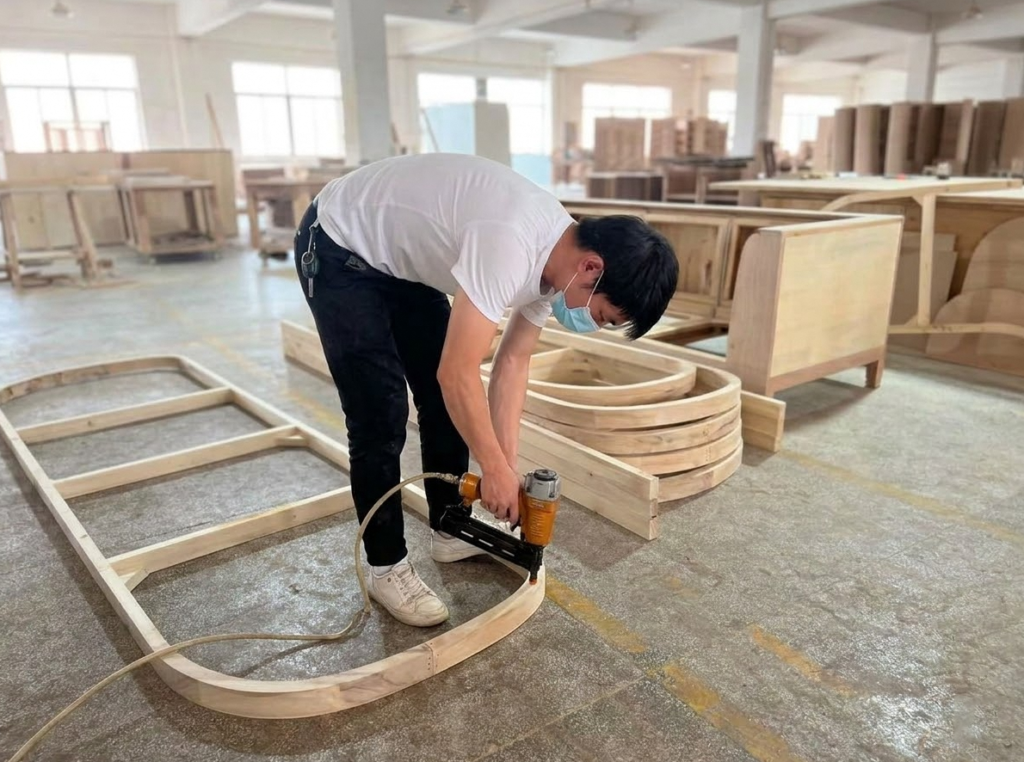
China furniture sourcing isn’t buying a product. It’s betting on a bundle of commodities — timber, foam, steel, fabric, glue, labor hours — that happen to get assembled at a specific moment. The factory doesn’t stockpile your sofa. They build it. And the input costs change daily.
Think of it like ordering a custom wedding cake six weeks out, then finding out butter tripled because of a dairy shortage. You wouldn’t expect the baker to eat that out of goodwill. Chinese factories run on margins that would make most Western manufacturers cry. A mid-size upholstery shop in Shunde might clear 6–9% net. One bad material swing and your entire container becomes a charity project.
But — and this stings — factories are picky about which costs they pass along. And when.
“Why didn’t they just quote higher to begin with?”
Because they wanted the PO. Full stop. Foshan has maybe seven thousand factories. A guy quoting $340 per unit loses to the guy at $298. So they quote $298, cross their fingers, and pray the foam market stays flat for six weeks. When it doesn’t, you get the revision email.
Actually, wait. That’s not quite right. What most buyers miss is that the “cheap” quote and the “honest” quote often come from the exact same factory. Depends which sales rep answers your email and whether they think you’ll swallow a mid-production adjustment. Old hands pad the first quote by 4–6% to soak up minor bumps. Desperate ones don’t. Good luck telling them apart from an Alibaba page.
The real kicker? Half the time the factory isn’t lying to you. They’re lying to themselves. They actually believe they can hit that number when they type it. Then the world moves.
The Hidden Half-Life of a “Firm” Price
I watched a Dongguan case-goods guy deliver a quote Monday. Thursday, his plywood supplier jacked prices because a regional environmental inspection shut down three competing mills. Factory’s options: absorb it, switch to lower-grade ply, or beg the buyer for more money. Option C is the only one that keeps the lights on.
And yeah. This happens more than anyone admits. A lot more.
The Currency, Material, and Labor Squeeze
If you want to fight post-quote Chinese price hikes, you need to know what actually drives them. It’s not one thing. It’s three things, and someone’s always kicking one of them.
Raw Materials: The Foam Problem
Polyurethane foam is boring. It’s also the canary in the coal mine. Foam tracks crude oil. Oil moves, foam follows — usually two, three weeks later. In 2026, industry observers estimate foam and chemical coating costs have added 10–15% to upholstered furniture production compared to early-2025 baselines. Energy volatility, supply-chain adjustments, the usual mess.
A factory quotes a hotel sofa project in January. By March, their foam spend per unit climbed twelve, maybe eighteen bucks. Two hundred units? That’s twenty-four hundred to thirty-six hundred dollars. For a factory running thin, that’s the difference between profit and a loss they can’t afford.
Timber’s no picnic either. North American red oak, European beech — China imports the good stuff. Export restrictions from origin countries, tighter anti-deforestation rules, supply gets pinched. The general pattern suggests solid-wood factories in Nankang and Anji have taken a harder beating than their panel-furniture cousins.
Labor: The Quiet Crisis
China’s furniture labor market flipped. Remember the old model? Armies of young workers from inland provinces pouring into Guangdong for three hundred bucks a month? Dead. Skilled upholsterers and woodworkers in Foshan now pull down ¥10,000 RMB a month, easy. Fourteen, fifteen hundred dollars. Not Manhattan money, but not nothing.
Factories can’t automate out of this. A premium sofa still needs human hands for pleating, stitching, hand-sanding. Result? Labor now eats 25–35% of the production budget for high-end upholstered goods. Mass-market flat-pack? Maybe 10–15%. I know a Shunde upholstery shop that lost their head stitcher to a competitor down the road. Twelve percent raise. Overnight, their lead time on a hotel batch went from four weeks to seven. The buyer’s quote? Technically still valid. Practically? Useless.
The Yuan Factor
Most China furniture quotes come in US dollars. But the factory pays suppliers in RMB. Yuan strengthens between quote and production, their revenue shrinks in local terms. Based on export data patterns, even a 2–3% RMB appreciation can erase the margin on a competitively priced container.
Early 2026, USD/CNY bounced around 6.88 to 6.95 with volatility near ±2.1%. For a factory, that’s not noise. That’s a gun to their head.
Inside the Factory Ecosystem: Who Holds the Line?
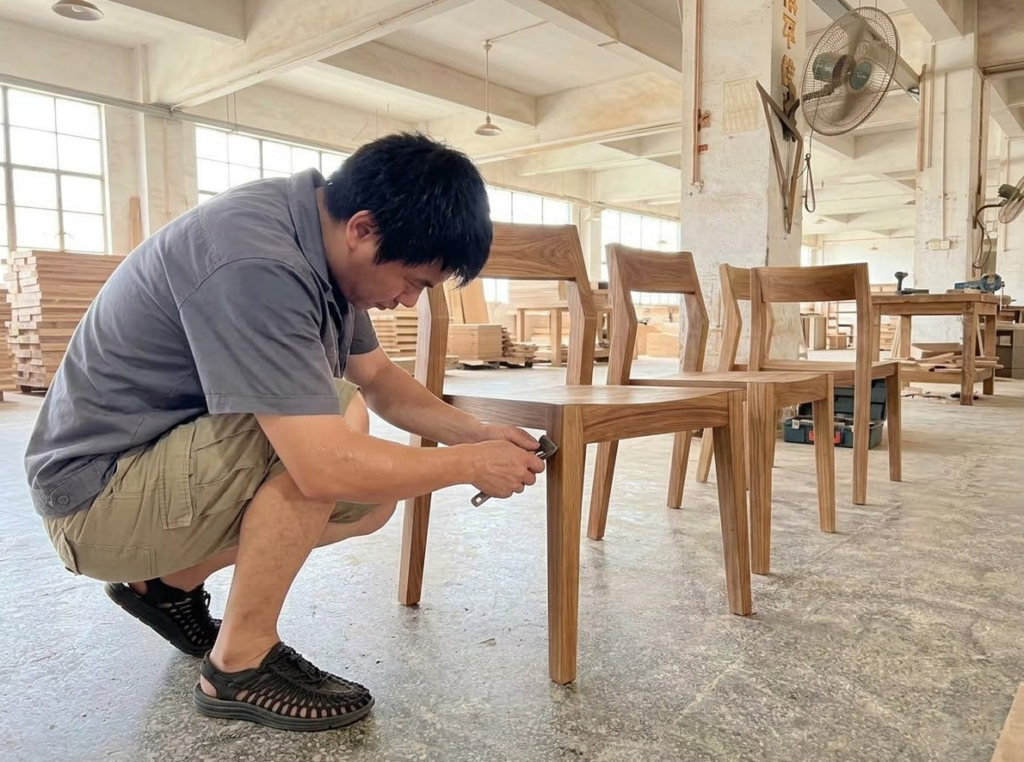
Not every factory plays bait-and-switch. The ones that don’t usually share a few traits: fifteen-plus years exporting, own their equipment instead of renting floor space, and they quote conservatively because they’ve been burned before.
While some buyers gravitate toward the giants in Foshan — the OPPEINs, the Kukas, with their two-hundred-thousand-square-meter plants and armies of sales staff — others find mid-sized specialists offer a different risk-reward equation. Operations like Interi Furniture, focused on project-based and hospitality-grade custom manufacturing, typically run tighter cost controls because they can’t afford to lose a repeat client over a 6% foam surcharge. They’re not the cheapest name on Alibaba. They’re also not the ones sending panicked revision emails three weeks before loading.
The factory that holds its price already factored in the worst case. The factory that breaks its price gambled. Simple as that.
Here’s how the landscape actually breaks down:
| Factor | Big Volume Factory | Mid-Size Specialist (Project/Hospitality) | Small Workshop / Trading Showroom |
|---|---|---|---|
| Quote Padding | 2–4% (thin margins, high volume) | 4–7% (buffer for custom work) | 0–3% (often underquoted to win) |
| Post-Quote Revision Risk | Low for stock; moderate for custom | Low to moderate | High |
| Typical Response to Cost Spike | Absorb small; pass large ones | Negotiate partial absorption | Demand full revision or walk |
| MOQ Flexibility | Rigid (200–1,000+ units) | Moderate (30–100 units) | All over the map |
| Best For | Retail chains, e-commerce volume | Boutique hotels, design studios, custom residential | Budget testing only |
Your Defense Playbook: How to Stop the Bleeding
You can’t eliminate post-quote price hikes. But you can make them someone else’s problem. Here’s what actually works on the ground.
Lock the timeline, not just the number. A quote without a production-start deadline is a floating guess. Push for this: “Price valid if 30% deposit lands within 14 calendar days of quote date.” Some factories will whine. The ones who agree are usually pricing honestly.
Pay faster than your competitors. Factories prioritize buyers who move cash quickly. Wire the deposit in 48 hours and you don’t just get better service — you get the quote that was valid when you received it. Not the one that got revised while you ran it up three layers of corporate approval.
Build a creep buffer into your landed-cost model. Add 5–7% to every FOB quote before it hits your internal budget. Factory honors the original number? You look like a hero. They don’t? You still hit margin. This isn’t pessimism. It’s arithmetic.
Get material specs in writing — with brand names. “High-resilience foam” is meaningless. “35-density HR foam, supplier-certified, no substitution without written approval” means something. Same for fabric gsm, timber species, hardware brands. A factory can’t swap in cheaper junk if you’ve locked the spec.
Use the 30/30/40 payment split for orders above fifty grand. Standard terms are 30% deposit, 70% before shipment. For bigger orders, fight for 30% at order, 30% at mid-production inspection, 40% after pre-shipment inspection. This keeps the factory honest during the window when most cost surprises strike.
Red flag: the factory that quotes in 24 hours. Actually, speed itself isn’t the sin. It’s what speed signals. A thoughtful quote for custom furniture takes time. Foam calculations. Fabric yield estimates. CNC programming review. If a factory fires back a detailed quote in a day, they either padded it heavily — fine — or they’re guessing — not fine. The real pros take three to five business days. Patience here saves money later.
Visit during production, not just before. A video call at 60% completion catches material swaps before they become your headache. I’ve seen factories quietly switch specified fabric for a “comparable” grade that cost 40% less. They don’t mention it. You have to ask. Or better, show up.

FAQ: What Buyers Actually Ask
Q: I got a quote, signed the proforma, wired the deposit. Can the factory still raise the price?
A: If the proforma doesn’t say “firm and fixed,” then yeah, technically. Practically? It depends on the factory’s integrity and your relationship. A deposit in hand strengthens your position — most factories won’t risk a dispute over a small margin bump. But if their raw material costs spiked 20% overnight, they’ll try. Your countermove is a signed contract with material-lock clauses and a firm-price provision. Without that, you’re relying on goodwill. And goodwill doesn’t pay rent in Longjiang.
Q: How much should I budget for post-quote surprises on a typical container?
A: In my experience, roughly 3–5% of total order value for established relationships. First-time orders or highly customized goods? Budget 7–10%. Plan for the high end. Treat any savings as found money.
Q: Is it better to accept a higher initial quote from a “safe” factory, or gamble on the low bid?
A: Depends on your risk tolerance and project timeline. Hotel opening with a hard deadline? The higher quote is usually cheaper in the end. Retail test order where you can eat a six-week delay? The low bid might be worth the dice roll. But — and this matters — the “safe” factory isn’t always the big one. Sometimes it’s the mid-sized operator with a reputation to protect and a client list full of repeat buyers. Size isn’t safety. History is.
Q: Can I legally enforce a quoted price in China if the factory tries to raise it mid-production?
A: Signed, sealed contract with explicit price terms and material specs? You have leverage. Chinese contract law recognizes written agreements. But enforcement across borders is slow and expensive. Your real protection isn’t a lawsuit — it’s a factory that values your future orders more than the short-term gain of a price bump. That’s why relationship capital matters more than legal boilerplate in this business.
Q: Are post-quote price hikes more common with certain product categories?
A: Absolutely. Upholstered furniture — sofas, beds, hospitality seating — gets hit hardest because foam, fabric, and leather prices bounce around like ping-pong balls. Solid wood is steadier but not immune, especially with imported species. Metal and glass furniture tends to be the most stable because steel and aluminum pricing is more transparent and hedged. The general pattern? The more “touch labor” in a product, the more likely you’ll see a revision. More hands, more variables, more ways for the math to break.
So here’s the hard-earned lesson, stated plain: the best price is the one that still exists when the container seals.
You can chase the lowest China furniture quote from here to Nankang. You can spreadsheet twenty factories and pick the one that saves you eighteen bucks per chair. But if that quote evaporates three weeks into production — if you’re suddenly negotiating against a clock you don’t control — you didn’t save money. You bought a problem.
The buyers who sleep well aren’t the ones who negotiated hardest. They’re the ones who built speed, buffers, and relationships into a system that accounts for the trap before it springs.