

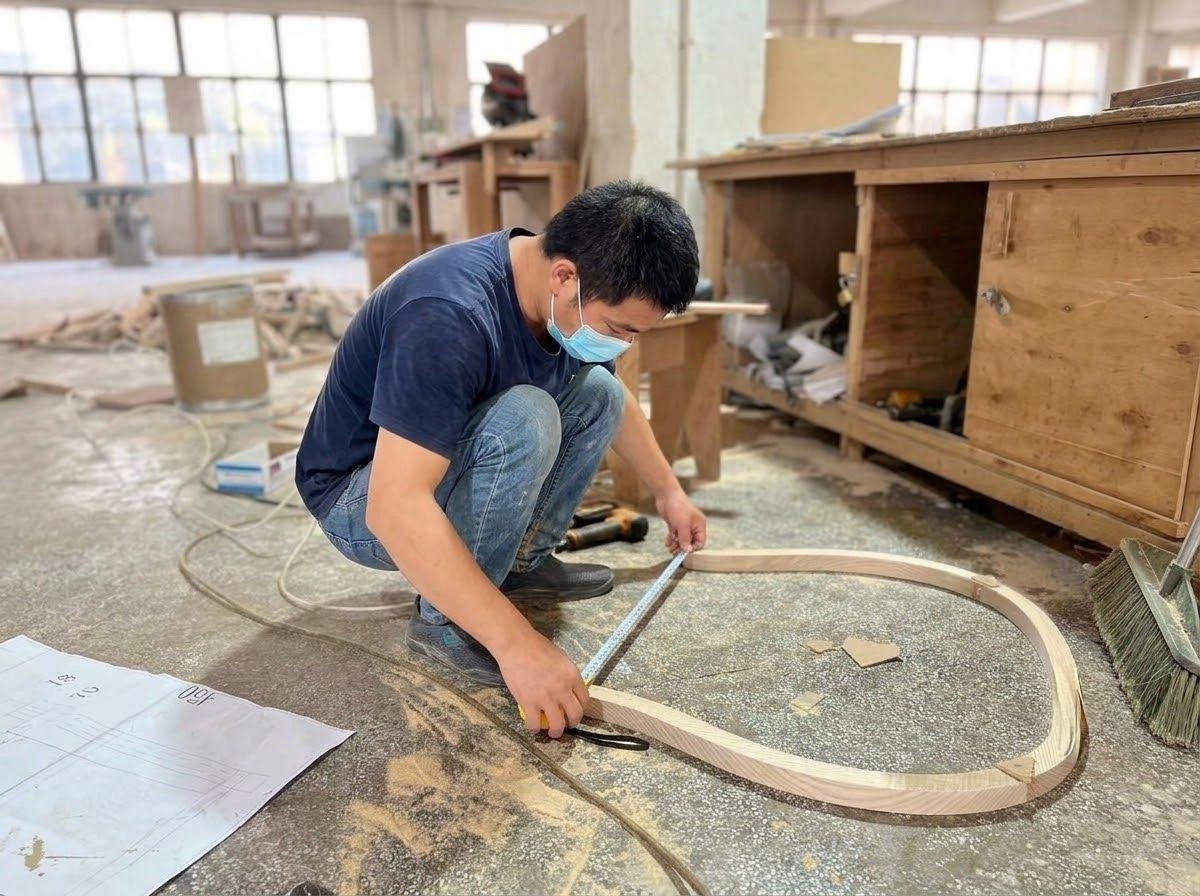
The email hit my inbox at 11:47 PM Shanghai time. A hospitality procurement guy — let’s call him Mike — had just cracked open a $340,000 container out of Foshan. He’d flown over twice. Shook hands. Took photos in the sample room. The six mock-up chairs? Gorgeous. Production sample? Even better. But container one had 380 chairs, and 94 of them had legs that wobbled like a drunk uncle at a wedding.
Factory’s response, filtered through three WeChat messages and a voice note at 2:00 AM, boiled down to: “You approved sample. This is tolerance.”
Mike wasn’t asking about tolerance. He wanted to know why chair #247 had a left front leg three centimeters short. And #248. And #249. The pattern wasn’t random. It was systematic. And sampling — that little ritual everyone treats like a security blanket — missed it completely.
The Brutal Truth
Here’s what the textbooks won’t tell you. Sampling works great for socks. For custom furniture out of a factory that rearranges its floor every six weeks? It’s basically a coin toss.
Most buyers treat sampling like a warm blanket. Fly to Guangdong, shake a sales manager’s hand, check five pieces, sign the PO, sleep on the plane home. That sleep is a lie.
Rule of thumb: if a factory hasn’t built your exact SKU at least three times before, sampling tells you squat about unit #73. Or #291. Or the piece that gets slapped together at 2:00 AM because the line boss is chasing a bonus deadline.
And here’s the sting. The factory isn’t necessarily scamming you. They’re surviving. Custom orders mean new jigs, new training, new suppliers for that brass finish you had to have. First shift does it right. Second shift wings it. Sampling catches the first shift. You pay for the second.
KEY TAKEAWAY
• China furniture sourcing means procuring made-to-order or customized furniture from mainland manufacturers — material selection, prototype approval, production oversight, the whole mess.
• Sampling checks capability. It does not check consistency across a full run. Not even close.
• Custom China orders throw in variables — new materials, tweaked dimensions, bespoke finishes — that make statistical sampling mathematically shaky at typical batch sizes.
• Chinese quality control isn’t a checkpoint. It’s either continuous intervention, or it’s theater.
Why Sampling Falls Apart in the Custom Game
Is Your Sample Even From the Same Planet?
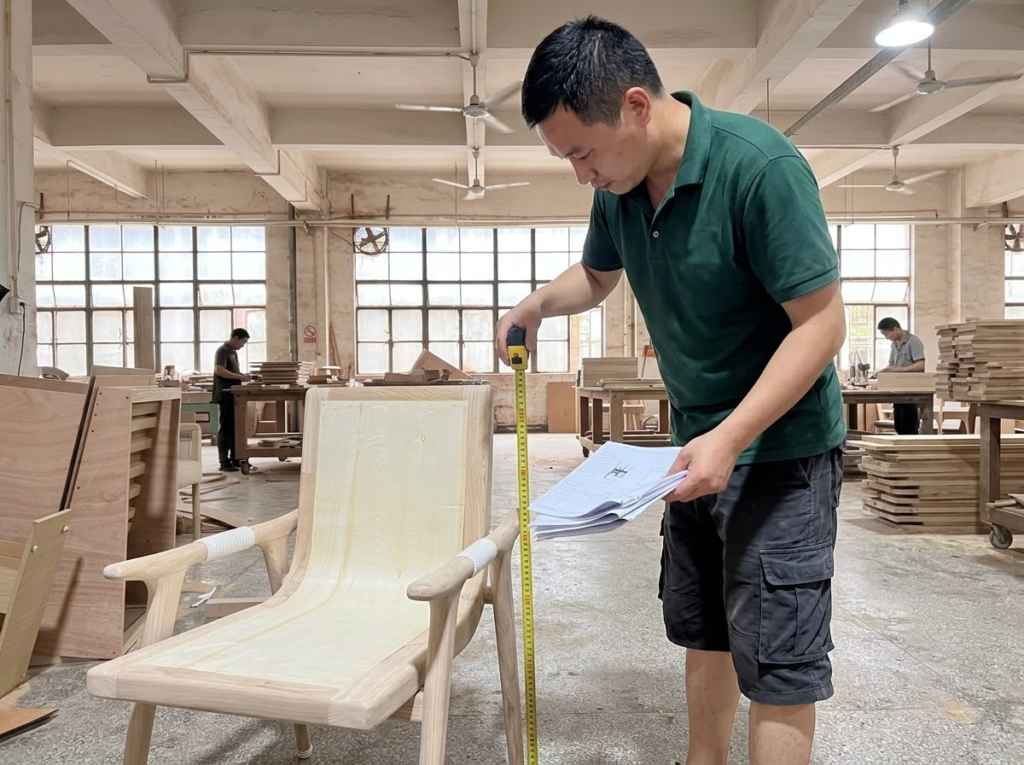
Sampling a custom furniture run is like tasting soup from the top of the pot and assuming the bottom hasn’t burned. (And yeah, this happens more than anyone admits.) The pieces that make it to sample stage? Built by the A-team — senior guys who know a dovetail from a disaster. Usually assembled in some quiet corner, not on the main line where twenty workers are juggling three rush orders and a power outage.
I walked a factory in Longjiang last March. Sample room looked like a boutique hotel. Polished concrete, track lighting, its own AC unit. Production floor? Dust, noise, and a cardboard sign saying “QC” taped to a folding table. Sample chairs were beautiful. Production chairs had screw holes that looked like a nervous intern went at them. Actually, wait — that’s not right. It wasn’t an intern. It was a veteran worker who got told to speed up 40% because the factory took another order to cover cash flow.
The real kicker? Samples don’t lie. They just tell a truth that expires by day three of production.
What “Acceptable Quality Level” Actually Means on the Ground
AQL tables — those neat charts buyers love waving around — assume randomness. Bell curves. In a custom China order, defects cluster. Hard.
Factory switches veneer batches mid-run because the first lot ran out. You don’t get a random scatter of color mismatches. You get a solid block of 80 units that look like they came from a different forest. CNC machine drifts out of calibration Tuesday afternoon? Every piece cut between 2:00 PM and 6:00 PM shares the same dimensional error. Your sample of 13 pieces, pulled across the run, has basically zero chance of catching that cluster.
In my experience, roughly 60% of critical defects in custom furniture runs are batch-correlated, not random. AQL sampling is built for randomness. It’s like bringing chess strategy to a poker game.
The Math That Doesn’t Math
When “Saving Money on Inspection” Becomes Your Most Expensive Call
Buyers love running the numbers. “Full inspection costs $3,200. Sampling costs $800. I’ll take the sample.” Sure. Until you’re arguing for three weeks about who pays to rework 40% of the order. Or your hotel opening gets pushed because 22 bedside tables showed up with drawer glides installed backwards. (Learned that one the hard way in Dongguan.)
Rework itself is the silent killer. Factories don’t prioritize fix-it jobs. Your rework gets squeezed between new orders from bigger clients. What was a 14-day lead time balloons to 45 days. And you’re still bleeding warehouse fees on the container you can’t release.
Plus there’s the relationship tax. Every fight erodes goodwill. Chinese factory owners have long memories. “That buyer who made us tear apart 200 sofas over a 2mm gap” is not a reputation that gets you priority next quarter.
The inspection fee is the cheapest insurance you’ll ever buy. The claim comes due when you try to save it.
The Hidden Cost of “Good Enough”
Some buyers tell me, “We’re not selling to royalty. A few imperfections are fine.” I get it. But custom orders don’t fail at “a few imperfections.” They fail at systematic deviations that make the thing unsellable. A dining table that rocks because base geometry shifted. A cabinet where doors don’t close because hinge mortises were routed wrong. These aren’t cosmetic. They’re functional. And they’re exactly what sampling misses, because the sample was built before the main line discovered the jig was wearing out.
The general pattern suggests factories handling custom orders for the first or second time have a “system drift” rate that sampling simply cannot detect at standard confidence levels. You need eyes on every piece. Not because every piece will be bad. Because the bad ones will be bad in the same expensive way.
What the Floor Actually Looks Like
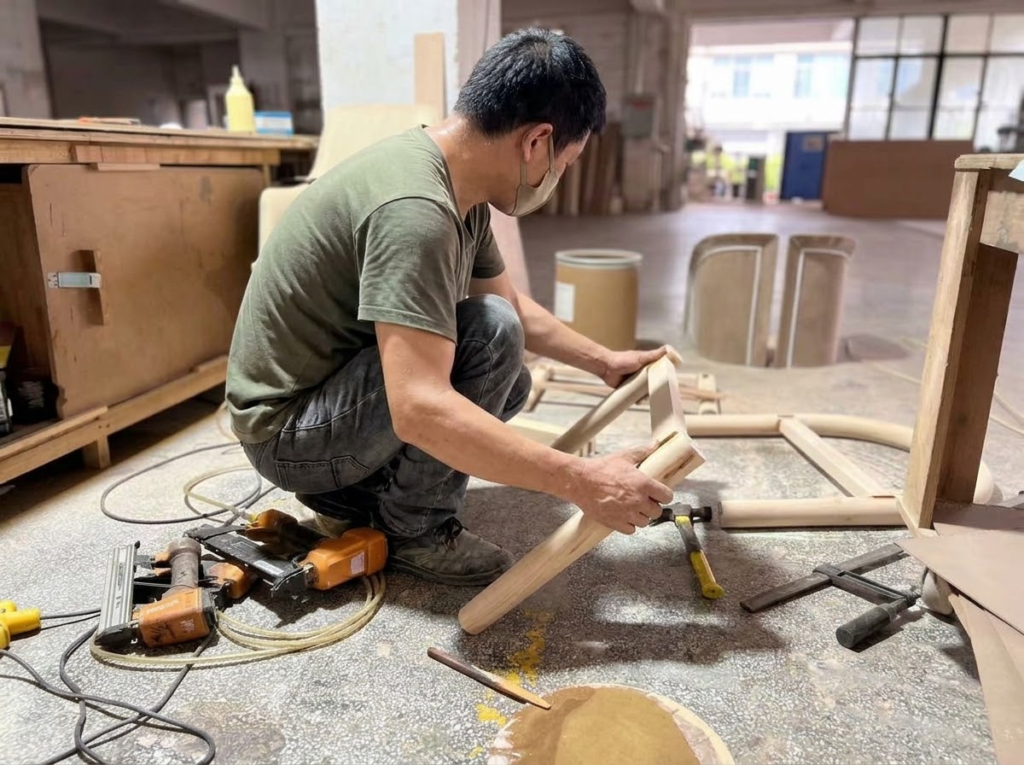
While some buyers gravitate toward large-scale manufacturers in Foshan, others find that mid-sized specialists — operations like Interi Furniture, which focuses on project-based and hospitality-grade custom production — offer a different risk-reward equation. These aren’t assembly-line giants. They’re workshops taking on complex, low-volume orders that bigger factories refuse, which means their output shifts more batch-to-batch. That variability isn’t a flaw. It’s the trade-off for flexibility. But it also means what you saw in the sample room week one might have almost no relationship to what’s happening on the bench in week four. And that gap is where 100% inspection earns its keep.
This isn’t about factory size, by the way. I’ve seen 800-worker plants with tighter consistency than 40-worker boutiques. The variable is order familiarity. The more custom your spec, the less the factory’s historical performance predicts your outcome. Full stop.
Your Decision Framework: When to Insist on 100%
Don’t wing this. Here’s what actually works on the ground.
The Non-Negotiables — if any of these apply, you sample and you check every unit:
- First-time supplier. No track record with your product category. Doesn’t matter how shiny the showroom is.
- Bespoke dimensions or materials. Anything requiring the factory to source a new substrate, finish, or hardware. If they’ve never bought that Italian leather before, they don’t know how it stretches.
- Order value north of $50,000. At this point, inspection cost is a rounding error. (And if it isn’t, you’re undercapitalized for custom sourcing.)
- Hard delivery deadlines. Hotel opening. Residential handover. If late delivery hurts worse than a price bump, inspect everything.
The Red Flag Most Buyers Ignore:
- The factory says “don’t worry, we always do full QC.” Sounds reassuring. It’s smoke and mirrors. “Full QC” in factory speak often means a worker glancing at a piece for thirty seconds before wrapping it. If they resist your independent 100% inspection, that’s not confidence. That’s control. Walk.
Your Inspection Architecture:
— Pre-production: Verify materials, jigs, and the first three units off the line. Not one. Three. Defects love hiding in small samples.
— In-process: Spot-check at 25%, 50%, and 75% completion. Catches drift before it becomes a container-wide nightmare.
— Pre-shipment: 100% inspection of finished, packed goods. Open cartons. Check wrapping. I once found water damage from a roof leak the factory “didn’t think was a big deal.”
— Container loading: Be there. Or pay someone to be. Loading order matters. Heavy on top of light. Moisture barriers missing. It’s not paranoia. It’s pattern recognition.

FAQ: What Buyers Actually Ask
Q: My factory has ISO 9001 and BSCI audits. Doesn’t that mean their quality system is solid?
A: Audits verify that a factory has documents describing a quality system. They don’t verify anyone follows those documents on a Thursday afternoon when the owner’s in Hong Kong and the line supervisor’s juggling overtime requests. I’ve seen perfectly certified factories ship complete disasters. The certificate is a starting point, not a substitute for looking at your actual goods.
Q: I’m only ordering 50 units. Is 100% inspection overkill?
A: Depends on your pain tolerance. Fifty units is actually where sampling is least reliable. AQL tables for 50 units might suggest inspecting 5 pieces. If 2 of those 5 are bad, you’ve already got a 40% defect rate and you’re only halfway through your sample. At small volumes, 100% inspection is often faster and cheaper than the statistical song-and-dance. Check every piece. Sleep better.
Q: The factory says full inspection will delay shipment by two weeks. Should I back down?
A: No. Two weeks of delay at origin beats six weeks of dispute, rework, and reputation damage at destination. A factory that genuinely can’t accommodate a reasonable inspection schedule is either overbooked or hiding something. Either way, you don’t want to be the order they rush through at 1:00 AM.
Q: Can I just hire a third-party inspector to do sampling on my behalf? Isn’t that what they’re for?
A: Third-party inspectors are useful. They’re also incentivized to keep factories happy so they get repeat business. Sampling inspections are their bread and butter because they’re fast. If you want 100% inspection, you need to specify it explicitly in your purchase order and be willing to pay for the hours. Don’t assume “inspection” means “thorough.” Define the scope. In writing. In Chinese and English.
Q: So is sampling ever enough for custom China orders?
A: No. Not if the order is truly custom, the supplier is unproven with your spec, and you can’t absorb a 20-30% defect rate without project failure. Sampling tells you what the factory can build. 100% inspection tells you what they did build. For custom orders, the second question is the only one that matters.
The Hard-Earned Lesson
At the end of the day, quality control isn’t a phase. It’s a stance. The buyers who thrive in the China furniture market aren’t the ones with the fanciest sample rooms or the longest contracts. They’re the ones who show up. Who open cartons. Who count legs and measure gaps and aren’t embarrassed to insist that a $2,400 armchair shouldn’t squeak.
Mike, the guy with the wobbly chairs? He paid for rework. He paid for air freight on the replacement batch. He paid in stress and credibility with his client. And he still uses that factory — because now they know he inspects every unit, every time, and they build accordingly. The inspection didn’t just catch defects. It changed behavior.
So here’s the question I’ll leave you with. If you’re not willing to look at every piece, why are you willing to pay for every piece?