

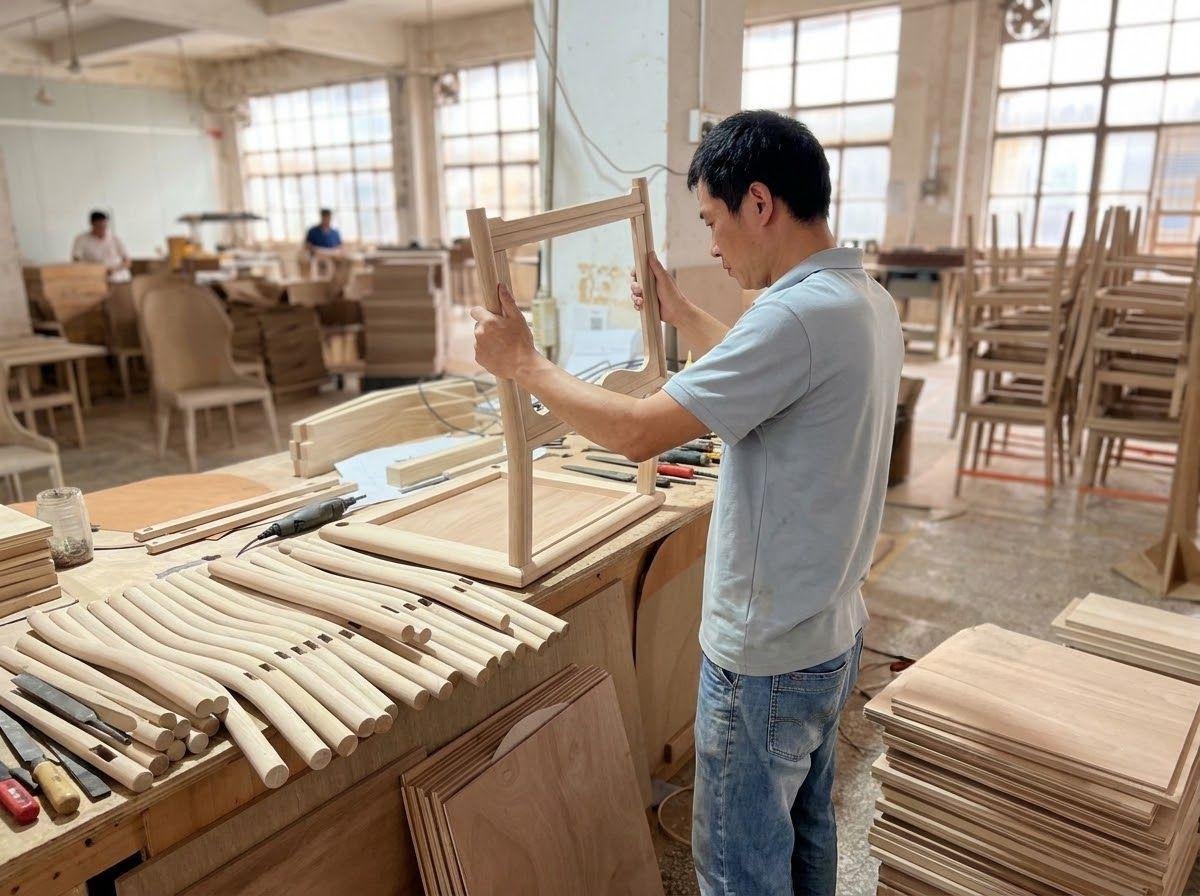
I was standing in a Foshan factory last March, watching a $380,000 hotel lobby order get unpacked for final inspection. The procurement director — a guy from Miami who’d flown in specifically for this — was pacing behind me, checking his phone every twelve seconds. The sofas looked perfect. Leather was flawless. Stitching was surgical. But Chen, the lead engineer, wasn’t looking at the leather. He was staring at the armrest height.
“Too tall for the space,” he said, in that flat, matter-of-fact tone that Guangdong engineers use when they’re about to cost you three weeks. “Your atrium ceiling is 4.2 meters. These arms read heavy. In that volume, they’ll look like blocks.”
The director blinked. He hadn’t brought architectural drawings. Chen had looked them up on the hotel’s website. Three years ago, that same director had spent $12,000 on a “custom” sofa from a Milan workshop that arrived proportionally perfect and structurally useless. Now a guy in a faded blue uniform in Shunde was saving his project — and probably his job — before the container even left the dock.
That’s the story nobody tells about China custom furniture. The engineers aren’t just building to spec. They’re the last line of defense against architectural embarrassment. And most buyers don’t even know the protection is happening.
The Brutal Truth: You’re Not Getting What You Think You’re Paying For
Here’s what most buyers won’t admit, even to themselves: when they say “custom,” they mean “the catalog item, but bigger.” And the factory knows it.
The brutal truth about Chinese OEM engineers is that they spend roughly 60% of their time fixing proportion disasters that buyers created. Not manufacturing errors. Design delusions. A 14-foot sectional crammed into a 12-foot wall. A dining table scaled up from a side table sketch with no structural recalculation. A headboard drawn by an interior designer who has never stood next to a CNC router while it screams through oak.
Industry observers estimate that over half of “custom” furniture orders from China involve some form of engineer-led dimensional intervention. The factory doesn’t call it a redesign. They call it “optimization.” But what it really is — and this is the part that makes procurement directors uncomfortable — is an engineer overriding a designer’s vision because the physics don’t work.
And here’s the rule of thumb: if your custom furniture order doesn’t trigger at least one “are you sure?” conversation with the factory engineer, you’re either a genius or you’re about to receive something that looks wrong in ways you can’t articulate yet.
Key Takeaways
- China custom furniture sourcing is the process of translating architectural intent into manufacturable reality, not simply ordering modified catalog items at scale.
- Chinese OEM engineers function as proportion gatekeepers, not production robots — their interventions often prevent expensive spatial failures.
- The most successful project buyers treat factory engineers as design collaborators, not as order-takers who execute flawed specifications.
- Protecting architectural proportions requires early engineer involvement, not last-minute crisis management before container loading.
The “Custom” Illusion: When Is It Custom, and When Is It Just Big?
There’s a difference between custom and enlarged. Most buyers never learn it until they’re standing in a finished space wondering why the furniture looks “off.”
Think of it like ordering a pizza. (Bear with me.) You can ask for extra cheese, different toppings, a larger diameter. That’s modified. But if you want the crust to hold up at 24 inches with the same thickness as a 12-inch pie, the dough chemistry has to change entirely. The sauce ratio shifts. The bake time recalculates. It’s not a bigger version of the same thing. It’s a different thing that happens to share a name.
China custom furniture operates on the same principle. A Chinese OEM engineer looking at a scaled-up sideboard doesn’t see a “larger sideboard.” They see a structural liability with sagging shelves, warped doors, and joinery that will fail within eighteen months. The general pattern suggests that factories in Longjiang and Anji handle this differently — Longjiang engineers tend to push back immediately, while Anji operations often build exactly what you asked for and let the warranty clause handle the aftermath.
I learned this the hard way in Dongguan. A client sent over a beautiful hand sketch for a reception desk — curved, floating, impossibly thin. The factory quoted it. Built it. Shipped it. It sagged in transit. Actually, that’s not quite right — what most buyers miss is that the factory knew it would sag. They built it anyway because the PO didn’t specify deflection tolerances, and “custom” in their vocabulary meant “custom dimensions,” not “custom engineering.”
The best engineers treat proportion like a language, not a measurement. They don’t just read numbers. They read space.
What “Custom” Actually Means on a Factory Floor
To understand what you’re really buying, it helps to see how Chinese OEM engineers categorize requests. Here’s the breakdown I see most often:
| Type | What the Buyer Asks For | What the Engineer Actually Does | Proportion Risk |
|---|---|---|---|
| Catalog Modified | “Model X, but 20cm wider” | Adjusts dimensions within existing engineering | Low — if the scale change is modest |
| Dimension Custom | “Build to these exact measurements” | Builds to spec, may flag structural issues | High — spatial context rarely considered |
| Engineer-Led Custom | “Make this work in this space” | Redesigns proportions, structure, and visual weight collaboratively | Lowest — but requires trust and communication |
The majority of buyers think they’re in the third category. In my experience, roughly 80% are actually in the second. They send a drawing, get a quote, and assume the factory will “fix” anything that doesn’t work. But fixing isn’t free. And in many cases, the factory doesn’t fix it at all — they build your mistake with impressive precision.
The Communication Gap That Engineers Bridge
Why Your Drawings Don’t Say What You Think They Say
Interior designers communicate in mood boards and spatial feeling. Engineers communicate in millimeters and material stress limits. The gap between those two languages is where most proportion disasters are born.
It’s like trying to describe a song to someone who only reads sheet music. You talk about the emotion. They need the tempo, the key, the time signature. Both of you are describing the same thing. Neither of you understands the other.
What tends to happen is this: a designer sends a 3D render showing a low-profile sofa in a grand lobby. The render is beautiful. The proportions feel right on screen. The Chinese OEM engineer receives the file, notes the dimensions, and immediately sees the problem — the seat depth relative to the back height creates a visual weight that will disappear in a high-ceiling space. The sofa will look like a bench. Not elegant. Underwhelming.
But here’s the thing. The engineer might not tell you. Not because they don’t care. Because they’ve learned that Western buyers often treat technical pushback as negotiation tactics. “You’re just trying to simplify the build.” “You don’t understand the design intent.” After enough of those conversations, engineers stop pushing back and start building. They document their concerns in the production notes, get sign-off on the dimensions, and watch the project photos roll in six months later.
And here’s the real kicker: the buyers who get the best results aren’t the ones with the biggest budgets. They’re the ones who ask the engineer, “What would you change?” before the first board is cut.
The Factory Floor Reality Nobody Talks About
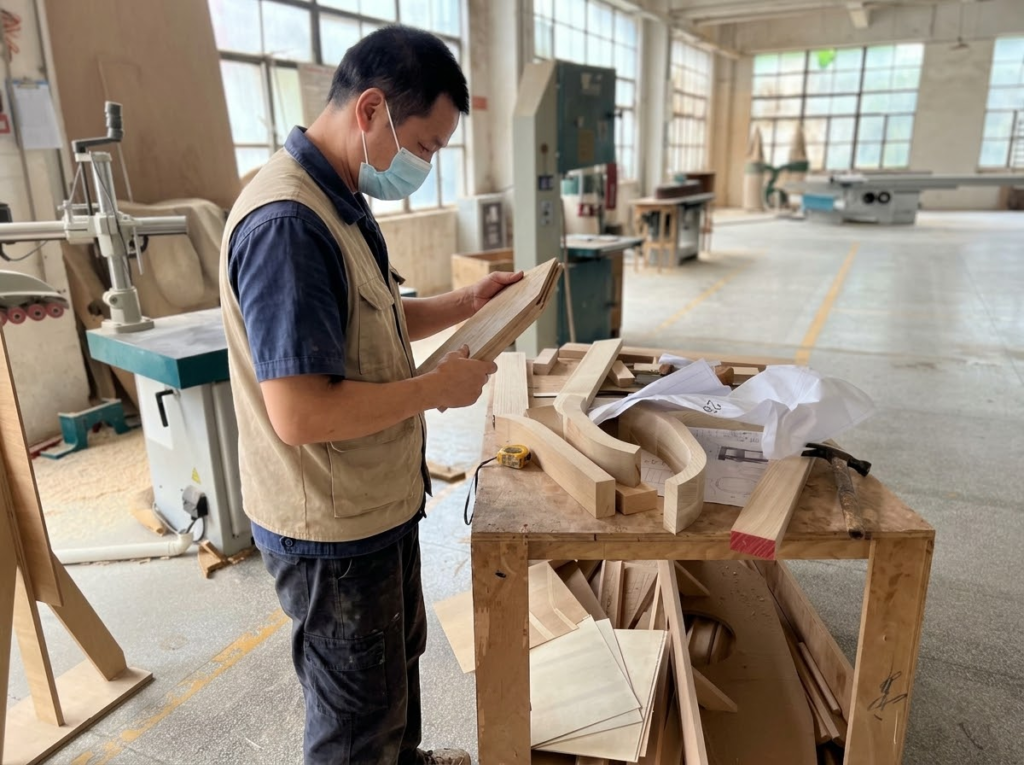
Walk through a mid-sized upholstery shop in Nankang on a Tuesday afternoon and you’ll see it. Stacks of foam cut to spec. Frames that match the drawing exactly. And an engineer standing in the corner, arms crossed, staring at a prototype that technically passes QC but visually fails the room it was built for.
(And yes, this happens more than anyone admits.)
The general pattern suggests that the most valuable Chinese OEM engineers aren’t the ones with the fanciest CAD software. They’re the ones who’ve spent fifteen years watching furniture leave the factory, then seeing installation photos, then mentally logging what worked and what didn’t. That institutional knowledge doesn’t show up on a spec sheet. It shows up when they quietly bump a seat height by 3 centimeters because they know the rug in your render is thicker than what you specified.
The Mid-Sized Advantage: Why Bigger Isn’t Always Better
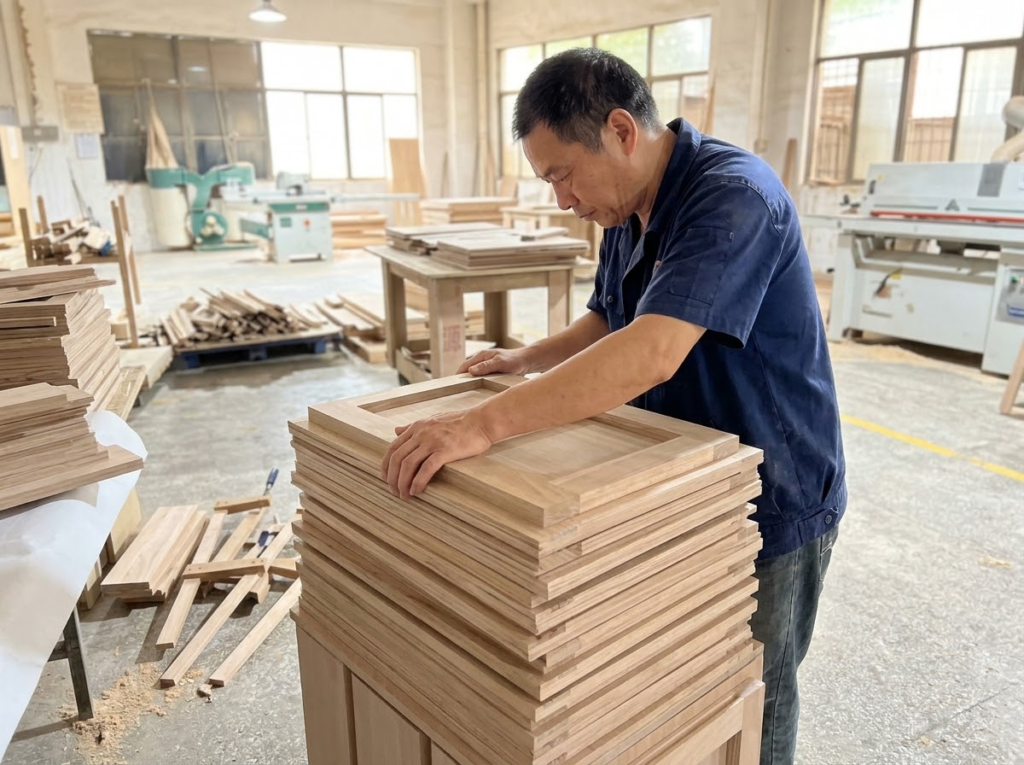
The China furniture landscape isn’t monolithic. While some buyers gravitate toward massive manufacturers in Foshan with 200,000-square-meter campuses and showroom floors the size of airport terminals, others find that mid-sized specialists offer a different risk-reward equation. Operations like Interi Furniture, which focuses on project-grade hospitality and residential custom work from a Guangdong base, tend to maintain tighter engineer-to-project ratios. That means the person reviewing your architectural drawings has actually walked the factory floor this month. Not always the case when your order is one of forty sitting in a queue at a volume giant.
The general pattern suggests that buyers working on proportion-sensitive projects — boutique hotels, high-end residential commissions, restaurant chains with strict brand standards — often get better proportion protection from these mid-tier specialists than from massive operations. The volume guys have the machinery and the margin compression. The specialists have the attention span and the engineering bandwidth.
The Proportion-Safe Sourcing Checklist
Before you send that CAD file to a factory, run through this. Not all of it will apply to every project. But skipping it is how you end up with furniture that “technically matches the spec” and visually ruins the room.
Phase 1: Pre-Quote
- Send architectural elevations alongside furniture specs. Not just floor plans. Elevations. The engineer needs to see ceiling height, window placement, adjacent millwork. Without context, they’re guessing.
- Include one “impossible” detail you love — and ask if it’s structurally viable. If the factory says yes to everything, that’s not flexibility. That’s either inexperience or they’re planning to fix it later with wood filler and hope.
- Request a 1:1 mock-up of the most proportion-critical piece. Yes, it costs money. A bad container costs more.
Phase 2: Engineering Review
- Red flag: The engineer asks zero questions about spatial context. A factory that treats your order like a spreadsheet is a factory that will build exactly what you wrote down, even if what you wrote down won’t work.
- Ask for a “visual weight assessment.” Not all factories do this, but the ones that do will tell you whether the piece will dominate or disappear in its intended space.
- Demand photos of similar completed projects in comparable architectural settings. Not catalog shots. Real install photos. If they can’t produce them, they haven’t solved your problem before.
Phase 3: Production & QC
- Inspect for proportion during mid-production, not just at final. Once upholstery goes on, it’s much harder to judge structural ratios.
- Compare the physical piece against your architectural model or render at scale. Print a life-size silhouette if you have to. Sounds ridiculous. Works every time.

FAQ: What Buyers Actually Ask
Q: Will a Chinese OEM engineer actually tell me if my proportions are wrong, or will they just build what I asked for?
A: It depends on the factory culture, not the individual engineer. In my experience, roughly 70% of engineers will flag obvious proportion issues if you establish early that you want technical feedback. The other 30% have been trained by previous buyers to stay silent. The general pattern suggests that asking “What would you change?” in your initial technical call changes the entire dynamic. If you don’t ask, many won’t volunteer.
Q: I don’t speak Mandarin and I can’t fly to Foshan every month. How do I communicate scale and proportion remotely?
A: Over-communicate with reference images. Not Pinterest mood boards — photos of existing spaces with similar ceiling heights, similar furniture scales, similar visual density. Include a human figure for scale in every reference. Chinese engineers are visual problem-solvers; they process spatial relationships faster from photographs than from dimension lists. Plus, most mid-to-large factories now have bilingual project managers who’ve handled enough Western hospitality projects to translate “feels too heavy” into “reduce visual mass by 15%.”
Q: Is China custom furniture actually capable of protecting architectural proportions, or is that just marketing talk?
A: Yes — but only if you treat the engineer as a collaborator, not a vendor. The capability exists in spades. The willingness to use it depends on how you frame the relationship. Buyers who send finished designs and say “build this” get exactly what they asked for, including the mistakes. Buyers who send design intent and say “make this work in this space” get proportion protection built into the process.
Q: How do I know if a factory has engineers who understand Western spatial standards, or just engineers who know how to read a tape measure?
A: Ask for their “problem portfolio.” Every good engineer has one — photos of projects where they had to redesign on the fly, solve impossible cantilevers, or adjust proportions for spatial harmony. If they show you perfect catalog pieces, they execute. If they show you messy, solved problems, they think. You want the second kind.
Q: Does protecting architectural proportions with Chinese OEM engineers work for every project type?
A: It depends on your project complexity and your willingness to engage. For straightforward residential orders with standard room proportions, you probably don’t need deep engineer involvement. But for hospitality, commercial, or any space where the furniture must dialogue with architecture — high ceilings, open plans, statement pieces — engineer collaboration isn’t optional. It’s the difference between furniture that fills space and furniture that completes it.
The Hard-Earned Lesson
After fifteen years of walking factory floors in Guangdong and Zhejiang, I’ve watched the China furniture industry evolve from a copycat operation into something more interesting: a global engineering resource that most buyers still don’t know how to use. The engineers aren’t waiting for your permission to be smart. They’re waiting for a signal that you won’t punish them for it.
So here’s the question I’ll leave you with: the next time you send a custom furniture spec to a factory, are you writing a purchase order — or are you starting a conversation? Because one of those approaches gets you a box. The other gets you a room that actually works.