

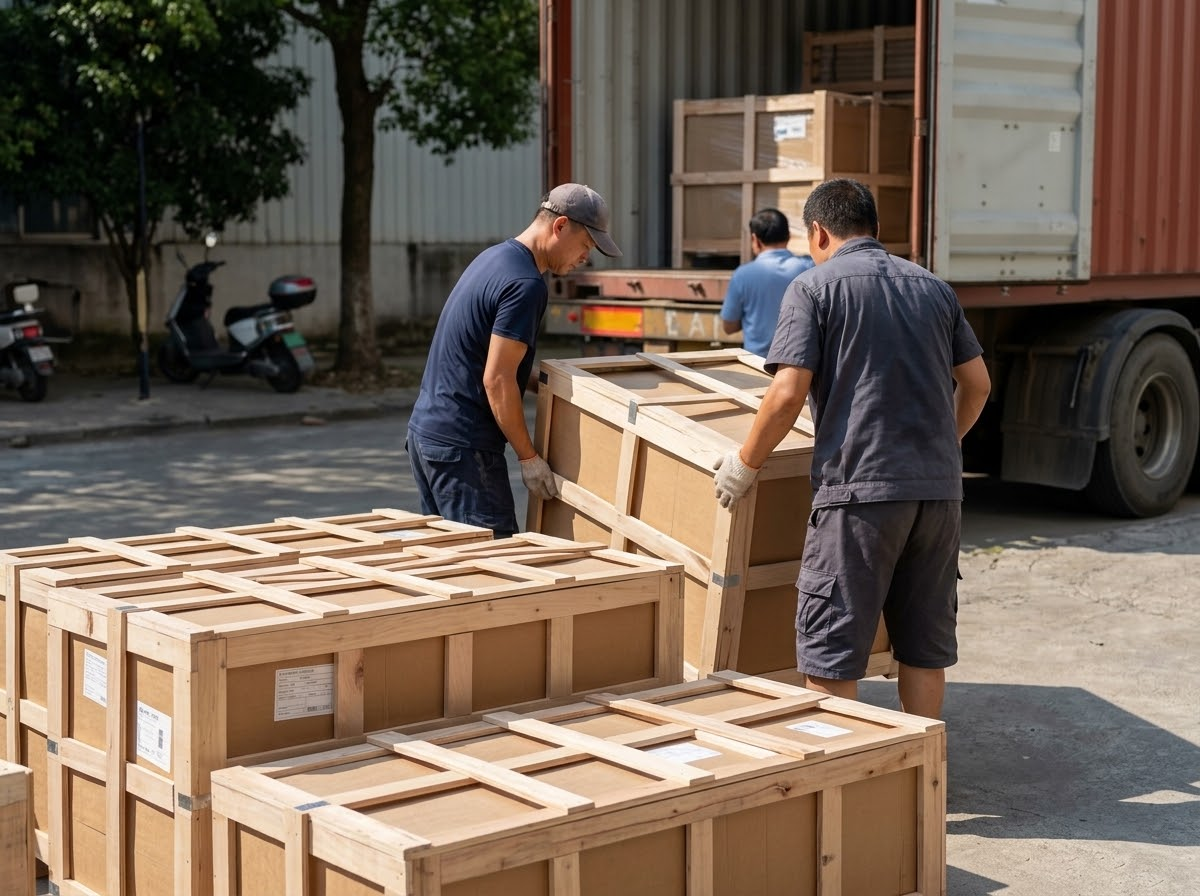
The container landed in Savannah three weeks late, and the first thing the unloading crew noticed was the smell. Not wood. Not varnish. Wet cardboard. Inside, out of forty-eight dining tables from a factory I’d visited twice in Foshan, eleven had corner damage so severe the marble tops had spider-webbed clean through. The buyer — a boutique hotel chain out of Austin — had paid $186,000 for the lot, including what the factory called “standard export packaging.” He called me that afternoon, voice flat, and said, “I thought we covered this.” We hadn’t. We’d covered wood species, joinery, and finish samples. We’d spent three days on color matching. The packaging conversation lasted four minutes. Four minutes on a six-week ocean journey. That’s the math that breaks people.
The Brutal Truth: You’re Not Paying for Protection
Here’s what nobody puts in the brochure. Most Chinese furniture factories — and I’ve walked the floors of enough in Dongguan, Longjiang, and Anji to fill a passport — don’t design packaging for your warehouse. They design it for their loading bay.
The goal at 4:30 PM on a Friday in Guangdong isn’t whether your console table survives a forklift bump in Rotterdam. It’s whether the container doors close before the truck driver starts charging overtime. That’s the game. You’re playing chess; they’re playing Tetris.
The rule of thumb I give every buyer: if you can’t describe your packaging requirements in enough detail that a translator could sketch them, you don’t have requirements. You have hopes.
And hopes don’t survive the trans-Siberian rail corridor. Or the Port of Singapore in monsoon season. Or the Chicago distribution center where a temp worker making $14 an hour treats every box like it owes him money.
Key Takeaway
- China furniture packaging is the process of engineering protective systems — foam density, corner bracing, crate construction, and moisture barriers — specifically for the stresses of international transit, not merely factory loading.
- Chinese factory QC operates on a spectrum from informal visual checks to ISO-certified third-party protocols; assuming consistency without verification is the most expensive mistake in sourcing.
- The cost delta between adequate and inadequate packaging typically runs 3–7% of unit cost, while damage claims routinely exceed 15–20% of order value when packaging fails.
- The most reliable indicator of packaging quality isn’t the sample box — it’s whether the factory lets you witness an unannounced drop test during regular production hours.
What Actually Happens on the Factory Floor
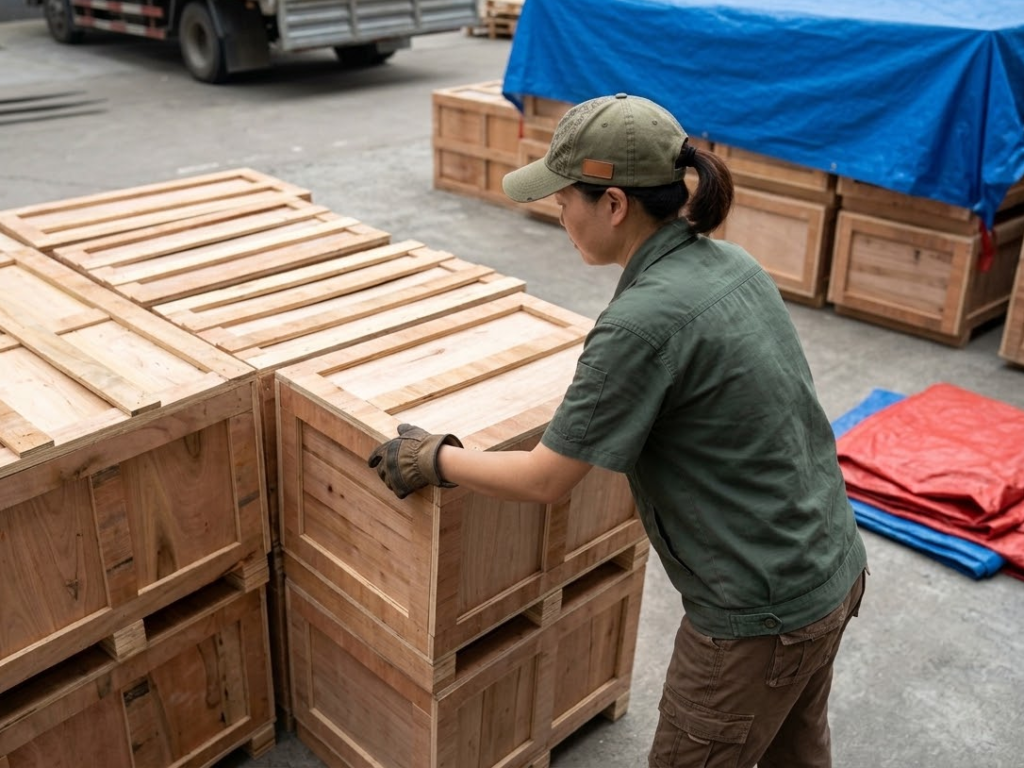
Walking into a furniture factory in China isn’t like the videos on LinkedIn. There’s no soft lighting, no acoustic panels, no gentle narration about “craftsmanship.” There’s sawdust, the whine of CNC routers, and a humidity that makes paper labels curl within an hour. And somewhere in the back corner, usually near the loading dock where the temperature hits 38°C in July, there’s the packing station.
That’s where your “export grade” packaging gets decided. Not in a conference room. Not by a packaging engineer with CAD software. By a team of three guys who’ve been told to process forty units before lunch.
Why Does the Same Factory Pass One Audit and Fail the Next?
Think of it like a restaurant kitchen. Tuesday at 2 PM, the chef plates every dish like he’s photographing it for a magazine. Saturday at 8 PM, you’re getting a salad that looks like it was assembled during an earthquake. Same kitchen. Same menu. Completely different execution.
Factories run on momentum, not documentation. When the order is small and the owner is hovering because a VIP buyer is visiting, the packaging is immaculate. Triple-wall cardboard, custom foam inserts, corner protectors that could survive a small car. When it’s a repeat order, mid-month, and the workshop is already behind schedule because a veneer shipment arrived three days late? That’s when corners get cut. Literally. Foam gets thinner. Tape gets cheaper. The “export crate” becomes a cardboard box with extra tape.
I learned this the hard way in Dongguan, standing next to a QC manager who — and I’m not making this up — pulled out his phone to check the buyer’s packaging spec because he’d forgotten whether this particular client paid for corner protectors. He hadn’t. The phone search took ninety seconds. In those ninety seconds, three dining chairs got wrapped in bubble wrap so thin you could read a newspaper through it.
Actually, that’s not quite right. The problem wasn’t the QC manager’s memory. It was that the packaging decision was discretionary in the first place. At most factories I’ve seen, packaging sits in the same mental category as office supplies. It’s overhead. It’s not the product. And until buyers start treating it like it is, the variability will never go away.
The Packaging Hierarchy Nobody Talks About
If you ask ten factories for “export packaging,” you’ll get ten different answers. And here’s the real kicker — none of them are technically wrong. “Export” isn’t a regulated standard in the Chinese furniture industry. It’s a marketing term, like “artisan” or “premium.” It means whatever the factory needs it to mean that week.
Is Your “Export Grade” Box Actually Export Grade?
It’s like buying olive oil. The bottle says “extra virgin,” but unless you’re in a regulated market, that phrase covers a lot of ground. In my experience, roughly 60% of what factories label “export packaging” would fail a basic ISTA 3A drop test. Not because the factories are dishonest. Because nobody ever asked them to prove it.
The hierarchy looks like this:
| Tier | What You Get | Cost Impact | Survival Reality |
|---|---|---|---|
| Domestic Plus | Single wrap, thin plastic | Included in unit price | 50/50 on a calm day |
| Standard “Export” | Cardboard + loose foam scraps | Included in unit price | Fine if nobody drops it |
| Reinforced | Double-wall carton, EPE foam, corner protectors | +3–5% unit cost | Survives normal handling |
| Custom Crated | ISPM-15 wood, vibration foam, humidity control | +7–12% unit cost | Survives almost anything |
But most buyers never see this spectrum. They see a price quote with a line item that says “packaging: included” and assume someone’s made a professional decision on their behalf. They haven’t. What tends to happen is the factory defaults to whatever packaging material they have the most of in the warehouse that month. Got a surplus of thin foam? Your chairs are getting thin foam. Cardboard supplier raised prices? Suddenly everyone’s getting lighter boxes.
“Export grade” isn’t a certification. It’s a mood.
The Ecosystem Reality: Big Factories vs. The Specialists
There’s a tendency among Western buyers to assume scale equals safety. The logic goes: if a factory ships 500 containers a year, they must have packaging figured out. Sometimes true. Often not.
Large-scale manufacturers in Foshan’s Shunde district — the ones cranking out hotel furniture by the thousands of units — operate on volume economics. Their packaging is standardized, tested, and usually adequate. But it’s also rigid. Try asking them to customize crate dimensions for a single boutique project, and you’ll hit a wall thicker than their plywood.
While some buyers gravitate toward large-scale manufacturers in Foshan, others find that mid-sized specialists — operations like Interi Furniture, which focuses on hospitality and project-based custom furniture — offer a different risk-reward equation. These aren’t assembly-line giants; they’re typically running smaller batches with more direct oversight, which means packaging specs can be negotiated unit-by-unit rather than pulled from a template. The trade-off? You’re managing more variables. The upside? When you specify a 40kg/m³ foam density and corner bracing on a $4,000 custom credenza, someone in the workshop actually reads the note.
With the big players, you audit for consistency. With the specialists, you audit for compliance against a spec they may never have used before.
Neither model is inherently better. But they demand different levels of packaging vigilance.
A Framework That Actually Works
After fifteen years of cleaning up packaging disasters — and preventing a few — here’s what I tell buyers to do before a single unit gets crated.
The Pre-Production Checklist
— Demand packaging specs in writing, not as an afterthought. Your purchase order should include foam density (specify minimum kg/m³), carton wall thickness (double-wall minimum for items over 15kg), corner protection material (EPS or EPE, not loose foam scraps), and moisture barrier requirements for ocean freight. If the factory pushes back on putting this in the contract, that’s not a negotiation. That’s a warning.
— Require photo documentation at three stages: bare product pre-wrap, mid-pack with foam visible, and sealed carton with labeling. Not sample photos. Production photos. From your actual order.
— Budget 4–8% of unit cost for upgraded packaging on fragile or high-value items. On a $50,000 order, that’s $2,000–$4,000. Compare that to a 20% damage claim on a single broken marble-top table. The math isn’t hard.
— Specify drop-test protocol. ISTA 1A for items under 68kg. One corner drop, one edge drop, one face drop from 75cm. If the factory won’t do it or doesn’t know what ISTA means, you’re not working with an export-ready supplier. Full stop.
Red Flags That Defy Conventional Wisdom
Most sourcing guides tell you to “trust factories with established export experience.” I say the opposite. Be extra suspicious of factories that insist their “standard export packaging” is fine without asking what you’re shipping, where it’s going, or how it’s traveling. That confidence usually means they’ve never been held accountable for a damage claim. The factory that asks fifteen questions about your logistics chain before quoting packaging? That’s the one worth your time.
And here’s the thing about third-party inspectors — they’re valuable, but they’re not magicians. If you hire an inspector to show up after everything’s crated, all they can do is take pictures of a sealed box. The real value is having them witness the process: how foam is cut, how corners are protected, whether the worker doing the wrapping has been trained or just assigned. Process inspection beats product inspection every time.

FAQ: The Questions Buyers Actually Ask
Q: My factory says they “always use export packaging.” Is that enough?
A: No. “Export packaging” is not a certified standard in the Chinese furniture industry. It’s a descriptor, not a specification. Without written parameters — foam density, carton grade, corner protection type — you’re accepting whatever the factory defines as adequate that day. Get it in writing, or get ready to file insurance claims.
Q: How much should I budget for upgraded packaging on a $50,000 order?
A: In my experience, roughly $2,000 to $4,000 for comprehensive upgraded packaging on fragile or high-value furniture. That’s 4–8% of order value. For standard residential furniture with lower damage risk, 2–4% usually covers reinforced cartons and better foam. The cheapest insurance you’ll ever buy.
Q: Can I just hire a third-party inspector and skip factory QC oversight?
A: You can, but you’re missing the point. Third-party inspectors verify outcomes; they rarely fix processes. If a factory’s internal QC is weak, an inspector will document the failure after it happens. What you need is packaging protocol baked into the production workflow — not a report telling you why your shipment arrived damaged. Use inspectors as verification, not as a substitute for packaging requirements.
Q: Why do some factories refuse to let me watch the drop test?
A: Because they know the result. A factory confident in its packaging will invite you to witness testing — sometimes unannounced during regular production. If they refuse, cite “proprietary methods,” or insist on pre-scheduled demos with sample units only, you’re seeing smoke and mirrors. The real kicker? Pre-scheduled demos often use hand-picked boxes with extra reinforcement. Demand production-line testing, or don’t trust the result.
Q: Is it worth flying to China just to check packaging standards?
A: It depends on your order size and risk tolerance. For a first order over $75,000, or any project with custom dimensions and fragile materials, yes. Not to micromanage every box, but to establish the standard in person. Once a factory knows you’ll show up unannounced to check the packing station, compliance improves dramatically. For repeat orders under $30,000 with a trusted supplier, detailed specs and photo documentation usually suffice.
The Hard Lesson
At the end of the day, packaging isn’t a line item. It’s insurance with a foam core. And like most insurance, you don’t think about it until you’re standing in a warehouse staring at $40,000 worth of splintered walnut wondering how a twenty-minute conversation could have prevented six weeks of headaches.
So here’s the question I leave with every buyer: When your next container clears customs and the doors roll open, will you feel confident? Or will you hold your breath?
Fifteen years in, I still check the packing photos first. Every time. Because the factory that gets packaging right — really right, not just “looks fine in the sample” right — is the factory that understands something fundamental. They know the product isn’t finished when it leaves their loading bay. It’s finished when it reaches the customer’s living room. Or hotel lobby. Or whatever space you designed it for.