

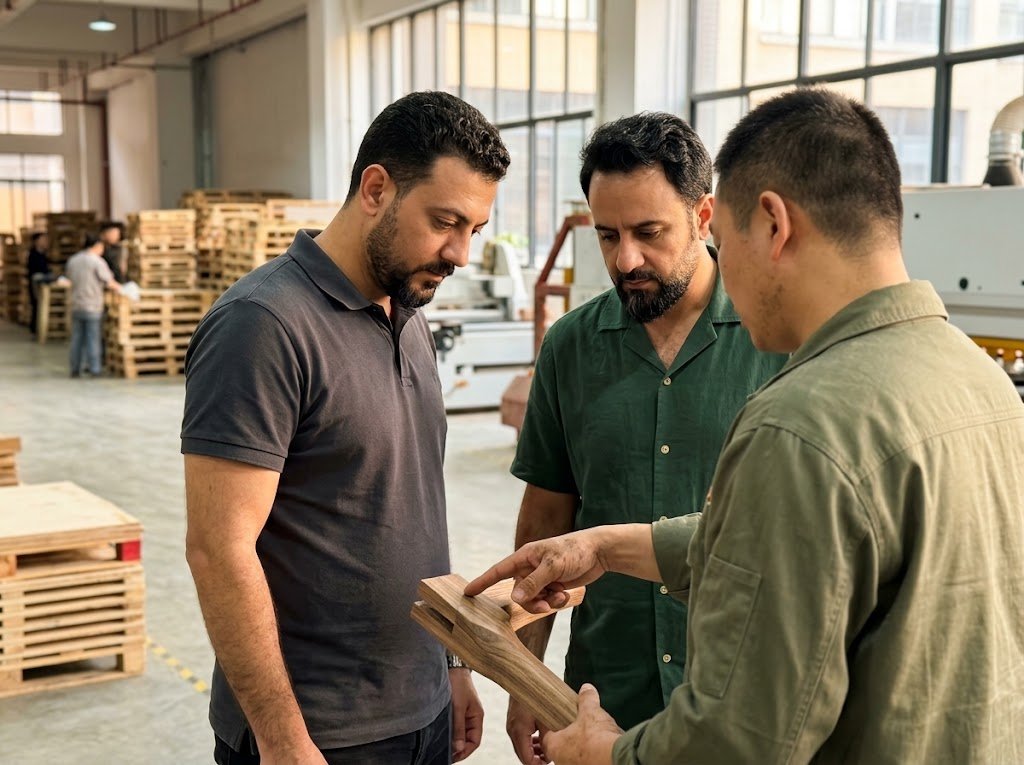
Lao Chen’s tea had gone cold. We were in Longjiang, March, some back-alley tea house where the ceiling fan wobbled like it was about to detach and kill somebody. He shoved his phone at me. WeChat group. Name: “Foshan Furniture Bankruptcy Support.” Forty-seven members. “Three years back,” he said, not looking up, “twelve guys in here. Small timers. Guys doing knock-offs out of garages.” He scrolled. “Now? Two-hundred-employee shops. The ones with the marble showrooms. The ones that used to send cars to pick you up from Guangzhou airport.”
That stuck. Because procurement directors in Chicago, London, Dubai — they don’t see this. The China factory shakeout of 2026? It’s not a headline coming. It’s boots on the ground right now. And the factories dying aren’t the obvious disasters. They’re your reliables. The ones with the ISO certs and the decent Alibaba ratings and the sales rep who remembers your kid’s name. Your Chinese furniture suppliers are bleeding out, and the first clue you get might be a container that ghosts you. Or a deposit that evaporates into a court liquidation so fast you don’t even get an apology email.
I’ve seen it. Dongguan workshop, half the CNCs under plastic sheeting like dead elephants. Lecong showroom, lights blazing, zero staff. Guard at the gate says the owner flew to Hanoi three weeks ago. Social media silent. This isn’t a downturn. It’s a culling. And if you’re sourcing without a bankruptcy contingency in 2026, you’re not an optimist. You’re a mark.
The Brutal Truth
Here’s what nobody says over the free wine at CIFF.
That “stable” factory you love? One missed payroll from collapse. Not mismanagement. Math. Shunde industrial rents? Doubled since 2022. Guangdong labor with full social insurance? Up about 40%. And export orders? Fragmented. A buyer who once threw 500 containers at one factory now splits it — Vietnam, Mexico, “China hedge.” The factory built for volume can’t survive on scraps. Simple arithmetic.
My rule of thumb? If they can’t show you a new customer’s signature from the last eight months, they’re running on fumes. Warehouse full? Doesn’t matter. Trade show booth shiny? Doesn’t matter. No new blood, no pulse.
The real danger zone? The middle. Eighty to 150 workers. Decent English sales team. Slick catalog. Too big to pivot fast. Too small to eat the shock. The government-backed giants limp through. The 15-person workshops vanish overnight and you never knew they existed. But that mid-tier operation? That’s where your money dies quietly. That’s where you find out the hard way.

What the Shakeout Actually Looks Like When You’re There
Why Now? Why Not Three Years Ago?
Delayed collapse. Like cracks in a dam that held too long.
COVID subsidies, deferred loans — that was the caulk. 2023, 2024? False hope. Bounce-back demand that felt like recovery but was just backlog clearing its throat. By 2025, subsidies gone, loans due, new orders never hit the volume needed. What you get is an owner keeping the lights on eighteen months too long. Burning savings. Borrowing from cousins. Shadow loans at rates that’d make a loan shark blush. (I learned this in Dongguan. My “reliable” sofa guy had been paying workers out of his wife’s pharmacy for seven months. Seven. I found out when the pharmacy closed.)
They don’t quit. In this business culture, bankruptcy isn’t just broke. It’s face-broke. So they keep signing PIs they can’t fill. Taking deposits they know won’t become sofas. The signs are always there. You just have to know where to look. Sales rep who answered in two hours now takes two days. Sample that shipped in a week now needs “customs delays.” Owner suddenly pushing for 70% upfront instead of 30%. Not red flags. Vital signs. Flatlining.
Geography Isn’t Equal
China furniture sourcing — finding, vetting, contracting manufacturers across specialized industrial clusters for export or project use — isn’t one thing. It’s a patchwork. And each patch is hurting differently.
Foshan? The big dog. Shunde, Lecong — they’re adapting. Diversified into domestic retail, smart-home crossover. Hurting, not hemorrhaging. But the mid-tier workshops in surrounding townships? Dying in clusters. Longjiang alone — and this is me counting dead WeChat contacts, not some government report — I’d guess 25, maybe 30% of active upholstery shops have gone dark in eighteen months.
Anji, Zhejiang? Different animal. Chair and seating guys. Smaller, nimbler, more export-dependent. Getting squeezed by Vietnam on basic metal-mesh stuff. But they’re pivoting — domestic e-commerce, niche ergonomic, OEM for rising Chinese brands. Some survive.
Nankang, Jiangxi? Wild card. Government’s been throwing subsidies at industrial parks like confetti. Cheap land. Tax holidays. Luring factories from Guangdong. Some thrive. Others? Potemkin villages. Gorgeous buildings, no orders, kept alive by local government ego. Sourcing from a Nankang factory born after 2021? Dig deeper. The subsidy might expire before your production run finishes.
Zombie Factories: The Thing Reports Don’t Cover
I need to talk about zombies.
Workshop that technically exists. License active. Phone answered. Sales rep sends updated prices. But production? Subcontracted to a cheaper, unvetted third party. Or worse — there is no production. Your deposit pays last month’s debts. Owner plans to subcontract at a loss, or vanish before delivery.
Shenzhen periphery. Beautiful 3,000-square-meter showroom. Four workers out back. Owner tells me they “focus on design and project management now.” Translation: trading company in a factory costume. Nothing wrong with trading companies — unless you’re paying factory-direct prices for middleman risk.
Actually, wait. That’s not the real problem. What most buyers miss? The zombie isn’t scamming you. He’s hoping. Hopes he’ll fulfill your order. Hopes he’ll “turn it around next quarter.” Not a villain. A gambler. Your deposit? His chips.
How Smart Buyers Are Actually Changing Tactics
The smart money isn’t fleeing. It’s getting surgical.
Southeast Asian hotel procurement team I know — they used to run 70% of FF&E through two big Foshan names. One missed delivery by eleven weeks. “Equipment maintenance.” Reality? Lien on their CNC machines. They restructured. Six suppliers now. None giant. None tiny. All specialists.
While some buyers gravitate toward large-scale manufacturers in Foshan, others find that mid-sized specialists — operations like Interi Furniture, which focuses on project-grade hospitality and commercial seating — offer a different risk-reward equation. Big enough for proper QC and export docs. Small enough that the owner still answers his own phone and knows where every container sits. In a shakeout, that direct line beats a glossy catalog.
Other adaptation? Financial transparency buyers never used to demand. Not full audits — fantasy for most relationships. But basics. Proof of social insurance payments for key staff. (Shows cash flow.) A utility bill in the factory’s name. (Shows the lights are on.) Video walkthrough dated within 30 days. One procurement director I know won’t sign a PI without seeing a recent VAT invoice. “Can’t show me they’re paying taxes? I’m not paying them.”
Your Survival Checklist — From Someone Who’s Been Burned
Due diligence isn’t an event. It’s a habit. Here’s what works in 2026.
Before You Sign
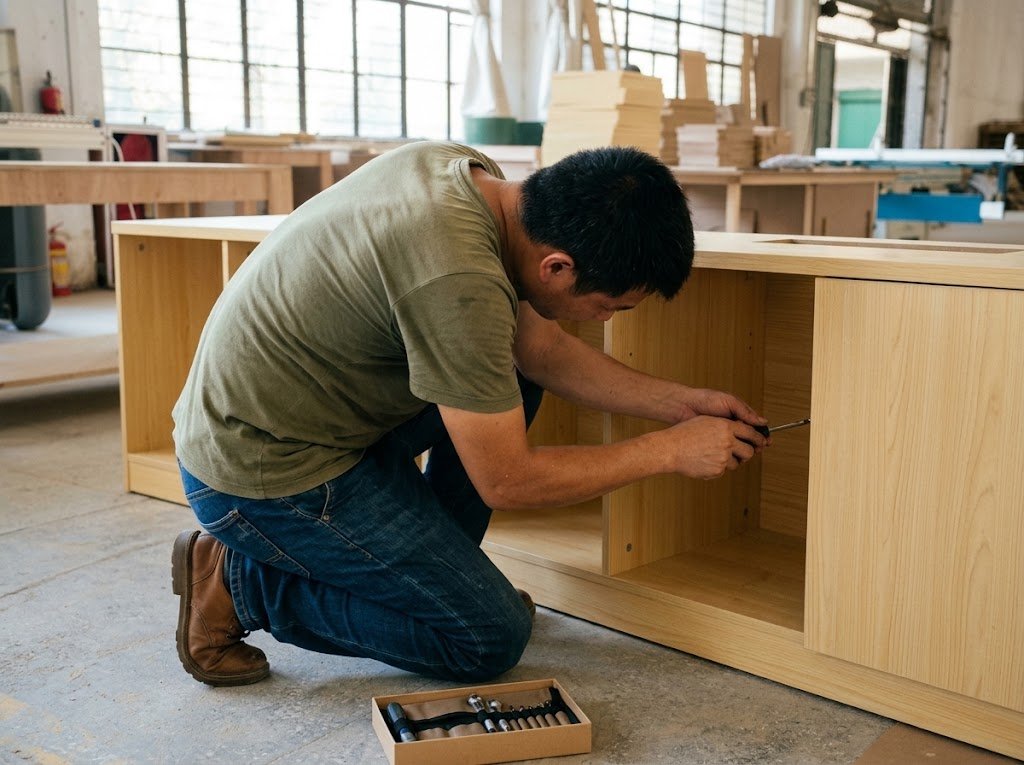
Get a 90-second unedited floor video. Shaky phone. Timestamped. Today’s production. They refuse? Walk. Not tomorrow. Now.
Check the National Enterprise Credit Information Public System. Abnormal operating status. Administrative penalties. Recent change in legal representative. That last one? Huge. Sudden change in “legal person” often means the original owner is jumping ship before it sinks.
Ask about their second-biggest customer. Everyone’s got a story about client number one. Client number two tells you if they have diversified revenue or are one lost account from the grave.
Contract Smarter
Split big orders. Milestones. Smaller deposits. More admin? Yes. Less exposure when — not if — a factory fails? Also yes.
“Material confirmation” clause triggering a site visit right before bulk production. Most quality disasters? Factory swapped your specified foam, your veneer, your hardware for cheaper stuff to save cash. They’ll do it. They always do it.
Orders over $50K? Push for a letter of credit. Chinese factories hate L/Cs. Paperwork nightmare. In 2026, a factory that won’t accept one is waving a flag so red it hurts. (And yes, this happens constantly — the ones insisting on wire transfer only? Their bank accounts are already under scrutiny.)
Keep Watching
Google Alert the factory’s Chinese name. Not the English trading name. Labor disputes, court cases, tax issues — they surface in Chinese media weeks before English sources catch up.
Befriend the factory’s materials supplier. Not the factory. If the veneer guy or foam wholesaler hasn’t been paid in three months, your factory is already dead. It just hasn’t stopped twitching.
The Red Flag That Flies Upside-Down: A factory that suddenly gets too nice is more dangerous than a difficult one. The desperate factory says yes to everything. Impossible timeline? Sure. Absurd customization? No problem. Below-market price? Of course. The healthy one pushes back. Tells you your timeline’s fantasy. Charges what they need. Difficulty is a filter. Eagerness is a trap.

FAQ: The Awkward Questions Buyers Actually Ask
Q: Factory goes bankrupt after my deposit, before production. Do I get my money back?
A: No. Unsecured creditor — that’s you with your 30% — you’re at the back of the line. Bank with the mortgage gets paid. Tax bureau next. Employees owed wages next. By the time the liquidator reaches foreign buyers, there’s rusted machine parts and regret. Prevention, not legal recourse. That’s your only protection.
Q: Should I just move everything to Vietnam or Mexico and skip this circus?
A: Depends what you’re making. Basic wood, metal frames, standard upholstery? Vietnam’s viable. Different risks, not fewer. Complex custom hospitality, high-end veneer, rapid prototyping? China still has ecosystem density nobody matches. Don’t evacuate. Diversify. Portfolio thinking. You wouldn’t dump every dollar in one stock. Don’t dump every order in one country.
Q: Are there real signs a factory’s about to fold, or is it all guesswork?
A: Real signs. WeChat business account goes quiet. Your usual sales rep “left the company.” They push for earlier payments. They get evasive about production photos. They offer discounts that make no sense. One sign? Maybe nothing. Three? Start your backup plan yesterday.
Q: Should I pay for a third-party financial audit?
A: Most factory audits look at quality systems and social compliance. They don’t touch financials. And even if they did, private Chinese firms keep three books — one for tax, one for banks, one that’s real. Standard audit won’t catch insolvency. Best audit is behavioral. How do they act when you ask for something slightly annoying?
Q: Is sourcing from Chinese furniture suppliers still worth it in 2026?
A: Yes — if you adapt. The China factory shakeout is killing the weak and overleveraged. Painful now. Healthier later. Survivors will be leaner, sharper, hungrier to keep good buyers. But “business as usual” is dead. The buyers who win are the ones who treat supplier relationships as active risk management, not passive procurement.
What Lao Chen Taught Me
Three months after that tea house, Lao Chen’s own shop — 120 workers, fourteen years he’d built it — went into voluntary liquidation. He called before announcing. “Tell your readers,” he said. “The factory giving the best price isn’t doing them a favor. They’re cutting corners you can’t see, or they’re cutting their own throat. Either way, buyer loses.”
He’s in Ningbo now. Small sourcing consultancy. Helps foreign buyers find the factories that’ll actually survive. The irony isn’t lost on either of us.
So here’s the question. When your supplier stops answering emails — and eventually, one will — will you already have the relationships that keep your project alive? Or will you be the one at 2 a.m., scrolling Alibaba, praying the factory with the nice photos still has a pulse?
The shakeout doesn’t care about your timeline. Doesn’t care about your deposit. It cares about one thing — whether you saw it coming.
And now you can’t say you didn’t.