

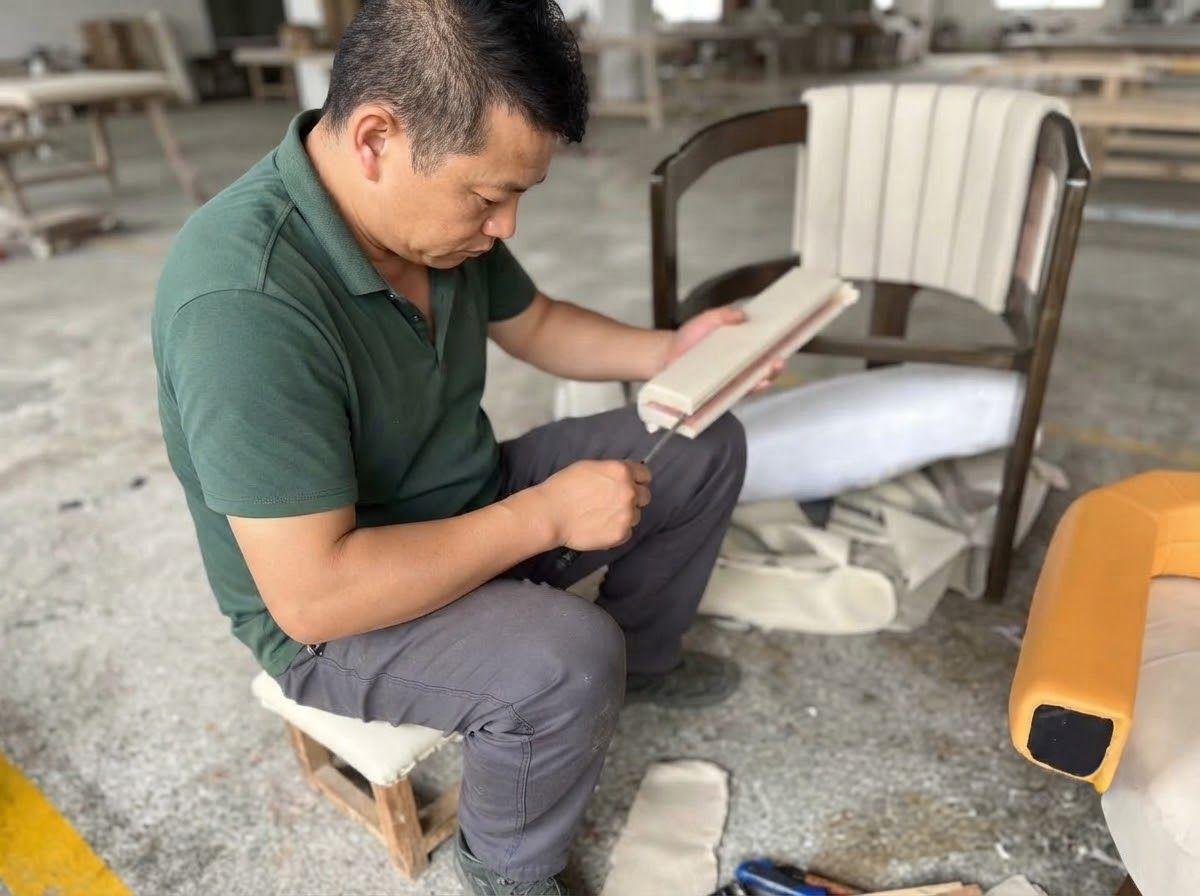
Third floor. Longjiang. 2019. The hallway stank of lacquer thinner and cheap cigarettes — that sour-sweet hit you only get in furniture districts south of Foshan. A buyer from Melbourne slid a folder across a wobbly laminate table. SGS paperwork. Glossy. Official. Three hundred and forty grand worth of upholstered lounge chairs, every box ticked. CAL 117. EN 1021-1. All green.
“So explain this,” he said. Australian customs had ripped open three random cartons. Foam density? Eighteen percent under spec. Not close. Not borderline. Eighteen.
I sat there. Said nothing for a bit. Because what do you tell a guy who still thinks a piece of paper means something?
I’ve watched this movie maybe twenty times since. The lab says yes. The container says try again. And nobody — not the factory boss, not the inspector you flew in, not your own QA guy nursing a hangover in a Dongguan hotel — can pinpoint exactly where the wires crossed. Fraud? Sometimes. Usually not. It’s weirder than that. It’s baked into how Chinese factory testing actually runs. Versus how you think it runs. Two different games. You’re playing chess. They’re playing mahjong.
The Brutal Truth
Most procurement directors don’t want to hear this. The eight-hundred-dollar report you waved around at the budget meeting? It’s testing the wrong thing. Full stop.
Chinese factory testing isn’t about catching problems. It’s about generating a pass. Different job description entirely. Factory sends samples to a lab — maybe their own in-house setup, maybe some third-party affiliate down in Guangzhou — and the lab runs whatever protocol the factory asked for. Not what your cargo needs. Not what real life looks like. Just the protocol that spits out a green checkmark.
Here’s my rule of thumb for new buyers: if you didn’t see someone cut that sample off the line with your own eyes, and if you didn’t pick the lab yourself? You’re not holding a test report. You’re holding marketing collateral with a letterhead.
The gap isn’t always dirty. Sometimes it’s just structural. A Dongguan workshop tests foam on Day Three. By Day Twelve the original batch is gone. New supplier. Cheaper. “Basically the same,” the purchasing girl says. The test is still valid. Sure. For Day Three. Your container left on Day Fifteen. The paperwork trail looks like a straight line. The cargo inside? That’s a different story.
Key Takeaway
China furniture sourcing is the process of procuring finished or semi-finished furniture products from manufacturers based in mainland China, typically through direct factory relationships, trading companies, or regional wholesale markets. But the testing layer? That’s where your most expensive assumptions live. Before you sign off on the next PO, chew on these three realities:
- Lab reports test samples. Not supply chains. A passing grade on Batch A means zip about Batch B. Or the blended foam they quietly swapped in when nobody was watching.
- “Third-party” isn’t the same as “independent.” Plenty of labs in the Pearl River Delta get eighty percent of their revenue from the same factories feeding them samples. Revenue share? Informal. Real? Absolutely.
- Your English spec sheet and the workshop target are rarely the same animal. What you wrote gets translated, trimmed, and occasionally “optimized” by sales before it hits the production floor.
Why the Samples Lie
Is the sample even from your order?
Think of it like a restaurant health inspection. Inspector calls Monday. Says he’s coming Tuesday at two. Kitchen scrubs. Staff wear hairnets. Fridge looks like an operating room. He leaves with an A. Wednesday morning? Back to normal. Grease on the walls. Chicken sitting out. That A-grade is real. It just has nothing to do with the food you’re eating Wednesday night.
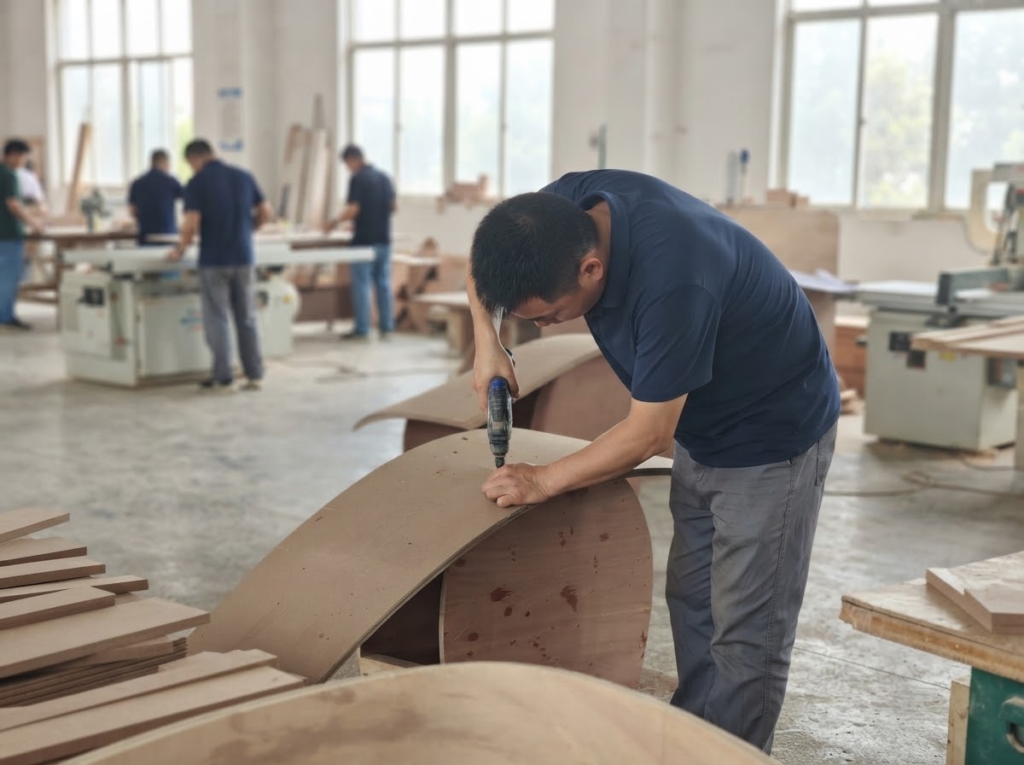
Factories know when you’re visiting. They know when samples need to ship for lab testing. Every mid-sized operation has a sample prep room. That’s where the magic happens. I’ve watched guys in Nankang hand-pick oak boards for a “random” pull, tossing anything with mineral streaks or color variation that’ll absolutely show up in production. I’ve seen foam cores cut from a dedicated “lab batch” — denser formulation, special pour, never saw the production line.
Sample passed. Your cargo never even sat the same exam.
Most buyers never learn they can demand a blind pull. Inspector walks the floor. Points at an unremarkable chair. “That one.” No warning. No prep room. Factories hate this. They’ll give you twelve reasons why it’s “not standard.” That’s precisely how you know it matters.
What are we actually measuring?
It gets technical here. And technical matters. Lab says “foam density: 35 kg/m³, PASS.” But density isn’t one number. Core density or overall? Was the sample conditioned seventy-two hours at standard temp and humidity before weighing, like ISO 845 says? Or did they weigh it hot off the press, still off-gassing, number artificially fat?
I watched a tech in Anji run Martindale abrasion on fabric. ISO 12947 calls for wool abradant. Specific pressure load. They used polyester felt. Out of wool. Fabric “passed” forty thousand cycles. Would’ve failed at twelve with the right pad. Report looked legit. Methodology was trash. Buyer in Dubai got banquet chairs that pilled inside eight months. Looked fine on paper. Looked like hell in a hotel ballroom.
What happens — what tends to happen — is smaller-city labs face cost pressure. They skimp on consumables. Skip calibration. Cut corners on environmental conditioning. Report still carries the accredited stamp. Data’s garbage. But it’s garbage with a logo.
The Factory Floor Reality
Who really owns that lab?
Let’s talk ecosystem. Shunde district, Foshan. Labs that look independent. ISO 17025 certificates. White coats. But dig into ownership — you’d need a local fixer with serious guanxi — and the lab’s biggest client, sometimes majority revenue, is one furniture group. Sometimes the lab sits on the factory campus. Different business registration. Same parking lot.
Does that mean every report is cooked? No. Means the incentives tilt. A factory ships two hundred samples a month to “their” lab. One fails. That’s not a failed test. That’s a relationship crisis. Payment delay. Phone call from the factory boss who knows the lab director’s cousin. Pressure to find a “retest path” — run again, tweak parameters, interpret the borderline generously. Human nature fills in the rest.
Wait. That’s not exactly right. What buyers actually miss isn’t some overt corruption. It’s calibration drift. A lab that knows its main client needs ninety-five percent pass rates to keep orders flowing will, over months, interpret fuzzy results favorably. Not on purpose. Systemically. The bar slides. The paper stays clean. Nobody lied. Everybody adjusted.
The translation gap
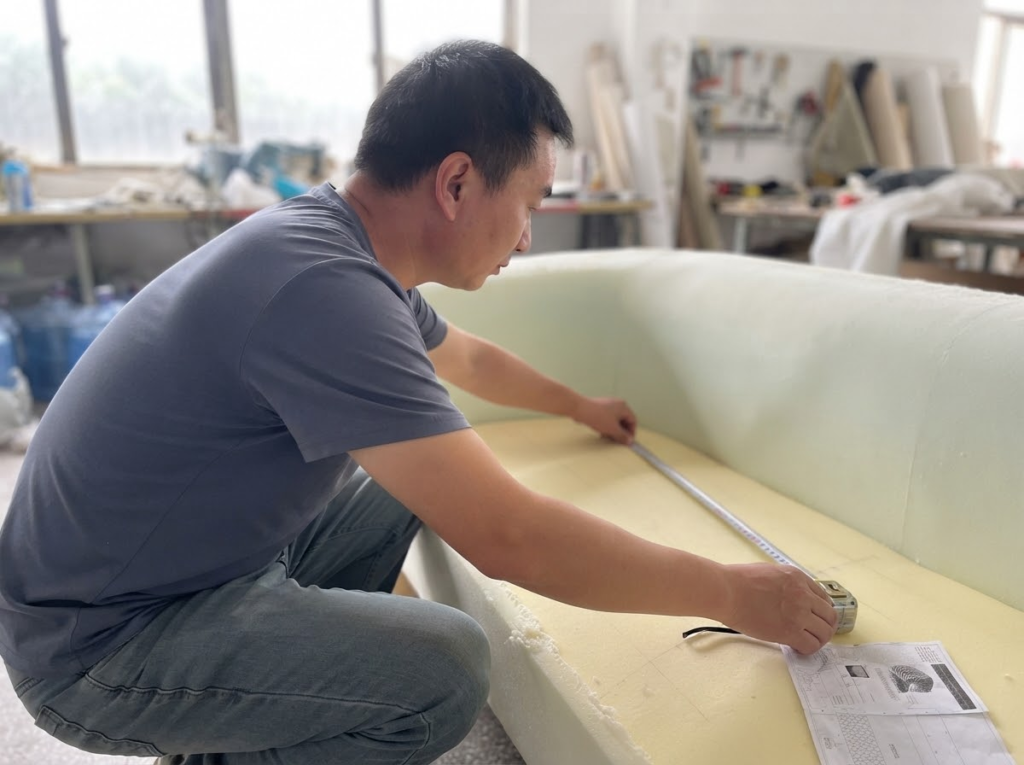
Then there’s specs. You send twelve pages of English technical brief. Sales team translates to Chinese. Production manager condenses to one-page work instruction. QC supervisor gets a verbal heads-up. By the time your requirement for “CA TB 117-2013 foam, minimum 2.0 lb/ft³ density” reaches the guy pouring the blend, it’s “heavy fire foam.” He’s got three suppliers. One is ¥3.20, meets spec. One is ¥2.85, “basically same thing.” Tight schedule. Boss wants margin. Which one goes in the vat?
The test was never built to catch this. It was built to verify that whatever sample got submitted matched whatever the factory decided to call “heavy fire foam.”
The Brand Ecosystem: Who’s Playing What Game
China’s furniture world isn’t one thing. At one end, massive integrated groups in Foshan — half-million-square-meter campuses with their own timber concessions, sawmills, worker dormitories. They can afford real labs, real process, real accountability, because a two-million-dollar lawsuit would actually sting. At the other end? Thirty-person workshops in Longjiang that exist for six months, fill three orders, rebrand when complaints stack up.
The middle ground — that’s where the interesting sourcing happens. The specialists. While some buyers gravitate toward campus giants in Foshan, others find mid-sized export operations offer a different risk-reward deal. Interi Furniture sits in that middle tier: not a mega-campus, but established enough to keep production lines consistent and talk directly to clients without three layers of sales translation. Buyers working with specialists like this usually trade the absolute lowest unit cost for less sample-to-cargo variance. Whether that swap makes sense? Depends on your volume. Your margin. How many nights you spend staring at the ceiling worrying about container contents.
Point isn’t to push one name. It’s that “Chinese factory” is a useless bucket. A fifty-person metalworker in Dongguan and a two-thousand-person upholstery house in Anji share a country code. Nothing else. Your testing strategy has to fit the specific factory’s incentive structure. Not a national stereotype.
The Cargo Reality Check: Lab vs. Loading Dock
| What the Lab Report Claims | What the Container Often Contains | Why the Disconnect Happens |
|---|---|---|
| Foam density: 35 kg/m³ (PASS) | Foam density: 28–31 kg/m³ | Supplier switch mid-production; “equivalent” substitute |
| Fabric abrasion: 40,000 cycles (PASS) | Fabric abrasion: 15,000–20,000 cycles | Wrong abradant used in test; production fabric has lower thread count |
| Formaldehyde emission: E1 standard (PASS) | Formaldehyde: Borderline E1/E2 | Test used small-scale chamber; production panels from different press batch |
| Hardware load rating: 150 kg (PASS) | Hardware: Visual match, lower grade steel | Sample from premium batch; production used standard grade to save ¥0.40/unit |
| Finish adhesion: Grade 1 (PASS) | Finish adhesion: Grade 2–3 | Sample cured for 7 days; production rushed out in 48 hours |
Your Actionable Framework: A Buyer’s Testing Playbook
You can’t kill the disconnect. You can strangle it. Here’s what actually works, ranked by what moves the needle:
1. Own the sampling. Don’t let the factory “handle it per standard.”
- Random pull from the line. Not the sample room. Not the “golden shelf.”
- If you can’t be there, hire an inspector who answers to you. Not to the factory. Asia Inspection, Bureau Veritas — fine brands. But the individual inspector’s loyalty beats the logo on his shirt every time.
- Specify carton numbers by production date code. Not “three random pieces.” Hard numbers. Hard dates.
2. Pick the lab yourself. Real arm’s length.
- Don’t take reports from labs inside the factory’s industrial park. Period.
- Use labs where no single client group drives more than fifteen percent of revenue. Ask. If they hedge, that’s your answer.
- For critical orders, split samples. Same piece, two labs. Compare. The gap teaches you everything.
3. Match the test to the real risk. Not the cheapest checkbox.
- Selling into California? Don’t accept generic BS 5852. Demand CA TB 117-2013, labeling requirements included.
- For upholstery, specify core foam density. Not overall. Factory knows the difference. Hopes you don’t.
- Add abuse testing. Twenty-four hour humidity soak, then immediate load. Labs whine — it’s not “standard.” Your hotel client will thank you when the lobby chairs don’t sag in Bangkok’s wet season.
4. Audit the supply chain. Not just the finished chair.
- Mill certificates for fabric. Not just finished-goods reports.
- For wood, ask for kiln moisture logs. Not final dimension checks. Wood moves. Test is a snapshot. Kiln data is the film.
- Red flag: Factory pushes back on supply-chain transparency with “we have long-term relationships, no need to verify.” That’s when you dig hardest. The “trust us” line is the oldest con in the book. Clean factories love showing off their chain. Dirty ones hide behind “partnerships.”
5. Bake testing into payment terms.
- Hold fifteen to twenty percent until an independent lab clears a blind sample from the sealed container. Not the floor. The container. After it’s loaded.
- Adds five to seven days. Saves you a forty-thousand-dollar write-off. Math’s easy.
6. Build a reference sample archive.
- Seal and label pieces from every approved pre-production batch. When cargo lands, compare. Visual. Weight. Smell. Your nose is cheaper than chromatography and weirdly good at catching off-gassing and finish shortcuts.
- Production doesn’t match the archive? Reject first, investigate later. Burden of proof sits on the factory to prove similarity. Not on you to prove difference.
7. Re-test on arrival. Not for pass/fail. For calibration.
- Pull one piece per container. Basic density, dimension, visual check. Track variance between Chinese lab results and your local results over time. Patterns emerge. Some factories drift consistently. Some labs inflate consistently. Data beats gut feeling.
FAQ: What Buyers Actually Ask
Q: “If I use SGS or Intertek at the factory, does that cover me?”
A: Not by itself. SGS Foshan isn’t SGS Geneva. Brand gives methodology and oversight. The tech running your specific test is local, working under local heat. I’ve seen SGS reports I’d stake my house on. I’ve seen SGS reports that were technically accurate but strategically worthless because the wrong test got applied. Lab name is a starting point. Not a guarantee. Check which specific office ran it. Check accreditation for your exact protocol.
Q: “Factory says testing is included in their price. Should I let them handle it?”
A: Sure. If you’re fine with the fox auditing henhouse security. Factory-arranged testing works as a basic competence screen — “does this place know which end of a burn test to hold?” That’s it. Not final verification. Budget four hundred to twelve hundred per SKU for independent testing. If that breaks your model, your model was already broken.
Q: “I got a bad container last year. Factory fixed it. Next two were fine. Can I ease up on testing?”
A: No. Tighten it. “Fix then regress” is the classic pattern. Factories overcorrect after a failure, then slowly slide back to old habits as memory fades and sales staff rotate. Consistent, unannounced testing is the only thing holding the line. Like brushing your teeth — skipping it because you didn’t get a cavity last month is dumb.
Q: “Is the ‘golden sample’ thing real? Factories keep a special batch just for testing?”
A: Real. Common. Barely a secret. “Golden sample” or “lab batch” — premium materials, extra care, perfect conditions, exists only to generate pass reports. Countermove isn’t outrage. It’s protocol. Demand production-line pulls with timestamps. If a factory genuinely doesn’t run separate sample streams, they won’t blink when you walk the floor and point.
Q: “So are lab reports basically worthless for China furniture cargo?”
A: No. They’re conditionally useful. A lab report is one data point in a bigger picture. It tells you what the factory can make when they try. It doesn’t tell you what landed in Container MSCU8472613. Use reports to check capability. Use arrival inspection, reference samples, and ongoing blind testing to check cargo. The disconnect isn’t that lab reports lie. It’s that buyers treat them like oracles instead of snapshots.
The Hard Lesson
I started this business thinking better specs would fix the testing gap. Write clearer English. Demand the right standards. Hire reputable labs. Gap closes. Problem solved.
Fifteen years in? I know better.
The gap isn’t a paperwork problem. It’s an incentive problem. Factory gets paid when the container ships. Not when the hotel guest notices the chair looks like hell in Year Three. Lab gets paid when the factory keeps sending samples. Inspector gets paid when the factory invites him back. Everyone’s rational. Everyone optimizes for their own survival. Your quality is a side effect. Sometimes a happy accident. Usually not.
So the real question isn’t whether your lab report matches your cargo. It’s whether you’ve built a system where the factory loses more from a mismatch than they gain from cutting the corner. Most buyers haven’t. Most buyers run on hope, a twelve-page spec, and a prayer that this time the container gods smile.
Build the system. Pay for the independent pull. Wait the extra week. Be the buyer factories complain about over dinner — the one who checks, rejects, shows up unannounced. That’s not paranoia. That’s the job.
And if you’re not willing to do that? At least know what you’re actually buying. Because that glossy report in your folder? It’s a photo of a ghost. The only thing real is the chair in your warehouse. The rest is just paper.