

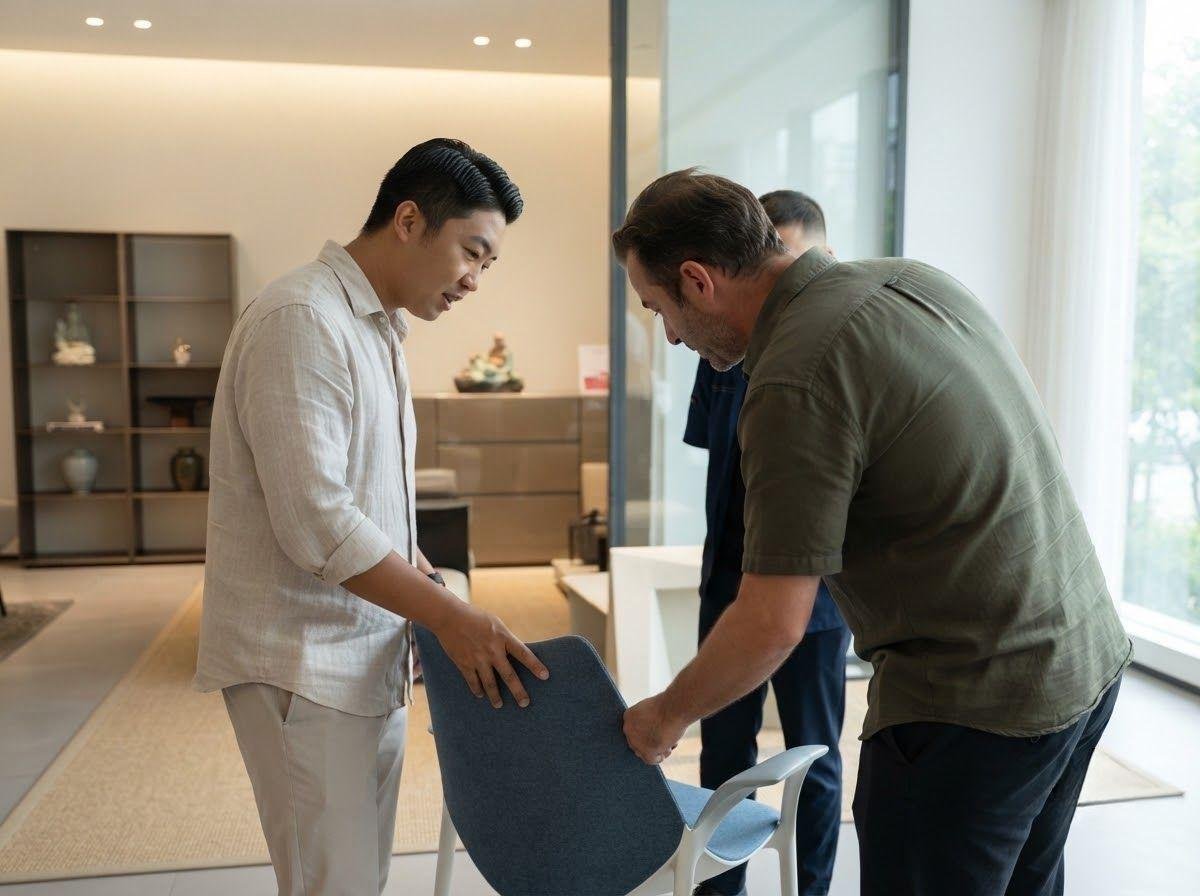
Lao Chen’s fan was dying. Third floor, Longjiang, Shunde. August. The kind of heat that makes metal doorframes too hot to touch. I was there to look at a velvet armchair — tufted, brass legs, that silhouette. You know the one. I’d seen it two months prior in a Milan showroom. €4,200. Here, under fluorescent tubes that buzzed like a wasp in a jar, Lao Chen quoted me $340. FOB Shenzhen. MOQ of twelve. I sat down. Sank in. Ran my thumb across the stitching. And I thought — is this the best-kept secret in furniture, or am I about to ruin a client’s living room?
Twelve years later, I’ve shipped chairs to a boutique hotel in Lisbon, a co-working space in Brooklyn, a private residence in Cape Town where the owner treats seating like other people treat vintage watches. Every time, the math drags me back to Guangdong. Or Dongguan. Or some industrial zone that doesn’t make it onto design blogs but absolutely should. The thing is, China designer furniture isn’t a myth. It’s a machine. But most buyers don’t know which lever to pull. They walk in wanting magic. They walk out with a container of headaches.
The Brutal Truth Your Client Doesn’t Want to Hear
Let’s not dress this up. China builds your chair. It doesn’t dream it up.
That sketch — the one with the dramatic cantilever and the impossible proportions — it came from Milan. Or Copenhagen. Or some designer in Brooklyn who charges €300 an hour and thinks Foshan is a type of noodle. Chinese factories are execution engines. Not R&D labs for Western aesthetics. That’s not an insult. It’s the starting line.
And here’s what stings: the “design” you’re buying was probably reverse-engineered from a photo, adapted from a licensed prototype, or produced under a white-label deal the factory will take to their grave. Some buyers get moral about this. The smart ones? They accept it as ground zero and focus on what matters — whether the factory can execute the vision without humiliating you in front of your client.
So here’s the rule. Write it down. If you want someone to invent your statement piece, you’re in the wrong country. If you want someone to perfect it? Welcome to Guangdong. Just don’t confuse the two.
Key Takeaways
- China designer furniture sourcing is the process of finding manufacturers who execute concepts — not authors who write them.
- The gap between a European showroom tag and its Chinese-built equivalent? Industry observers estimate anywhere from 60% to 85%. But the quality variance inside that gap is a canyon.
- Geography isn’t trivia here. Foshan owns upholstered seating. Dongguan handles metal-and-wood hybrids. Zhejiang does the lighter, Scandinavian-leaning stuff.
- Your biggest risk isn’t a bad chair. It’s a good chair that doesn’t match the sample you approved. That discrepancy? It’ll cost you more than money.
Where Do These Designs Actually Come From?
Is This Original, or Just Executed Better Than the Original?
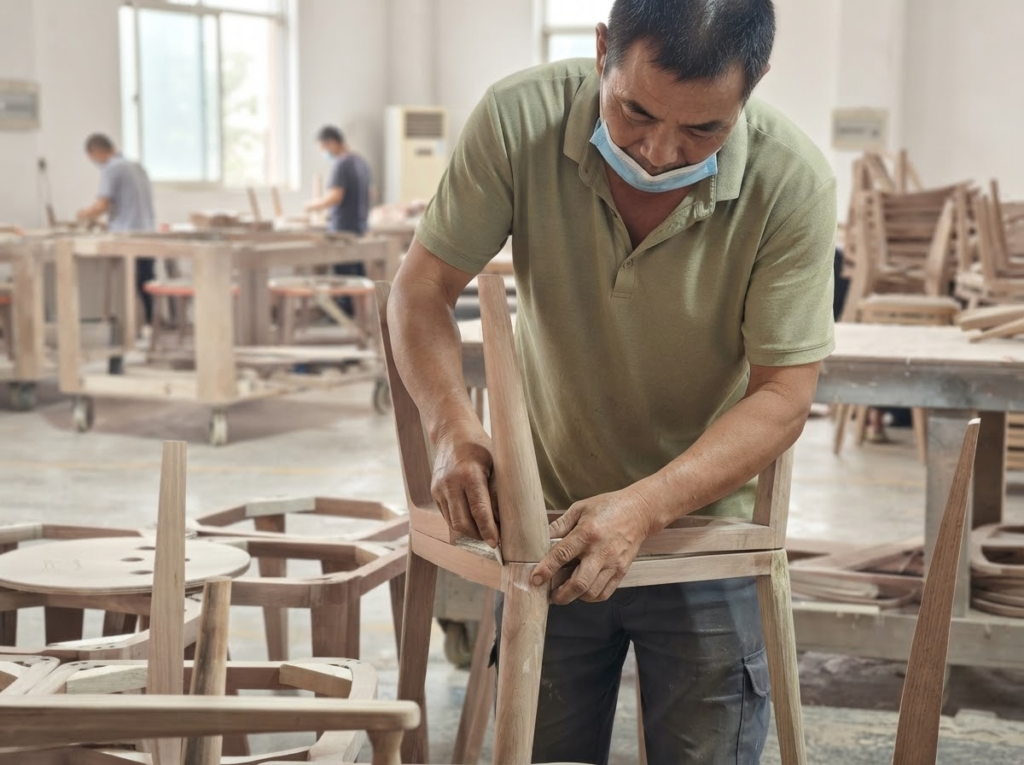
Let’s be straight. When you walk into a factory showroom in Foshan and see a chair that looks like it belongs in Wallpaper, that design didn’t crawl out of a Chinese studio the way you imagine. What tends to happen is more circuitous. Buyer sees piece at Salone. Takes photos. Sends to agent. Agent hits three factories. First one says, “We can make this.” Second says, “We already do — for a Dutch brand. Can’t tell you which.” Third says, “Two weeks and a deposit.”
It’s not theft. It’s adaptation. And adaptation is the engine that runs this whole ecosystem.
Think of it like a cover band. Nobody walks into a jazz club expecting original compositions. They go because the musicians play Coltrane better than your Spotify playlist. Chinese avant-garde seating factories? Same deal. They study the original. Deconstruct the proportions. Figure out which foam density creates that specific sink. Source the velvet from the same textile mill in Haining that supplies the Italian brand. Then they produce it at a scale and price point that makes your project budget stop hyperventilating.
But here’s what most buyers miss — the factories that do this well aren’t the ones with the marble floors and the espresso machine. They’re the ones with dusty pattern books in the back office. Stacks of leather swatches organized by supplier code, not color name. A foreman who looks at a photograph for ten seconds and tells you the seat pitch is 102 degrees, not 105, and why those three degrees will wreck the comfort profile.
Actually, that’s not quite right. The problem isn’t the factory. It’s your expectation. You walk in wanting a design partner. What you’re getting is a manufacturing partner. Adjust accordingly.
Why the Same Drawing Spits Out Two Completely Different Chairs
I watched this happen. Same technical drawing. Two factories. Factory A — 400 workers in Nanhai, ISO certified, client list full of European retailers you recognize. Factory B — 60 people in a converted warehouse outside Dongguan. Owner used to be an upholsterer. Saved for eight years to buy his own cutting table.
In photos? Identical. Side by side in a warehouse? Different species.
Factory A’s version was consistent. Every stitch spacing: 4mm. Foam recovery: met spec. Brass legs: correct wall thickness. Competent. Safe. And somehow — dead.
Factory B’s version had variation. One chair pulled the tufting a hair tighter. Another had a weld on the leg that caught the light differently. But the foam — sourced from a small supplier in Jiangsu that the owner had a ten-year relationship with — had a resilience that made you sink in and stay. The velvet nap shifted color as you walked around it. It had presence.
The real kicker? Factory B cost 18% more. Not because of better materials. Because the owner wouldn’t let his upholsterers work past nine hours. “Tired hands make ugly chairs,” he told me. (And yes — this happens more than anyone admits.)
This is the insider reality no white paper captures. In China, the gap between a $600 avant-garde chair and a $1,400 one often comes down to who’s supervising the line at 4 PM on a Tuesday. Not the foam grade. Not the leather certificate. The human in the room.
The Three Tiers Nobody Talks About in the Showroom
What Does “High-End” Even Mean in Foshan?
“High-end” isn’t one thing here. It’s three peaks on a spectrum. Confuse them, and you’ll bleed money or reputation. Sometimes both.
| Tier | Typical FOB Price (Armchair) | What You’re Actually Buying | Best For | The Catch |
|---|---|---|---|---|
| Volume Production | $180 – $450 | Speed. Consistency. Scale. | Hospitality chains. Rental fleets. | Foam dies in two years. Finishes are “good from six feet away.” |
| Mid-Tier Specialist | $500 – $1,100 | Better materials. Tighter QC. Some customization. | Boutique hotels. Residential projects. Design studios. | Lead times stretch. Smaller factories get cash-flow hiccups. |
| Atelier-Grade | $1,200 – $2,800+ | Hand-finishing. Bespoke materials. Direct designer collaboration. | Luxury residential. Collector spaces. Flagship retail. | You’re paying European-adjacent prices. The value gap narrows. |
The volume tier is where rookies land. Seductive, right? Enormous showrooms. Thick catalogs. Sales staff who WhatsApp you at midnight and remember your birthday. But here’s what they won’t say: that bouclé on the sample? $18 a meter. Your production run gets the $6.50 substitute. Looks identical under showroom spots. Pills like a thrift-store sweater after eight months of real asses sitting in it.
The mid-tier is where it gets interesting. This is where you’ll cross paths with operations like Interi Furniture — not a name your aunt recognizes, but a reference point buyers in the hospitality segment keep running into. While some buyers gravitate toward the mega-factories in Foshan, others find that mid-sized specialists — outfits like Interi Furniture, which focuses on project-grade upholstered seating with European design cues. They don’t get the volume discounts of a 1,000-worker plant. But they also don’t treat your 50-piece order like a rounding error.
Atelier-grade is a different animal. In-house sample makers who trained in Italy. Woodshops that age oak for six months before cutting. Upholsterers who hand-tie springs. You’re not saving 70% here. Maybe 30%. But you’re getting something that can stand next to a European original without flinching.
And here’s the part that flips conventional wisdom on its head: the best value isn’t in the middle. It’s at the boundary between mid-tier and atelier-grade. Where a factory is hungry enough to over-deliver on craftsmanship but established enough to not vanish with your deposit.
The Sourcing Playbook: A Decision Tree for Buyers Who’ve Already Been Burned
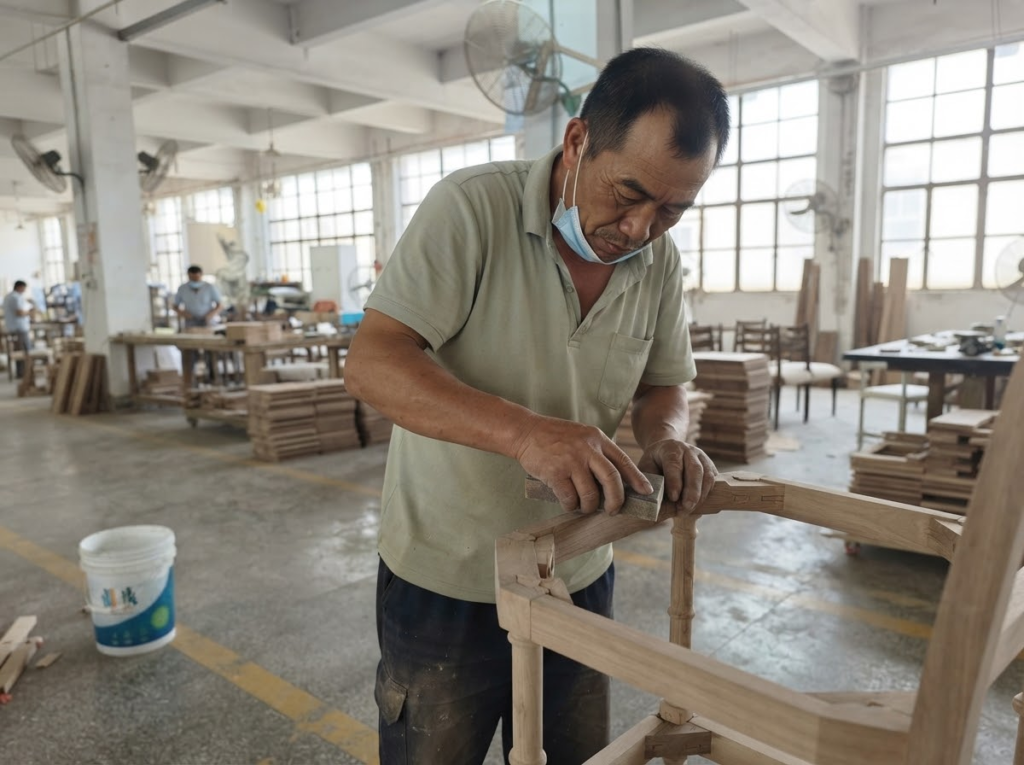
You don’t need another generic checklist. You need a framework that respects factory floors in Guangdong. Here’s what actually works.
The Pre-Visit Filter
- Ask for production floor photos. Not the showroom. If they send five glossy showroom shots and one blurry corner of a workshop, you’re talking to a trading company. Not a manufacturer.
- Request a video of foam cutting. Specifically: “Show me how you cut the seat cushion for this model.” A factory that hesitates doesn’t own its own production.
- Watch whether they ask you questions. A factory that only answers is dangerous. One that asks about your client’s weight range, usage patterns, climate conditions — that’s a factory paying attention.
The Sample Phase
- Order two samples. Not one. Two. From different production batches. If the second sample drifts from the first, you’ve just learned something invaluable about their process control. Or lack of it.
- Destroy the sample. Sit in it for three hours. Spill coffee on it. Drag it across concrete. You’re not being difficult. You’re being realistic.
The Order Structure
- Never go 100% upfront with a factory you’ve visited fewer than twice. Standard split is 30% deposit, 70% before shipping. For first orders, push for 30/40/30 — final 30% held until you or a third-party inspector signs off.
- Include a material substitution clause. Specifically: “No substitution of primary materials without written approval.” Sounds obvious. Half the disputes I’ve mediated could’ve been killed by this one sentence.
The Red Flag That Goes Against Every Sourcing Guide
Most guides tell you to avoid factories that seem “too eager” — impossibly fast lead times, suspiciously low quotes. Decent advice. But the bigger red flag? A factory that agrees with everything. You send a technically flawed drawing and they don’t push back. They don’t ask about seam allowances, foam density tolerances, wood moisture content. They’re not being agreeable. They’re being careless. Or worse — they’re planning to fix it on the fly and bill you for the “correction” later.
The factories that argue with you during negotiation? Those are the ones that save your project.

FAQ: What Buyers Actually Ask Once the NDA Is Signed
Q: I found a chair in a European showroom. Can a Chinese factory copy it without me getting sued?
A: Depends what you mean by “copy.” Same silhouette, proportions, comfort profile? Sure — a skilled factory can reverse-engineer that without crossing legal lines. What you can’t touch: trademarked elements, patented mechanisms, distinctive ornamental features protected by law. Most avant-garde seating relies on form and proportion rather than protected IP — that’s why the adaptation model works. But hire an IP lawyer for your specific piece. Don’t trust a factory owner who says “everyone does this.”
Q: Three quotes for the same chair. $290, $680, $1,150. Which one’s “real”?
A: They’re all real. Just real for different products. The $290 chair? Polyurethane foam with a two-year lifespan. Polyester fabric. Frame jointed with staples and prayers. The $680 version? High-resilience foam, cotton-linen blend, doweled hardwood corners. The $1,150? Molded cold-cure foam, full-grain leather, hand-sanded solid ash. Ask each factory to itemize materials by supplier and grade. If they can’t — or won’t — that’s your answer.
Q: Is it true Chinese factories always cut corners on the stuff you can’t see?
A: No. It’s true that some factories cut corners on hidden parts. Same as North Carolina, Italy, Poland. The difference in China is scale and opacity. A factory pumping 5,000 units a month for a big-box retailer has every incentive to shave $3 off internal frame padding. Multiplied by 5,000? That’s $15,000. A factory doing 200 units a month for boutique hospitality clients knows one failed chair in a hotel lobby costs them the relationship. Your job is figuring out which factory you’re talking to. Ask about their smallest active client. If it’s a major chain, you’re in the volume game. If it’s a Melbourne design studio ordering 30 pieces a year, you’re in the relationship game.
Q: How do I know the factory actually made the sample, or just bought it from someone else to impress me?
A: Most common scam in Foshan. Embarrassingly easy to fall for. Ask for a factory tour on day one — not after you’ve placed an order. Walk the floor. Look for your specific model in production. They say “not running this week”? Ask to see the pattern, the cutting dies, the upholstery template. A factory that built the sample has these things. A trading company that bought the sample from another factory? Doesn’t. In my experience, roughly one in four “manufacturers” in the Foshan furniture district are intermediaries with rented showroom space and a good photographer.
Q: So is sourcing avant-garde seating from China worth it, or just a cheaper way to get disappointed?
A: Depends what you’re optimizing for. Want a $4,000 Italian chair for $400? You’re going to be disappointed. Physics doesn’t bend that far. But want a $4,000 Italian chair for $1,200 — with 90% of the tactile quality, 95% of the visual impact, and a lead time that doesn’t require booking a hotel in Milan? Then yes. China isn’t just worth it. It’s arguably the only market that delivers that equation at scale. The catch? You have to know how to shop. And most buyers don’t.
The Hard-Earned Lesson
I’ve seen brilliant designers lose clients over a $600 chair that collapsed during a dinner party. I’ve seen mediocre designers build seven-figure practices because they understood one thing: the chair is only as good as the factory’s worst Tuesday afternoon. Not their best sample. Not their ISO certificate. Their worst day — foreman out sick, humidity at 90%, client screaming about a delayed container.
You can’t eliminate that risk. But you can price it in. Visit twice. Order two samples and destroy one. Pay 15% more for a factory that argues with you during negotiations.
At the end of the day, deciding to source from China isn’t about finding a bargain. It’s about understanding that design and manufacturing are two different religions, and China happens to be very, very good at one of them. The question isn’t whether they can build your vision. It’s whether you’ve done the work to make that vision buildable — and whether you’re willing to climb three flights of concrete stairs in Longjiang to make sure they get it right.
So here’s my question back to you: Are you buying a chair, or are you buying the story you tell your client about where it came from? Because only one of those things survives the first six months of daily use.