

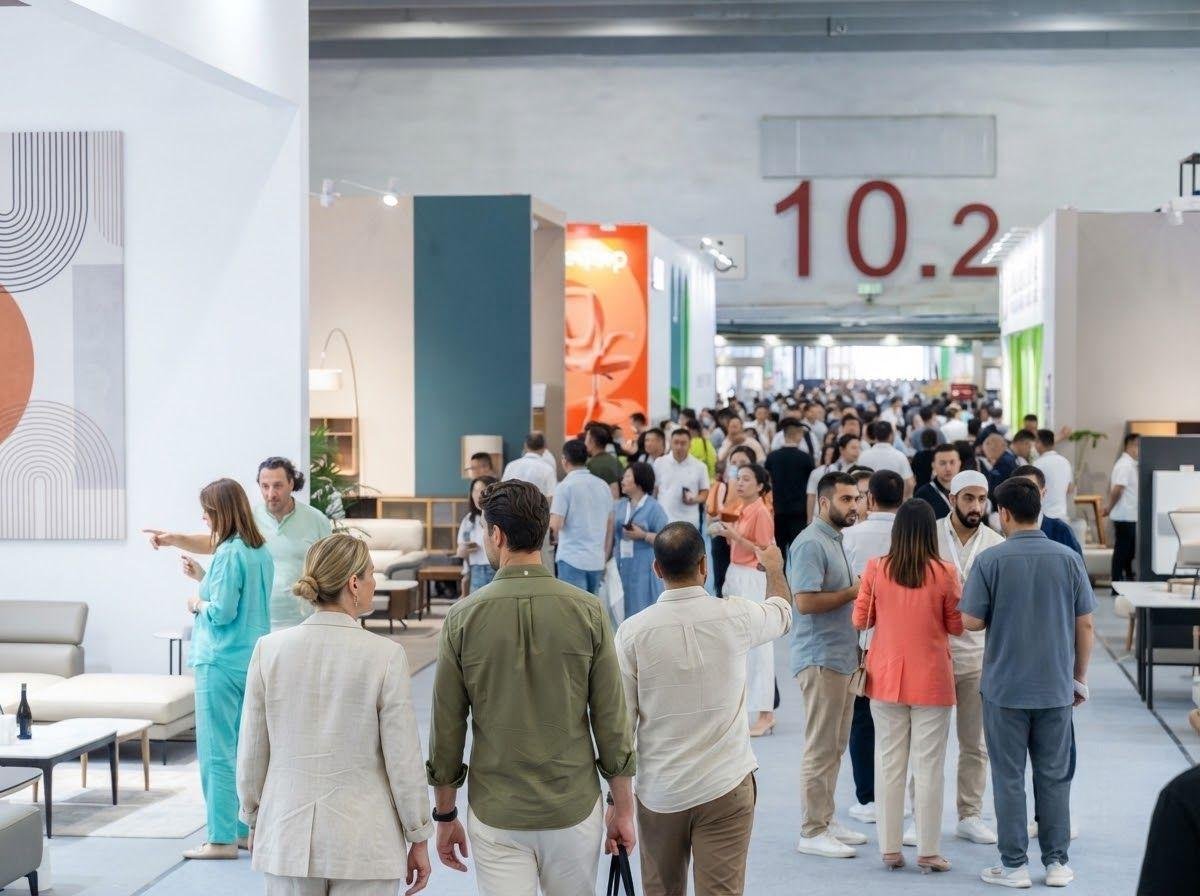
It happened in Houjie, Dongguan, about three years ago. I was walking through a massive factory’s VIP sample room with a high-end residential buyer from Chicago. We rounded a corner past a row of velvet sectionals, and there it was. Her proprietary dining chair design, down to the exact fluted brass ferrule detailing on the legs, sitting proudly under a spotlight as part of the supplier’s “new spring collection.”
She had signed a standard NDA with this exact manufacturer barely 72 hours prior.
The factory owner didn’t even flinch when she pointed it out. He just smiled, offered us another pour of heavily oxidized Pu’er tea, and asked if she wanted to place a volume order to lock in a discount. (And yes, this happens more than anyone in the industry willingly admits). That afternoon cost her firm roughly $40,000 in sunk R&D and prototyping costs, all because she relied on a piece of paper that held zero weight in Guangdong province.
Welcome to the realities of sourcing original designs in the world’s biggest manufacturing hub. You can have the most brilliant product in the world, but if your legal moat is built on Western assumptions, you are basically subsidizing your competitors’ catalogs.
The Brutal Truth About NDAs
Let me give it to you straight. A standard Western Non-Disclosure Agreement is effectively toilet paper in China.
Most buyers walk into a factory clutching an English-language NDA governed by the laws of New York or California. They slide it across the table. The factory boss signs it immediately, often without even reading it. Why? Because he knows it is entirely unenforceable.
If you cannot sue them in their own backyard, they do not care about your paperwork.
You cannot take a US court judgment to a Chinese court and expect them to enforce it. They won’t. You’ll spend years and tens of thousands of dollars in legal fees just trying to get the factory to acknowledge a summons, while they continue pumping out your dining chairs by the shipping container.
Rule of thumb: If your contract doesn’t explicitly terrify the factory boss in his native language, you don’t have a contract. You have a polite suggestion.
Core Sourcing Intelligence
- China furniture IP protection requires a localized NNN (Non-Disclosure, Non-Use, Non-Circumvention) agreement, not a standard Western NDA.
- Your agreements must be written in Chinese and explicitly governed by Chinese law to be taken seriously.
- Litigation jurisdiction must be set in the local Chinese court where the factory is based.
- Immediate, frictionless agreement to your terms is a massive red flag; real IP protection involves negotiation.
The Anatomy of a Furniture Leak
Trying to protect your designs with a simple NDA is like handing a baker your grandmother’s award-winning cake recipe, giving him all the ingredients, paying him to bake a test batch, and then telling him he’s absolutely forbidden from selling that cake to anyone else. It defies the basic laws of commercial gravity.
Actually, that’s not quite right — the problem isn’t just the factory boss wanting to sell your cake. It’s the entire ecosystem.
When you hand over your CAD files, your technical drawings, or your 3D renders, they don’t just sit in a secure server. They get printed out. They get handed to the mold maker down the street. They get shared with the upholstery subcontractor in the next town over. I’ve literally sat in factory breakrooms and watched production managers swap CAD files for the latest Milan releases in massive WeChat groups, trading them like baseball cards. Just like that.
An NNN agreement China style is the only way to plug these leaks. It stands for Non-Disclosure, Non-Use, and Non-Circumvention.
- Non-Disclosure stops them from sharing the secret (which is hard to enforce, frankly).
- Non-Use stops them from tweaking your design by 5% and selling it as their own (this is where the real battle is fought).
- Non-Circumvention stops them from looking at the shipping labels, calling up your best retail clients in London or Los Angeles, and offering them the exact same furniture for 40% less.
The “Liquidated Damages” Hammer
You want to know what actually stops a leak? A specific, ruinous dollar amount written directly into the contract.
In a proper NNN, you don’t just say “you will face legal action if you copy this.” You write in a Liquidated Damages clause. This clause states that every single breach of the agreement will cost the factory a predetermined sum—say, 1,000,000 RMB (roughly $140,000). Chinese courts love liquidated damages because it saves them from having to calculate your lost profits, which is notoriously difficult to prove. When a factory boss sees a specific financial penalty tied directly to his assets, the CAD files suddenly stay off WeChat.
Why the Canton Fair is the Danger Zone
The Canton Fair is an incredible spectacle. Millions of square feet of upholstery, casegoods, and outdoor furniture. But it is also the single most dangerous place on earth for your intellectual property.
The Myth of the “Closed Booth”
You’ll see factories with high walls and “No Photos” signs at the Fair. They might even make you scan a QR code or show a business card before letting you into the inner sanctum to see their premium lines. It feels exclusive. It feels safe.
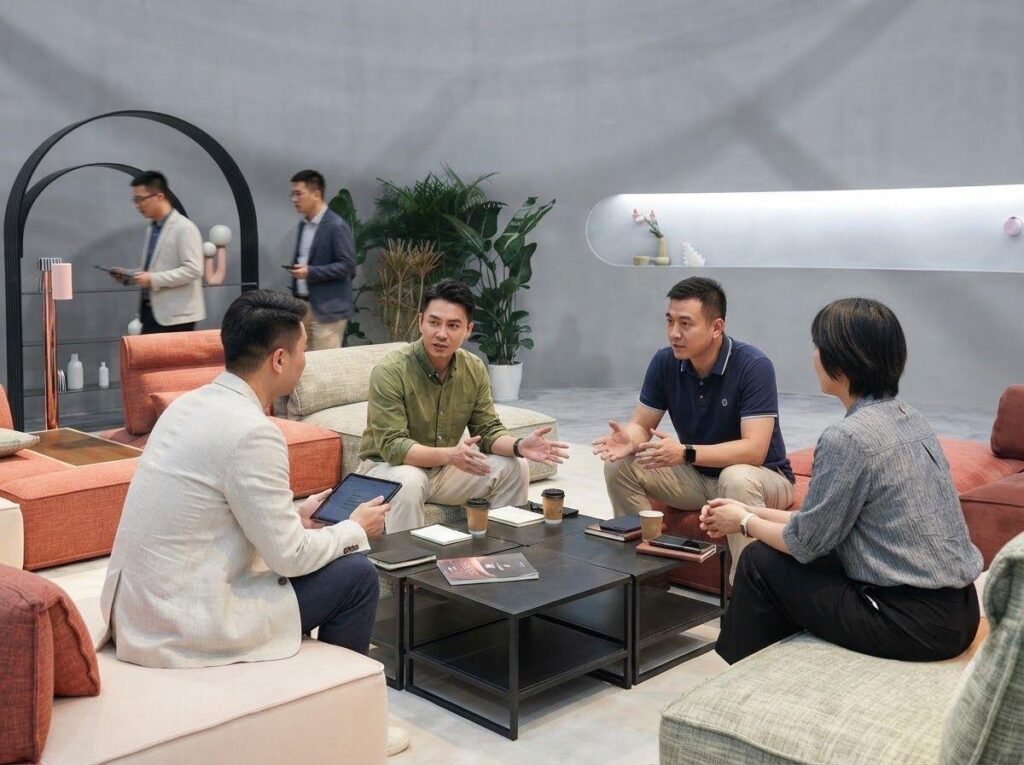
But this is mostly smoke and mirrors. When you sit down at those little glass tables and pull out your iPad to show them your upcoming 12-piece collection, you are fully exposed. The reps taking notes are often highly incentivized salespeople who will take your concepts, hand them to their in-house R&D team, and have a prototype ready before you even board your flight out of Guangzhou Baiyun International Airport.
The “Tooling Trap”
Here’s a classic Canton Fair hustle. A supplier quotes you an impossibly low price for opening new molds for your custom hardware or proprietary chair frames. You think you scored a massive win. What you actually did was subsidize their R&D. Because you didn’t define who owns the tooling in an enforceable NNN agreement, they will use your mold to run their own production on the night shift. You paid for the privilege of arming your competitors.
Stratification and the Brand Ecosystem
Not all factories operate like pirates. The Chinese manufacturing landscape is highly stratified, and your risk level depends heavily on the type of partner you engage.
At the bottom, you have the volume-obsessed mega-factories. They survive on razor-thin margins and massive throughput. For them, your proprietary side table is just raw material to feed the beast; they will copy it without a second thought because their business model requires constant newness at scale.
But as you move up the value chain, the calculus changes. While some buyers gravitate toward the absolute largest manufacturers in Foshan hoping for leverage, others find that mid-sized specialists — operations like Interi Furniture, which focuses heavily on high-end project work and premium residential segments. Factories operating at this tier have figured out that long-term relationships with Western brands are far more lucrative than stealing a single design for a quick domestic buck. Their margins depend on trust, execution, and quality control, not on ripping off your catalog.
The size of the factory doesn’t dictate your safety; their underlying business model does. If they sell primarily to domestic wholesalers, watch your back. If they act as a dedicated OEM for premium export markets, your IP is generally in safer hands—though you still need the paperwork.
The Actionable Framework: Locking Down Your IP
If you are boarding a plane to China next month, you need a system. Do not rely on handshakes, and do not rely on your brother-in-law who happens to be a real estate attorney in New Jersey.
Here is the exact sequence you need to follow to draft and execute an NNN agreement that actually works.
- Draft in Dual Languages (but make Chinese the controlling language). Have a specialized China-based lawyer draft the agreement. The English version is for your board of directors; the Chinese version is the only one the local judge will read.
- Specify the Exact Local Court. Do not put “Disputes will be settled in Beijing.” If the factory is in Anji, specify the Anji People’s Court. Local courts have the power to freeze the factory’s bank accounts almost immediately if a breach is proven. The threat of a frozen bank account is your ultimate leverage.
- Define “Use” Obsessively. Don’t just say they can’t make your product. Spell out that they cannot make products that are “substantially similar,” they cannot use your off-cuts, they cannot sell factory seconds, and they cannot use your proprietary finishes on their own frames.
- Include Tooling and Mold Ownership. Explicitly state that you own all molds, jigs, and tooling created for your product, regardless of who paid for them, and that they must be returned or destroyed within 10 days of your written request.
- The Red Flag Test: If the factory signs your NNN agreement immediately without negotiating a single word, run away. A real business that respects contracts will push back on your liquidated damages clause or argue about jurisdiction. Friction during the signing process means they actually intend to follow the rules.

The Buyer’s FAQ on China Furniture Sourcing
Q: Can I just patent my furniture designs in the US and be protected globally?
A: No. Patents are strictly territorial. A US design patent means exactly nothing in China. If you want patent protection in China, you must file a design patent in China before you ever show the product to a factory. (And frankly, the NNN is faster, cheaper, and often more effective for the fast-moving furniture cycle).
Q: Will an NNN agreement completely stop a factory from copying me?
A: It changes the math, but it doesn’t guarantee perfection. A good NNN agreement keeps honest factories honest and deters the opportunistic ones by making the financial penalty too high. It won’t stop a dedicated bad actor who operates through a network of shell companies, but it eliminates 90% of casual IP theft.
Q: My supplier is pushing back heavily on the Liquidated Damages clause. Should I drop it to save the relationship?
A: Absolutely not. If they refuse to agree to a financial penalty for stealing your work, they are explicitly telling you they might want to steal your work. Find another supplier. There are literally thousands of them in Guangdong alone.
Q: Does all of this apply if I’m just buying off-the-shelf “white label” products at Canton Fair?
A: It depends on your modifications. If you are just buying their catalog chair and putting your logo on the box, you don’t need an NNN. But the second you ask them to change the foam density, alter the stitching pattern, or apply a custom fabric that you developed, you are introducing your own IP. At that point, lock it down.
The Hard Lesson
At the end of the day, sourcing furniture in China is a high-stakes game of relationship management backed by localized legal force. You can’t just parachute into a trade show, hand over your life’s work to a stranger, and expect Western business norms to protect you.
The buyer I was with in Dongguan? She didn’t sue. She couldn’t. She ended up having to heavily discount her own original inventory just to compete with the factory’s knock-offs, which hit the European market three months before hers did.
Protecting your designs isn’t about being paranoid; it’s about being professional. Do the groundwork, hire a local attorney to draft the NNN, and establish your boundaries before you ever open your briefcase. Protect your moat, or someone else will happily swim in it.
Safe travels, and watch your CAD files.