

Late September. The AC is rattling in a Longjiang factory office, and you’re still sweating. You’re wedged into a faux-leather sofa across from a guy chain-smoking Double Happiness cigarettes, knocking back thimble-sized cups of bitter tea. Your pitch? You want his absolute rock-bottom, 10-container bulk price on a ridiculously complex, channel-tufted velvet accent chair.
The punchline? You’re only ordering thirty pieces for a lobby refit in Austin.
I watch this trainwreck happen every week. A hotshot buyer rolls in with fifteen grand to spend, dead certain they’ll magically unlock the “China price” reserved for million-dollar accounts. They drop the most exhausted lie in the Pearl River Delta: “Give me the bulk rate today. If my client likes it, we’ll order two hundred next spring.”
The boss nods. He smiles. He writes down a number.
And you walk out to your Didi thinking you won. You didn’t. He just quoted the standard wholesale markup minus maybe fifty bucks so you’d feel like a shark. Bagging a real Chinese suppliers discount on a microscopic run isn’t about flexing. It’s an exhausting, weirdly intimate psychological game.
The Brutal Truth About Your Trial Order
Let’s stop pretending. Buyers hate hearing this, but here it is: factory bosses aren’t desperate for your boutique order.
They’ve heard the “trial order” pitch a thousand times. Every dropshipper and mid-tier design firm reads from the exact same script.
Actually, scratch that—it’s not the script that offends them. It’s the sheer delusion that they haven’t already calculated your exact lifetime value by looking at your business card. Expecting a 40HQ container rate for an LCL (less-than-container-load) headache makes you look like a total rookie.
Here is the rule of thumb: if your entire PO won’t cover the electricity to run their edge-banding machines for a week, you have zero leverage in a spreadsheet negotiation.
You’re just a bottleneck. You mess up their flow. You demand endless WeChat updates and clog up their sample room arguing over dye lots.
Key Takeaways: Scraping Margins on Small Runs
- China furniture sourcing is the process of vetting and managing mainland workshops to build commercial or residential pieces without getting fleeced.
- Real bulk rates are tied directly to assembly line speed, never to your promises of future business.
- Want to slash prices on a micro-order? Kill the factory’s setup time. Stop asking for arbitrary favors.
- Actual China price negotiation happens through material compromises, not pounding your fist on a tea table.
Unearthing the Profit (Where the Money Actually Hides)
Stop arguing over the final invoice number. You need to find out where the boss is actually hiding his margin.
Think about buying a house. The builder doesn’t make his real money pouring the foundation; he makes it when you upgrade to quartz countertops and brass fixtures. Furniture assembly lines play the exact same game. Push them too hard on a sofa’s base price, and they won’t say no. They’ll just ghost-downgrade the guts of the piece. You’ll end up with garbage recycled foam, green MDF instead of plywood, and staples that pull out after six months in a hotel lobby.
Pure smoke and mirrors.
(I caught a factory pulling this in Houjie last year). A buyer thought he was a genius for squeezing a 15% discount on 40 lounge chairs. Down in the dust, the workers were frantically swapping his approved D45 foam for a chalky, fast-decaying sponge. The factory didn’t eat that 15% hit. The buyer just paid for a disposable chair.
Are you negotiating, or just begging?
Begging is asking for a cheaper price without changing your specs. Vets don’t do that. They change the math.
They ask for the bulk rate, but then offer to wrap the chairs in whatever dead-stock fabric the factory has rotting in the warehouse from a canceled Saudi gig. They beg for a discount, but hand over a relaxed 60-day lead time. That way, the factory can squeeze those 30 chairs into dead space between massive Hilton container loads. Speak their language.
Finding Your Actual Weight Class
Take a $20k custom seating job to a massive Foshan compound that supplies Target, and they will literally ignore your emails. Take it to a dirt-floor garage, and your deposit might vanish overnight.
The secret? Match your PO to the factory’s daily metabolism.
Rookies flock to the massive multi-campus giants. But veterans know that mid-market operations occupy a different universe entirely. Think of specialized mid-tier exporters like Interi Furniture—workshops that built their bread and butter on bespoke hospitality refits and high-end residential packages without the red tape of mega-corporations. A mid-tier shop is usually hungry enough to care about your 20-room boutique hotel, but professional enough to actually maintain clean QC. They live in that sweet spot. A $30,000 wire transfer still matters to them.
You never score bulk pricing by forcing a massive factory to care about you; you get it by finding a factory where your volume naturally feeds their current growth.
| Factory Tier | Who They Actually Want | Minimum Viable Order | Vibe on Small Runs |
| Tier 1 (The Giants) | Top 100 Global Retailers | 10+ Containers/Month | Dead end. Rigid rules. Do not bother. |
| Tier 2 (Mid-Sized) | Hotels, Mid-Market Brands | 1-3 Containers/Month | Flexible. Will negotiate if the pieces look good in their catalog. |
| Tier 3 (Workshops) | Local market, Traders | 10-50 Pieces | Very flexible. Huge risk of getting scammed on materials. |

Seducing the Guy on the Floor
That slick sales rep pouring your tea? They don’t make the final call on pricing. Their job is to take your pitch to the production manager and fight for you.
And here’s the rub. The production manager absolutely hates you.
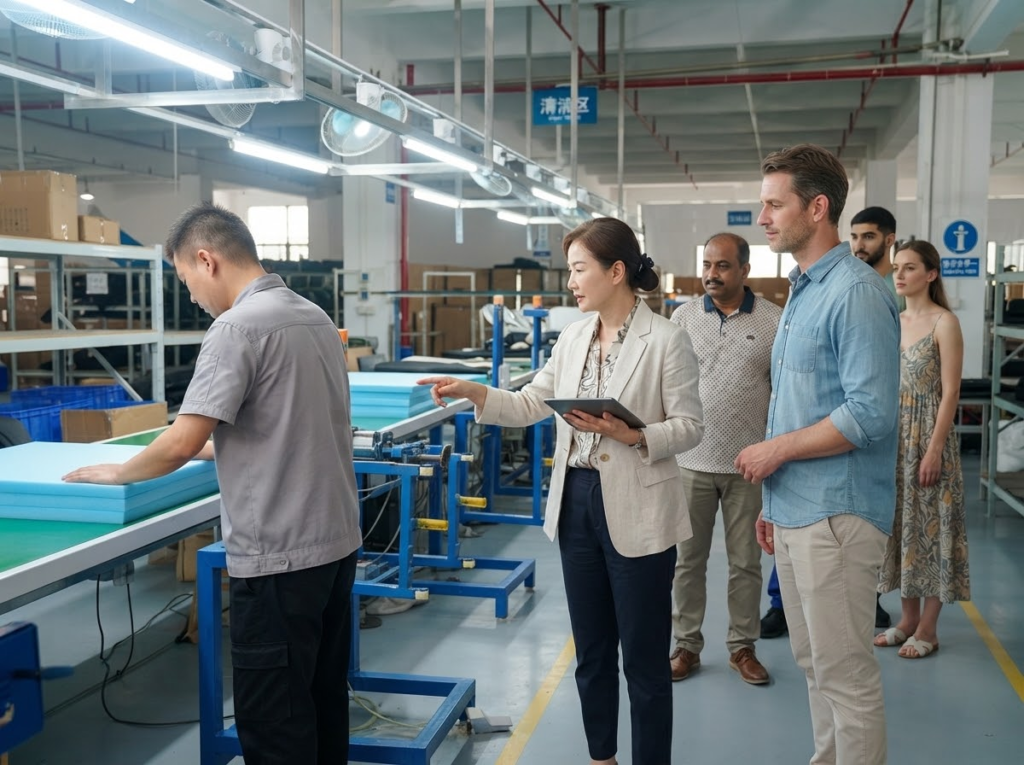
To the guy sweating on the floor, your fifty custom dining chairs mean resetting the CNC jigs, hunting down a tiny batch of specific ash veneer, and stopping a friction-free run of 5,000 identical Marriott beds.
If you want that Chinese suppliers discount, you have to make your PO invisible to his machines.
How? Ruthless standardization. Need a custom finish? Fine, but put it on a frame they already cut by the thousands. Need a weird, bespoke leg shape? Spray it in their standard house black lacquer. Every time you strip away a custom variable, you destroy their excuse to upcharge you.
Industry observers estimate that nearly 40% of the markup on small batches comes directly from the headache of sourcing weird materials and recalibrating machines. Kill the headache. The price drops.
The Showroom Charade
Trying to pull off a China price negotiation without reading the room is like playing poker blindfolded. You’re bleeding chips.
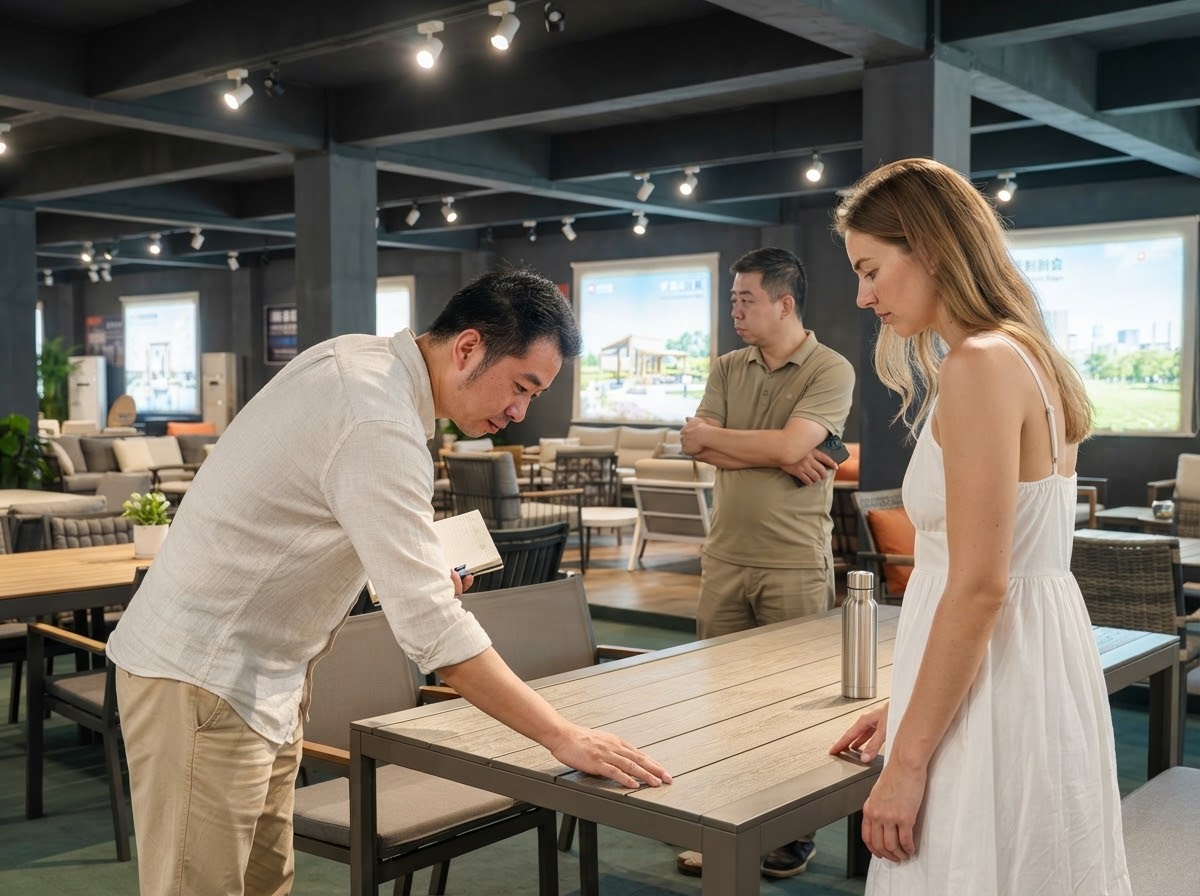
When you sit at that carved root-wood table, you aren’t just drinking tea. You’re being audited. The boss is checking your shoes and watching how you handle a wood sample. If you lift a chair by the top rail instead of flipping it upside down to check the corner blocks, they instantly clock you as a tourist.
A fatal error.
They’ll casually toss out the “foreigner tax” quote because they know you can’t tell the difference between 201 and 304-grade stainless steel. And they’ll be incredibly polite while doing it.
To shatter the charade, talk shop. Ask about the moisture content in their drying kiln. Ask how bad the toluene smell gets in the painting booths during July. Prove you know where the bodies are buried on a factory floor, and watch that initial quote magically shrink before the second pour of tea.
The “Small Order, Big Discount” Playbook
Want bulk perks without the volume? Stop pleading. Engineer the deal.
- Throw cash upfront. RMB talks loudly. Instead of the tired 30% deposit / 70% before shipment split, drop 50% down. It slashes their risk and separates you from the Alibaba window-shoppers.
- Draft in their slipstream. Ask the floor manager what fabrics are running hot for their whale clients. If they’re cutting miles of a specific grey bouclé, spec that exact roll for your tiny order. Boom. You just hijacked the mega-client’s raw material pricing.
- Trade pixels for margin. Outfitting a luxury space? Promise them raw, high-res lifestyle shots of the furniture in the wild. Factories bleed cash trying to fake western lifestyle imagery in bad local studios. A two-grand discount is cheap marketing collateral for them.
- Control your own logistics. Don’t force them to babysit your messy LCL shipment. Hire a local forwarder in Shenzhen. Tell the factory it’s strictly EXW (Ex Works), and have your own truck bump the dock to grab the crates.
- The Red Flag: Never assume “always counter the first price” works here. Horrible rookie mistake. If a trusted mid-tier partner hands you an open-book BOM (Bill of Materials) cost breakdown, slapping them with an arbitrary 20% cut doesn’t make you look tough. It proves you don’t know the spot price of cold-rolled steel. They’ll either block your WeChat or quietly swap your hardware for tin.

FAQ: Questions from Bruised Buyers
Q: The boss agreed to my target price, but the samples look like cheap knockoffs of the showroom piece. What gives?
A: Because Chinese factories almost never say “no” to your face; they just engineer the BOM down to hit your arbitrary number. Force a $100 cap on a chair that costs $120 to build right, and they’ll use scrap leather and cardboard to make the math work.
Q: Can a sourcing agent actually get me a better deal on a tiny PO?
A: Yes, but only if they’re pooling your volume with other clients. A legit agent stacks your 20 pieces with someone else’s 80 to hit the factory’s minimums. A bad one just slaps an 8% fee on your retail quote and goes to lunch.
Q: How do I spot a trading company pretending to be a direct manufacturer?
A: Demand their environmental compliance certificates for the paint line. Traders never have facility-specific docs. Also, look at their catalog. If they’re selling complex leather sectionals, rattan outdoor sets, and solid oak tables under one roof, they are 100% a trading company. Real assembly lines specialize.
Q: Is it honestly possible to secure a 40HQ price on a 20-piece order?
A: It depends entirely on your flexibility. Demanding custom dimensions, weird fabrics, and a rush delivery? Not a chance in hell. But if you buy their stock frame, use house materials, and let them ship whenever they have a gap on the line? Yes.
Closing the Deal
Where does all this leave you before your next flight to Baiyun Airport?
Stop treating the Guangdong supply chain like a broken vending machine. You can’t just insert a demanding PDF and wait for perfectly discounted goods to pop out. Sourcing here is gritty, human, and wildly pragmatic.
These bosses are staring down razor-thin margins, crazy freight spikes, and massive payrolls. They don’t give a damn about your agency’s Instagram followers. Your promises of “huge future orders” just make them roll their eyes. They care about keeping the line moving and the cash flowing.
Are you a bottleneck, or are you easy money? Figure that out, adapt to their operational reality, and watch the quotes drop. The best buyers never scream over an invoice. They just design POs the factory actually wants to build. Catch you on the floor.