


July 2024. Dongguan. The air felt like trying to breathe through a hot, wet towel, and I was losing my mind in a dusty lumber staging yard somewhere off the main highway in Houjie.
I was standing there, squinting at this chaotic, towering stack of timber. The factory boss—a guy who practically chain-smoked ChungHwa cigarettes just to punctuate his sentences—kept shoving a crumpled piece of paper against my chest.
It looked like it had been photocopied, faxed, and then photocopied again. The ink was a smeared, illegible mess. This, he claimed, was his FSC certificate. Or rather, it was a blurry JPEG of a certificate he’d probably scraped off some defunct Russian timber directory, slapped with a completely mismatched company name.
Meanwhile, my client was sitting in a climate-controlled office in Chicago. His finger was hovering over a keyboard, completely ready to wire a $120,000 deposit for a boutique hotel project down in Miami. He was fully drinking the Kool-Aid. He honestly believed they were securing a highly sustainable, eco-friendly product.
They absolutely weren’t. I killed the deal right there on the cracked concrete.
People outside the industry think sourcing Chinese FSC furniture is just a matter of Googling a supplier, spotting a little green tree logo on their Alibaba profile, and placing a PO. It isn’t. Not even close. It is an exhausting, paranoid process of physically tracing a cut log across thousands of miles. You’re constantly navigating a dozen cultural blind spots. You’re fighting an entire sub-economy that has perfected the art of the bureaucratic workaround. And when it comes to environmental certifications? That blind spot isn’t just big. It’s practically a black hole.
The Brutal Truth About That Piece of Paper
Key Takeaway
- Most certificates are running on fumes: A factory buys one single container of legitimate, certified wood to pass a random audit. They then use that exact same piece of paper to cover the next five years of dirty, off-the-books production.
- Traceability is everything (and everywhere): If a supplier suddenly gets defensive or vaguely confused when you ask for the continuous chain of custody—from the port importer straight to the factory’s cutting room—pack up. Walk away.
- Price tags never lie: Genuine China legal timber carries a brutal, completely unavoidable premium. If your quoted price matches standard open-market rates, you are buying black-market wood. Full stop.
Nobody sitting in a corporate ESG meeting wants to hear this. Procurement teams desperately want to believe the supply chain is pristine. Why? Because their marketing department already plastered “sustainable luxury” all over their upcoming retail campaign.
But down here on the factory floor? The system is fundamentally, comically busted.
Factory owners aren’t stupid. Far from it. They know exactly what European and American compliance auditors need to see to tick a box and go home. So, they give you the letters. They email you the perfectly formatted PDF.
What they actually load onto the CNC routers on the night shift is an entirely different story.
I’ve personally audited finishing rooms where the volume of boxed, FSC-stamped goods sitting on the loading dock was mathematically impossible based on the raw certified lumber they actually bought that quarter. You can’t turn 10 cubic meters of raw wood into 40 cubic meters of finished tables. It’s physics. Or, rather, it’s fraud.
Here is how I operate after 15 years of breathing sawdust: If the factory doesn’t complain bitterly about the cost, the agonizing lead times, and the sheer administrative nightmare of sourcing your certified wood, they aren’t actually sourcing it.
Real compliance hurts. It requires physical segregation of wood on the factory floor (which takes up valuable floor space). It requires separate accounting ledgers. Fake compliance, on the other hand, is just a quick WeChat message to a buddy who knows a guy with a pirated copy of Photoshop.

The “Halo Effect” (And Why You’re Falling For It)
Are You Buying the Timber or Just the Story?
Think of it like buying a used truck from a guy who hands you a pristine, perfect mechanic’s report. The only problem is the report belongs to a completely different truck parked three towns over.
I call this the “Halo Effect” scam. And man, it is everywhere.
Here’s how the play actually unfolds on the ground. A massive factory up in Foshan wins a major hospitality contract—maybe a massive Vegas casino rollout—that strictly enforces sustainability rules. The buyer has teeth, so the factory actually does things by the book. They purchase three containers of legitimate, certified Russian Ash. They meticulously handle the paperwork. They pass the external third-party audit with flying colors.
Then, the project ends. But they take that beautiful, verifiable paperwork and shove it in the manager’s desk drawer.
For the next three years, every time a naive western buyer asks, “Hey, do you guys do sustainable wood?” out comes that same golden ticket. The factory is basically basking in the halo of a single, ancient transaction. (And yes, this happens vastly more than anyone in the commercial furniture sector wants to admit).
Math doesn’t lie, even if the sales reps do.
Actually, wait—that’s not quite right. What most buyers miss isn’t the lie itself. It’s their own lazy failure to demand a continuous, batch-specific chain of custody. If that paper chain breaks anywhere between the logging concession and the factory’s finishing room, the legality is totally void. You are paying a 20% premium for a ghost.
The “Species Switch” and the Art of the Finish
Look Closely at the Grain (Because They Pray You Won’t)
Sometimes the scam has absolutely nothing to do with forged paperwork. Sometimes it’s about handing you perfectly legal, stunningly accurate paperwork… for the completely wrong species of wood.
Let’s say you specify certified Teak for a massive outdoor resort project. The factory boss knows certified Teak is incredibly rare right now. The market rate is obscenely expensive. Buying it would eat his margin alive. So he nods, smiles over a cup of green tea, and quietly sources certified Acacia instead.
His team hits it with a heavy chemical stain. They apply a distressed glaze. They wire-brush the hell out of the surface to hide the natural grain. Then, they ship it out.
When your compliance guy asks for the documents, they proudly hand over a legitimate, 100% verifiable FSC certificate. But it’s for Acacia. Because most procurement directors sitting in London or New York can’t tell the difference between heavily stained Acacia and Teak on a compressed 720p Zoom video call, the factory gets away with it clean.
A valid certificate is entirely useless if it doesn’t match the cellular structure of the physical table leg you just unloaded off the truck.
I caught a massive supplier in Zhejiang pulling this exact stunt on a residential rollout a few years ago. They had perfect documentation. Binders full of it, color-coded and everything. But the grain structure on the sideboards was dead wrong for White Oak. It was Hevea brasiliensis (Rubberwood)—a cheap, ubiquitous byproduct—heavily processed and fumed with industrial ammonia to fake that wide, open-grain oak look.
The factory owner didn’t even yell or argue when I called him out. He just shrugged, lit another cigarette, and mumbled, “The finish matches your control sample, doesn’t it?”
He knew it was a gamble. He lost that specific hand because I happened to be standing there in person. But I guarantee you he wins it nine times out of ten with remote buyers who never leave their home country.
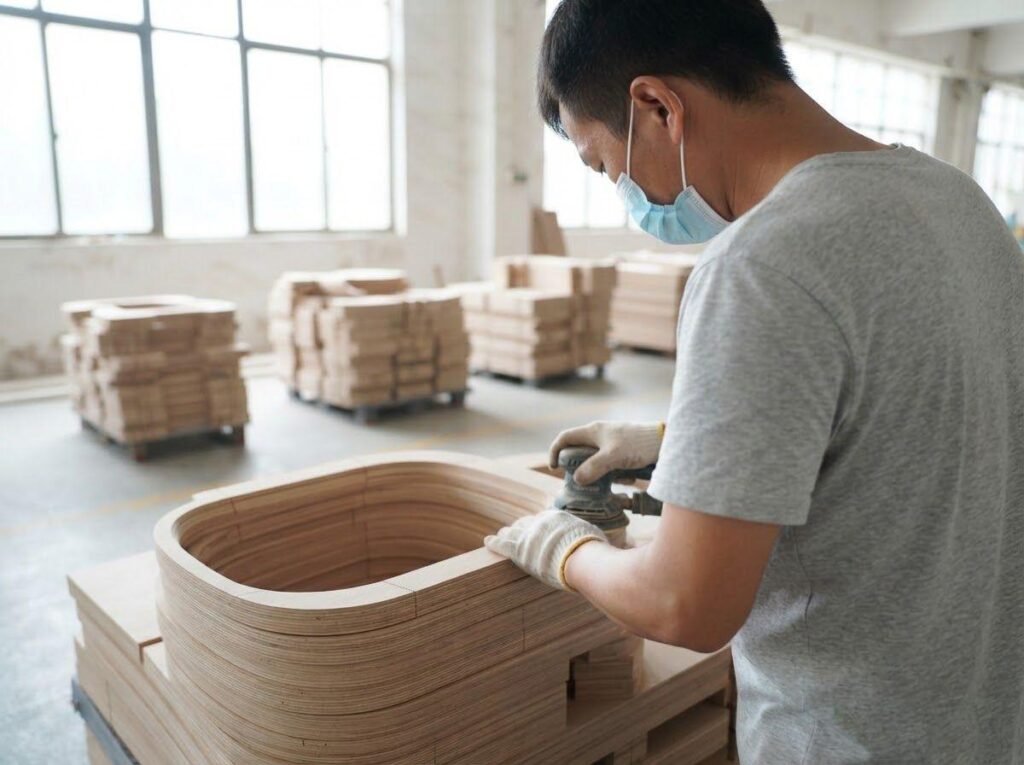
The Geography of Wood: Why the Port Matters More
Tracing the Bloodline of the Timber
If you genuinely want to verify your wood, you need to stop staring blindly at the factory and start looking at the port of entry.
Sourcing timber in China is exactly like tracing a muddy river back to its source. If the water is toxic at the delta, it really doesn’t matter how shiny the plumbing is in your house. The vast majority of imported wood enters the country through a few specific, massive hubs. You’ve got places like Zhangjiagang for tropical hardwoods. Or Qingdao for North American and European temperate species. The giant importers operating at these ports are the actual, literal gatekeepers of the entire system.
When you do a factory tour in a place like Longjiang, you’ll walk past massive stacks of raw boards drying in the yard. But those factories almost never import the wood themselves. They don’t have the cash flow. They don’t have the volume. Instead, they buy from domestic brokers operating out of chaotic, mud-filled wholesale markets (like the infamous Jiujiang timber market, where forklifts are constantly dodging stray dogs and rogue delivery trucks).
The broker level is exactly where the paper trail usually goes dark.
You’ll ask the factory manager where the timber came from, and he’ll wave vaguely toward the bay doors and say something like, “The market down the road.”
That is a dead giveaway. Run.
If your factory cannot instantly produce the customs declaration and the phytosanitary certificate from their direct importer, you are almost certainly buying black-market or gray-market wood.
It really is that binary. And frankly, a lot of procurement teams would rather turn a blind eye than delay a multi-million dollar hotel launch by three weeks just to verify customs stamps. They take the path of least resistance, cross their fingers, and pray U.S. Customs doesn’t decide to randomly flag the container in Long Beach.
The Mid-Market Dilemma: Finding the Sweet Spot
The absolute hardest part of this job isn’t dealing with the massive, multi-billion-dollar contract manufacturers. Those behemoths have dedicated compliance departments, internal auditors, and direct purchasing lines to global timber conglomerates. If they want to do it right, they can.
The real danger zone? The messy, highly fragmented mid-market.
Buyers constantly get trapped trying to squeeze certified materials out of tiny, unsophisticated workshops in places like Nankang. These are sweatshops where the accounting is still done on grease-stained notepads. They literally lack the ERP software to track a chain of custody, even if they actually wanted to.
While some buyers instinctively gravitate toward the massive mega-factories in Foshan to solve this compliance headache, others find that mid-sized specialists—operations like Interi Furniture, which usually handle bespoke hospitality or high-end residential work—offer a much better risk-reward equation.
Why? Because these mid-tier players usually have enough working capital to maintain direct, ongoing accounts with legitimate timber importers right at the port. They skip the muddy wholesale markets. But crucially, they aren’t so massive that your 200-room hotel project gets quietly bumped to a shadow subcontractor in the middle of the night just to meet a deadline.
But listen to me carefully. Even when dealing with highly competent mid-sized players, you cannot abdicate your responsibility. You have to verify. Every. Single. Time.
The exact moment you get lazy and stop asking for batch-specific documentation, the factory’s purchasing manager will be tempted to buy from the cheaper, uncertified broker down the street to pad their year-end margin. It’s human nature. Or rather, it’s just basic survival economics in Guangdong manufacturing. You get what you inspect, not what you expect.
The Bulletproof Verification Framework
How do you actually protect your supply chain? You build a verification protocol that makes it mechanically, administratively too difficult for the vendor to lie to you. Smoke and mirrors only work if you refuse to turn on the lights.
Here is the exact, unyielding checklist I use before approving any factory for certified production:
- The Commercial Invoice Match (The Fapiao): The factory must provide the actual commercial tax invoice from their direct timber supplier. The volume of wood purchased on that invoice must logically match the volume of your furniture order. If you order 500 solid oak dining tables, and their invoice shows they bought two cubic meters of oak… you have a massive problem. (I always factor in roughly 30-40% yield loss for solid wood milling just to do the math. Sawdust doesn’t turn into furniture).
- Check the database yourself. Never, ever accept a PDF certificate at face value. Go to the official FSC public search database. Type in the license code manually. If the status says “suspended” or “terminated,” walk away. Don’t listen to their panicked excuses about “pending administrative renewals.” It’s garbage.
- Demand the Customs Entry (报关单). This is the holy grail of validation. It proves the wood actually crossed international borders legally and wasn’t illegally logged in a protected domestic forest. Or smuggled across the border from Myanmar in the dead of night.
- Write the trap directly into the PO. Do not leave this to verbal agreements over dinner or casual chats on WeChat. Your purchase order must explicitly state: “Final balance payment is strictly contingent upon receipt of batch-specific chain-of-custody documentation linking raw material to this specific PO number.”
- — The Red Flag of Perfect Paperwork: Here’s a deeply counter-intuitive truth I learned the hard way. If the factory produces the certification documents instantly, without having to call their supplier or dig through filing cabinets, be highly suspicious. Real chain-of-custody paperwork for a fresh batch of wood usually takes a day or two to pull together from the various brokers. “Perfect” documents sitting on a manager’s desk ready to go are almost always the recycled, five-year-old ones I mentioned earlier.

Real Questions from the Procurement Trenches
Q: My vendor is totally ghosting me on the FSC cert, claiming it takes 4 weeks to “process” with the local government. Are they stalling?
A: Yes, that is a classic stalling tactic. If the factory actually bought certified wood from a certified broker, the paperwork transfers with the physical sale immediately. Delay usually means they are scrambling behind the scenes to buy the document separately from the wood on the gray market. Or, worse, they are just hoping you’ll drop the issue so they can get the container on the water before you cancel the whole PO.
Q: I found a supplier on Alibaba who says all their solid wood furniture is 100% certified, but their prices are 20% cheaper than anyone else in my spreadsheet. What’s the catch?
A: They are lying to your face. There is a hard, unavoidable premium on legally harvested, certified timber. It usually hovers between 15% to 30% on the raw material cost depending on the exact species. You cannot pay basement, race-to-the-bottom prices and receive genuine Chinese FSC furniture. The math literally does not work. You are buying illegal wood with a fake sticker slapped on the crate.
Q: Does it count if the MDF or plywood core inside the veneer is certified, but the solid wood frame isn’t?
A: Only if it’s explicitly sold, contracted, and labeled as an “FSC Mix” product. And even then, the factory itself must hold a specific, active chain-of-custody certification. A certified plywood core does not magically legalize an illegally logged mahogany frame. Don’t let slick sales reps blur these lines during price negotiations. Stick to your guns.
Q: What happens if customs flags our container at the destination port (like LA or Long Beach) and we don’t have the right Lacey Act or timber legality paperwork?
A: Your container gets seized. Best case scenario? You pay exorbitant daily demurrage fees at the port while frantically trying to get the factory to send documents (which CBP will likely scrutinize, realize are fake, and reject anyway). Worst case scenario? The goods are completely destroyed by the government, your company is heavily fined, and your entire supply chain gets flagged for intense inspection on every single future shipment.
Q: Ultimately, is it actually possible to guarantee my China legal timber is 100% legit?
A: Yes, but only if you refuse to be lazy. If you aggressively demand batch-specific customs and purchase invoices and force your team to follow the paper trail all the way back to the port of entry, you will box the factory in. You will force them to use legal timber. It depends entirely on your willingness to do the unglamorous paperwork.
The Bottom Line on the Factory Floor
At the end of the day, a factory in China will only be exactly as honest as your auditing process forces them to be.
We love to sit in comfortable western offices and blame overseas suppliers for cutting corners and destroying the environment. But how much blame actually belongs to buyers? Procurement teams who demand pristine, bulletproof sustainability credentials while simultaneously beating those same suppliers to a pulp over an extra two dollars a chair are the root of the problem.
You cannot demand premium compliance on a black-market budget. It is a fantasy.
If you want clean wood, you have to pay for it, and you have to verify it with your own eyes—or at least with ironclad port documents. Are you willing to lose three weeks of production time fighting over invoices to ensure you aren’t quietly funding illegal clear-cutting in the Russian Far East?
If the answer is no, you have absolutely no business putting eco-labels on your products.
Stay sharp out there. Keep asking the incredibly annoying questions until the paperwork actually matches the wood sitting right in front of you.


