

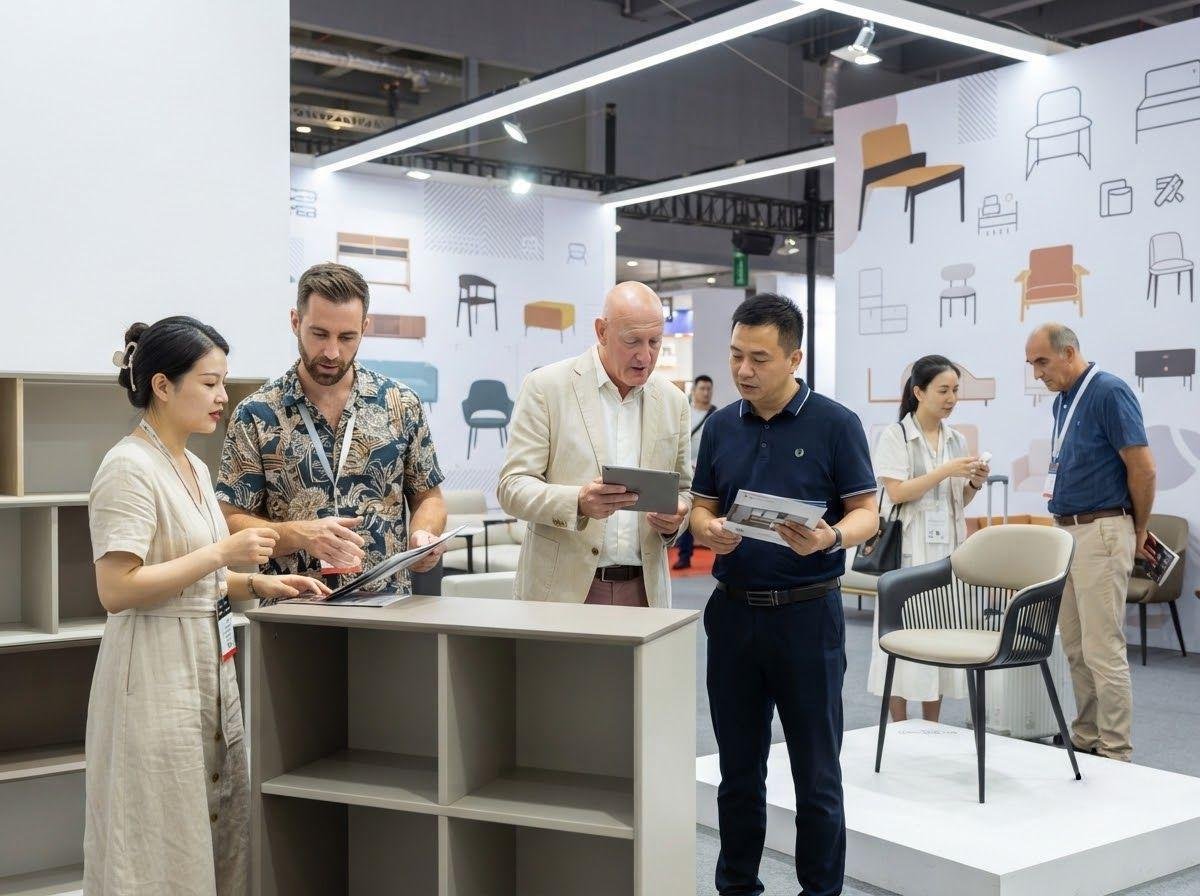
Picture this. You’re standing outside the Pazhou complex in Guangzhou, nursing a lukewarm coffee and a stack of business cards thick enough to choke a horse. You’ve just spent three grueling days at Phase 2 of the Canton Fair. You placed a $14,000 order for dining chairs with a slick factory out of Longjiang, and another $22,000 for marble-top tables from a supplier down in Dongguan. You’re feeling like an absolute sourcing genius.
But then the logistical hangover hits you.
How exactly are you going to get these two fiercely competitive, highly paranoid factory bosses to cooperate and load their respective goods into a single 40-foot High Cube container? Welcome to the migraine-inducing world of container consolidation. Most buyers think the hard part of the Canton Fair is negotiating the unit price down by a few RMB. Actually, that’s not quite right — what most buyers miss is that the real negotiation starts when you try to get Factory A to send their goods to Factory B’s loading bay without someone throwing a tantrum. It’s a delicate dance of face, freight, and finger-pointing.
The Brutal Truth About Factory Cooperation
Nobody wants to load your mixed container.
There. I said it. Factory A doesn’t want Factory B’s dirty domestic truck clogging up their pristine export loading dock. Factory B is terrified Factory A will open their cartons, steal their new hardware designs, or actively try to poach your business by sliding their own catalog into your boxes.
When you ask two Chinese suppliers to consolidate, you are essentially asking two rival restaurants to share a kitchen for the afternoon. It’s unnatural.
The golden rule of thumb here is simple: The factory with the largest volume of your goods must “host” the container, and they will almost certainly complain about it.
They’ll complain about the customs paperwork being complicated. They’ll complain about the trucker being late. They’ll complain that the other factory’s packaging is inferior and completely ruined their perfectly calculated stacking plan.
And yes, you will inevitably end up paying someone a mysterious “handling fee” just to make the headache go away.
Key Takeaway: The Realities of China Furniture Consolidation
- LCL furniture China sourcing often destroys profit margins through exorbitant destination warehouse fees; factory-direct consolidation is the cheaper, albeit politically harder, path.
- Factory reluctance stems heavily from IP paranoia and loading dock logistics, not just laziness.
- Successful consolidation requires strictly designating a “Host Factory” (largest volume) and a “Guest Factory” (smaller volume) before paying deposits.
- Clear incoterms for the domestic transit leg are mandatory to avoid surprise inland freight bills.
Why Traditional LCL Kills Furniture Margins
China furniture sourcing is the process of navigating thousands of specialized manufacturers to build a cohesive retail collection, but getting those goods home is where the actual profit is made or lost. Container consolidation is the process of combining shipments from multiple suppliers into a single Full Container Load (FCL) to avoid the exorbitant costs and damages associated with Less than Container Load (LCL) shipping.
If you try to ship a few sofas LCL, you’re asking for trouble.
Furniture is inherently bulky, deeply fragile, and absolutely hates being handled multiple times. Traditional LCL means your pristine velvet sofas are sitting in a massive, dusty consolidation warehouse in Shenzhen, probably wedged between a pallet of heavy farm machinery and a crate of leaky engine parts.
It’s like sending your grandmother on a crowded subway with a four-tier wedding cake. Disaster waiting to happen.
Is LCL Ever Worth the Risk?
Look at the math.
| Shipping Method | Handling Risk | Domestic Freight Cost | Final Per-CBM Cost |
| Traditional LCL | Very High (Multiple touches) | Low | Very High (Destination fees) |
| 3rd Party Warehouse Consolidation | Medium | High (Trucking to warehouse) | Medium to High |
| Factory-to-Factory Consolidation | Low (Loaded once) | Medium (Trucking to host) | Lowest |
If you are sourcing furniture in China, factory-to-factory consolidation is the only viable way to protect your profit margins and your product integrity.
I remember walking through a massive logistics hub in Nansha a few years ago. (I learned this the hard way during an inspection trip). You’d see beautiful, high-end export cartons from top-tier brands literally crushed under the weight of poorly stacked generic cargo. That’s the reality of LCL. The warehouse guys driving the forklifts don’t care about your “fragile” stickers. They care about clearing the dock before lunch.
The Art of the Host-Guest Negotiation
So, how do you get these factories to play nice?
First, you have to establish dominance early. You absolutely cannot drop the consolidation bomb after the goods are finished and sitting on the factory floor. You bring it up at the Canton Fair booth, right in the middle of the honeymoon phase, before you even discuss the final price.
Who Controls the Trucking?
The general pattern suggests that the factory with 60% or more of the CBM (cubic meters) gets the container dropped at their yard. They are the Host. The factory with 40% or less is the Guest.
But here is the trick.
You have to negotiate EXW (Ex Works) pricing for the Guest factory, but stipulate that they must arrange and pay for the domestic truck to drive their goods to the Host factory. Why? Because if you try to organize a domestic Chinese truck from your air-conditioned office in Sydney or Los Angeles, you will get fleeced on the rate and lose control of the schedule.
The supplier who controls the domestic trucking controls the timeline, so make the Guest factory responsible for delivering their goods to the Host’s door.
Brutal. Effective. It puts the onus on the local players to communicate in their own time zone, using their own leverage.
Finding Your Sourcing Sweet Spot: The Ecosystem Approach
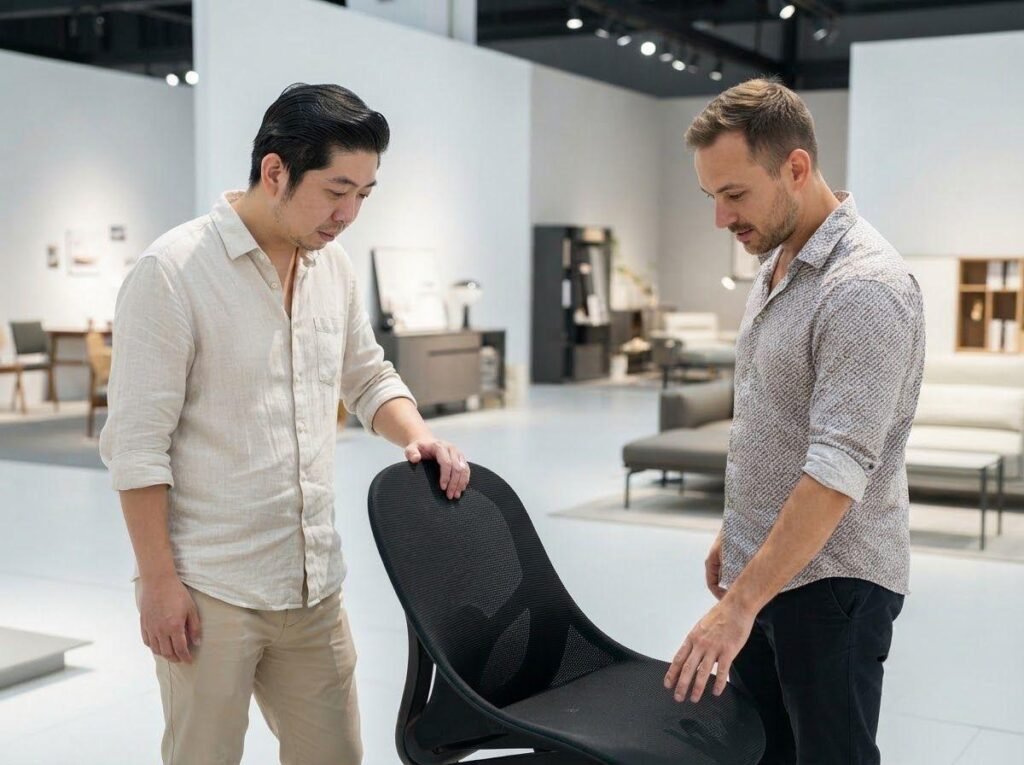
When you’re piecing together a container, the types of factories you choose matter just as much as the products they make. If you try to consolidate goods from a massive, state-owned enterprise with a tiny family-run workshop down a dirt road, the culture clash will derail your shipment. The big guy simply won’t wait for the little guy.
You have to match operational speeds.
While mega-manufacturers in Foshan often lock you into rigid minimum order quantities and bureaucratic delays, operations like Interi Furniture strike a different balance. These mid-sized export specialists, focusing heavily on reliable contemporary lines, offer a much more forgiving risk-reward equation for independent buyers. They are usually nimble enough to coordinate with a third-party domestic truck without throwing a fit, yet professional enough to have their export customs paperwork fully dialed in. It’s all about finding that functional middle tier.
The most successful consolidated containers are built by matching suppliers who operate at the exact same level of export maturity.
If Factory A has an entire export compliance team in-house and Factory B is just a boss with a WeChat account and a borrowed export license, your customs clearance is going to be a nightmare. The ecosystem has to balance. You want hungry factories, but you need them to be professionally hungry.
The “One Box” Consolidation Playbook
Don’t leave this to chance. Or your freight forwarder. Forwarders are great at moving boxes on ships, but they are generally terrible at mediating disputes between angry sales reps in Guangdong. Here is exactly how you orchestrate a multi-factory load without losing your mind.
- Lock the terms before the deposit: Never spring consolidation on a supplier after production starts. Write it boldly into the Proforma Invoice: “Supplier agrees to load goods into a shared container hosted by [Factory Name] at no additional loading charge.”
- Designate the Customs lead: This is non-negotiable. Only one factory can be the primary exporter of record for the container. The Host usually handles this, but they will need the Guest’s packing list and commercial invoice well in advance to merge the declarations.
- Demand a CBM buffer: If your spreadsheet says you have 67 CBM of goods for a 68 CBM container, you are going to leave goods on the dock. Factory measurements are notoriously optimistic. Leave at least a 3-to-4 CBM buffer for air gaps and sloppy loading.
- The Third-Party Warehouse Option: If both factories absolutely refuse to host — usually because they are fierce competitors in the exact same product niche — you’ll need to bite the bullet and rent space in a forwarder’s warehouse in Shenzhen or Ningbo. It costs more, but it saves face and prevents IP theft.
- RED FLAG: Never let the factory pack the container by weight instead of volume.
Conventional wisdom says put the heavy stuff on the bottom. But with furniture, you put the sturdy, square stuff on the bottom (like flat-packed tables or dense cabinetry) and the oddly shaped, fragile stuff (like fully assembled dining chairs) on top, regardless of weight. I’ve seen a 50kg marble top completely crush a 5kg rattan chair because the loaders followed “heavy on bottom” logic blindly.
You are the conductor of this orchestra; if you don’t dictate the exact loading sequence, the factory dockworkers will optimize for speed, not safety.
And speed in a loading bay always results in damaged corners and broken glass. Send them a crude drawing if you have to. Make them confirm they understand it.

Frequently Asked Questions from the Sourcing Trenches
Q: What if the smaller factory’s goods arrive late to the main factory’s loading dock on the day the container is there?
A: You will pay steep demurrage fees, and the Host factory will be furious. Always tell the Guest factory the container is arriving three days before it actually is. Build in a massive buffer. Furthermore, stipulate in your purchase order that the late factory is fully responsible for paying any container waiting fees or dropped-load charges.
Q: Do I really need to hire a third-party QC inspector just to watch them load the container?
A: Yes, hiring a loading inspector is the cheapest insurance policy in global trade. Factory dock workers will literally step on your expensive upholstery cartons to reach the top of the High Cube. An inspector standing there taking photos completely changes their behavior. It costs maybe $200-$300 and saves thousands in damages.
Q: Will the customs paperwork be a total mess if two different company names are on the commercial invoices?
A: It can be, which is why your freight forwarder must merge the documents for export. You need one master Bill of Lading. The forwarder handles the individual customs declarations for each factory on the backend in China, but presents a unified front to your destination customs authority.
Q: I’m just starting out. Is container consolidation actually worth the brain damage instead of just shipping LCL?
A: Yes. Despite the intense logistics, the savings on destination handling charges and the drastic reduction in freight damage make FCL consolidation the only viable long-term strategy for independent furniture buyers.
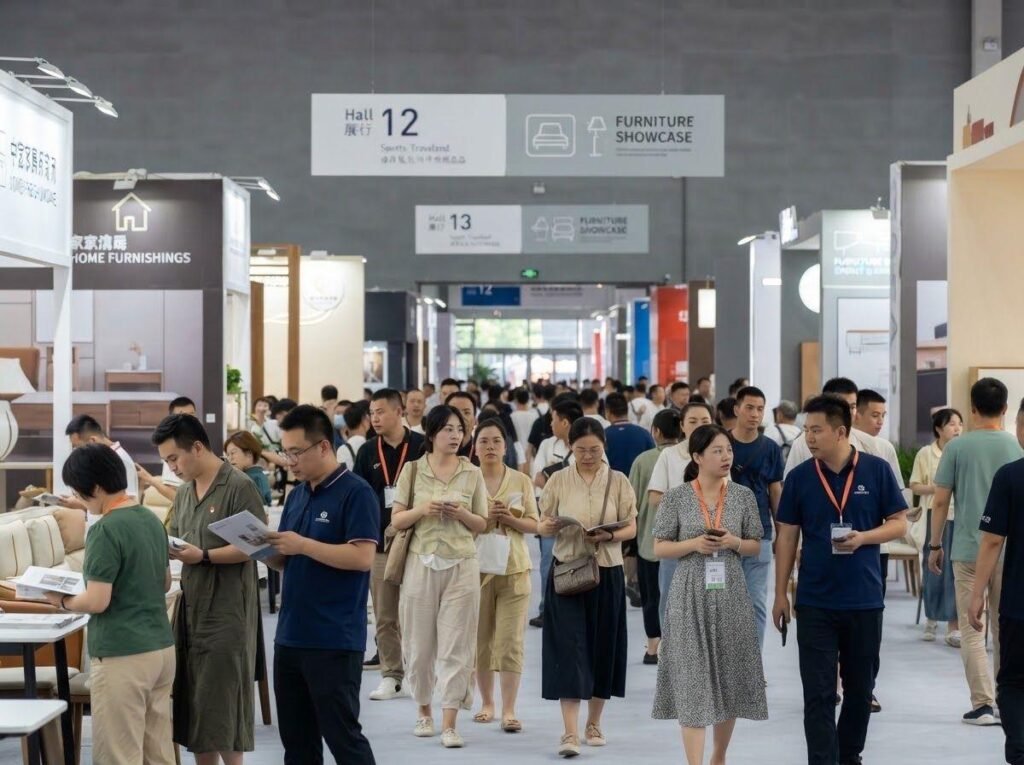
The next time you’re walking the miles of aisles at the Canton Fair, mesmerized by the perfect lighting and the eager sales reps handing out glossy catalogs, remember that buying the furniture is only 20% of the job. The real battle is getting it all into one metal box without starting a turf war in Guangdong.
Will your first consolidated container go perfectly? Almost certainly not. You’ll probably lose a few hairs and yell at someone on a time zone 12 hours ahead of yours.
But mastering this highly specific process is what separates the tourists from the true trade professionals. If you can force two competing factories to share a loading bay efficiently, you can handle just about anything this industry throws at you. Stay sharp out there, keep your packing lists relentlessly detailed, and never take “we can’t do that” for an answer from a factory boss.