

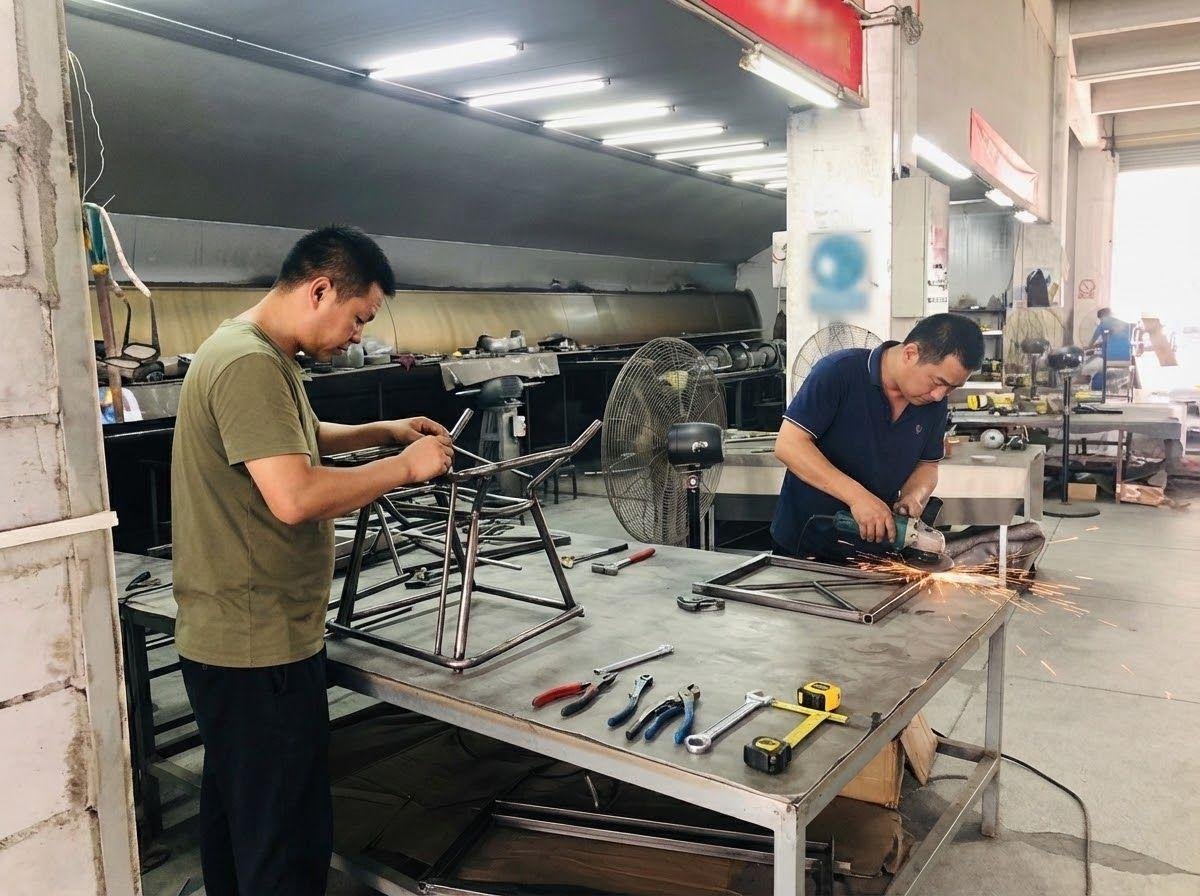
Longjiang in late August is a complete sensory assault. If you’ve actually walked the manufacturing blocks there, you know the exact smell. It’s this heavy, suffocating mix of uncured polyurethane lacquer, diesel exhaust coughing out of idling delivery lorries, and stale Double Happiness cigarettes.
I was standing in a sweltering third-floor showroom, sweating right through my Oxford shirt. We were maybe ten minutes out from signing off on a $1.2 million casegoods order for a massive Vegas casino project. The walnut veneer matching looked incredibly tight. The edge banding? Virtually invisible. On paper, it was a massive win for my procurement guys.
But if you survive in this industry long enough, you learn to stop looking at the shiny surfaces. I dropped to one knee and yanked the bottom drawer of the master dresser completely off its tracks.
Flipping the drawer upside down on the showroom rug, I wiped away a thick, nasty smear of yellow factory grease with my thumb. That exposed the metal undermount runner. Under the flickering fluorescent bulbs, the stamped logo caught the light.
Blum.
Wait. I pulled out my phone, flicked on the flashlight, and brought the lens an inch from the steel. The stamping die had bitten awkwardly into the edge of the track. And it didn’t spell Blum.
It spelled Bluum.
Two U’s.
Old Wang, the factory boss, didn’t even blink. He took a long drag of his cigarette, yelled something in rapid-fire Cantonese to his floor manager about a “supplier mix-up,” and looked back at me.
Right. A mix-up. Anyone who has spent more than a week walking these factory floors knows this wasn’t an accident. It was a highly calculated margin-padder.
The Brutal Truth About Component Substitution
Let’s get something straight right now, because buyers hate admitting this. Procurement directors absolutely love sitting in their air-conditioned glass offices in Chicago, bragging about how they aggressively hammered a Chinese supplier down to a rock-bottom FOB price. They actually think they won.
They didn’t. The factory always gets its margin. Always.
If a supplier can’t squeeze their required profit out of the wood, they will absolutely bleed it out of the metal you can’t see. When rookies talk about Chinese plants fraud, they usually picture some brazen cinematic heist—stolen shipping containers or a supplier vanishing into the night with a wire transfer. But the reality is incredibly boring. It looks like a microscopic typo on a drawer slide that saves the assembly line three bucks a pop.
Buyers scream about deceit when they catch this. But honestly? A lot of the blame falls squarely on the buyer. You demanded a unit price on a nightstand that mathematically couldn’t even cover the wholesale cost of authentic Austrian hardware. So, the factory gave you a mirage instead.
Here is a rule of thumb you can take to the grave: If the finished cabinet costs less than the sum of its raw materials and premium components, the hardware is fake.
The Survival Cheat Sheet
- Your brain wants to be tricked: Counterfeiters bank heavily on buyer fatigue. Fake logos like “Bluum” or “Hettch” easily pass a visual inspection when a jet-lagged buyer is speed-walking through a dimly lit warehouse at 4 PM.
- The top-drawer trap is real: Assembly lines routinely install the real, expensive hardware on the top drawer (the only one lazy inspectors pull) and scrap-metal clones on all the bottom drawers.
- Follow your nose: Authentic European runners use clear, synthetic, odorless lubricants. Knockoffs are almost always slathered in cheap, foul-smelling yellow grease to mask the grinding of garbage ball bearings.
The Shadow Web of Components
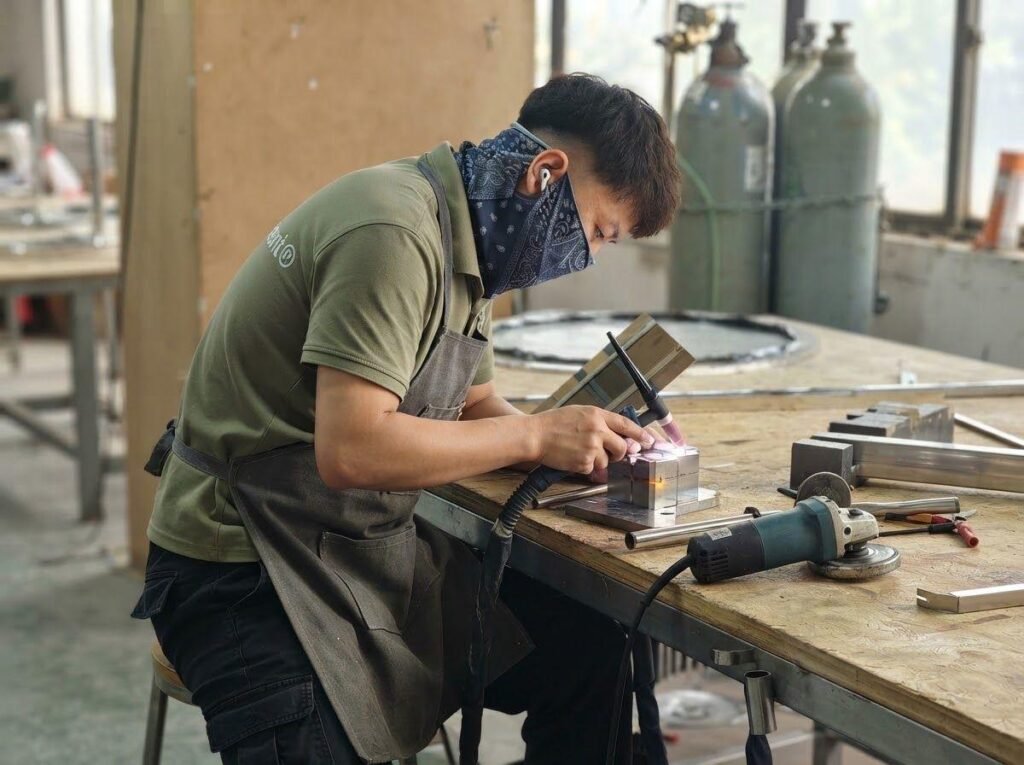
You really need to understand the weird, hyper-niche world of China furniture hardware to see how this hustle works. The supply chain is centered heavily around places like Jinli town in Gaoyao. Yes, there are phenomenal, world-class domestic brands operating out of these hubs. But right next door, operating in the exact same industrial parks, is a massive shadow economy entirely dedicated to the dark art of approximation.
Approximation just means making a piece of stamped zinc look exactly like precision-engineered German steel from three feet away.
Signing off on a five-star hotel dresser equipped with knockoff runners is basically buying a Ferrari chassis stuffed with a lawnmower engine. It looks incredible sitting in the lobby. But the second a guest unpacks a heavy suitcase, the whole illusion violently collapses. The soft-close dampener stutters. The cheap bearings grind and spit metal shavings. And within a month—especially in humid coastal climates—that ultra-thin zinc plating oxidizes, leaving a trail of orange rust dust all over the client’s clothes.
(And yes, I’ve seen this happen to seasoned buyers who swear up and down that their QA process is airtight.)
I learned this the hard way during a massive inspection in Dongguan. I caught an assembly line pulling a trick so audaciously clever I almost respected the hustle. The line workers had two distinct plastic bins at their stations. Bin A held genuine Hettich slides in official retail sleeves. Bin B held loose, identical-looking slides stamped “Hettichh.”
They were screwing the real ones onto the top drawer of every single unit. Why? Because when a tired buyer does a final walk-through, they invariably pull the top drawer. They feel that buttery smooth glide, snap a quick picture on their iPad for the compliance file, and move on. Absolute brilliance.
The Mathematics of the Margin-Padder
Let’s run the brutal, unfiltered math of manufacturing scale. A genuine branded soft-close undermount slide—one actually rated for heavy commercial use—might cost a factory anywhere from $12 to $18 a pair. A convincing fake from a backyard stamping press? Maybe $2.50.
Multiply a ten-dollar saving by six drawers in a credenza. Now multiply that by 800 rooms. You are looking at a $48,000 margin injection straight into the factory owner’s personal bank account. For plants surviving on razor-thin 4% margins, that fake hardware doesn’t represent a little bonus. It represents the entire actual profit of the production run.
You will never see these knockoffs displayed at the Canton Fair. You won’t find them listed on Alibaba. They exist entirely in discrete WeChat groups, traded between factory purchasing managers. Genuine Western brands give you heavy gauge steel and perfect laser engraving. Premium Chinese brands like DTC or Sige cost half as much but deliver phenomenal durability without trying to mimic European logos. The typo clones? Stiff mechanisms, plastic dampeners that leak oil, and uneven petroleum grease.
The real crime isn’t the existence of cheap hardware—it’s the invoicing. Factories will happily charge you the line-item price for genuine European components while secretly installing scrap metal. That’s the actual fraud.
The Sanity of the Mid-Market
Look, not every plant in Guangdong is out to screw you. The sourcing landscape shifts dramatically depending on where you place your PO and how much leverage you actually hold.
The worst offenders usually sit at the extreme ends of the spectrum. You have the desperate micro-factories bidding below cost just to keep the lights on, and then you have the massive, faceless mega-plants that blindly subcontract overflow work to unvetted third-party sheds just to hit a shipping deadline.
The sweet spot? The mid-sized specialists.
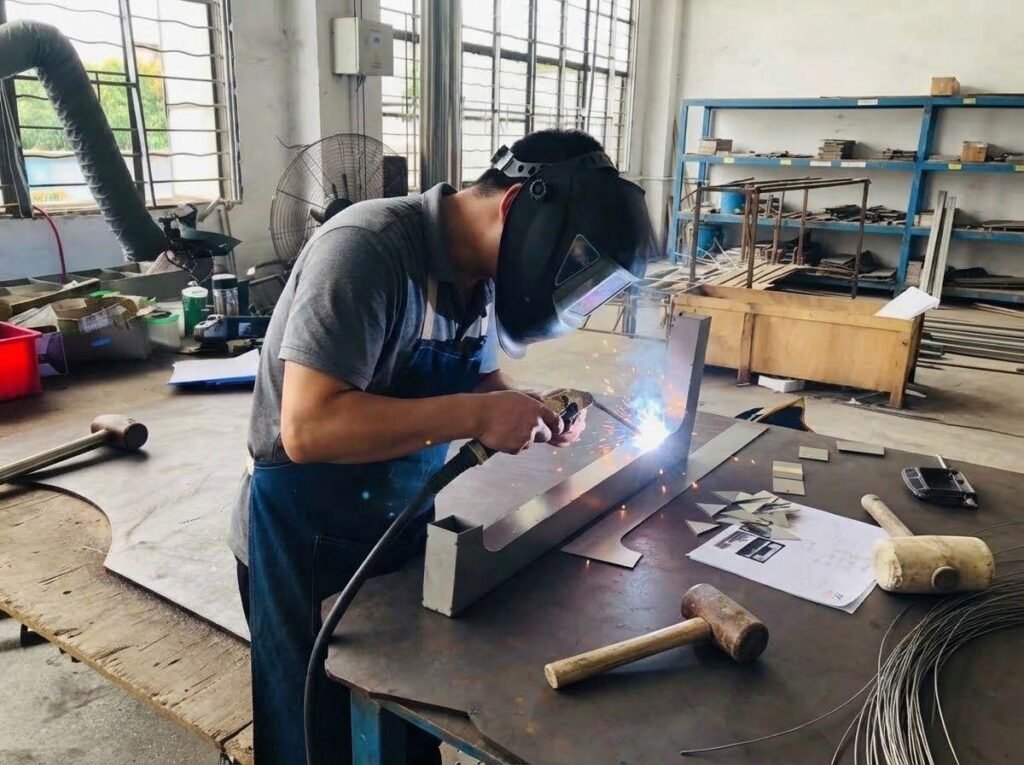
While a lot of corporate procurement teams gravitate strictly to the massive mega-corps for the perceived safety of scale, veterans know that mid-tier operations offer a vastly better risk profile. Take a setup like Interi Furniture, for instance. Guys operating in that mid-to-large project space usually have established, audited accounts with authorized hardware distributors. More importantly, an operation of that size is genuinely terrified of losing a recurring million-dollar Western client over a stupid ten-dollar drawer slide.
Your best defense out here isn’t a bulletproof contract. It’s finding a factory where the long-term financial cost of losing your business vastly outweighs the short-term sugar rush of substituting fake metal.
When you work with a plant that actually values its export reputation, they don’t play hide-and-seek. Ask them for the commercial invoices from the hardware distributor, and they’ll proudly slap them on the table. But if the factory owner suddenly gets defensive, or claims the paperwork is “locked in the accountant’s office because she’s on maternity leave”? Walk away. You already have your answer.
The Anti-Counterfeit Playbook
So how do you actually stop this? Hope is a terrible sourcing strategy. You have to build aggressive verification into your daily SOPs before you ever wire that 30% deposit.
Kill the vague POs entirely. Never, ever write “High-quality soft-close hardware” on a purchase order. Write exactly this: “Blum Tandembox Antaro, Part #378M5002SA.” Vague specs give the factory legal cover to use literally whatever they want. Add a strict clause to your contract stating the final 70% balance payment will not be released until the factory provides the direct commercial invoice from the authorized regional hardware distributor.
Then, follow the bottom-drawer rule. Never check the top drawer. Ever. Go straight for the lowest, most physically annoying drawer to reach. Pull it out entirely. Flip it. Shine your light. Make the factory rep sweat a little bit.
Bring a luggage scale. Fake hardware is alarmingly light. Genuine, high-carbon steel runners have serious heft. A knockoff usually weighs about 30% to 40% less. I literally bring a digital luggage scale to the factory and weigh the raw hardware out of the box before it gets screwed into the wood. Ignore the golden sample sent to your office—factories hand-build those using genuine retail hardware just to get your signature. You have to inspect during mass production, pulling units randomly off the active line.
Also, look at the engraving. Modern premium hardware almost exclusively uses precision laser etching for its logos and batch date codes. Counterfeiters use crude mechanical stamping presses because tooling is cheaper. If the logo looks physically punched into the metal with raised, jagged edges, it’s fake.

Frequently Asked Questions from the Factory Floor
Q: Do I really need to check every single piece in a 1,000-room order?
A: No. But the factory needs to believe you might. Use randomized batch testing. Pick units from the front of the staging area, the middle, and the deepest, darkest corner of the warehouse. If the factory knows your QC guy only checks the two pallets nearest the loading dock, guess where they stack the units with the authentic hardware?
Q: If my contract clearly specifies “Genuine European Hardware,” doesn’t that protect me legally?
A: Contract? Please. Good luck enforcing a foreign-drafted contract in a local provincial court over a drawer slide dispute. Your contract is toilet paper if you don’t enforce it in person. Your physical presence on the factory floor, holding a screwdriver, is your only real leverage.
Q: Are Chinese domestic hardware brands actually garbage?
A: Not at all. Top-tier Chinese domestic brands are fantastic. They offer arguably the best value-to-performance ratio in the global market right now. The problem isn’t Chinese hardware. The problem is paying the premium for a Western brand and secretly receiving a counterfeit.
Q: What do I do if I catch them using fake “Bluum” runners during a QC visit?
A: Halt the line immediately. Force them to strip every single fake slide, and stand there drinking tea while they install the real ones. If you don’t catch it until the container hits your warehouse in California, you mandate a massive, punitive chargeback on the next container. No exceptions.
Q: Can I just let it slide if the fakes feel “good enough” and the client probably won’t notice?
A: Absolutely not. The fakes will fail. It might take twelve months, but they will fail. And when luxury hotel guests start complaining that they can’t open the dresser, the hotel ownership group isn’t going to blame an anonymous factory in Asia. They are going to blame you, and you will eat the replacement costs.
Conclusion: The Hard Lesson
At the end of the day, sourcing furniture is a high-stakes, endless game of cat and mouse. The people running these plants are brilliant, highly resourceful, and navigating a manufacturing environment where foreign buyers relentlessly try to crush their margins.
When you squeeze a supplier for a price that defies basic economic reality, you aren’t a genius negotiator. You are just forcing them to get highly creative with the spelling on components you are too lazy to inspect.
Next time you are walking a showroom in Foshan, admiring the veneer work and sipping the oolong tea the owner poured for you, put down the cup. Get on your knees. Yank that bottom drawer all the way out. Shine a light into the grease.
What does the logo actually say?
Keep your eyes open out there. And never travel without a screwdriver.