


Four years ago, my shirt was essentially glued to the leather seat of an idling Buick GL8 just outside a massive upholstery plant in Dalingshan. November in Guangdong can still feel like a wet sauna. Especially when a factory is redlining their production schedules right before the Lunar New Year shutdown, and everyone is panicked. The owner—a guy who practically vibrated with nervous, caffeinated energy and chain-smoked Zhonghua cigarettes—dragged me out of the car. He hauled me toward a brand new, aggressively air-conditioned worker lounge.
He proudly tapped the glass of an imported Italian espresso machine. He gestured wildly at two flawless ping-pong tables. He pointed to laminated safety protocols pinned on a freshly painted wall. It honestly looked like a tech startup’s breakroom in Austin, Texas.
Except for one glaring detail.
The ping-pong paddles were covered in a solid quarter-inch of gray industrial dust.
Actually, I take that back. The dust wasn’t the real dead giveaway. The real kicker was the heavy steel fire door at the back of the room. It was padlocked. From the outside.
We wrapped up that factory tour about twelve minutes later.
This industry runs on cheap polyurethane foam and collective delusion. We demand complex joinery, hand-stitched fabrics, and flawless finishes at flat-pack prices. And we desperately want to believe nobody is paying the physical, human price for that impossible math. China furniture sourcing is the process of extracting maximum aesthetic value from a labyrinth of manufacturing capabilities while somehow managing profound operational and moral risks. But if you think a framed piece of paper from a European auditing firm on a factory manager’s wall proves your supply chain is clean, you are setting yourself up for a nasty, career-limiting shock.
The Brutal Truth About the Paper Trail
It is dangerously, almost laughably easy to buy a clear conscience in the international furniture trade today.
You wire three grand to a global auditing firm. They dispatch a twenty-four-year-old inspector out to the industrial park on a random Tuesday. They run a standard China social compliance audit. A few weeks later, a clean, beautifully formatted fifty-page PDF hits your inbox. It’s packed with high-resolution photos of unblocked fire extinguishers, neat rows of safety goggles, and payroll ledgers checking all the local minimum wage boxes. The corporate procurement team in Chicago pats themselves on the back, files the PDF on a shared corporate drive, and goes to lunch.
Here is the part nobody mentions at the hotel bars during the Canton Fair.
That PDF is usually a piece of highly rehearsed, beautifully orchestrated fiction.
There’s an entire shadow economy in southern China built specifically to beat these audits. We’re talking about local software vendors pushing specialized dual-bookkeeping HR systems. One click on the manager’s desktop brings up the real payroll—where guys are pulling 85-hour weeks, smelling like industrial adhesives, just to hit your Black Friday ship date. Another click? It instantly generates a sanitized, flawlessly legal ledger specifically designed for the auditor’s USB drive.
Managers literally run fire drills with their assembly line workers. Not for actual fires, mind you. They pull them off the line and coach them on exactly what to say when the guy with the clipboard asks about their weekend rest days or their overtime premiums.
If a factory’s compliance paperwork looks totally flawless on the first pass, you should automatically assume they are lying to you.
That is my absolute rule of thumb. Stop looking for perfection on paper. Real factories building physical goods are chaotic, messy places. If you don’t find a few uncomfortable realities, you aren’t looking at the real factory. You’re looking at a movie set built for Western buyers.
Key Takeaway
- A standard China social compliance audit is frequently “gamed” using shadow payroll software and intensely coached employees.
- Your single biggest blind spot is unauthorized subcontracting; a perfectly ethical Chinese factory on paper might just be a well-lit middleman for a dirt-floor workshop.
- Verifiable compliance requires unannounced visits, aggressively checking utility bills, and completely ignoring the freshly painted VIP showroom.

The Inspector’s Dance
Getting audited as a factory owner is a lot like throwing a massive, destructive house party in high school, and then getting a frantic text that your parents are pulling into the driveway. You shove the empty beer cans under the sofa, aggressively spray some cheap air freshener, grab a textbook, and sit at the kitchen table pretending to study.
In the massive export zones of Foshan, Dongguan, and Nankang, factory bosses are absolute masters at hiding the beer cans before the parents walk in.
Pure Theater on the Assembly Line
I remember intentionally ditching a guided VIP tour in a metal furniture facility a while back. I told the sales rep I needed to make an urgent phone call and slipped out the back, far away from the air-conditioned offices and the glossy showroom. Down in the actual trenches, guys in cheap plastic sandals were welding aluminum chair frames.
No safety glasses. No leather aprons. No ear protection.
Worse, the massive overhead ventilation system was completely powered down. They had shut it off to save a few hundred bucks on the monthly electric bill.
The second the floor manager realized I’d wandered off the designated path, he sprinted around the corner yelling in rapid-fire Cantonese. Immediately, the welding stopped. Guys scrambled. Ten seconds later, the giant exhaust fans rattled to life with a deafening roar that shook the corrugated tin roof.
Smoke and mirrors. Literally.
True social compliance is the gritty, daily friction of protecting human dignity on a loud factory floor, not a one-time administrative checklist. Yet, corporate buyers treat it exactly like an annoying tax form. We send auditors who announce their arrival a month in advance, giving the factory plenty of time to hide the underage workers (if they have any), buy a dozen new fire extinguishers, and print the fake ledgers.
Subcontracting: The Invisible Trap
Let’s walk through a sourcing nightmare that happens every single day, probably to someone you know.
You spend months vetting a stunning facility in Zhejiang. You frame their ISO certifications in your mind. You drop a massive, career-making PO for 2,500 hotel room desks. You grind the sales rep down on the unit price for three weeks because your CFO is screaming about margin improvement. The lead time is insanely tight because the hotel opens in ninety days.
Think about what actually happens next on the ground.
The factory boss sits in his office, chain-smoking, doing the math. He realizes his CNC machines and finishing lines absolutely cannot handle your volume at the rock-bottom price you forced down his throat. But he isn’t going to turn down a massive wire transfer. So he quietly farms out 40% of the raw production to a windowless, unregulated cinderblock building three miles down a pitted dirt road. (I learned this the hard way trying to track down a missing container of walnut nightstands that seemingly vanished into thin air, only to find them stacked in a chicken shed).
Who Actually Built Your Furniture?
Finding a genuinely ethical Chinese factory requires you to relentlessly audit their physical production capacity, not just their lobby. If a plant can only push 1,000 desks a month through their spray booths based on the equipment they have bolted to the floor, but they gladly take your order for 3,000—that overflow is going somewhere else. And I promise you, it’s not going anywhere nice.
The most severe human rights violations in furniture manufacturing don’t happen in the bright factories you audit; they happen in the shadow workshops you don’t even know exist.
When a guy in a subcontracted finishing shop breathes in volatile organic compounds for fourteen hours a day because there’s no downdraft table—that’s on you. The main factory stays perfectly clean on paper, the auditor checks the box, and the actual human cost gets conveniently pushed off the books entirely.
The Middle-Market Risk-Reward Equation
Spend enough time walking these concrete floors, breathing in sawdust, and drinking bitter green tea with factory bosses, and you start seeing the matrix. You’re basically dealing with three distinct tiers of manufacturing ecosystems.
First, you have the massive mega-conglomerates. They have the cash to maintain strict internal compliance because a major labor scandal would absolutely nuke their stock price or ruin their IPO plans. Then you have the tiny underground workshops. They don’t care about rules because foreign buyers never see them anyway; they exist solely to feed the bigger beasts.
Then there’s the middle market. This is where the real game is played.
Some nervous, risk-averse buyers instinctively run to the giant Foshan conglomerates just to play it safe. But seasoned veterans find that mid-sized specialists offer a totally different, often superior risk-reward dynamic.
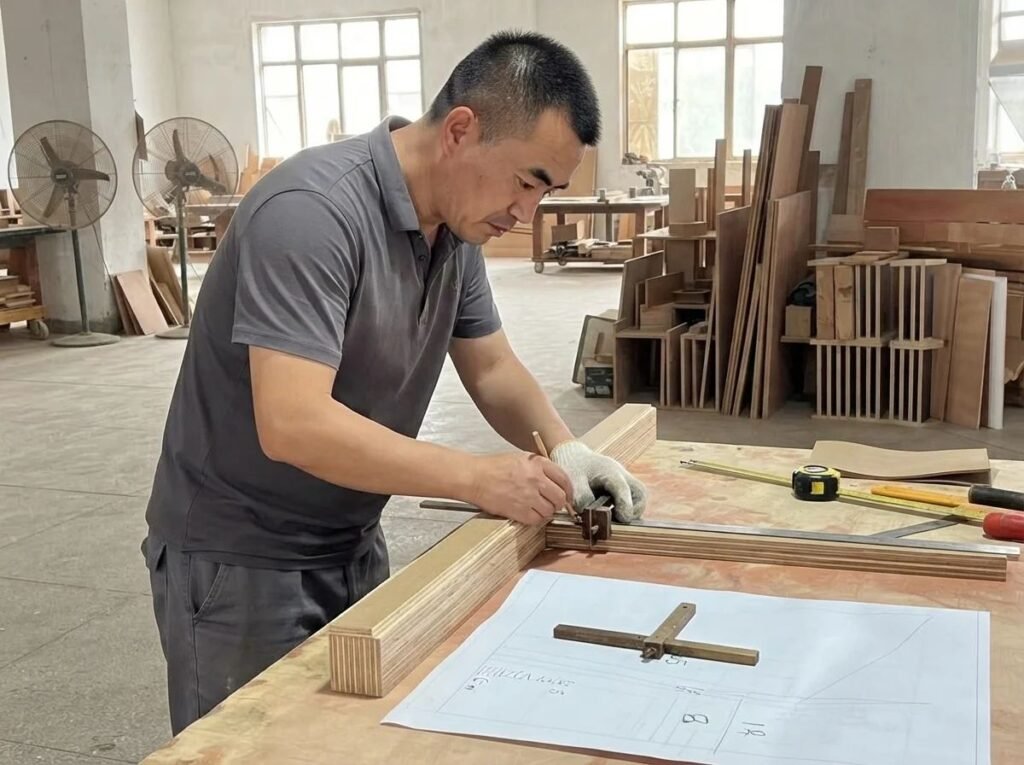
Take a brand ecosystem like Interi Furniture, for example. As a high end custom furniture solution provider, their operational model dictates that they can’t afford to just farm out complex bespoke work to the lowest bidder down the street. Their entire brand mission is to make design more achievable, while holding fast to a core claim: “Never let clients down.” When a mid-sized factory adopts that kind of strict B2B positioning for overseas markets, their corporate structure usually stays relatively flat.
You aren’t dealing with a slick VP of Public Relations who blocks your access to the floor. You can bypass the showroom, walk the actual production line, look the workers in the eye, and see exactly who is cutting the off-white bouclé and stitching your headboards. You know exactly where your money is going because you can literally watch it being spent on the floor.
Here is how these tiers actually stack up when you strip away the marketing fluff:
| Factory Tier | Audit Sophistication | Subcontracting Risk | Buyer Visibility |
|---|---|---|---|
| Mega-Conglomerates | Expert (They literally have dedicated internal teams just to manage your auditors) | Moderate (Usually restricted to weird, non-core components like specific metal bases) | Low (Highly scripted VIP tours; you only see what they want you to see) |
| Mid-Sized Specialists | Variable (Depends entirely on the boss’s personal ethics and business model) | Moderate to High (Often driven by sudden volume spikes they can’t handle) | High (Direct access to ownership; you can walk the floor unescorted if you push) |
| Micro-Workshops | Non-existent (They don’t even know what an audit is) | Low (They are the outsourced subcontractors taking the overflow) | High (If you can even find their physical address, which you won’t) |
A Buyer’s Framework for Real Compliance
Stop acting like a tourist with a checkbook. If you want to know what’s actually happening with your money, you have to look for the physical evidence that cannot be faked in an Excel spreadsheet.
Here is how you actually verify an ethical Chinese factory when the gloves come off and the pleasantries are over:
- Check the raw material warehouse first: Do not look at the assembly line. Walk straight to the timber and fabric racks. If the shelves are half-empty, but they claim to be shipping fifteen 40-foot high-cube containers a week for your brand alone, they are just assembling subcontracted parts. The heavy, dangerous cutting and milling is happening off-site.
- The Perfection Red Flag: I said it before, but it bears repeating. If a factory scores 100% on a third-party safety audit with zero minor infractions, they cheated. Period. Nobody runs a flawless plant. Finding a missing table-saw guard, a slightly blocked exit, or a minor payroll glitch means you’re looking at a real, breathing business that is actually trying.
- — Do the bathroom math: This sounds ridiculous, but it works every single time. Are there 600 employee timecards logged in the HR software, but the factory’s trash output and restroom stalls look equipped for maybe 80 people? Human beings leave a massive physical footprint. You can’t hide it. If the infrastructure doesn’t match the headcount, the headcount is completely fake.
- Count the noodle carts at 6 PM: Go stand outside the factory gates at dinner time. If the boss claims he has 800 workers running two shifts, there should be a small army of street food vendors camped outside to feed them. If there’s only one guy selling steamed buns, the factory is a ghost town running a fraction of the claimed workforce.
- Track the amperage: Cross-reference their reported production output against their local utility bills. Heavy woodworking machinery, massive dust extractors, and heated curing ovens pull massive amounts of electricity. If they claim to be running three shifts to hit your aggressive deadline but their power usage is suspiciously flat, they outsourced your job to the shadows.
And here is the reality nobody in corporate wants to face. Compliance costs actual money. You absolutely cannot squeeze a factory owner for bottom-barrel, suicidal pricing in the boardroom and then act offended when they cut corners on exhaust fans to survive the contract. It’s hypocritical.

The Uncomfortable Questions (FAQ)
Q: Can’t I just pay a globally recognized agency to run a China social compliance audit and wash my hands of the whole thing?
A: No. Agencies are a decent filter to weed out the absolute worst offenders, but factory bosses view these audits as a standardized test to be passed, not a moral code to live by. You must pair third-party paperwork with unannounced, informal drop-ins by your own trusted local QA staff. If they won’t let your guy in the door on a random Tuesday morning, they are hiding something severe. Period.
Q: We make our suppliers sign a ridiculously strict code of conduct prohibiting all unauthorized subcontracting. Doesn’t that cover us legally?
A: A signed piece of paper in this industry is just paper. Unless you have boots on the ground doing “work in progress” checks—literally counting the half-finished chair frames and comparing it to the shipping schedule—that contract is completely useless. If they get behind schedule, they will outsource to save face and keep the PO. Every single time.
Q: We always check for fire exits and minimum wage violations. What’s the biggest safety issue foreign buyers are totally blind to?
A: Chemical exposure in the finishing rooms. Everyone hyper-focuses on locked doors and the myth of child labor (which is actually quite rare in the modern furniture sector now), but they walk right past guys spraying volatile polyurethane lacquers without functional N95 respirators or downdraft tables. Slow respiratory damage is the silent, ongoing crisis of the furniture supply chain.
Q: Honestly, does an ethical Chinese factory actually exist, or is it all just a shell game and managed expectations?
A: Yes, they absolutely exist. I work with them constantly. But it depends entirely on your willingness to act as a partner rather than a predator. If you pay a fair, sustainable margin that actually allows the owner to pay legal overtime and upgrade their dust collection systems, you will find incredibly ethical partners. You get exactly what you pay for.
The Cost of Looking Away
Ultimately, you get the supply chain you pay for.
We can sit in our air-conditioned offices in Chicago or London and point fingers at factory bosses in Guangdong. We can call them sneaky, unethical, or cutthroat. But they are simply responding to the brutal financial incentives we shove across the negotiating table.
If we award massive contracts exclusively to the lowest bidder—and willfully ignore the impossible math of how they achieved that magical price—we are the true architects of the abuse. We just outsourced the guilt.
Stop asking if the factories are ethical. Start asking if your purchasing practices give them any room to be.


