


Last November I visited a damp, corrugated steel factory in the town of Longjiang, in Foshan. On a dusty concrete floor lay an excellent replica of an Italian multi-seater lounge, complete with matching saddle leather piping and hand-stitched joints. The factory boss proudly stated that he could supply it for $3,800, ex-factory, and it would then take four weeks to produce.
Just two weeks later I saw an almost identical version being showcased in an opulent New York penthouse, and described as the work of a “bespoke European atelier”.
Of course if you’ve ever worked in hospitality or luxury property, you already understand that this is common practice. No longer is sourcing luxury from China limited to the murky underbelly of global commerce. Rather, it is silently sustaining the profit margins of an estimated 50% of boutique design businesses. Although designers never mention this at exclusive Milan or New York soirées, their clients are willing to pay well for ‘heritage’, emotion and narrative – none of which relates to a 40ft container exiting Long Beach port. However, behind NDAs, some of the leading sourcing departments are carefully and discreetly exploiting the skills available in Guangdong province.
The Hard Facts on Discreet Sourcing
Most people believe they understand the trick to sourcing China designer furniture replicas. Unfortunately they don’t. Typically, 80% of the so-called luxury replicas that appear on sites such as Alibaba and Instagram are poor quality and are likely to sag, rot or become unstable within just 18 months.
Leading replicators do not advertise on social media and are unlikely to have fluent English-speaking sales staff to add you as a contact. Usually they are located deep in Dongguan or Foshan and are sourced via Hong Kong trading companies and experienced sourcing professionals.
Based on my 15 years of factory experience, if a showroom is styled like an art gallery and the sales representative is happy to adapt a product to your requirements, then you are not really speaking to a factory. You are in fact in touch with a middleman who is soon going to take your deposit.
Key Insights
- The actual factories remain hidden. Leading luxury replicators source products using private networks in Foshan and Dongguan. They do not source via B2B sites.
- You’re purchasing the unseen. The real difference between a poor replica costing $1,200 and a near-perfect replica at $4,000 is down to the frame construction, foam density and kiln-drying processes.
- Adaptation provides protection. Rather than ordering exact replicas, leading designers alter key elements such as size, fabric and finish to produce ‘inspired-by’ bespoke furniture which easily complies with customs regulations.
- Due diligence trumps faith. Without onsite assessment prior to covering a product, you are jeopardising your client’s reputation.
How the Covert Supply Chain Functions
Sourcing luxury from China involves instructing specialist Chinese OEM and ODM factories to produce bespoke, high-quality furniture. Often, this achieves a cost saving of between 60% and 80% versus the mark-up usually applied by Western brands.
Much like the relationship between a high quality restaurant and a specialist organic farm which supplies its ‘signature’ tomato crop, the restaurant will charge you $45 for a salad. This is despite the fact that the farm simply supplies organic tomatoes. The restaurant adds value through the ambiance it provides, its sommelier and prestige menu. Recently, leading designers have realised they can cut across the supply chain and simply drive straight to the farm at 5.00am to purchase the organic tomatoes from the source. And this is considerably more prevalent than any of those featured in the AD100 will ever acknowledge publicly.
Why Are You Paying $18,000 for a Dongguan factory-made frame?
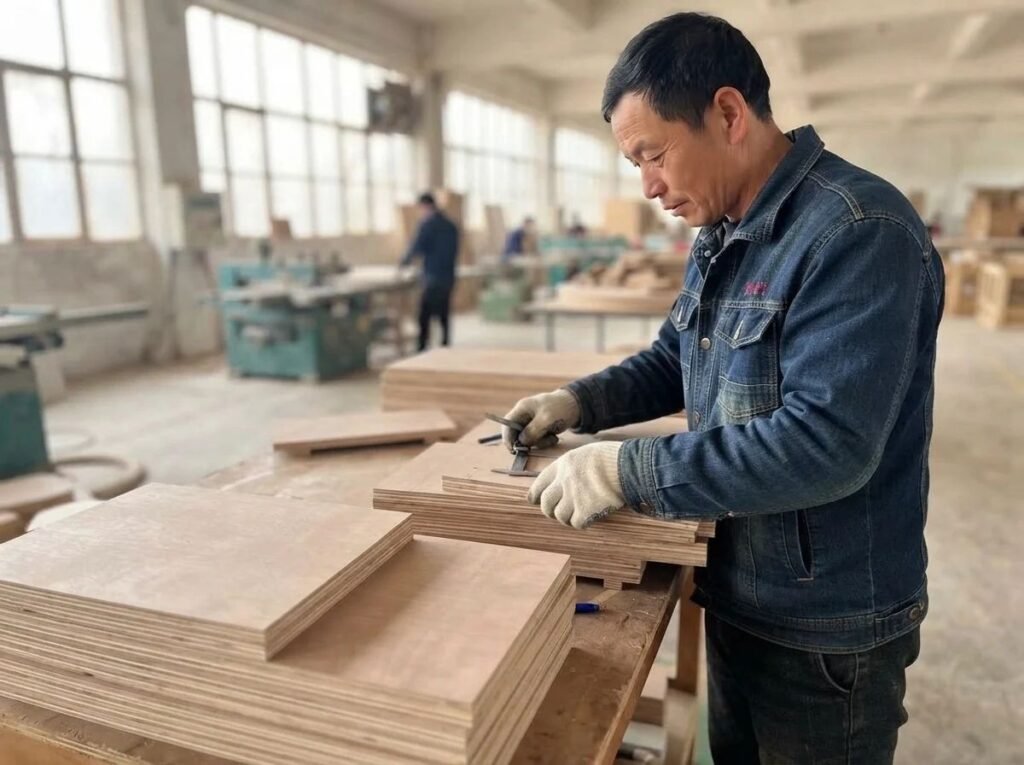
As you walk around the industrial parks in Dongguan’s Houjie area, you’ll see several middle-tier factories which are currently producing replicas. Previously, many of these were OEM factories for well-known Western luxury brands. As such, they already possess 5-axis Italian CNC routers and understand how to form steam-softened walnut without damaging the wood grain.
Unfortunately, the technology divide between a historic European factory and a leading Chinese factory is largely non-existent now.
Last Spring I saw a craftsman in Foshan fitting full-grain aniline leather (imported from a Vicenza, Italy tannery) over a solid white oak frame destined for a Miami boutique hotel. Again, there was no brand or logo. But the saddle stitching was perfection. The hotel procurement director managed to achieve a substantial saving, equivalent to around $140,000, on just the hotel lobby furniture range. Guests and fellow designers were unable to detect any difference.
Clearly, from a selling point, this is all illusion.
How do designers maintain discretion?
Never by using their own brand name. (Provided they are intelligent of course!)
Around 7 out of 10 prominent designers utilise a dual layer of sourcing intermediaries. First, they engage the services of a boutique sourcing professional in Shenzhen or Hong Kong who acts as their official buyer. Crucially, neither the factory nor the designer ever learns which celebrity’s Malibu house the dining table is destined for. Furthermore, the astute amongst them will never order a precisely replicated item. Instead, they will subtly alter the slimming factor on a table’s legs, replace brass with blackened bronze, and provide their own COM (Customer’s Own Material) from a Belgian mill. As a result, it is no longer a replica. It is fully bespoke.
Understanding High Quality Replicas (and Where Factories Compromise)
Whilst it may seem that all Chinese replicas are of the same standard, you are soon going to discover that this is not the case. Indeed, my own experience in Dongguan in 2014 revealed that a “solid walnut” credenza had split along its central section mere weeks after experiencing a dry Chicago winter.
Whilst this is not always due to a factory’s inability to manufacture correctly, it is often as a result of a factory feeling forced to compromise in areas which are not immediately visible to a buyer due to the pressure placed upon it to reduce costs.
Similar to attempting to purchase a genuine vintage Rolex purely on the basis that it appears to have a gleaming face, you are in real fact never able to be sure whether it contains a Swiss movement or simply a $5 quartz battery crudely held in place with hot-glue.
Can a $2,500 sofa truly replicate a $25,000 original?
Yes, to a large extent – if the correct internal components are sourced.
Should a factory be instructed to supply a 30% price reduction, the factory boss will nod in agreement and even offer you a further pot of oolong tea. However, the minute you depart the factory, he will begin to replace the kiln-dried Russian larch or ash frame with inadequately dried green pine. He will also substitute the high resilience 45 density foam and goose down seat padding for low density 30 density foam and polyester batting. Externally, nothing has changed. Nevertheless, after just six months, you will be sitting on something akin to a pancake.
Once fabric has been added, the main difference between a high quality replica and landfill waste is largely imperceptible.
| Authentic European Luxury | Tier-1 Chinese Workshop | Alibaba/Mass Reproduction | |
| Frame Material | Kiln-dried beech, oak or steel | Kiln-dried Russian larch or ash | Unseasoned pine, MDF or ply |
| Joinery | Mortise and tenon with dowels | Mortise and tenon with reinforcement | Staples and white glue |
| Foam density | 40-50kg/m³ high resilience foam plus down | 40-45kg/m³ high resilience foam plus down | 25-30kg/m³ standard foam |
| Upholstery | European full-grain and/or mill fabrics | Imported Italian hide and/or COM | Split leather, PU and/or thin polyester |
| Typical Cost for a sofa | $15,000+ | $2,200-$4,800 FOB | $450-$900 FOB |
| Lifespan | 15-25+ years | 10-15 years | 1-3 years |
Interestingly, once you account for export shipping, duty and premium white-glove delivery costs, the premium Chinese workshop is in fact not substantially more costly than the mass reproduction sector. Equally, a $600 sofa will occupy the same volume of shipping container space as a $3,500 sofa. So, for heavens sake, why would you pay $1,800 in export costs for trash?
There is absolutely no good reason.

Exploring the Brandscape: Large Showrooms and Covert Factories
Flying into Guangzhou and taking a car to Foshan’s ‘Louvre’ Furniture Exhibition Centre is an awe-inspiring experience. The venue boasts beautiful marble floors and crystal chandeliers, alongside stunning replicas. Avoid this site however, unless you are happy to pay 100% premium show-room pricing purely so that you can benefit from air-con.
Although the Chinese furniture landscape is highly geographically and commercially specialised, Anji in Zhejiang specialises in producing swivel and office chairs, and Nankang in Jiangxi is predominant in manufacturing mass-produced solid wood furniture. Within the luxury residential and hospitality sectors though, Guangdong remains pre-eminent – specifically the triangle formed by Foshan, Dongguan and Shenzhen.
Generally within this triangle, a designer must choose between dealing with huge export-focused factories which enforce a minimum order quantity of 50 units and view residential bespoke customers with scant enthusiasm, and working with more nimble, medium sized factories such as Interi Furniture. These are adept at producing high quality export residential and hospitality furniture and appreciate the importance of design accuracy and flexibility in minimum order quantities. Medium sized factories tend to provide a preferable balance in terms of both quality assurance and the ability to adapt to bespoke fabric and sizing requirements for leading interior designers.
Nevertheless, it remains essential to ascertain who is undertaking the actual manufacturing. In fact, numerous so-called factories in Guangdong are actually contract assembly units. They procure frames, metal bases and padding from various villages and then assemble the finished article. Far from being undesirable, this often results in superior metal fabrication as component villages specialise in specific production fields. Good quality control at the assembly unit is, however, crucial.
My Due Diligence Protocol for Chinese Luxury Furniture Sourcing
To effectively source Chinese luxury furniture and avoid problems, it is key to penetrate past the show-room façade. Below is my detailed protocol for assessing a new factory for a hospitality client:
- Request and review images of a ‘naked frame’. Always refuse to have a product covered in fabric until the factory has emailed, or ideally video-called you, to demonstrate the frame, corner blocks and webbing. Should they be reluctant to do so, then move on.
- Confirm the level of humidity. Particularly for solid wood tables and casegoods, ensure that the factory can display to you the reading from a pin hygrometer inserted into the wood. Anything exceeding 12% humidity level is highly problematic as soon as the furniture is placed in an air conditioned American or European home.
- Whenever possible, send your own COM fabric to the factory. Despite Chinese factories’ outstanding expertise in woodworking and metalworking, local Chinese textile mills continue to struggle to recreate the tactile and rub resistance properties of Belgian linen and Italian boucle. Therefore, send fabric rolls directly to factories for processing.
- Red Alert (Usually Misunderstood): An immaculate, stock-filled show-room. Typically people assume that a large and well presented showroom equates to a reliable supplier. In Foshan, however, this is generally the antithesis of the case. Genuine bespoke factories are often dirty, noisy and are frequently faced with lengthy production backlogs of 30-45 days. Should someone have 20 ‘bespoke’ Mario Bellini-style sofas ready for immediate despatch in a warehouse, then these are almost certainly poorly manufactured mass-produced replicas.
- Formally establish packaging requirements. I have witnessed high quality marble tabletops worth $80,000 arrive at a client’s property as gravel. This was due to the factory having packed them in cheap card-board rather than fumigated ISPM-15 timber boxes lined with high density corner foam.

Common Queries
Q: Is it unlawful to source Chinese luxury furniture replicas?
A: It is against the law to import an exact replica which either displays a registered brand name or infringes an active design patent. This can also lead to immediate customs detention. However, as many key mid-century designs no longer hold active patents, and in addition leading designers tend to sufficiently alter a product’s measurements, fabric and structure to ensure that they can legally source ‘inspired-by’ bespoke items rather than exact replicas, this is generally achievable.
Q: What cost savings are there after export and duty?
A: According to export statistics and landed cost analysis, assuming that an overall order value of approximately $15,000 and above is achieved, buyers can typically realise cost savings of between 40% and 65% versus Western retail pricing. However, for individual items such as sofas and dining chairs, most of these savings will be consumed by interntional LCL (Less than Container Load) shipping, customs and duty fees.
Q: Can I source Chinese luxury furniture without visiting Foshan or Dongguan?
A: Yes, but only if you employ an independent on-site quality assurer or a reputable sourcing expert who charges openly rather than receiving covert factory payments. Solely depending on factory-supplied WhatsApp photographs is the quickest route to obtaining a shipment of incorrectly coloured and/or unstable furniture.
Q: Do leading interior designers covertly source high quality Chinese furniture replicas?
A: Yes, and in far greater numbers than is usually recognised by the luxury design press. Although top design studios will still purchase genuine signature articles where funds permit, a considerable proportion of luxury residential and boutique hotel projects utilise covert Chinese factories to both stay within stringent budgets and simultaneously maintain strong visual outcomes.
Put simply, the luxury furniture industry is driven by both quality and allure. Western heritage brands have devoted a century to refining both and charge premium prices for doing so. Meanwhile, Chinese factories have quietly perfected the former over the last two decades. They are largely unconcerned by the latter.
Designers with good sense have already understood how to reconcile these two areas. Rather than seeking the lowest B2B quotation, and unaffected by show-room embellishment, they approach sourcing as an engineering task. They carry out exhaustive checks of joinery and then proceed to cover furniture. Finally, they remain silent in front of magazine photographers.
So next time you embark on a major project, ask yourself – are you paying for quality or simply the destination postcode on the delivery label?
Until we meet again on factory floors.


