

A hotel procurement director I know — let’s call him Mike — flew into Guangzhou last April with a simple mission: replace 200 guest-room headboards for a boutique chain in Miami. He’d spent three weeks on Alibaba furniture China listings, screenshotting prices that looked almost criminal. $68 for a queen-size upholstered headboard. The same SKU his current supplier quoted at $147. Mike did the math in the taxi from Baiyun Airport. Even with shipping, he’d save forty grand. Easy money.
He spent the first day at the Canton Fair furniture sourcing halls in Pazhou, shaking hands, collecting WeChats, feeling like a king. Day two, he took the metro to Foshan. Walked into a factory that looked nothing like the polished booth he’d visited the day before. Dust. Workers without goggles. And the “factory-direct” price? $71. Not $68. Plus a 300-unit minimum he hadn’t seen online. Mike flew home with a headache and a half-empty suitcase. China furniture wholesale channels aren’t broken. But they’re not exactly what the screenshots promise, either.
The Brutal Truth
Here’s what nobody puts on their LinkedIn post about sourcing trips.
Alibaba furniture China looks like a safe bet. It’s built for international buyers. English interfaces. Trade Assurance. Gold Supplier badges. But the platform is a marketplace, not a guarantee. The 30% to 50% price gap that lures buyers? It’s real. But it often comes from trading companies posing as manufacturers, or from spec sheets that quietly change between sample and shipment.
Canton Fair furniture sourcing looks like the answer. Thousands of booths. Export-ready suppliers. English-speaking staff. But the fair is theater. The booth is the costume. The real show happens 40 kilometers away in Longjiang or Shunde, where the actual factory floor may — or may not — match the performance you saw on stage.
And here’s the rule of thumb: If a channel looks frictionless, you’re not seeing the friction. You’re just seeing the marketing.
Key Takeaway
- Alibaba furniture China offers convenience and buyer protection, but “factory direct” claims are often smoke and mirrors.
- Canton Fair furniture sourcing connects you with verified exporters, but the booth is a stage — factory reality often differs.
- China furniture wholesale channels work best when you treat them as starting points, not endpoints.
- The cheapest price you see online almost never includes the hidden costs of compliance, logistics, and defect rework.

Deep Dive: What Alibaba.com Actually Is (And What It Isn’t)
It’s a Directory Where Everyone Claims to Be the Factory
Think of Alibaba furniture China like walking into a massive trade directory where every listing screams “WE ARE THE MANUFACTURER.” Some are. Many aren’t. The platform is the world’s largest B2B marketplace, and that scale is both its strength and its trap. Alibaba.com has Trade Assurance, English interfaces, and export-trained sales teams. But it also has thousands of trading companies who rent a factory photo for the weekend and call themselves producers.
The general pattern suggests that at least half of the “manufacturers” on Alibaba are actually trading companies, wholesalers, or middlemen. They don’t lie, exactly. They just let you assume. “Factory direct” becomes “factory direct… from the factory we have a contract with.” The price looks competitive because it’s been marked up once already. Sometimes twice.
But here’s the thing that trips up even experienced importers. The product photos? Professional. The videos? Cinematic. The sales rep’s English? Flawless. But the actual factory might be a 2,000-square-meter workshop with no QC department and a owner who has never heard of your “factory direct” supplier. The platform connects you to China. It doesn’t verify what’s on the other end.
The real kicker? Specification substitution happens more easily than anyone admits because the contract is between you and the Alibaba seller, not you and the factory. That foam density you requested? The factory might swap it. The wood species? Changed. And without a pre-shipment inspection or a direct factory relationship, you won’t know until the container arrives in Baltimore. Or rather, the problem isn’t the platform, it’s the expectation that a marketplace badge equals a factory guarantee.
The Geography Nobody Talks About
Alibaba furniture China listings cluster heavily around Foshan, Dongguan, and Anji. But the platform’s “Gold Supplier” or “Verified” badges verify the company, not the factory. A trading company in Guangzhou can list products made in Nankang, ship them from a warehouse in Zhongshan, and claim “factory direct” status because, technically, they have a cousin who owns a workshop. I’ve seen it. (And yes, this happens more than anyone admits.)
While some buyers gravitate toward large-scale manufacturers in Foshan, others find that mid-sized specialists — operations like Interi Furniture, which focuses on high-end residential and hospitality upholstery — offer a different risk-reward equation. They don’t always play the Alibaba price-war game. Their pricing isn’t the lowest on the platform, but their compliance documentation and sample consistency tend to match what you see in the showroom. For project buyers who can’t afford a 10% defect rate on a 200-room hotel install, that’s not trivial.
Deep Dive: The Canton Fair Mirage
Speed Dating with Factories
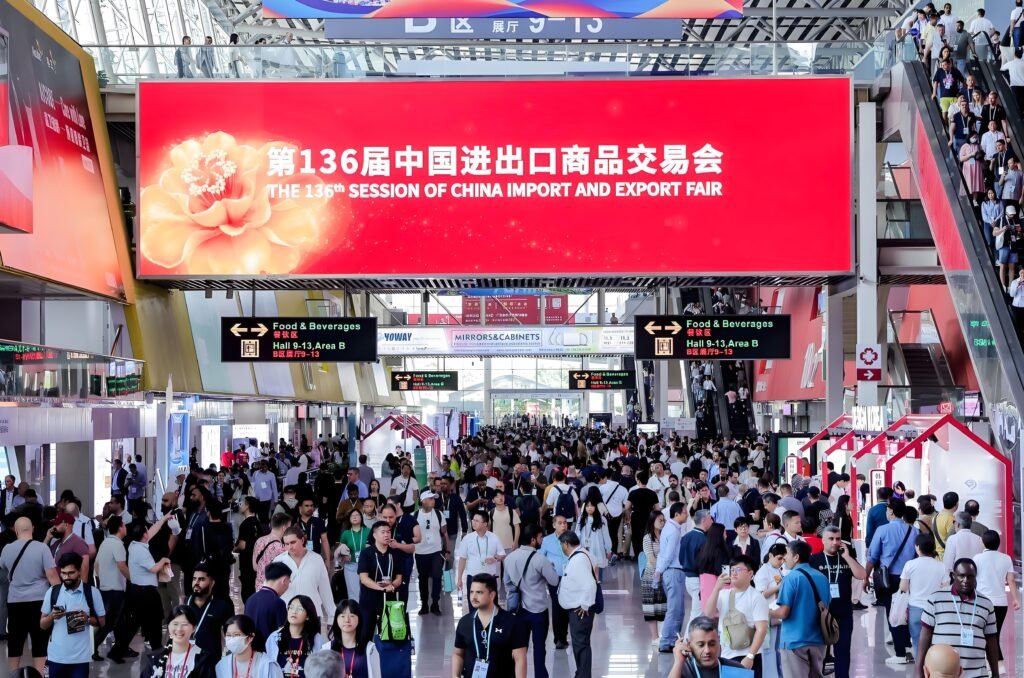
Canton Fair furniture sourcing is like speed dating. You have five days. You meet fifty suppliers. Everyone’s charming, well-dressed, and promising long-term commitment. Then you visit their actual facility and realize the “R&D center” was a rented conference room and the “factory” is a 3,000-square-meter assembly shop with no drying kiln. The fair is matchmaking. Due diligence happens after.
Phase 2 — April 23 to 27 — is the golden window for furniture. Hotel and apartment furniture dominate Halls 9.1 through 11.1. Office furniture sits in 13.2 and 14.2. Outdoor and garden fills 15.1. You can cover more ground in two days than six months of emails. But coverage isn’t the same as clarity.
The booths that look expensive? They are. A 10-by-10 meter corner booth at Pazhou costs more than some annual marketing budgets. That investment signals stability, but it doesn’t signal honesty. I’ve watched a factory display solid oak samples, then quote particleboard prices, knowing most buyers won’t inspect the container until it’s too late. The booth is the promise. The purchase order is the test.
The 90-Day Reality Gap
Industry observers estimate that roughly 60% of exhibitors at the fair are direct manufacturers. The rest? Trading companies, wholesalers, or “factory cooperatives” that pool production from multiple workshops. Telling them apart in a 20-minute booth conversation is nearly impossible. The English is too polished. The brochures too perfect. The red flag isn’t what they say — it’s what they avoid saying when you ask about production line capacity.
Based on export data patterns, the most successful buyers don’t treat the fair as a ordering event. They treat it as a filtering exercise. Collect cards. Ask uncomfortable questions. Schedule factory visits for the gap days between phases. (I learned this the hard way in Dongguan, after a “factory” turned out to be a trading company with a rented sign.)
Actually, that’s not quite right — what most buyers miss is that the fair’s real value isn’t the suppliers you meet. It’s the market intelligence you absorb. You see pricing clusters. You spot material trends. You learn which regions are pushing rattan this year and which are pivoting to aluminum. That context is worth more than any business card.
The Brand Ecosystem: Where Interi Furniture Fits
Let’s zoom out. The China furniture wholesale channels landscape isn’t binary. It’s not “Alibaba cheap” versus “Canton Fair premium.” There’s a middle tier of export-oriented manufacturers who treat trade shows as relationship builders, not volume hunts, and maintain a curated presence on Alibaba without racing to the bottom. Interi Furniture sits in that tier — a Guangdong-based operation with a footprint in both domestic project work and international hospitality supply. They don’t compete on the $68 headboard. They compete on the spec sheet that doesn’t change between sample and shipment.
In my experience, roughly one in five buyers at Canton Fair actually needs a factory like this. The other four are chasing commodity price points that make sense on a spreadsheet and fall apart in a shipping container. Knowing which buyer you are saves more money than any negotiation tactic.
Your Decision Framework: Which Channel, When
Don’t treat this like a choice between good and evil. Treat it like a flowchart.
Start here:
- You’re buying 20+ containers a year, have a China desk, and speak Mandarin (or employ someone who does).
→ Alibaba furniture China can work as a lead-gen tool. But only with independent verification. Factory audits. Pre-shipment inspections. And never — never — pay 100% upfront for a first order, even with Trade Assurance. - You’re a mid-size importer, hotel developer, or design firm buying 2–5 containers per project.
→ Canton Fair furniture sourcing is your front door. Use it to shortlist. Then visit. The booth is the handshake; the factory is the contract. - You’re a small buyer, e-commerce startup, or first-timer.
→ Start with a vetted sourcing agent or a platform with robust buyer protection. The money you “save” by going direct on Alibaba will evaporate in rework, returns, and regret.
Red flags that contradict conventional wisdom:
- A supplier who immediately offers to drop the price by 30% if you “pay off-platform to save fees.” Run. This isn’t flexibility. It’s a trap dressed as a favor.
- A booth with no production photos, only renders. Every factory has a phone. If they can’t show you a messy workshop, they don’t own one.
- An Alibaba furniture China listing where every review is five stars, every photo is a render, and the “factory” has 47 product categories. That’s not a manufacturer. That’s a trading company with a good photographer.
The checklist before you commit:
- Request a video call from the factory floor, not the showroom.
- Ask for the business license number and verify it independently.
- Demand a sample that is exactly the production spec, not a “similar” model.
- Confirm who holds the export license. If it’s not the factory, understand the markup chain.
- Budget 8% to 15% of your order value for inspection and compliance. Not as a cost. As insurance.
FAQ: The Questions Buyers Actually Ask
Q: Is Alibaba.com safe for buying furniture directly from China?
A: Safer than wiring money to a random email, but “safe” is relative. Trade Assurance helps if the product never ships or ships completely wrong. It doesn’t help if the product ships with substituted materials, incorrect dimensions, or foam that collapses in six months. Alibaba furniture China is a marketplace, not a quality guarantee. Use it to find leads. Verify everything independently.
Q: Is Canton Fair just for big buyers with container-load orders?
A: Traditionally, yes. But the floor is shifting. More exhibitors now hold stock for cross-border e-commerce. Instead of asking “What’s your MOQ?” on day one, try “Do you have stock available for immediate shipment?” You might pay 15% more per unit, but you can test the supplier with 50 units instead of 500. For Canton Fair furniture sourcing, this is the most underused strategy I see.
Q: How do I know if the Alibaba supplier is a real factory or a trading company?
A: Ask for a video call from the production line during working hours. Not a prerecorded tour. A live call. Ask them to walk to the drying kiln and show you the current batch. If they hesitate, you have your answer. Also, check the business license type. A “trading company” license means they don’t manufacture. That’s not always bad — but it’s not what they implied.
Q: Are the prices at Canton Fair negotiable?
A: Everything is negotiable. But the real negotiation happens after the fair, not on the booth floor. The booth price is an opening bid. Factory visits, sample approvals, and volume commitments move the number. Don’t expect a 40% drop on the spot. Do expect 10% to 20% movement if you commit to a timeline and pay a deposit within 30 days.
Q: Which channel is better for custom or OEM furniture?
A: It depends on your complexity. Canton Fair furniture sourcing wins for custom hospitality or project work because you can review materials in person and lock specs with the engineer face-to-face. Alibaba furniture China works for off-the-shelf items where customization means picking a color from a swatch. For anything requiring mold development, structural engineering, or compliance certification, the fair — or a direct factory relationship — is the only sane path.
The Hard Question
So here’s what it comes down to. You’re not really choosing between Alibaba furniture China and Canton Fair furniture sourcing. You’re choosing between two versions of risk. One is the risk of curated illusion — professional photos, polished English, and the assumption that a Gold badge equals a gold standard. The other is the risk of surface-level trust — polished booths, smooth talk, and the assumption that a business card equals a factory.
China furniture wholesale channels don’t have a dark side and a bright side. They have a bright side and a side you didn’t look at closely enough. The buyers who win aren’t the ones who found the “best” channel. They’re the ones who knew exactly what each channel could and couldn’t do — and planned for the gap.
What’s your next move?