

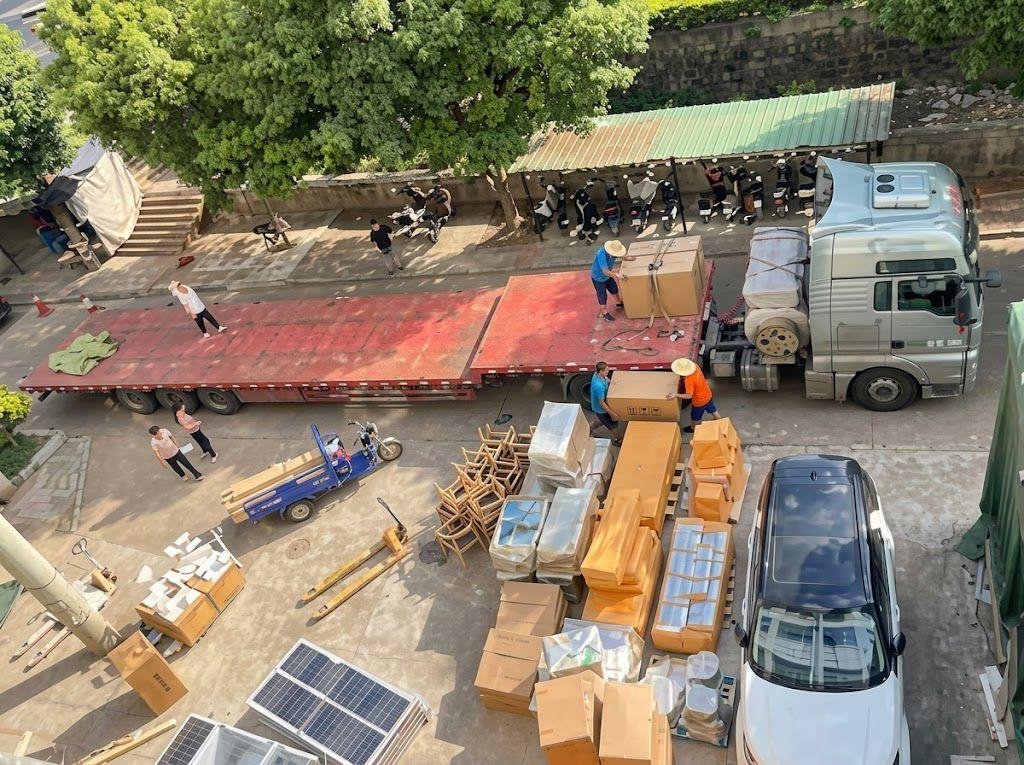
Last March, I met this guy Mike at a hotel procurement dinner in Chicago. Texas dude. Flew into Guangzhou Baiyun wearing a hard hat, clutching an Excel spreadsheet, and eight grand worth of optimism. Three days. Twelve factories in Foshan. Zero sleep. Came back bragging about 22% savings. Six months later, the container hit the dock. Navy blue had turned sky blue. Veneer bubbling like bad wallpaper. Rework, air freight for replacements, and a soft-opening delay penalty. Fourteen grand in the hole. He was nursing a bourbon, eyes glazed. “I followed the YouTube tutorials,” he said. “Walked the floor. Shook hands. Looked them in the eye.” I nearly spat out my whiskey. Looked them in the eye? This isn’t a blind date, Mike.
Let’s Start with Something Uncomfortable
Most buyers lose before they even board the plane. They lose because they actually believe China’s furniture industry works like American retail — transparent, comparable, fair. Keep dreaming.
When you buy from China, you’re not buying a chair. You’re buying guanxi, a timeline, a quality gamble, and logistics roulette — wrapped in a language barrier with a complimentary cultural confusion package. Google Translate won’t save you at 2 a.m. when your production manager goes silent. It won’t.
Here’s a rule I learned the hard way over fifteen years: if a factory makes your life easy in week one, they’re either starving or setting a trap. The good ones? They’re a pain in the ass. They challenge your specs. They tell you your design won’t survive a thirty-day container ride across the Pacific. Those are the ones worth keeping.
Key Takeaways
- “Factory direct” sounds cheap until hidden coordination costs eat your margin alive.
- The Canton Fair is a trading company’s runway. Real manufacturing happens in industrial zones you’ve never heard of.
- China furniture import success means matching your product category to the right geographic cluster, not just finding the “right” factory.
- Your payment terms and sample approval process scream rookie louder than your business card ever could.
China furniture import is the process of procuring manufactured furniture from Chinese suppliers for resale or project use. Supplier identification, sample approval, production oversight, international logistics. Looks simple on paper. In execution? That’s where buyers actually bleed.
“Cut the Middleman” Is a Trap, and the Canton Fair Is Mostly Theater
Is Your “Factory Direct” Strategy Actually Eating Your Margin?
Everyone says it. Sounds like gospel. Textbook stuff. Problem is, in China, textbooks are used to level wobbly tables.
That “middleman” you’re trying to cut? Often the only person who speaks decent English, understands your quality standards, and has local relationships to put out fires before they become container-sized disasters. I’m not saying all agents are saints. I’ve met enough lazy ones to fill a 40-foot high cube. But “direct equals cheaper”? That’s rookie math.
Think of it like this: buying direct from a Chinese factory without local support is like watching a YouTube dental tutorial and then pulling your own tooth with pliers. The tools are out there. The steps are clear. But when something goes wrong — and it will — you’ll wish you had a professional in the room.
Here’s how it actually plays out. You find a factory on Alibaba. Custom lounge chair, $340 per unit. An agent quotes $380, “sourced from their partner factory.” You do the math. Forty bucks saved per chair. Two hundred chairs? Eight grand. Champagne time.
Then the fabric arrives. Wrong. Not a shade off. Completely different. The factory swapped your specified Italian linen for a local substitute because it was “too expensive” and they didn’t want to “bother you.” Now it’s 2 a.m. and you’re on WeChat, Google Translating your way through an argument with a production manager who stopped replying three hours ago. That agent you rejected? They would’ve caught this on the cutting floor. Because they visit weekly. Because they have guanxi. Because it’s their actual job.
The real kicker? That eight grand you “saved” just became a twelve-thousand-dollar hole. Not counting the stress. Or the reputation hit with your client.
Why the Canton Fair Is Mostly Smoke and Mirrors
The biannual pilgrimage. Guangzhou turns into a carnival of booths, business cards, and terrible coffee. Should you go? Once. That’s enough.
But here’s what most people miss: the factories actually worth working with? Often not there. Or they’re buried in the back rows, one exhausted sales rep holding down the fort, while the flashy front booths belong to trading companies with glossy catalogs and rehearsed pitches.
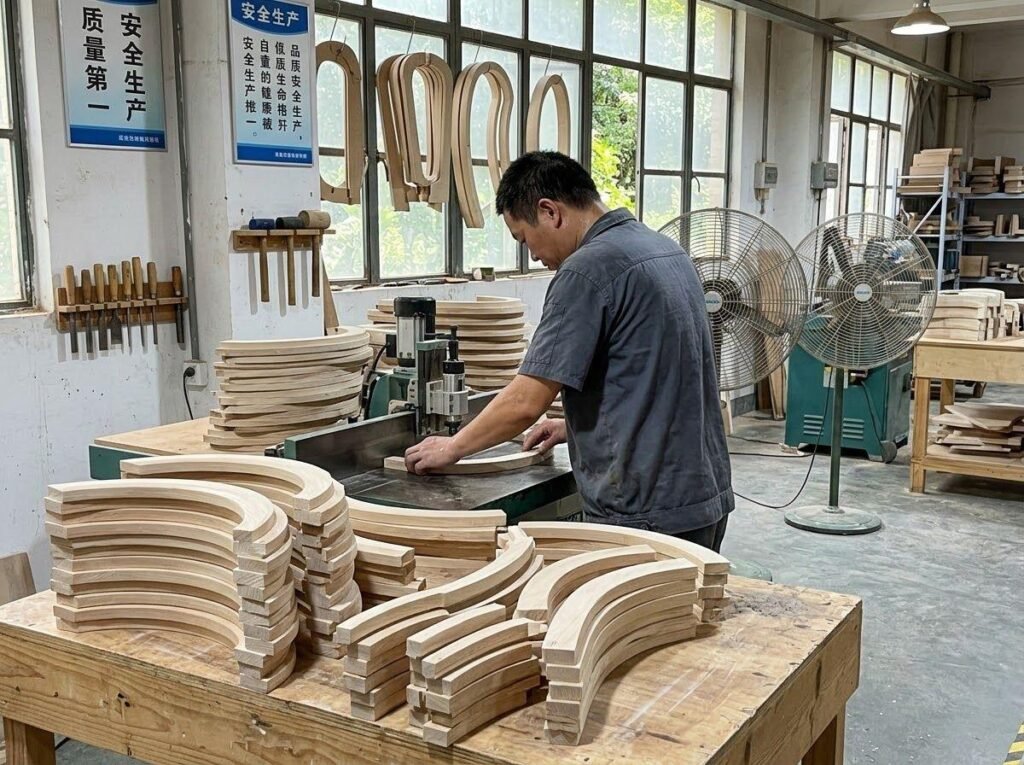
I walked the furniture hall in autumn 2024. (Wait — actually, that’s not quite right. It was the autumn session. The spring one got shuffled around by scheduling chaos.) Biggest banners? Prettiest models? Smoothest English? Trading companies. Middlemen with fat marketing budgets. The actual factory owners? Back in Longjiang. Dongguan. Panyu. Running production. Who has ten hours to stand in a booth?
The Canton Fair is good for one thing: reading the temperature. It’s a thermometer, not a pharmacy. You go to check the fever. You don’t go to pick up meds.
And here’s what stings. The buyers walking out with real deals? They already had relationships. They used the fair to grab tea face-to-face with suppliers they’ve worked with for years. The first-timer who thinks they’re going to “discover” a factory? They’re the mark. The easy target. That “Canton Fair special price”? Fifteen percent higher than normal, because that booth cost them twelve grand, and someone’s gotta pay for it.
The Geography Trap: Knowing Only Foshan Means You Haven’t Started
Are You Sourcing from a City, or from a Country?
If I got a dollar every time someone told me, “I’m going to Foshan to source furniture,” I could buy a container of Italian leather right now. Foshan is huge. It’s the Hollywood of Chinese furniture — everyone knows the name, everyone wants to go, most come back with stories that are more spectacle than substance.
But Foshan is one city. Guangdong Province alone has nearly six thousand furniture manufacturers. Six thousand. And that’s just one province.
Buyers who limit themselves to Foshan are paying a convenience tax. They’re shopping at the most visible mall in the biggest city, then acting surprised when the prices reflect that visibility.
Let me draw you a map. Solid wood dining sets? Nankang, Jiangxi. Been at it since before Foshan was famous. Office chairs and ergonomic seating? Anji, Zhejiang. That’s where the real engineering lives. Upholstery and soft goods? Dongguan and the broader Pearl River Delta. Specialists who’ve supplied European brands for decades. Outdoor furniture? Zhejiang and Fujian.
Sourcing only from Foshan is like doing all your grocery shopping at a convenience store because it’s the only place with a parking sign. Sure, you’ll find food. You’ll pay too much. And you’ll miss the good stuff.
Some buyers gravitate toward large-scale manufacturers in Foshan’s Lecong or Shunde districts, chasing big names and flashy showrooms. But others find that mid-sized specialists — operations like Interi Furniture, based in Panyu, Guangzhou, which focuses on bespoke contract furniture for hospitality and high-end residential projects — offer a completely different risk-reward equation. They’re not trying to be everything to everyone. No showroom the size of an airport. But for buyers who need custom millwork, FF&E packages, or design-driven pieces that won’t fall apart in a hotel lobby, that specialization is what matters.
The Hidden Specialists Nobody Talks About
The best factories I’ve found in fifteen years? Word of mouth. A friend’s cousin. A factory owner in Dongguan who told me over baijiu, “You need chairs? Talk to my guy in Anji. Slow as hell on email, but his welding is perfect.”
These aren’t trade secrets. They’re just not on the first page of Google.
Here’s what usually happens: a buyer searches “furniture factory China,” clicks the first five results, sends RFQs, and thinks they’re being thorough. They’re not. They’re being lazy. The real work of China furniture import is mapping the ecosystem. Understanding that Longjiang is different from Shunde. That a factory in Nankang looks at wood moisture content differently than a factory in Foshan — because they’ve been staring at timber for forty years.
Period.
| Region | Specialization | Buyer Profile | Typical Lead Time |
|---|---|---|---|
| Foshan / Shunde | Broad range, showrooms, export-ready | First-time buyers, retail chains | 35–50 days |
| Dongguan / Panyu | Upholstery, custom contract, hospitality | Hotel FF&E, interior designers | 40–60 days |
| Anji, Zhejiang | Office chairs, ergonomic seating | Commercial projects, B2B | 25–40 days |
| Nankang, Jiangxi | Solid wood, casegoods, traditional styles | Residential, mid-market | 30–45 days |
| Zhejiang / Fujian | Outdoor, metal, wicker | Hospitality outdoor, retail | 20–35 days |
The Quality Assurance Fantasy
Can You Really Trust That Perfect Sample?
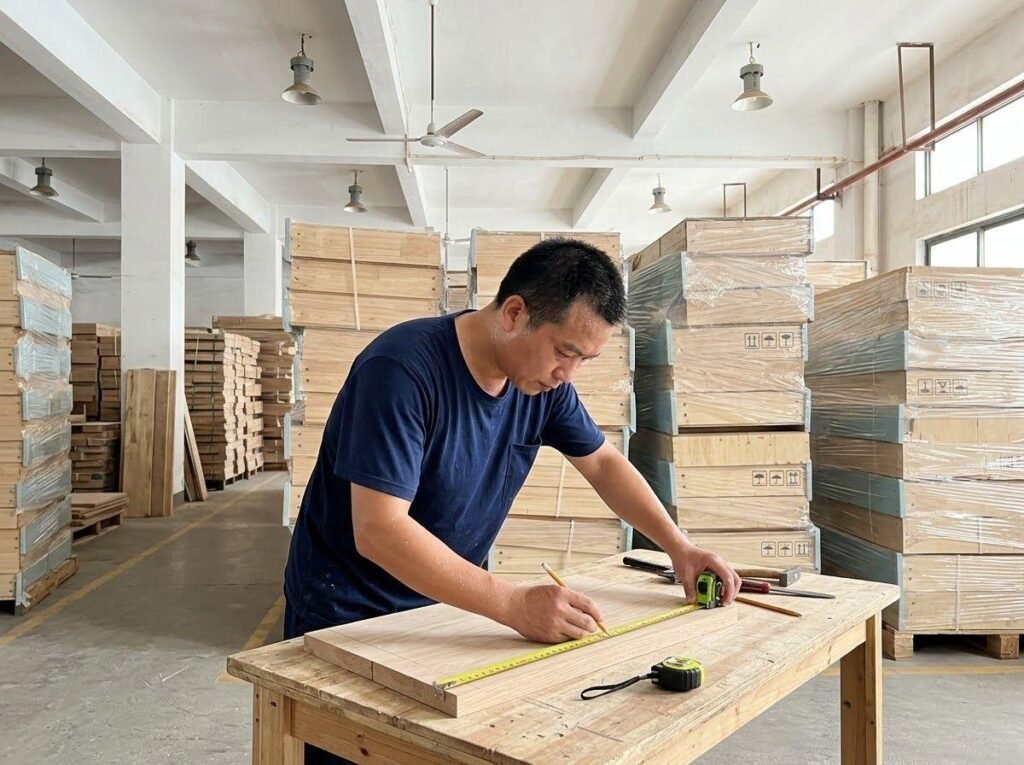
The sample room is the most dangerous place in any Chinese furniture factory. Best workers assigned there. Best materials stacked there. Production manager personally inspecting every stitch, every joint, every finish. It’s a stage. You’re the audience.
I’ve seen sample rooms that looked like museums. Perfect lighting. Climate controlled. Dust-free. Then I walked fifty meters left onto the production floor and saw workers using glue pots that hadn’t been cleaned in weeks. Veneer sheets stacked against a wall where humidity was pushing 85%.
Judging a factory by its sample is like judging a restaurant by its bathroom. Tells you something. Doesn’t tell you what the food tastes like.
The gap between sample and production? That’s where most China furniture import nightmares start. You approve a gorgeous prototype. Sign the PO. Wire the deposit. Production kicks off. Suddenly the foam density is different. The fabric dye lot shifted. The hardware went from German hinges to some no-name brand you can’t even find on Alibaba.
Why? The sample was built with care, time, and attention. Production is built with quotas, deadlines, and the constant pressure to shave costs. Unless you have boots on the ground — an agent, a QC inspector, or your own two feet on that factory floor — you’re flying blind.
And yes, this happens more than anyone admits. Even with “reputable” factories. Even with ISO certifications. Even with factories that supply big Western brands.
Are Your Payment Terms Scaring Away the Best Factories?
Here’s a truth that contradicts everything the risk-management blogs preach: if you insist on 30% deposit, 70% before shipment, zero flexibility, you’re broadcasting distrust. And in a relationship business, distrust is expensive.
The best factories — the ones with waiting lists, the ones that turn down orders — don’t need your business badly enough to accept punitive terms. They’ll take the buyer offering 50% deposit, 50% against copy of B/L. Or the one who establishes a letter of credit after the first successful order.
I’m not saying throw caution out the window. Your payment terms are a negotiation tool, not a bulletproof vest. The factory that immediately agrees to 30/70 with zero discussion? Either desperate for cash, or planning to make it up somewhere else. Hidden costs. Substituted materials. Rushed production.
Think about it.
A Framework for Cutting Through the Noise
Before you book that flight to Guangzhou, run through this. Be honest with yourself.
Pre-Trip Reality Check
- Have you defined your product category precisely? “Hotel furniture” isn’t a category. “Upholstered lounge chairs with fire-retardant foam and commercial-grade fabric” is.
- Do you know which Chinese industrial cluster actually specializes in your product? If not, you’re not ready to fly.
- Did you budget for third-party QC inspection? If your answer is “I’ll handle it myself,” add three grand to your trip cost for the mistakes you’re going to miss.
The Three-Visit Rule
- Visit one: Showroom or Canton Fair booth. Take photos, collect cards, ask questions. Don’t commit.
- Visit two: The actual factory floor. Not the sample room. The floor. Raw material storage, worker stations, waste disposal. Won’t let you see the floor? Walk away.
- Visit three: Mid-production check. This is where the real factory shows its face. On schedule? Materials match your approval? Craftsmanship consistent?
Red Flags That Defy Conventional Wisdom
- They agree to everything immediately. A factory that says “yes” to every spec, every timeline, every term without pushback is either lying or incompetent. The good ones argue. Tell you your timeline is unrealistic. Suggest better materials. Push back.
- Their English is too good. Fluency is nice. But a sales rep who speaks perfect English and has never set foot on the production floor? Red flag. You want to talk to the production manager. Through a translator if you have to.
- No export clients in your market. Can’t name three brands or buyers they’ve supplied in North America or Europe? They don’t understand your quality expectations. No matter what they promise.

The Questions Buyers Actually Ask
Q: Do I need to speak Mandarin to buy from China successfully?
A: No. But you need someone in your corner who does. A good agent, a reliable translator, or a factory with an English-speaking project manager you can actually reach during China business hours. Google Translate won’t save you when a production issue hits at 11 p.m. China time.
Q: Is it true that Chinese factories always copy your designs and sell them to other buyers?
A: Depends who you’re working with. Mass-market factories with no export reputation? The risk is real. Specialized contract manufacturers serving hotel chains and designer brands? Their entire business depends on discretion. Protect yourself with clear contracts, but more importantly, choose factories whose client base would evaporate if they got a reputation for copying.
Q: How do I know if I’m talking to a real factory or a trading company?
A: Ask for a video call from the production floor. Ask for their business license and check the registration scope — “manufacturing” should be listed, not just “trading.” Ask technical questions: “What CNC router do you use?” “What’s your kiln-drying process for solid wood?” A real factory answers without hesitation. A trading company Googles it while you’re talking.
Q: Should I visit the factory in person, or is a video tour enough?
A: For your first order over fifty grand? Get on the plane. Video tours are curated. Smells, sounds, and chaos don’t transmit over Wi-Fi. The dust in the air, the workers’ attitudes, the condition of the raw material stack — these tell you more than any polished video ever will.
Q: Is importing furniture from China still worth it with current tariffs and shipping costs?
A: Yes — but only if you’re strategic. Commodity items competing purely on price? The math got harder. But custom pieces, specialized contract furniture, or designs requiring craftsmanship at scale? China still offers capabilities that are tough to replicate elsewhere. The value proposition shifted. It didn’t disappear.
The Real Question
Fifteen years of walking factory floors. Eating questionable lunches in Dongguan. Watching buyers make the same mistakes with increasing confidence.
I’ve settled on one principle: you’re not paying for furniture. You’re paying for the story you can tell about how that furniture was made.
Mike’s story? About cutting out the middleman. The buyer who spent three months mapping the right factory in the right cluster, built a real relationship, and paid for proper QC? Her story is about product that arrived on time, on spec, and on budget.
Which story do you want to tell?