

Last August I stepped out of Guangzhou Baiyun Airport into what felt like a sauna wrapped in a blanket. Forty-two degrees, easy. The cab driver was a Hunan guy who’d been hauling buyers around for twelve years. He asked, Lecong or Longjiang? I said Longjiang. He caught my eye in the rearview. “Factory audit?” I nodded. He laughed. That laugh. You know the one.
In the back sat Mike, a procurement director out of Miami for a boutique hotel group. Polo shirt soaked through at the armpits. Three hours earlier he’d stood in a six-floor showroom in Foshan, staring at a marble dining table lit like it was in the Louvre. Brass base so polished you could shave in it. He turned to me and said, “This trip just paid for itself. We’re cutting FF&E by forty percent.” I didn’t say anything. Not yet.
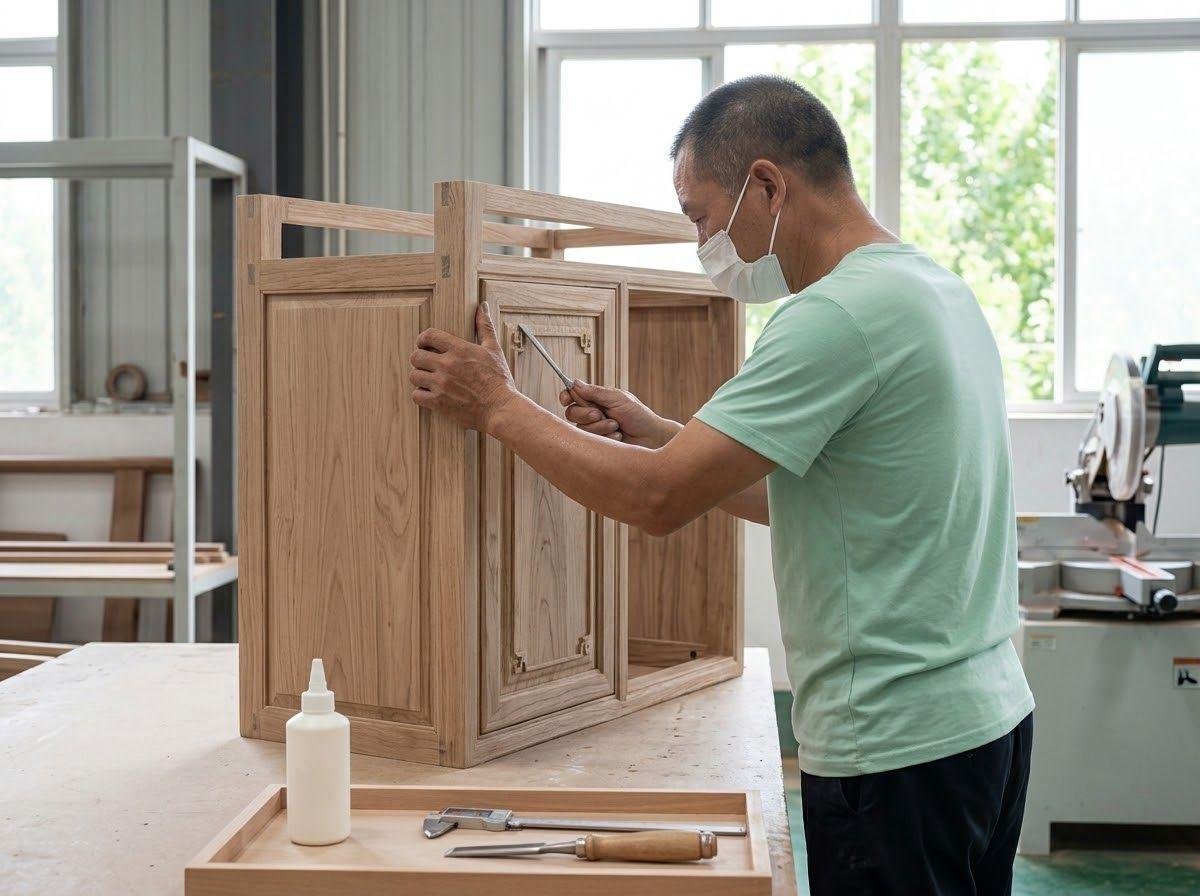
Three hours later we were in Longjiang. Concrete floor, not sealed. A worker squatting, hand-sanding white oak with no mask. Wood dust floating in the slanted afternoon light like gold flakes, or maybe just dust. Mike pointed at the half-finished pile. “That’s the table?” I said, “That’s where it was born.” He didn’t speak. His face changed. The showroom is a stage. The factory floor is backstage. And the gap between them? That’s where buyers lose their shirts.
China furniture sourcing is, at its core, the process of digging through industrial clusters in Guangdong, Zhejiang, and Jiangxi to find people who can actually build what you drew. It sounds like procurement. It’s archaeology. You dig.
The Brutal Truth
Most buyers lose before they even land in Guangzhou. Not on price. On information asymmetry. The factory knows your budget. Not because they’re psychic. Because your designer posted renderings on Instagram. Because your LinkedIn says you’re doing an eighty-seven-room boutique hotel. Because your “confidential” mood board got forwarded to three WeChat groups. They know your project better than you do.
Here’s a rule of thumb: a quote that lands in twenty-four hours isn’t a quote. It’s bait. Real numbers take three days. Material loss calculations. Production slotting. Whether they already booked an IKEA run this month. Whether the foam supplier jacked prices overnight. Twenty-four hours? That’s copy-paste. Or guesswork.
And that “factory director” who takes you to dim sum and speaks English like he went to Oxford? Might not even work there. Business card says Production Director. Actually a freelance broker running four factories. Four factories that might share a canteen in the same industrial park, poaching each other’s workers, not speaking at lunch. And you thought you were getting “factory direct.” In Chinese contract furniture, direct doesn’t exist. There’s only the markup you can’t see.
Key Takeaway
- China furniture sourcing isn’t shopping. It’s mining. Preparation beats luck. Verification beats quoting.
- Showrooms in Lecong and Foshan are theaters, not warehouses. Between the sample and production? A whole province.
- The lowest bid is usually the most expensive mistake. Pricing accuracy beats low pricing by a factor of ten.
- Mid-sized specialists often outperform giants for custom work. If you know what you want and you’re willing to camp out in the workshop.
Why the Factory Floor Looks Nothing Like the Catalog
“They Swapped My Product” — No, They Evolved It
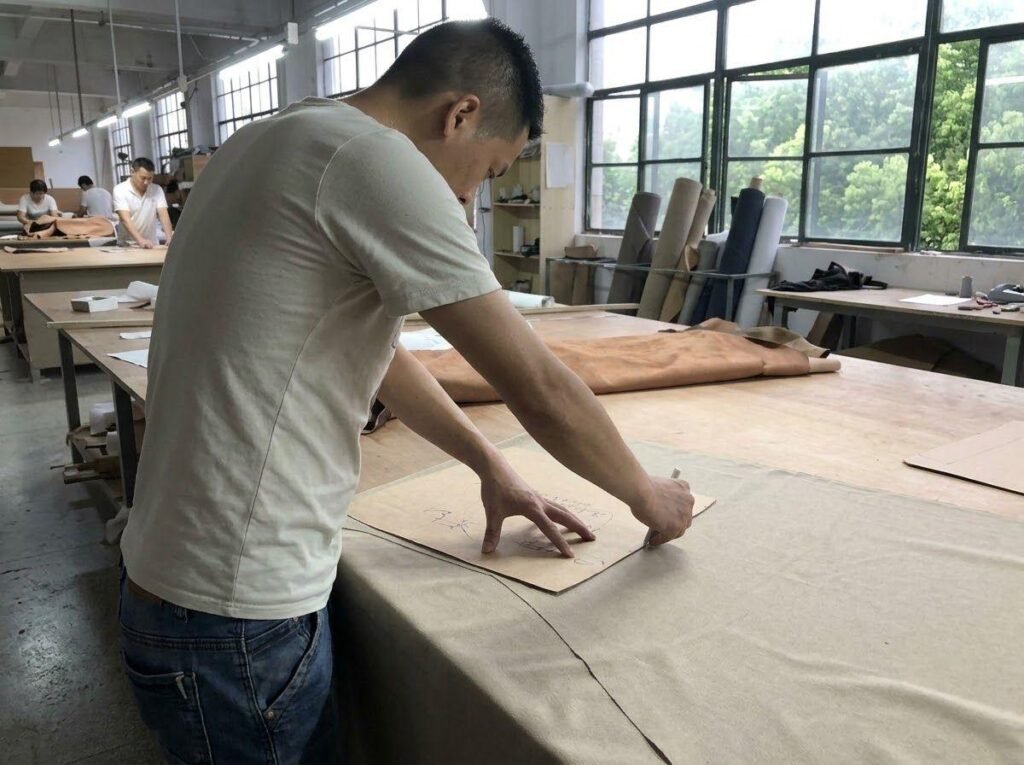
Mike’s chair. The one from the showroom. Velvet, brass legs, proportions so good you wanted to steal it. He ordered two hundred units. Six months later the container arrived. SKU matched. Photo on the carton matched. But something was off. Tufting depth shallow by three millimeters — don’t laugh, under lobby lighting three millimeters changes the whole face of the piece. The brass had shifted from warm gold to something that looked like spray-painted plastic. He called me, furious. “They swapped my product!”
Swapped? No. They optimized. That showroom sample was built six months ago with leather from a supplier who’d since gone bust, tufted by a guy who’d since quit. New worker. Different foam batch. To the factory, a chair is alive. It breathes. It changes. To you? It’s a contract. A legal document. That mismatch is where the nightmares start.
What does China furniture sourcing really feel like? Adopting a stray dog. You think you’re buying an object. You’re not. You’re entering a relationship with a production organism that shifts based on raw material availability, whether the owner’s second uncle is managing the workshop this month, and if the workers went home to harvest wheat. You don’t control it. You learn it.
The Guy with Four Business Cards
Think you’re talking to the boss? You’re talking to the boss’s nephew. Or worse, a trading company. Guy rents a desk in a business center, prints four sets of cards, four company names, one phone number. I learned this the hard way in Dongguan. Three days. Became “brothers” with the “Production Director.” Drank three times. Found out he represented four factories. Two in the same park. Shared a canteen. Workers poached each other. And him? Whoever paid the better commission got the push. Information broker. Not illegal. But if you don’t know the game, you think you’re playing chess while he’s playing poker.
The Pricing Game Nobody Explains
The “All-In” Quote That Never Is
Factories play a game. Call it “lowball hook, variation knife.” You send drawings. They send back a number so sweet you want to email your CFO with confetti. You sign. Then it starts. “Seasonal wood shortage” — upgrade available. “Fabric discontinued” — similar option, twelve percent more. “Cartons need humidity resistance? You know Guangdong weather.” That’s extra.
By month four your “all-in” quote is unrecognizable. Fraud? Usually not. Asymmetry. You thought the quote was a promise. They thought it was an opening position. Cultural difference? No. Different dictionaries for the word “contract.” You grew up in New York. They grew up in Longjiang. Same word. Different religion.
The real cost of Chinese contract furniture isn’t the unit price. It’s uncertainty cost multiplied across two hundred hotel rooms. You ever do that math? Fifty bucks difference per chair, two hundred chairs, that’s ten grand. But if delivery slips three weeks and your soft opening gets pushed, what’s your OTA presale loss? Half a million? A million?
Here’s the analogy. You’re buying a used car from a mechanic who only speaks in metaphors. Might get a steal. Might get a transmission that drops out on the highway. The difference? Preparation. You show up with a technical package so detailed the factory manager yawns — material certifications, approved sub-lists, packaging diagrams, photographic defect standards, even glue brand. Boring? Yes. Boring saves lives. Or rather, the problem isn’t the factory. It’s the expectation. You think you can PDF your way to a finished container? That’s Amazon. This isn’t.
The MOQ Trap Nobody Escapes
Minimum order quantities are another graveyard. That dining chair at eighty-nine dollars? That’s the five-hundred-unit price. You need eighty? Suddenly it’s two-ten. Or they say sure, eighty at eighty-nine, and quietly swap foam density from 35kg/m³ to 28kg/m³. Guest forty-seven sits down. Sinks. You never know. Most buyers solve this by over-ordering. “We’ll use it on the next project.” You won’t. Those chairs sit in a warehouse for three years and sell as scrap. I’ve seen it. Too many times.
The Factory Food Chain: Who Eats What
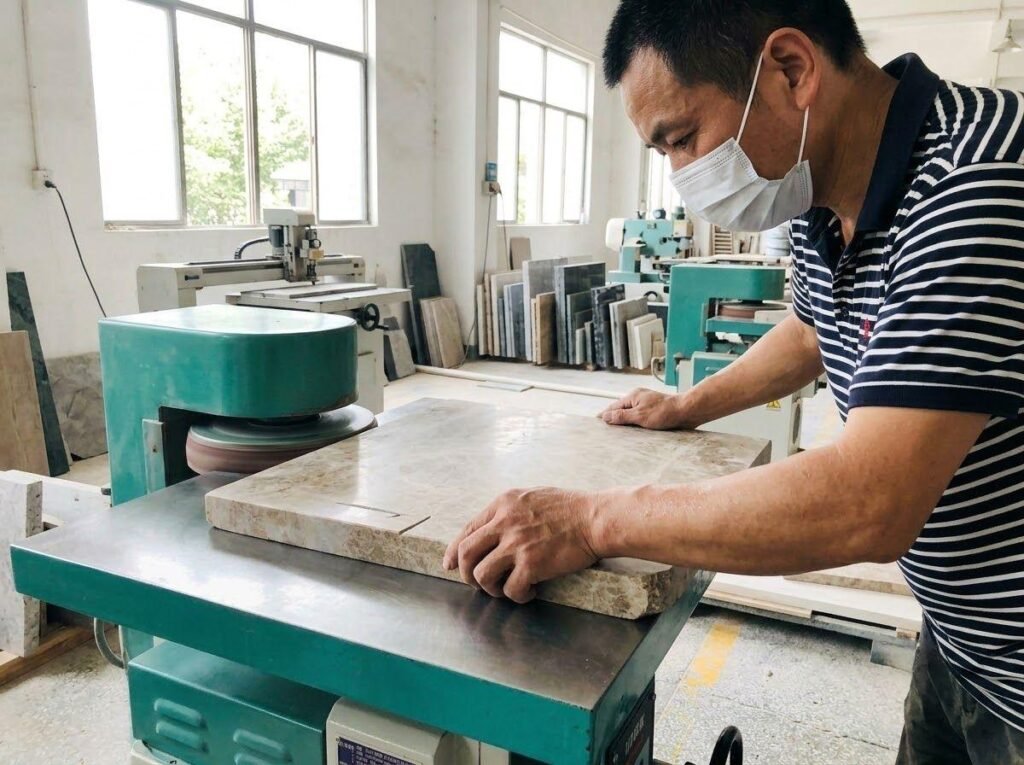
Walk through Guangdong’s furniture belt and you’ll spot three species.
First, the whales. Two-thousand-plus workers. ISO certificates framed like diplomas. Production lines like highways that never stop. They make furniture the way Coca-Cola makes soda. Consistent. Predictable. And rigid as a board. Want to change a sofa leg profile? No. Or yes, with a forty percent bump and a six-month wait. They don’t care about your order. You’re a rounding error in their annual revenue. Your designer changed the drawing three times? They blacklisted you till next year.
Then the mid-sized specialists. Operations like Interi Furniture, working custom hospitality and high-end residential pieces out of Guangdong. Usually running one-fifty to four hundred workers. Woodworking and upholstery in-house. Still remember what a change order looks like. In Chinese contract furniture, scale isn’t everything. Fit is. Some buyers head to Foshan for the giants and their standardized volume. Others find that mid-sized players — shops like Interi Furniture that live in a specific niche — offer a completely different risk-reward trade. Flexible. Technical team on speed dial. But less raw material buying power than the whales. Which one? Depends on your luck. And your purchase order.
Finally, the workshops. Family-run. Forty workers. One master who can work miracles on a CNC router. Another guy who handles all English emails via Google Translate, turning “confirm the delivery” into “conform the delivry.” Corporate buyers fear them. They shouldn’t. Small-batch custom work — bespoke headboards, statement lobby pieces — they often crush the whales. The trick is matching. Right job to right animal. Don’t send an aircraft carrier to pick pearls.
| Factor | Large-Scale Volume House | Mid-Sized Specialist | Small Family Workshop |
|---|---|---|---|
| Best for | Standardized hotel chains, repeat SKUs | Custom hospitality, designer residential | Bespoke pieces, small batches, rapid prototyping |
| Flexibility | Low — spec changes are expensive | Medium-high — technical teams accessible | High — owner often on the floor |
| Pricing | Competitive at volume; rigid below MOQ | Mid-range; value in customization | Variable; depends on relationship and season |
| Lead time stability | High for standard items; poor for custom | Moderate; honest about capacity | Unpredictable; either magic or disaster |
| Quality consistency | High within frozen specs; poor if spec drifts | Moderate to high; smaller batches allow oversight | Rollercoaster; requires constant babysitting |
| Communication | Layered; slow; often through trading arms | Direct; engineers usually available | Personal; language barriers are real |
Your Pre-Flight Checklist — Don’t Be a Tourist
Before you book that ticket to Guangzhou, run this. I don’t care how experienced you are. Ego is expensive here.
The Basics
- Lock down your tech pack. Not a mood board. Not a Pinterest folder. Dimensions, materials, finishes, foam densities, fabric rub counts, hardware brands, carton construction. If it doesn’t bore you, it’s not detailed enough. The factory manager should yawn. That’s the sign.
- Verify the real factory address. Not the office on Alibaba. The workshop. Google Earth it. Look for a loading dock. No dock? Not a factory. Maybe a warehouse. Maybe a photographer’s studio.
- Ask for production photos of a current order. Any factory that can’t show work-in-progress within forty-eight hours is either too chaotic or too shady. (And yes, there are more shady ones than anyone admits.)
The Red Flags
- A factory that says yes to everything. “Two-week delivery?” Sure. “Fifteen percent cheaper?” No problem. “Recycled foam?” Absolutely. That’s not flexibility. It’s desperation. Good factories push back. They tell you the timeline is fantasy. They warn you the fabric will pill. They say the structure will crack in six months. Pushback is competence. Nodding is a warning sign.
The Decision Tree
- Need five hundred identical armchairs for a hotel renovation? → Giant in Longjiang or Anji. Accept the rigidity. Freeze the spec. Sign and don’t look back.
- Need eighty custom pieces with mixed materials and a tight install window? → Mid-sized specialist. Budget fifteen percent more. Sleep better. Worth it.
- Need four show-stopping lobby pieces that’ll end up in Architectural Digest? → Small workshop. Hand-hold every step. Bring your own QC. Daily photos. Daily.
One last thing. Everyone says “visit the factory.” They’re right. But nobody tells you when. Don’t go during screening. Don’t go to “see what’s out there” — that’s tourism, not business. Wait until you’ve received three detailed quotes, compared them, and locked in one possible partner. Then go to verify. Verification is ten times cheaper than exploration.

FAQ: The Questions Buyers Actually Ask (But Are Afraid to Sound Dumb)
Q: If I find a factory on Alibaba with five gold stars and ten years of history, am I safe?
A: No. Alibaba ratings track payment history and platform activity, not production quality. I’ve seen factories with pristine online profiles outsource one hundred percent of orders to unvetted subcontractors. Online verification is a starting line, not a finish line. The only credential that matters: can you walk into their workshop unannounced? If yes, talk. If no, walk.
Q: My designer says we should specify everything down to the glue. Is that overkill?
A: For residential, maybe. For a one-hundred-fifty-room hotel with three hundred beds and four hundred fifty nightstands? It’s underkill. Specify wood species, veneer grade, foam density, fabric certification, hardware brand, carton construction, edge-banding process. The factory won’t follow all of it. But specifying forces them to acknowledge deviations. And deviations are where lawsuits come from. And where you get the 2 AM call that a bed collapsed.
Q: Can I trust a factory’s in-house QC team, or do I need third-party inspection?
A: Depends on the factory and your risk tolerance. In-house QC at a large, export-certified operation is usually competent. In-house QC at a forty-person workshop is often the owner’s cousin who needed a job. For first orders above one hundred thousand dollars, hire third-party. SGS, Bureau Veritas, whoever. For repeat orders with a proven partner, in-house plus random spot checks works. But never skip inspection entirely. That’s not trust. It’s laziness. And laziness is expensive in this business.
Q: Why does my freight forwarder in Shenzhen know more about my factory than I do?
A: Because forwarders are intelligence agencies. They handle cargo from hundreds of factories. They know who ships on time, who repackages goods at midnight to hide defects, who got blacklisted by Marriott last quarter, who had a container sent back for formaldehyde failure. Buy your forwarder dinner. Hot pot, cheap. Ask questions. Talk less. You’ll learn things no textbook teaches.
Q: Is sourcing large-scale furniture in China still worth it, or should I look at Vietnam, Mexico, or Turkey?
A: Depends what you’re buying. For solid wood, Anji and Nankang still dominate global supply chains. For upholstered hospitality, Guangdong’s ecosystem — fabric mills, foam suppliers, hardware makers, all within a two-hour drive — is unmatched on earth. Vietnam competes on price for basic casegoods but struggles with complex custom work. And guess what? A lot of Vietnamese factories import raw materials from China anyway. Mexico wins on speed for North American buyers but lacks depth. Turkey does well in mid-market upholstery. China isn’t always the answer. But for complex, large-scale, custom commercial furniture, it’s still the default. The question isn’t whether China works. It’s whether you do.
The Only Lesson That Matters
Fifteen years. I’ve walked factory floors in Longjiang, eaten roast goose in Lecong that gave me three days of regret, watched brilliant projects collapse because someone communicated “walnut” differently in Dongguan than in Shanghai. I’ve settled on one principle. The buyers who win in China aren’t the ones with the biggest budgets or the thickest spec books. They’re the ones patient enough to treat the relationship like a marriage, not a transaction. They visit. They ask annoying questions. They remember the QC guy’s daughter’s name. They understand that on the other side of that purchase order are human beings working six-day weeks in buildings that would never pass a Western safety inspection. Hands scarred. Eyes sharp.
So. Is China furniture sourcing right for your project? Here’s a better question: are you willing to do the homework? Because the factories are there. The craft is real. The savings are possible. But none of it jumps out of a PDF. You have to go get it.
See you in Longjiang. I’ll be in the back of the workshop, squinting at a veneer sample under a fluorescent light that flickers. Bring coffee. Two cups. And bring your tech pack.