

It was late November. Foshan. A factory out in Shunde district. The air in the assembly warehouse tasted like cheap PU lacquer and sweat. We were hovering over a custom reception desk—a $250,000 hotel lobby centerpiece that was currently looking a lot like expensive firewood.
My client, a procurement director for a Vegas hospitality group, was aggressively digging his thumb into a gap. Four millimeters. It sat exactly where a brushed brass inlay was supposed to kiss the edge of a walnut veneer. He was losing his mind. Swearing. Pacing the concrete floor.
The factory owner? Guy was just standing there in a wrinkled polo shirt, casually dragging on a Chunghwa cigarette. He looked genuinely baffled by the American’s meltdown.
To the buyer, that tiny gap represented a total breach of contract. A complete failure of basic engineering.
To the factory boss, it was just wood. Wood doing what wood naturally does when you try to machine it during a heavy, humid Guangdong summer.
I see this exact nightmare play out constantly. Buyers fly into Baiyun airport clutching their pristine iPad renders. They operate under this collective delusion that a crisp vector line on a screen instantly translates to a perfectly routed board on a CNC machine. It doesn’t. You can waste six solid months arguing over letter-of-credit terms and finish swatches. But if you never actually sat down in that dusty factory office and negotiated your China manufacturing tolerance down to the exact millimeter?
You are gambling with your containers.
The Brutal Truth About Factory Floor Realities
Let’s drop the corporate sourcing seminars for a minute and look at how the floor actually operates. China manufacturing tolerance isn’t some objective ISO standard. It is a highly fluid, highly localized cultural and financial negotiation.
Western buyers love to tell themselves that precision is just a matter of the factory “caring more” about the craft. Nonsense. Precision eats time. And time absolutely murders factory margins.
When a Chinese supplier finally caves and accepts that rock-bottom target price you hammered them on for three weeks, they aren’t planning to operate at a loss. They aren’t running a charity. They plan to widen the margins of error so the assembly line can run faster.
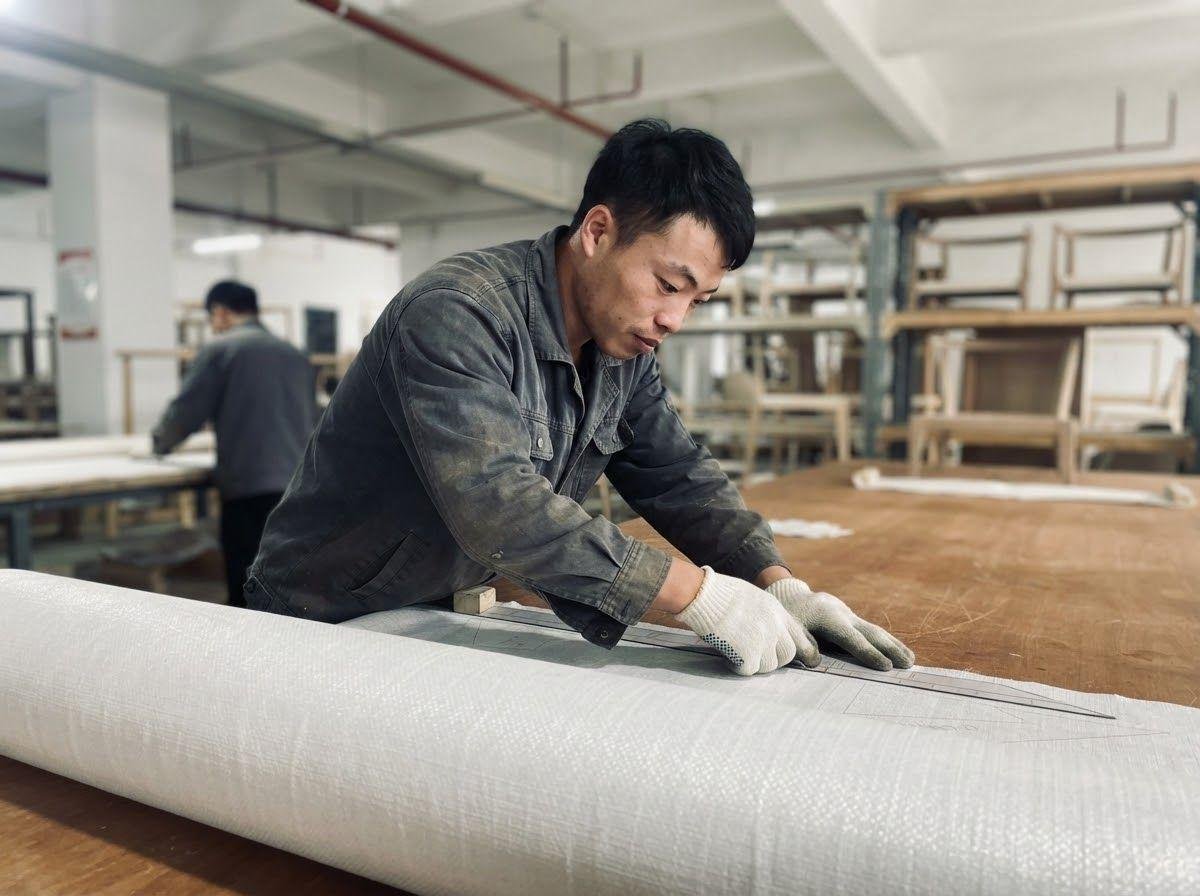
Look at the guys working the floor. They are often paid piece-rate. If a chair leg sits 2mm off-kilter, a cheap wholesale factory just forces the piece into a pneumatic clamping jig. They fire an extra brad nail into the joint, smear on some tinted wood filler to hide the crime scene, and shove it down the line. Keep it moving. A premium shop, on the other hand, tosses that same leg in the scrap bin.
Here is the reality of the situation. If you refuse to define your acceptable variance in a signed QC document, the factory boss will define it for you based on whatever protects his daily output quota.
The “Write This Down” Sourcing Rules
- Wood is a sponge. Seriously. Solid timber needs a 2-3mm allowance simply for moisture fluctuations during a 30-day ocean transit. Don’t fight physics.
- Precision equals money. The internal allowance granted by the floor manager directly mirrors the per-unit price you squeezed out of the sales rep.
- Paper is cheap. Your Chinese furniture specs mean absolutely nothing unless they are tied to harsh, actionable financial penalties in your final inspection manual.
- Materials behave differently. Never demand the same variance for mild tubular steel that you’d expect from kiln-dried European oak.
The Anatomy of a Specification Gap
Sourcing loose furniture out of Dongguan is exactly like baking sourdough bread. You can use the exact same recipe, the exact same oven, and the exact same flour. But if it rains on a Tuesday afternoon, the dough goes rogue.
Wood breathes. It expands. It twists. I’ve seen insanely tight, perfectly flush joints leave a Longjiang workshop looking like gallery pieces. Five weeks later? They arrive in a bone-dry Nevada warehouse looking like a bomb went off inside the crate.
You hand over your 50-page tech pack. The factory rep pours you some Tieguanyin tea, nods enthusiastically, and chops the document with their red star stamp.
You think you’re safe. You aren’t.
The absolute most dangerous word in Chinese manufacturing is “Yes.” When a supplier smiles and immediately agrees to a 0.5mm variance on an ash dining table, they are lying to your face. They know it’s physically impossible at their price point. They just figure you’re flexing your authority, so they treat your strict specs as an opening bid.
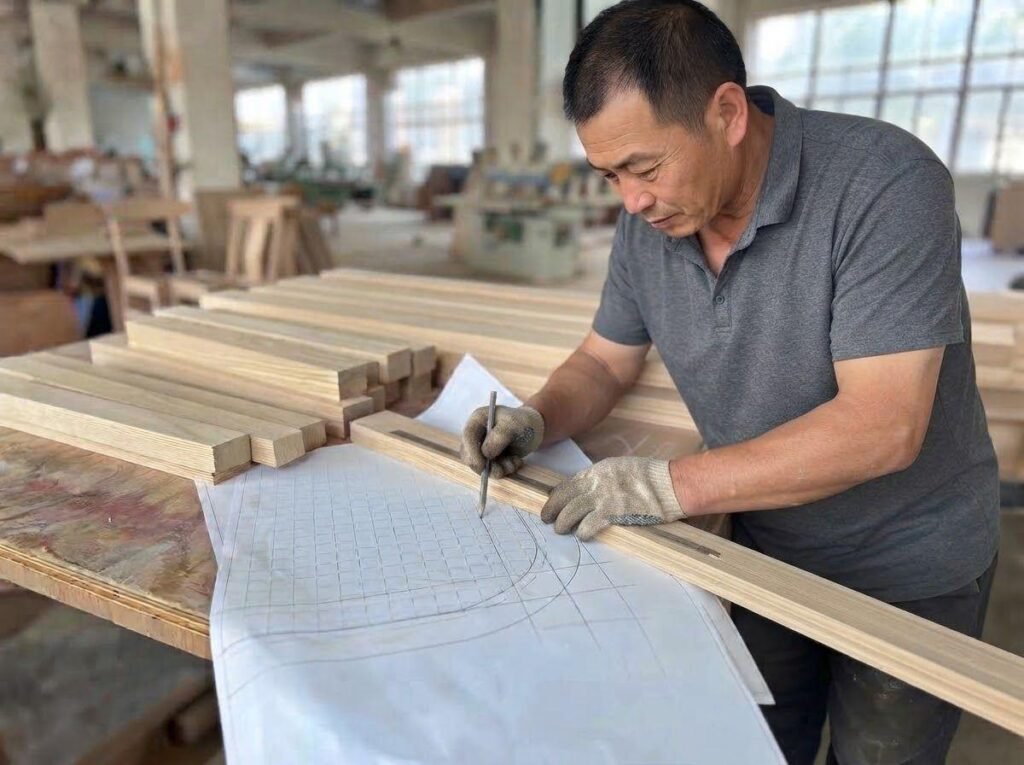
Worse still? The guy actually running the production floor never even sees your English tech pack. He gets a butchered, translated cut-sheet from the drafting room. And you can bet that the internal CAD guy—making maybe 6,000 RMB a month—already quietly rounded your impossible decimal points up to something the workers can actually hit before they clock out at 6 PM.
The Illusion of German Machinery
“But their CNC is a brand-new German Homag! I saw it on the tour!”
I hear this defense all the time from junior buyers. Great. The machine is German. Who buys the blades? A half-million-dollar router only cuts clean if the tooling is razor sharp. Fresh diamond bits yield perfect, zero-tolerance cuts. But bits are an expensive overhead cost.
If the factory owner decides to swap router bits weekly instead of daily to save a few hundred kuai, by Thursday afternoon, that bit is chewing the MDF. It isn’t cutting it anymore. Suddenly your pristine 1mm tolerance blows out to 3.5mm because the edge is frayed. World-class gear run by cheap management will always pump out wildly inconsistent junk.
The Material Reality Check
You need a baseline before you start screaming at a supplier on WeChat. Asking for aerospace precision on a rustic pine frame just makes you look incredibly green.
| Material Category | Unspoken Factory Tolerance | What You Should Actually Demand | The Risk of Pushing Too Hard |
|---|---|---|---|
| Upholstery (Foam/Fabric) | ± 1.5 to 3.0 cm | ± 1.0 cm | Over-stuffed, rock-hard seating that ruins the designer’s intended ergonomic pitch. |
| Solid Wood (Casegoods) | ± 3.0 to 5.0 mm | ± 1.5 to 2.0 mm | Insane scrap rates that the factory will secretly try to bill you for on the next PO. |
| MDF / Veneer panels | ± 2.0 mm | ± 1.0 mm | Rushed pressing on the line, leading to edge-banding glue failure a few months down the road. |
| Welded Metal Frames | ± 3.0 to 4.0 mm | ± 1.0 to 1.5 mm | Aggressive grinder marks that show right through your expensive matte powder coat. |
Ecosystems of Precision
Manufacturing in this country isn’t a monolith. Not even close. Tolerance standards shift violently depending on which specific ecosystem you happen to step into.
Walk into a massive, 5,000-man facility in Zhejiang cranking out flat-pack knock-down desks for big-box retail stores. The noise is deafening. The dust is everywhere. That entire building is built for raw, unfiltered speed. Tolerances are loose on purpose. A drawer gap is 4mm on the left and 2mm on the right? Does the track slide without jamming? Yes? Box it and ship it.
But you aren’t forced to buy from the volume monsters. A lot of smarter buyers figure out that mid-sized specialists offer a way better risk-reward setup. Take operations like Interi Furniture, for example. They heavily target the B2B custom project and international hospitality sectors. Because they deal directly with fussy interior designers and complex hotel fit-outs, their baseline tolerances naturally sit much closer to Western architectural norms.
They actually know that a wonky brass leg on a luxury side table isn’t just a minor “oops.” It’s a glaring defect that will get an entire container flagged by an aggressive hotel developer. The goal of sourcing isn’t hunting for a magical factory that does everything perfectly. It’s finding a shop whose worker culture naturally matches the precision your specific product actually requires.
Actionable Framework for Locking Down Specs
So how do you actually police these numbers without setting up a cot on the factory floor and sleeping there? You have to build the enforcement mechanism directly into the commercial paperwork.
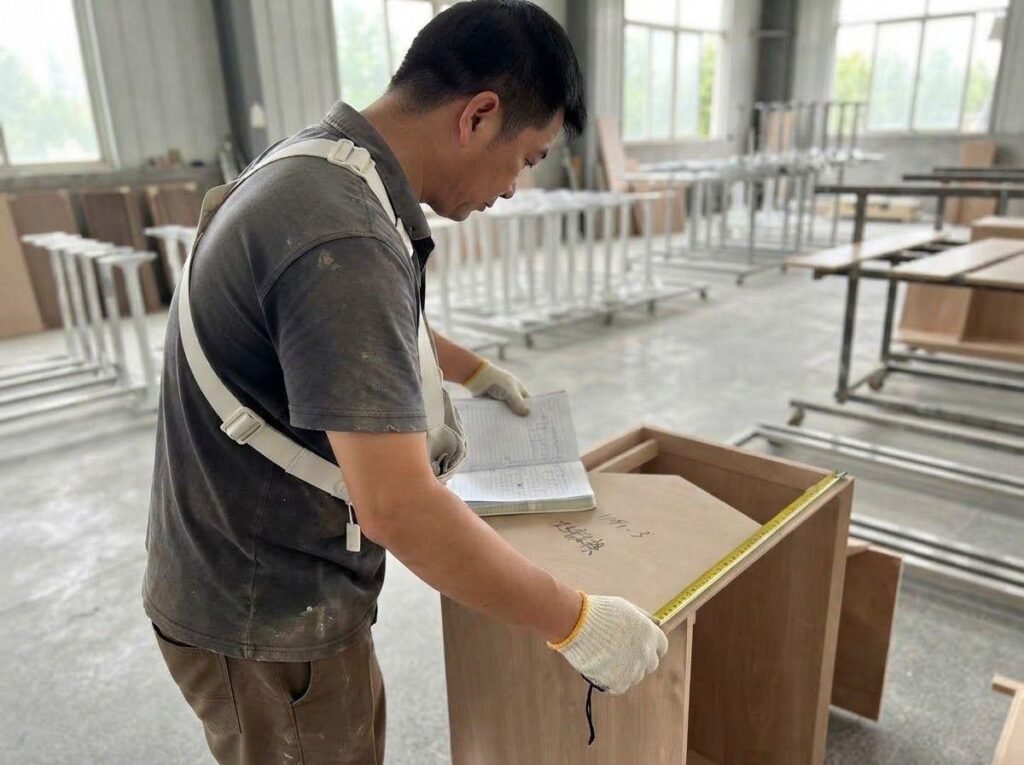
Weaponize your sample. Stop scrawling your signature in sharpie under a chair seat and calling it approved. Bring a set of Mitutoyo digital calipers. Take macro photos of the calipers physically measuring the critical reveals and gaps on the prototype. Make the factory boss sign those specific photos. Staple them to the PO.
Isolate the aesthetics. A 3mm variance on a hidden brace under a sofa cushion? Who cares. Let it go. A 3mm variance on a high-gloss wardrobe door? Absolute dealbreaker. Tell them exactly which three dimensions are completely non-negotiable. Give them slack on the hidden stuff to maintain their production speed.
Mandate the moisture. Write it down: timber must be dried to 8-10% MC before hitting the saws. Then force unannounced pin-meter tests during your mid-line inspections. Don’t trust the factory’s own meter, either. Bring yours.
Watch for the red flag. A factory owner instantly agrees to zero-tolerance limits on solid wood. He doesn’t try to raise the unit price. He can’t articulate his climate control processes. Run. He is feeding you absolute garbage to secure the 30% deposit and has zero intention of hitting those numbers.

The Buyer’s FAQ
Q: My pre-production sample was flawless. Why is the mass production run full of dimensional variances?
A: Because samples get built by two master craftsmen in a quiet, well-lit prototyping room. Production runs are slammed together by stressed line workers on a piece-rate quota. If your Chinese furniture specs aren’t idiot-proofed for assembly-line chaos, production will always drift from the golden sample. It’s inevitable.
Q: Can I reject a shipment over a 2mm tolerance issue?
A: You can certainly try. But unless you explicitly defined that exact 2mm gap as a critical defect in a bilingual QC manual before you paid the deposit, they will fight you. Hard. They’ll call it a standard industry variance and hold your goods hostage at the port.
Q: Do I really need to pay a third-party QC just to measure tolerances? Can’t they just eyeball it?
A: Unless you like gambling with a $100K container, yes. Visual checks are a complete joke for precision. Give the inspector a rigid list of five exact measurements to hit with calipers, and demand photo proof of the LCD readout.
Q: Is it actually possible to get European-level precision from a Chinese furniture factory?
A: Absolutely. The CNC gear sitting in a top-tier Guangdong shop is the exact same equipment sitting in Milan. It all depends on the time allocated to machine calibration and the allowable scrap rate. And both of those things are dictated entirely by the target price you negotiated. Pay for precision, and you will get it.
The Hard Lesson
I ate a massive loss on a container of dining chairs early in my career. Why? Because I stupidly thought my CAD file was a legally binding contract.
It’s not. Out here, a CAD drawing is a theoretical suggestion.
It only becomes real when backed by an approved physical sample, a signed millimeter tolerance sheet, and a stubborn inspector holding a tape measure before the 70% balance payment clears the bank.
Stop assuming your supplier inherently knows what you consider acceptable. Grab a pen. Draw a line in the sand. Put a hard millimeter number on it. In this business, if you don’t aggressively manage the margins of error, those margins will eventually manage you right out of a job.