


I was standing in a massive, fluorescent-bathed showroom in Longjiang—the chaotic, beating heart of Foshan’s furniture epicenter. The humidity outside was pushing a suffocating ninety percent, but the chill in that room? Instant. My client’s face went completely pale, mirroring the cheap white marble tiles under our feet. There, sitting proudly under a gaudy, faux-crystal chandelier, was his exact $2,400 curved velvet lounge chair. The “proprietary” one. We had spent six exhausting months prototyping it. Blood, sweat, and endless WeChat arguments over foam density. The factory just three miles down the road had signed a supposedly airtight NDA. Yet here it was, shamelessly rebadged and offered to anyone with a pulse and an export license for 800 bucks.
You think your latest mid-century modern revival piece is safe just because you emailed a PDF of a generic non-disclosure agreement to an over-caffeinated sales rep named “Kevin”? Think again.
If you’re sourcing Chinese OEM furniture, you aren’t just buying chairs or tables. You are playing a high-stakes, blindfolded game of intellectual property poker. And most western buyers are showing their cards before the dealer even shuffles. Sourcing from Asia takes a lot more than downloading a legal template from the internet. It requires leveraging factory culture, understanding the unwritten rules of the sub-contracting underworld, and knowing exactly how to weaponize local laws to protect your margins.
The Brutal Truth About Your “Ironclad” Contract
Let me give it to you straight. You won’t like it. But here is the uncomfortable reality most procurement directors refuse to accept: your standard Western NDA is entirely useless here.
I’m talking literally less valuable than the rough, single-ply toilet paper in the factory boss’s executive washroom.
Why? Because a contract written in English, governed by the laws of New York, London, or Sydney, cannot be enforced in a local Chinese court without jumping through flaming bureaucratic hoops that will bankrupt your legal budget. Trying to serve legal papers to a mainland entity under the Hague Convention? Expect that to drag out for over a year. And let’s say you miraculously win a default judgment in California. Congratulations. Chinese courts generally do not enforce US court judgments anyway. So you’ve just spent $50,000 in legal fees for a piece of paper you can frame in your office.
The plain English rule of thumb is this: An agreement in China is only as strong as your realistic ability, and financial willingness, to sue the factory in their own backyard.
If they know you won’t sue them in Guangdong or Zhejiang, they will sell your design. It’s really that simple.
KEY TAKEAWAYS
- Jurisdiction is your only shield: If your contract isn’t explicitly governed by Chinese law, it’s dead on arrival.
- NNN beats NDA: You need a Non-Use, Non-Disclosure, and Non-Circumvention agreement. Period.
- Bilingual is mandatory: Contracts must be in Chinese and English, with Chinese explicitly designated as the controlling language.
- Deterrence over litigation: The goal isn’t actually to go to court. It’s to make the financial penalty so clear and terrifying that the factory boss decides stealing your design just isn’t worth the headache.
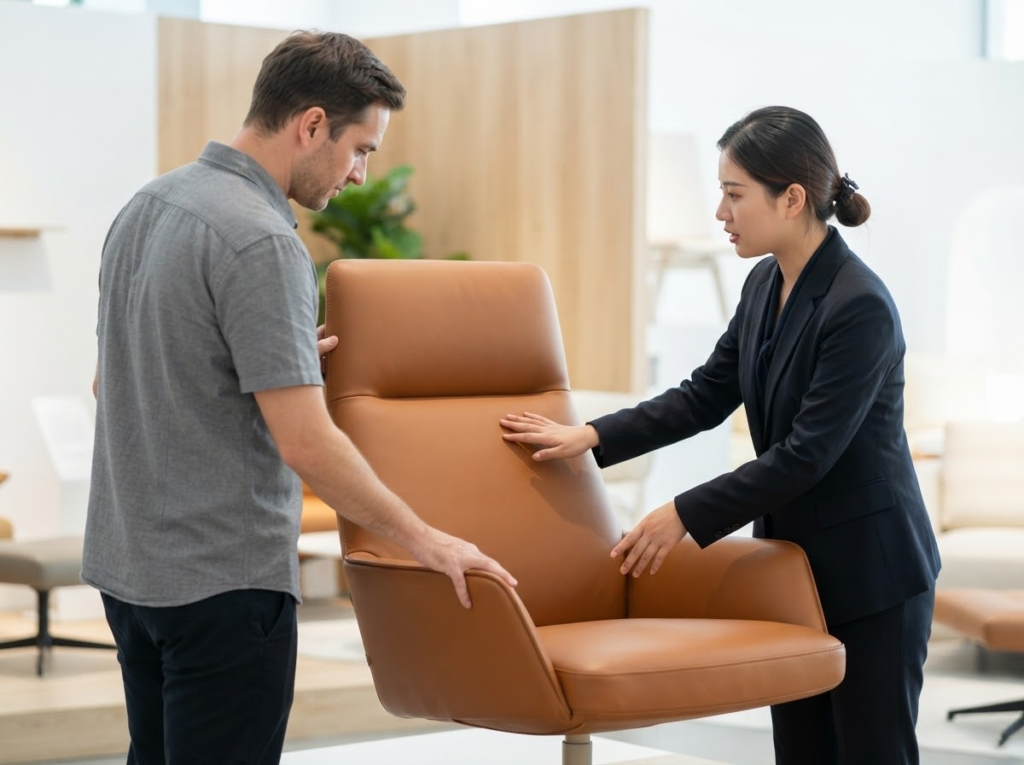
The Anatomy of a Design Leak
How exactly does your proprietary dining table end up in a competitor’s glossy catalog? It’s rarely a malicious, Bond-villain master plan hatched in a smoke-filled boardroom. Handing over your raw CAD files to a factory without proper safeguards is a lot like giving your grandmother’s secret, award-winning BBQ sauce recipe to a local diner, paying them to cook a batch for you, and just hoping they don’t serve it to their regular Tuesday night crowd. The temptation isn’t born of malice. It is structural. Baked right into the razor-thin margins of the business model itself.
I’ve sat in the chain-smoking tea rooms of countless Dongguan manufacturing compounds. What tends to happen is far more mundane—and far more frustrating—than corporate espionage. The factory boss, trying to shave three percent off his overhead, shares your custom mold with his cousin’s metal workshop two towns over. The cousin, who operates completely outside your purview, realizes the frame geometry looks incredible. He slaps a slightly cheaper foam cushion on it, changes the fabric from linen to a cheap poly-blend, and suddenly he’s pitching it to a high-volume buyer from Australia at the next Canton Fair.
Every single time.
The leak doesn’t start at the top; it starts on the gritty factory floor, where sharing components with sub-tier suppliers is just seen as smart, efficient business.
Are You Funding Your Competitor’s R&D?
Actually, that’s not quite right. Or rather, the problem isn’t just the factory’s instinct to share—it’s the western buyer’s fundamental misunderstanding of who is actually paying for what. Look at your invoices. You are paying for the custom injection molds. You are paying for the CNC routing setup. You are paying for the endless, frustrating trial-and-error prototypes to get the ergonomic pitch of that backrest just right. Weeks of labor. Tens of thousands of dollars.
Once the bugs are finally worked out? The factory is sitting on a perfected, market-ready product that cost them absolute zero in R&D. Not a single RMB.
Why on earth wouldn’t they run an extra 200 units on the ghost shift to sell domestically? To them, leaving that mold sitting idle on a shelf is a crime against capitalism. If you don’t have a legal cage around that design, you are effectively operating as a free research and development arm for your biggest global competitors. Think about that the next time you try to negotiate fifty cents off the unit price. You’re saving pennies while giving away the farm.
Finding Your Place in the Ecosystem
The risk of IP theft often correlates directly with the specific type of manufacturing partner you select. Too many designers just blindly search Alibaba and gravitate toward massive, 5,000-worker mega-factories in Foshan. Places where your mid-sized container order is barely a rounding error. In those massive ecosystems, your IP easily gets lost in the shuffle of a hundred sub-contractors, and nobody cares if your design leaks because you don’t represent enough of their bottom line.
But flip the script. While some buyers chase those large-scale manufacturers, others find that mid-sized specialists offer a completely different, often safer, risk-reward equation. Take operations like Interi Furniture, which focuses heavily on export-oriented project and hospitality seating. Factories in that specific mid-tier bracket often maintain significantly tighter internal controls precisely because their entire business model relies on repeat, long-term western contract buyers. When a factory’s core competency is highly specialized B2B export rather than just flooding the domestic wholesale market with cheap knockoffs, they generally have vastly more to lose by alienating a key client. (And yes, this happens more than anyone admits—choosing the wrong factory profile from day one is the root cause of 90% of IP leaks).
You have to match your order scale and IP sensitivity to the factory’s core DNA. If you are developing a highly unique, design-forward product, going to a factory that survives by churning out fast-furniture knockoffs by the tens of thousands is literal financial suicide.
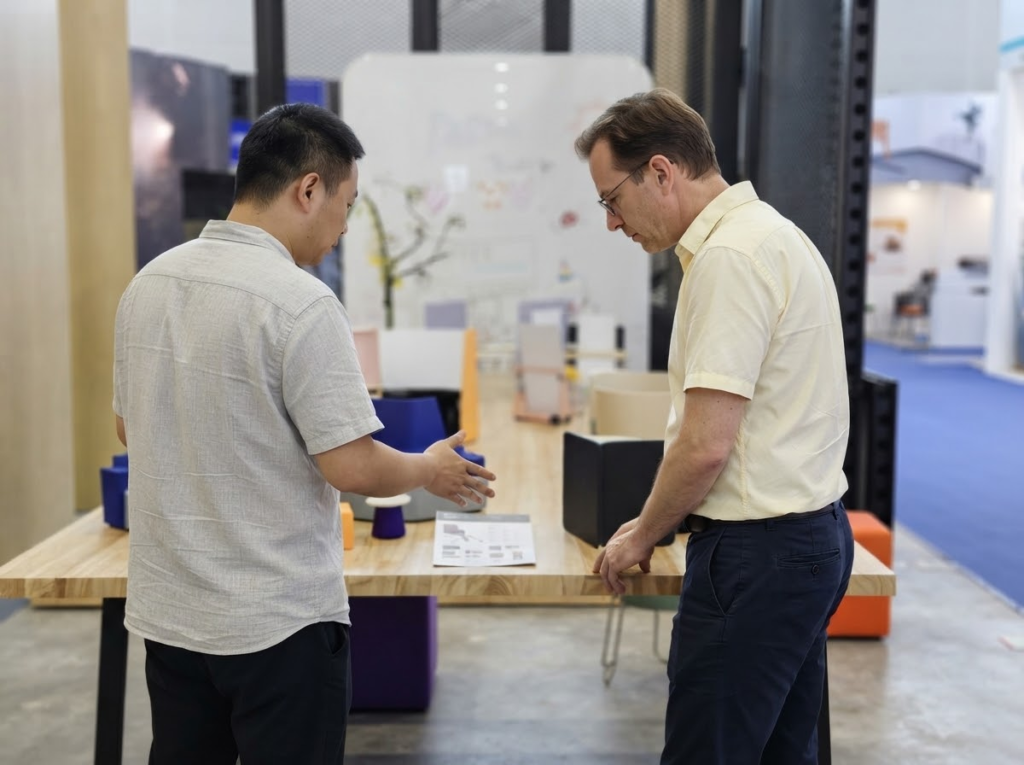
NNN vs. NDA: The Alphabet Soup of Protection
Let’s get back to the paperwork. China NDA enforcement is essentially a mechanism of psychological and financial deterrence, relying on local bilingual contracts known as NNN agreements rather than Western-style confidentiality clauses. If you close this tab right now and take away only one single thing from my 15 years in the dirt, let it be the profound, business-saving difference between an NDA and an NNN.
A standard NDA just says “don’t tell anyone our secrets.” But in the cutthroat world of Chinese OEM furniture, they don’t need to tell anyone. They just need to manufacture and use the design themselves.
An NNN covers Non-Disclosure, Non-Use, and Non-Circumvention.
Non-Use is the holy grail. It means they legally cannot use your design, your molds, or your CAD files for anyone but you. Not for their domestic brand, not for their cousin’s side hustle. Non-Circumvention means they can’t figure out who your end-client is (say, the massive hotel chain you are supplying) and secretly bypass you to sell to them directly for 20% less.
When you send a US-style contract to a Chinese factory, the sales rep smiles, stamps it with a red star seal (the “chop”), and files it in a drawer they never open again. If you want real, bite-down-to-the-bone protection, your contract must be enforceable in their local court system, with damages tied directly to their local currency.
| Feature | Your Lawyer’s Standard NDA | A Proper Chinese NNN Agreement |
| Governing Law | US/EU/UK (aka useless overseas) | PRC (Chinese) Law |
| Language | English Only | Bilingual (Chinese explicitly controlling) |
| Core Protection | Prevents sharing of corporate secrets | Prevents use, sharing, and bypassing your business |
| Enforcement | Astronomical international arbitration | Swift local Chinese court asset freezes |
| Deterrent Level | Laughably Low | Extremely High |
How to Actually Protect Your IP (Without Losing Your Mind)
You can’t completely eliminate risk in cross-border manufacturing. If anyone tells you otherwise, they are selling you a bridge. But you can absolutely manage it. Here is the exact, unvarnished framework I use when onboarding new manufacturing partners for high-end residential and hospitality clients who actually care about their IP.
- The “Split Manufacturing” Paranoia Play: Never, ever give one single factory all the pieces of the puzzle. Have Factory A manufacture the complex metal frames in Zhejiang. Have Factory B handle the upholstery and foam injection down in Guangdong. Assemble the final pieces at a third-party warehouse or even in your home country. Yes, it’s a massive logistical headache. Yes, it costs slightly more in freight. But it structurally guarantees nobody has the complete recipe to steal.
- File First, Ask Questions Later: Register your IP in China immediately. Even if you never plan to sell a single barstool in Asia, register your design patents and trademarks in China. The PRC operates on a strict “first-to-file” system. If a factory (or a professional patent squatter who watches western design blogs) registers your design before you do, they legally own it in China. They can literally have Chinese customs seize your own goods at the port for infringing on their bogus patent. I’ve seen it happen. It’s a nightmare.
- Hold the Tooling Hostage: Your manufacturing agreement must explicitly state that you own the molds, but go further. Physically tag the molds with your company name. Demand photos of your tooling in their warehouse. If you ever leave that factory, you send a truck to pick up those molds. If they refuse, your NNN agreement drops the hammer.
- Lock Down the Damages: Your NNN must include a highly specific, totally reasonable “liquidated damages” clause. If the penalty is vague or requires you to mathematically prove your lost western profits, local Chinese judges will often just throw the case out. A set, pre-agreed RMB amount makes the threat real, tangible, and terrifying to the factory owner.
- The Ultimate Red Flag: If a factory agrees to your English-only NDA instantly, without pushing back, without asking for clarification, and without sending it to their legal team—run. Do not walk. Run. It means they already know the document is legally worthless in their jurisdiction, and they have absolutely zero intention of honoring a single word of it.
- Audit their Showroom (and their trash): Spend an hour walking through their onsite sample room. Look closely. If you see products that clearly belong to famous western brands who you know for a fact do not own this factory, guess what? Next season, your proprietary designs will be sitting right next to them, catching the dust.
Frequently Asked Questions from the Factory Floor
Q: My factory rep says they won’t sign an NNN because it’s “too complicated” and their boss “doesn’t like legal trouble.” What do I do?
A: Walk away immediately. If a factory refuses a standard NNN, it usually means one of two things: they are already planning to use your expensive molds for other clients to pad their margins, or they simply lack the internal management structure to control their own engineers from leaking files. There are thousands upon thousands of highly capable factories in China. Don’t settle for one that won’t respect your basic commercial boundaries just because their unit price is a dollar cheaper.
Q: Can I just register my design patents in the US Patent Office and be safe globally?
A: Absolutely not. This is a classic rookie mistake. US patents protect you from competitors selling the item within the borders of the US. They do absolutely nothing to stop a Chinese factory from taking your exact design, manufacturing it in Dongguan, and selling it to aggressive buyers in Dubai, London, or Sydney. Because China is a first-to-file jurisdiction, failing to register there leaves your global flanks entirely exposed to anyone with a WeChat account and a shipping container.
Q: Who pays for the custom injection molds, and who actually owns them?
A: You should pay for them, in full, upfront. And your manufacturing agreement must explicitly, aggressively state that you own them. Here is the trap: if the factory offers to “subsidize” or split the tooling costs to help you out, they aren’t doing it to be nice. They will almost certainly view the resulting design as co-owned property. This gives them all the internal moral justification they need to sell it to other buyers to recoup their “investment.” Pay for your own tools. Own your own IP.
Q: Be honest with me. Does China NDA enforcement actually work in the real world, or is it just expensive smoke and mirrors sold by western lawyers?
A: Yes, it works. But only if the contract is drafted specifically for the Chinese legal system by someone who knows what they are doing. A properly drafted, Chinese-jurisdiction NNN agreement allows you to petition a local court to freeze a factory’s bank assets pre-trial, which is the ultimate, nuclear leverage to force a rapid settlement.
The Final Tally
At the end of the day, even the most aggressive, ironclad contract is just a piece of paper with a red stamp on it. It can never fully replace the grueling, unglamorous hard work of relationship building, boots-on-the-ground auditing, and relentless, paranoid quality control.
Take a hard look at your supply chain. Are you treating your factory like a disposable vendor, constantly grinding them down on price until they have no choice but to cheat you to survive? Or are you building a strategic partnership where their long-term financial success is intrinsically, undeniably linked to keeping your designs exclusive?
The most successful buyers I know—the ones who sleep soundly at night—don’t just weaponize their legal documents. They weaponize their buying power and their relationships. Never give a factory the keys to your brand without making sure you hold the absolute power to change the locks. Keep your eyes wide open, get your contracts localized by a ruthless Chinese lawyer, and maybe skip sitting under those cheap Foshan showroom chandeliers next time. You never know whose design you’re really sitting on.