


A buyer I know — Miami hotel guy, zero Mandarin — once spent three years and probably fifteen grand cultivating what he thought was Chinese business Guanxi. Dinners in Longjiang. Red envelopes. He even flew back for the factory owner’s son’s wedding. Figured this relationship would unlock pricing, priority production, and maybe — just maybe — protection when things went sideways.
His reward? A container of dining chairs. Legs three inches short. Not a little off. Three full inches.
The factory owner shrugged. “Machine calibration drift,” he said. Our buyer called his fixer — the same guy who’d eaten at his expense for thirty-six months — and got voicemail. Three days later, a text: “Factory says it’s within tolerance.”
That was the moment. The expensive, humbling moment. He realized he’d been playing the wrong game entirely. He didn’t get screwed because he lacked connections. He got screwed because he assumed connections would prevent it. That’s the core myth of trying to buy from China. Most Western buyers land in Guangzhou thinking Guanxi is some VIP pass — insider pricing, untouchable quality, a backdoor to the good stuff. It’s not. It’s messier. More transactional. And honestly? More democratic than the fairy tale version.
The Brutal Truth: Guanxi Is a Lubricant, Not a Lock
Let’s get uncomfortable.
Guanxi won’t save you from a bad contract. It won’t make a factory care about your 200-piece order when a hotel chain just dropped a 2,000-suite project on their desk. And it sure as hell won’t stop a production manager from swapping your oak veneer for something cheaper while you’re asleep in Miami.
The rule of thumb? Relationships in China open doors. They don’t guard what’s inside.
I’ve watched buyers with zero Mandarin and no local contacts secure better terms than veterans who’ve been “connected” for a decade. The difference wasn’t who they knew. It was how they verified. How they paid. How they inspected — not who took them to karaoke.
A factory owner in Dongguan told me something I’ll never forget: “The foreigner who checks everything himself, we respect him. The foreigner who trusts his ‘friend’ to check for him, we price accordingly.” That “accordingly” usually means a 12-18% premium buried in the unit cost. You’re not paying for better quality. You’re paying for the illusion that someone else is watching.
Key Takeaway
- Chinese business Guanxi accelerates introductions but never replaces contracts.
- The buyers who thrive don’t have better connections — they have better paperwork.
- When you buy from China, verification beats relationship every single time.
- A “connected” intermediary often takes a hidden commission that inflates your landed cost.
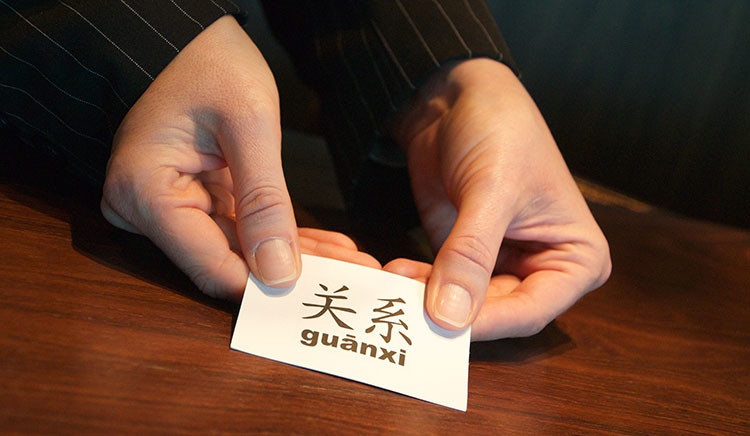
What Guanxi Actually Gets You (And What It Doesn’t)
China furniture sourcing is the process of identifying, vetting, and contracting manufacturers across China’s fragmented industrial landscape — a landscape where personal relationships can speed up access but never replace due diligence.
Think of Guanxi like a fast-pass at an amusement park. You skip the line. You don’t get a safer ride.
Can It Speed Up Initial Contact?
Yes. Absolutely. A warm introduction gets you past the showroom gatekeeper faster than a cold email ever will. In Foshan’s Shunde district, where salespeople size you up in thirty seconds flat, a local reference can mean the difference between a catalog handoff and an actual factory tour.
But speed isn’t strategy. I’ve seen buyers rush into production because their “connection” vouched for a factory they’d never laid eyes on. Six weeks later, they’re staring at a container that looks like it was assembled by interns. Because it was.
The real kicker? That connection often takes a commission you never see. Not always. But often enough that you should assume it.
Does It Guarantee Better Pricing?
Here’s where the mythology really unravels.
Factories price based on volume, materials, payment terms, and their current order book. Your relationship with the owner’s cousin’s college roommate doesn’t change any of that. What it might change is the transparency of the pricing. A connected intermediary might show you the real cost breakdown instead of the inflated “foreigner price.”
But you can get that same transparency without the three-year dinner circuit. You just need to know what questions to ask. (And yes, this happens more than anyone admits — I’ve seen buyers negotiate better net prices after one factory audit than their “connected” competitors get after five years of relationship maintenance.)
Actually, that’s not quite right. What most buyers miss is that Guanxi pricing advantages are real, but they’re temporary. Factory owners reward loyalty during slow months. When orders pile up? Your “special relationship” gets you exactly nothing. The container ships to whoever paid the deposit first. End of story.
The Insider Observation Nobody Talks About
Walk through any mid-sized factory in Nankang or Anji during peak season. The owner isn’t in his office sipping tea with old friends. He’s on the floor, screaming at subcontractors, trying to push a container out before the shipping window closes. In that moment, your Guanxi is worth precisely zero. The only thing that matters is whether your purchase order has a penalty clause for late delivery.
I’ve seen this in Dongguan. A buyer who’d been “like family” with a factory for eight years got bumped two weeks because a Russian distributor doubled his order overnight. The factory owner sent a fruit basket as apology. The buyer missed his hotel opening date.
The Real Currency: What Replaces Guanxi in Modern China
If connections aren’t the shield buyers imagine, what is?
The most successful buyers I’ve observed treat Chinese manufacturing like a system to be reverse-engineered, not a relationship to be cultivated. They don’t need an uncle in Longjiang. They need a checklist, a third-party inspector, and the willingness to walk away.
Verification Beats Connection Every Time
Let’s use an analogy. Buying from China without independent verification is like buying a used car because the seller seems nice. You don’t care about his kids’ soccer team. You care about the engine.
A factory audit isn’t rude. It’s expected. Professional Chinese manufacturers want buyers who audit. It signals you’re serious, you’re informed, and you’re not a tourist. The factories that resist audits? They’re the ones counting on your Guanxi-induced blindness.
While some buyers gravitate toward large-scale manufacturers in Foshan, others find that mid-sized specialists — operations like Interi Furniture, which focuses on project-based hospitality and residential furnishings from their base in Panyu, Guangzhou — offer a different risk-reward equation. You trade some of the volume discounts for more direct access to production managers and faster design iteration. The Guanxi calculus changes when you’re dealing with a 150-person operation versus a 1,500-person behemoth where you’re just another PO number.
The Documentation Gap
Here’s the thing that separates survivors from casualties. The buyers who thrive don’t have better connections. They have better paperwork.
A purchase order with clear specs. A quality agreement that defines “acceptable” with photos. A payment schedule that holds 30% until after third-party inspection. (Not 70% on B/L copy — that’s a different article entirely.)
The general pattern suggests that factories respond to structure, not sentiment. A buyer who shows up with a 12-point inspection checklist and a clearly worded contract gets more respect than one who brings a bottle of Scotch and stories about his last trip to the Great Wall.

The Guanxi Decision Tree: When Connections Help, When They Hurt
Not all Guanxi is useless. But it’s situational. Here’s how to think about it without the romance.
Use connections for:
- Initial introductions — Getting a first meeting in a crowded market
- Cultural navigation — Understanding why a factory owner won’t say “no” directly (hint: they won’t)
- Dispute mediation — A local voice can clarify misunderstandings that escalate when filtered through translation apps
- Market intelligence — Which districts are overheating, which materials are spiking in price
Do NOT use connections for:
- Quality assurance — Your “friend” has a financial interest in the factory’s success, not yours
- Contract enforcement — A handshake in Guangzhou isn’t legally binding in Miami
- Price validation — The “special price” might just be the standard price plus an invisible commission
- Production oversight — If you wouldn’t let your brother-in-law inspect your own house renovation, don’t let a connection inspect your $80,000 furniture order
Red flag checklist item that contradicts conventional wisdom: If a factory owner insists you work through his “trusted intermediary” and refuses direct communication, that’s not Guanxi culture. That’s a control mechanism. Walk away. The best factories in China speak enough English to handle commercial terms directly. They use WeChat, email, and video calls. Anyone who hides behind a relationship gatekeeper is usually hiding something else.

FAQ: What Buyers Actually Ask (And What They Should Know)
Q: Do I need to hire a Chinese fixer or agent to buy furniture from China?
A: No. For straightforward product categories — dining sets, sofas, case goods — you can deal directly with export-oriented factories. Agents add value when you’re sourcing complex custom pieces across multiple districts, or when you need consolidated shipping and QC. But for a single container of standard furniture? An agent is an unnecessary layer that increases cost and reduces accountability. If you can’t communicate directly with the person building your furniture, you’re already at a disadvantage.
Q: Will a factory give me worse pricing if I’m a first-time buyer with no Guanxi?
A: They’ll test you. First-time buyers often get the “foreigner price” — inflated by 15-25% because the factory assumes you won’t verify. But this isn’t about relationships. It’s about information asymmetry. Get three quotes. Ask for a breakdown of material, labor, and overhead. Mention you’ve audited factories in Foshan before (even if you haven’t — the implication that you know the landscape changes the dynamic). The worst pricing goes to buyers who signal they’re dependent on someone else to think for them.
Q: Is it true that Chinese business culture requires gifts and dinners before serious negotiation?
A: In 2010? Sometimes. In 2024? Not in the export furniture sector. Professional manufacturers in Guangdong and Zhejiang have been selling to Western buyers for two decades. They want your PO, your deposit, and your repeat business. A dinner might happen after a deal is signed, as a courtesy. But if a factory insists on multiple social meetings before discussing specs and pricing, they’re either not serious about export, or they’re running a long con to build false trust. Either way, it’s a waste of your plane ticket.
Q: Can Guanxi help if something goes wrong after production?
A: It depends on what went wrong. If it’s a minor finish issue and you have a friendly relationship, a factory might prioritize your rework. But if it’s a fundamental spec deviation that costs them money to fix? Your Guanxi evaporates. What actually helps in disputes is a clearly written contract with inspection clauses and a payment schedule that hasn’t already released 100% of funds. At the end of the day, a factory owner will honor a contract that costs him future orders faster than he’ll honor a friendship that cost him dinner.
Q: So do I need connections to buy from China, or not?
A: No. You need clarity, capital, and a verification system. Connections can make the first step easier. They cannot make the last step — receiving what you paid for — any more certain. Buy from China successfully, and you’ll realize the only connection that truly matters is the one between your purchase order and the factory’s incentive to deliver correctly.
The Hard-Earned Lesson
A few years back, I watched a hotel developer from Texas lose $40,000 on a Guanxi-driven deal in Longjiang. His fixer disappeared after the deposit cleared. The factory claimed the specs were “verbal.” The developer had no contract, no inspection report, and — worst of all — no one to blame but himself.
Six months later, he placed a larger order with a different factory. No intermediary. No dinners. Just a detailed spec sheet, a third-party inspector from SGS, and a payment schedule that held 30% until after container loading was verified. The furniture arrived perfect. The factory owner added him on WeChat personally. They now do two containers a year.
He didn’t build Guanxi. He built a reputation for being organized, demanding, and fair. And in the China furniture trade, that reputation travels faster than any introduction ever could.
So here’s the question I leave you with: Are you flying to Guangzhou to make friends, or to buy furniture that doesn’t embarrass you when the container seal breaks? Because only one of those trips is tax-deductible. And only one of them will keep your project on schedule.