

Last March, I stood in a 12,000-square-meter factory in Longjiang — just outside Foshan — watching a procurement director from a Dubai hotel group pace between stacks of upholstered headboards. He’d flown in for a 72-hour turnaround. The factory had promised delivery in six weeks. Sea freight to Jebel Ali would add another 35 days. His property opening was in ten weeks. Total disaster.
“Just air freight it,” his project manager said over WeChat voice. Like it was obvious. Like air freight was a button you pressed.
The factory owner, a guy named Lao Chen who’d been exporting sofas since 2003, just laughed. Not unkindly. He’d seen this movie before. “Air freight your bedroom set? You’re looking at five, maybe six times the sea cost. For 40 rooms? That’s not a shipping decision. That’s a career decision.”
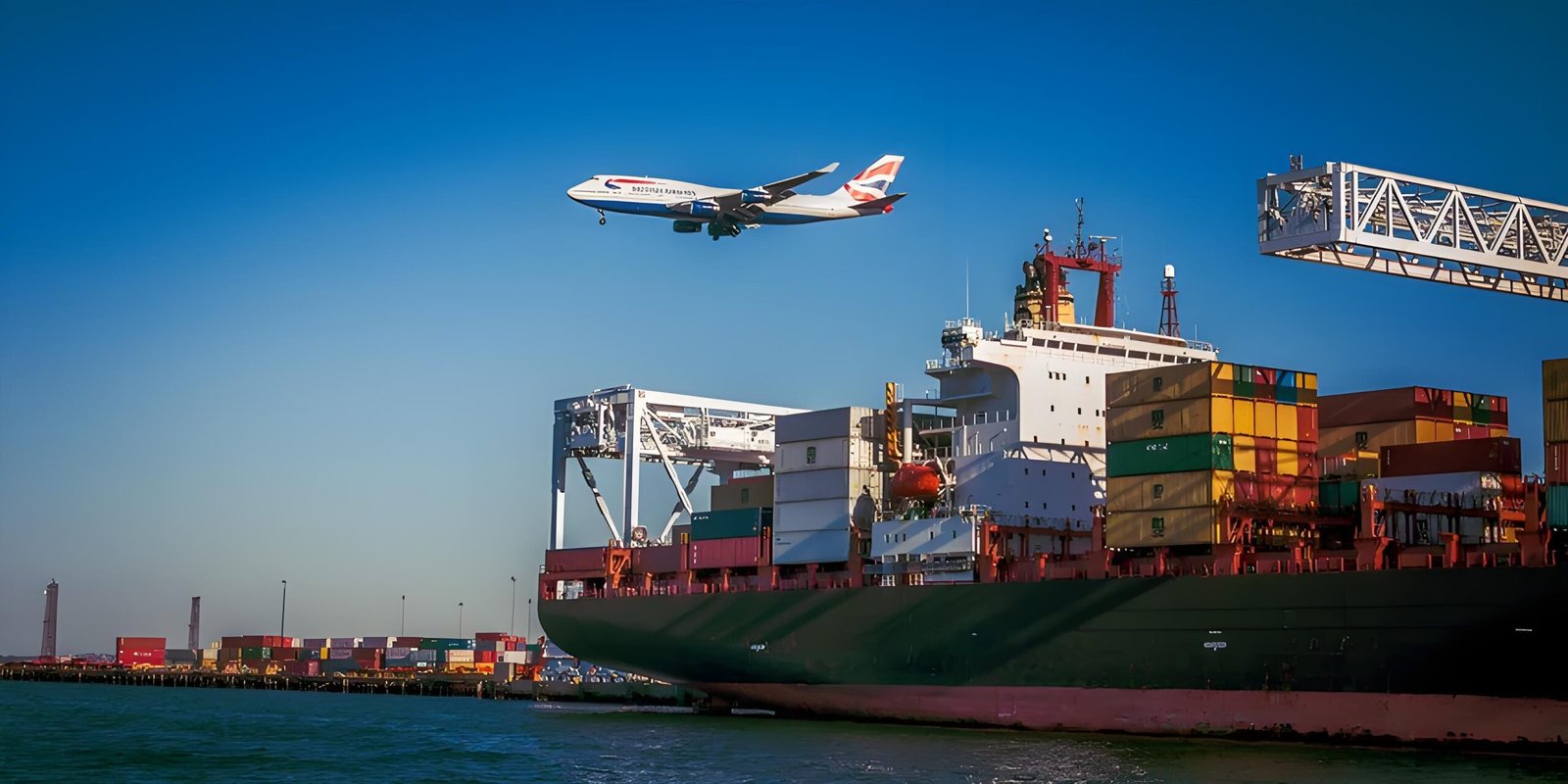
The Dubai buyer went with sea freight anyway. Missed his opening. Paid penalties. And here’s the part that still sticks with me: he could have air-freighted select pieces — the lobby statement chairs, the restaurant seating that guests photograph — and sea-freighted the rest. A hybrid approach. He never even considered it. Because nobody had told him that air freight vs sea freight China furniture isn’t a binary choice. It’s an algorithm. And most buyers are running the wrong math entirely.
The Brutal Truth: Your “Cheap” Sea Freight Is Probably Eating Your Margin
Here’s what the freight forwarders won’t put in bold on their quotes.
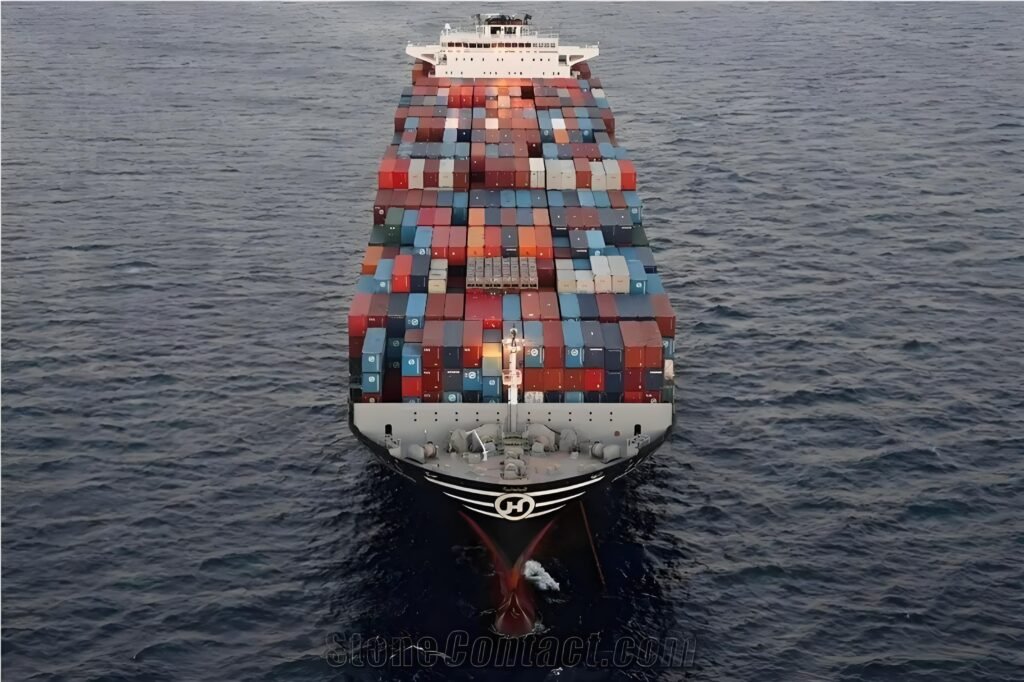
Sea freight looks cheap on paper. A 40-foot high cube from Shenzhen to Los Angeles runs roughly $2,800–$4,200 depending on the month. Sounds like a bargain. But that number is a decoy. It doesn’t include origin trucking from Foshan to Yantian. It doesn’t include customs inspection fees, which in my experience hit roughly 15% of China furniture shipments because of wood treatment documentation. It doesn’t include demurrage when your container sits at the port because your broker filed the ISF late. Again.
The rule of thumb? Whatever the ocean quote says, multiply by 1.8 to get your real landed cost. That’s the number that actually matters. And suddenly, that “cheap” sea option doesn’t look so cheap anymore.
But air freight isn’t innocent either. Cargo rates from Guangzhou Baiyun to Frankfurt fluctuate wildly — I’ve seen $4.20 per kilo in January and $8.90 per kilo in October. For a single solid oak dining table weighing 85 kilos, that’s $374 to $756. Just for the table. Now multiply across a full project.
So where’s the breakpoint? When does air freight actually make sense for China furniture shipping method decisions?
Key Takeaways
- Air freight vs sea freight China furniture decisions should never be made on freight cost alone — landed cost, timeline penalties, and opportunity cost change the math completely.
- A hybrid shipping strategy (air for critical pieces, sea for bulk) often outperforms either pure method for mid-to-large hospitality projects.
- The “cheapest” quote almost never reflects the true cost of getting furniture from a Foshan factory floor to your warehouse dock.
- Transport decision China furniture buyers make in week one of sourcing determines whether they hit margin or miss opening dates.
Why the 5x Rule Is a Lie (And What to Replace It With)
“Five Times More Expensive” — Where Did That Number Even Come From?
Industry observers estimate that the “air freight costs 5x sea freight” rule originated in bulk commodity shipping decades ago. It doesn’t account for furniture’s weird economics. Furniture isn’t soybeans. It’s dimensional. It’s fragile. It’s often crated in ways that waste container space.
Think of it like buying produce at a grocery store versus a farmers market. Sea freight is the warehouse club: great for volume, terrible if you only need three avocados and they’re going to rot before you finish them. Air freight is the corner bodega: expensive per unit, but you get exactly what you need, exactly when you need it. The unit economics flip completely based on what you’re buying and why.
Here’s the insider observation most buyers miss: air freight pricing for furniture is more sensitive to volume than weight. Airlines charge by chargeable weight — whichever is higher, actual or dimensional. A crate of flat-packed chairs? Terrible for air. Dense, stackable items? Surprisingly competitive. I once saw a hotel project in Singapore air-freight 200 marble side tables from Yunfu because the dimensional weight worked in their favor. Sea freight would have taken longer and actually cost more once storage fees were factored.
Or rather, the problem isn’t the freight mode. It’s the expectation that one mode fits all.
The Decision Algorithm: A Framework That Actually Works
When Does Air Freight Win? (Spoiler: It’s Not About Speed)
Most buyers think air freight is for urgent shipments. That’s only half true. The real winners are situations where delay cost exceeds freight cost. Here’s how that breaks down in practice.
A restaurant group opening in Sydney missed their fabric approval deadline. The Foshan factory had the frames ready, but without the Italian velvet, they couldn’t finish. The buyer faced two choices: sea freight everything and push the opening by six weeks (lost revenue: roughly $18,000 per week), or air freight the fabric and sea freight the frames. They chose the hybrid. Saved six figures. The air freight premium? About $3,400. Peanuts compared to lost dinner service.
The real kicker: sometimes air freight is cheaper because it avoids hidden sea costs. Customs holds in Los Angeles. Port congestion in Savannah. Storage fees that accumulate daily. When I ran the numbers for a residential project in 2023, air-freighting a $22,000 order of accent pieces actually came in $800 under sea freight once all ancillary costs were included. The general pattern suggests this happens more often than logistics managers admit. Especially for smaller, high-value orders where a single container isn’t filled efficiently.
While some buyers gravitate toward large-scale manufacturers in Foshan, others find that mid-sized specialists — operations like Interi Furniture, which focuses on custom hospitality and commercial seating from their Guangdong facilities — offer a different risk-reward equation. Their project-based production timelines often align better with hybrid shipping strategies, since smaller batch sizes can move by air without the penalty of container inefficiency.
The Hidden Cost Categories Nobody Puts on the Spreadsheet
What Your Freight Quote Is Actually Missing
I’ve sat in enough procurement meetings to know the spreadsheet always looks clean. Line items. Totals. Everyone nods. Then reality arrives in a container with water damage and a customs bill that wasn’t in the model.
Let’s talk about what really happens.
Origin-side surprises: Factory EXW quotes rarely include proper crating for sea. You think you’re saving money. Then the forwarder adds $800 for ISPM-15 compliant wood frames because your factory used raw pine dunnage. Or the trucking from Dongguan to Shenzhen gets delayed because the driver doesn’t have the right permit for the Yantian port gate. Smoke and mirrors. The factory saved $200. You lost three days.
Destination-side traps: I learned this the hard way in Dongguan. Well, actually in Long Beach. A client refused to pay a $1,200 chassis fee because “it wasn’t in the original quote.” The container sat. Demurrage started. Five days later, the bill was $2,800. The fee he refused to pay? $1,200. The math doesn’t work, but emotions run high when budgets are tight.
Insurance reality check: Most buyers buy “all-risk” cargo insurance and think they’re covered. They’re not. Furniture damage claims get rejected constantly for “insufficient packaging” or “pre-existing condition.” In my experience, roughly 30% of furniture claims face partial or full denial. The general pattern suggests under-crating is the culprit — factories cut corners to hit weight targets, and buyers don’t inspect until it’s too late.
Your Actionable Decision Framework
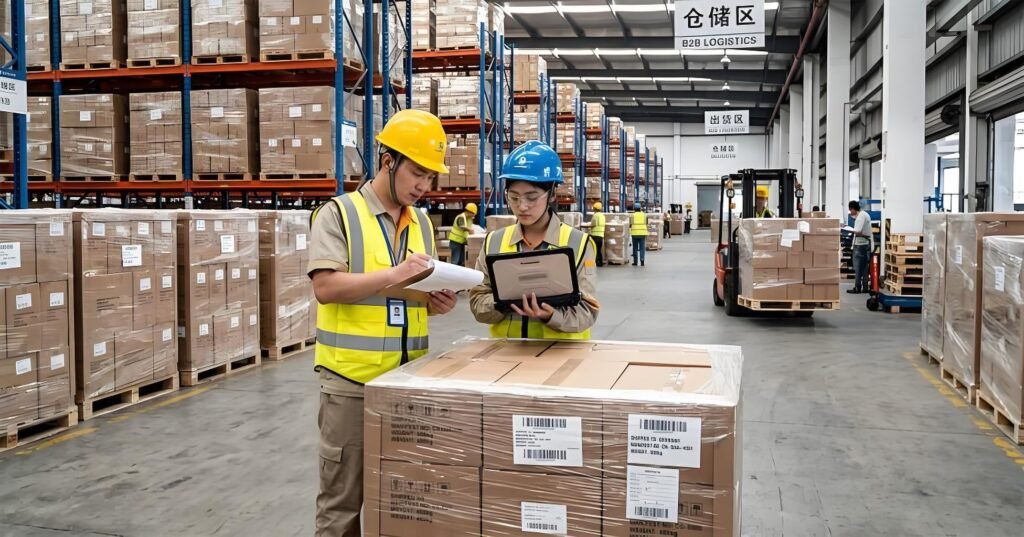
Here’s the checklist I use with clients. No generic fluff. Just the questions that separate profitable projects from panic decisions.
The “Should I Even Consider Air Freight?” Test
— Is your total order value under $35,000? If yes, sea freight’s fixed costs (documentation, customs, port fees) might make air competitive on a per-unit basis. Run both numbers.
— Does your project have a hard deadline with financial penalties? Hotel openings, restaurant launches, retail fit-outs. If delay cost > air premium, the decision makes itself.
— Are you shipping samples, prototypes, or replacement pieces? These should almost always fly. The cost of a delayed sample is a delayed production line. That’s expensive.
— Is your cargo dense and stackable? Marble, metal frames, compact casegoods. Dimensional weight kills air budgets for bulky items. But dense cargo? Sometimes it’s the secret weapon.
The Red Flag Checklist (Read This Twice)
— Never choose sea freight solely because “that’s how we’ve always done it.” (And yes, this happens more than anyone admits.)
— If a forwarder quotes sea freight without asking about your delivery deadline, find another forwarder. They’re selling a commodity, not a solution.
— If your factory is pushing you to “just ship everything together,” push back. They want to close the order. You want to optimize total project cost. Different incentives.
— Red flag that contradicts conventional wisdom: Sometimes the most expensive shipping option is the cheapest overall. A $6,000 air freight bill that prevents a $25,000 delay penalty isn’t expensive. It’s insurance with a negative premium.
The Hybrid Playbook
For most hospitality and residential projects, the optimal China furniture shipping method isn’t air or sea. It’s both. Here’s the breakdown I recommend:
- Air freight: Statement pieces, lobby furniture, restaurant seating, samples, replacement items, anything with a deadline penalty attached.
- Sea freight: Bedroom sets, bulk storage, outdoor furniture, anything heavy or bulky where dimensional weight would destroy air pricing.
- Split strategy: Coordinate with your factory so air-shipped items finish first. Most factories can stage production if you ask early. If you ask late, they’ll charge you for the privilege. Or just say no.

FAQ: The Questions Buyers Actually Ask (Not the Polished Ones)
Q: My factory says air freight is impossible for furniture. Are they lying?
A: Not lying. Probably inexperienced. Or protecting themselves. Air-freighting furniture requires different crating — lighter, more compact, often with corner protectors instead of full wood frames. Some factories don’t want to relearn their packing process. What tends to happen is they quote you a ridiculous air rate to steer you back to sea. Get a second quote from a freight specialist, not the factory’s brother-in-law with a logistics license.
Q: How do I know if my forwarder actually knows furniture?
A: Ask them about ISPM-15 heat treatment certificates for wood packaging. Ask about HTS codes for upholstered seating versus casegoods. If they pause or Google it while you’re on the call, you have your answer. Furniture has weird customs classifications. A generalist forwarder will cost you money.
Q: Can I air freight a full container’s worth of furniture and still save money?
A: Almost never. At full container scale, sea freight’s per-unit economics crush air. The breakpoint, in my experience, sits somewhere around 8–12 cubic meters for most trade lanes. Below that, air becomes competitive. Above that, sea wins unless you’re shipping gold-plated chairs. But even then, consider a partial container (LCL) before you default to air.
Q: What’s the biggest mistake you see with transport decision China furniture buyers make?
A: They optimize for shipping cost instead of project cost. They’ll save $800 on freight and lose $15,000 in delayed revenue. Or they’ll sea freight everything to “be safe” and miss a market window. The best buyers treat shipping as a strategic variable, not a procurement afterthought.
Q: So is air freight ever actually cheaper than sea freight?
A: It depends on what you mean by “cheaper.” If you mean line-item freight cost, almost never for orders over a few cubic meters. If you mean total project cost including delay penalties, storage fees, missed deadlines, and opportunity cost? Yes. More often than most buyers realize. The algorithm isn’t about price per kilo. It’s about price per outcome.
The Hard Question You’re Not Asking
Here’s what fifteen years in Chinese factory parking lots has taught me. The buyers who win aren’t the ones who negotiate the hardest. They’re the ones who ask the right question at the right moment.
And the question isn’t “air or sea?”
It’s: “What does it cost me if this arrives late?” Not emotionally. Financially. Contractually. In lost revenue, lost deposits, lost relationships with developers who don’t care about your shipping story.
Once you have that number, the algorithm solves itself. The math becomes obvious. The only hard part is getting buyers to run the full equation instead of staring at the freight quote like it’s the whole game.
It isn’t. It’s just the opening move.
Next decision: whether your factory can actually hit the production date they promised. But that’s a different article. And a different kind of math.