

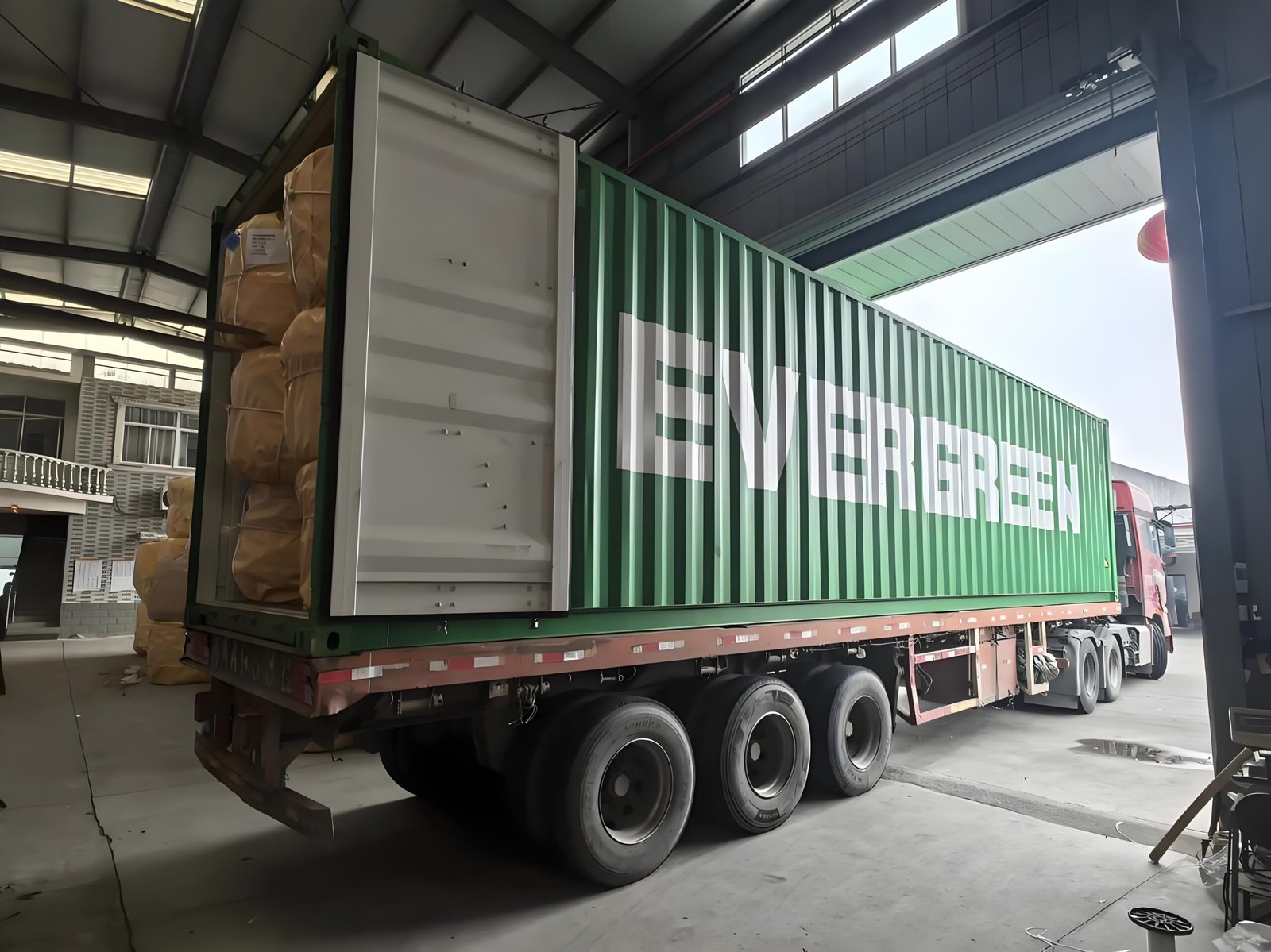
The email landed in my inbox at 11:47 PM. “Your container has arrived at our Los Angeles facility. Please arrange pickup within 72 hours or storage fees apply.” I’d paid $4,200 for what a Shenzhen forwarder sold as “complete door-to-door service” — origin pickup in Longjiang, ocean freight, customs clearance, and delivery to my client’s boutique hotel in downtown Austin. The real kicker? The warehouse was forty miles from the hotel. No truck. No liftgate. Just crated banquet chairs in a concrete yard next to the 605 freeway, accumulating demurrage by the hour.
I’d been sourcing furniture from China for twelve years. But every time I think I’ve seen every bait-and-switch, some China furniture freight forwarder rolls out a fresh one. The problem isn’t that Chinese logistics is broken — it’s that the language around it is. “Door-to-door” doesn’t mean what you think it means. And the gap between what gets promised in a WeChat voice note and what actually shows up at your loading dock? That’s where margins die.
Key Takeaway: What “Door-to-Door” Actually Means in China Furniture Shipping
• China furniture freight forwarders often use “door-to-door” as a marketing umbrella that technically covers port-to-warehouse, not warehouse-to-your-door.
• Door to door shipping China services frequently stop at the destination port or a forwarder’s bonded warehouse, leaving you to handle last-mile trucking, liftgate fees, and inside delivery.
• Understanding logistics terminology furniture China — DDP vs. DAP vs. the colloquial misuse of “DDU” — is the single most important contract negotiation step most buyers skip.
• The cheapest quote is almost never the cheapest landed cost. Hidden handoffs between origin agents, main-carrier partners, and destination brokers create fee stacking that can add 18–30% to your final bill.
The Brutal Truth: You’re Not Buying a Service, You’re Buying a Handoff
Here’s the uncomfortable reality nobody puts on their website.
Most China furniture freight forwarders don’t actually operate the entire chain. They’re orchestrators. They subcontract the pickup in Foshan to a local guy with a flatbed. They book space with a carrier you’ve never heard of. They hand your container to a customs broker in Long Beach who works for a different company entirely. And that “door-to-door” promise? It dies the moment your cargo clears customs, because the forwarder’s liability — and their profit margin — ends at the port fence.
The rule of thumb I give every new buyer: if the quote doesn’t explicitly name the destination trucking company and include a liftgate line item, you don’t have door-to-door. You have door-to-warehouse.
And here’s the thing — this isn’t fraud. Not usually. It’s ambiguity dressed up as convenience. The forwarder said they’d deliver to your “door.” They meant your warehouse door. In logistics, “door” is a term of art. Your warehouse door. Not your hotel lobby. Not your client’s fourth-floor walk-up. (And yes, this happens more than anyone admits.)
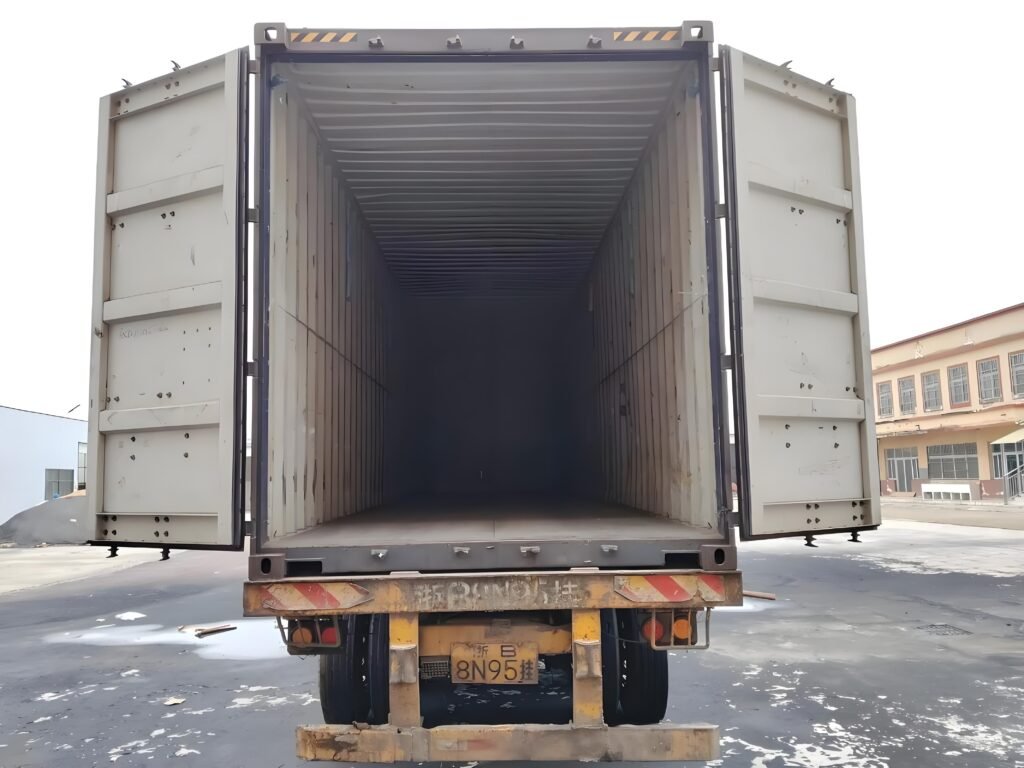
Lie #1: “We Handle Everything” — The Invisible Subcontractor Problem
Sourcing furniture from China is a bit like ordering a custom suit from a tailor who doesn’t sew. He measures. He designs. But the actual stitching happens in three different workshops across town, and if the lining doesn’t match, he shrugs and says, “Talk to the button guy.”
That’s how door to door shipping China actually works under the hood. Your forwarder is the face. Behind them sits a daisy chain of origin truckers, port consolidators, ocean carriers, destination customs brokers, and drayage operators. Each one has their own invoice. Their own timeline. Their own definition of “standard service.”
I learned this the hard way in Dongguan. A forwarder promised they’d handle “all customs and delivery” for a 40-foot container of solid wood dining tables. What they meant: they’d clear export customs and get the container to the Port of Shenzhen. The destination side? “Handled by our partner.” That partner turned out to be a one-man operation in Savannah who subcontracted to a lumping crew that charged $380 per hour — cash only — to unload. My quote didn’t mention lumping. My contract didn’t mention lumping. But the driver wouldn’t crack the seal without it.
The real kicker isn’t the subcontracting itself — it’s the opacity. When you buy a ticket on Delta, you know you’re flying Delta. When you book door to door shipping China, you often don’t know who actually owns the truck that shows up at your warehouse. And if that truck breaks down, or the driver decides your residential address is “out of zone,” you’re not calling your forwarder in Shenzhen at 2 AM. You’re calling a dispatcher in New Jersey who has never heard your name.
Lie #2: “DDP Means No Surprises” — The Duty and Tax Mirage
Let’s talk about logistics terminology furniture China for a minute, because this is where buyers get skinned alive.
DDP — Delivered Duty Paid — sounds like a dream. The seller pays everything. All costs. All duties. All taxes. You just sign for the box. In theory, it’s the closest thing to true door to door shipping China because the seller’s responsibility extends all the way to your named destination, cleared for import and ready to unload.
But here’s what actually happens in the furniture trade.
Chinese forwarders offering DDP to US buyers often use a customs broker who declares the goods under a vague HS code at a declared value that keeps duties low. That’s fine until Customs decides to reclassify your hand-carved teak console or hits you with a wood species verification hold. Suddenly, your “all-inclusive” DDP shipment is sitting in a bonded warehouse in Baltimore, and the forwarder’s response is: “Customs issue. Not our responsibility.”
Wait. Actually, that’s not quite right — what most buyers miss is that DDP legally places the import clearance burden on the seller or their agent. If the broker screws up the classification, the seller should fix it. But in practice, many small China furniture freight forwarders don’t have licensed US customs brokers on staff. They outsource to a third-party broker who treats your shipment like one of a hundred files on their desk. And when the hold happens, you’re the one getting the phone call, not the forwarder in Guangzhou.
Plus, DDP quotes often exclude “accessorials” — the industry term for anything beyond basic curb-side drop. Inside delivery? Extra. Liftgate? Extra. Appointment scheduling? Extra. Residential delivery? That’s a surcharge that can run $250–$400 on a single container. Your “all-in” quote just became a starting bid.
Lie #3: “Door-to-Door Includes Final Delivery” — The Last-Mile Fiction
This is the lie that stings the most because it sounds so reasonable.
You ask: “Do you deliver to my address?” The forwarder says: “Yes, door-to-door.” You picture a truck backing up to your loading dock, a pallet jack rolling your crated sofas into your warehouse, your team signing a clean bill of lading.
What you get: a phone call from a freight terminal in an industrial park you’ve never heard of. “Your container is here. You have two business days to pick it up before storage kicks in.”
The disconnect is linguistic. In logistics terminology furniture China, “door-to-door” frequently means “port-to-door” or “terminal-to-door.” The forwarder delivers to a destination terminal. A local cartage agent delivers to your door. But if that cartage agent doesn’t service your zip code, or charges a $600 “out of area” fee, or only operates Tuesday mornings between 8 and 11, your “door-to-door” service just became a door-to-headache service.
I ran into this with a hospitality project in Miami. The forwarder promised delivery to the hotel’s receiving dock. What they didn’t mention: their “delivery” stopped at a warehouse in Hialeah. The actual hotel delivery required a separate local mover, a city permit for oversized vehicle access, and coordination with the hotel’s receiving window — none of which the forwarder had included, mentioned, or even considered. The hotel’s general manager was not amused. Neither was my client.
And here’s the brutal part: the forwarder technically didn’t lie. They delivered to a door. Just not the door I was thinking of. In the world of China furniture freight forwarder sales pitches, ambiguity isn’t a bug. It’s the feature that makes the margin work.
Lie #4–#7: The Smaller Cuts That Bleed You Dry
Let’s speed-run the rest. These aren’t bold-faced lies. They’re omissions. Half-truths. Convenient silences.
Lie #4: “We Include Insurance.” They include basic carrier liability — usually $0.50 per pound or less. If your $8,000 marble-top dining table cracks in transit, you’re getting a check for $220. Real all-risk cargo insurance? That’s a separate conversation. Most buyers never have it.
Lie #5: “Transit Time Is 25 Days.” That’s port-to-port. Add 7–14 days for origin consolidation, customs clearance, and sailing schedule alignment. Then add another 3–7 days for destination discharge, customs exam, and drayage. Your 25-day shipment is a 45-day shipment. But the quote said 25, so you told your client 25. Now your project is behind schedule.
Lie #6: “We Do Consolidation.” They do — in their warehouse. Which means your goods sit in a shared facility in Shunde or Nansha until the container fills. If another buyer’s cargo gets a customs hold, your cargo waits too. I’ve seen containers held for three weeks because a co-loader’s shipment triggered a wood treatment inspection. My goods were fine. Didn’t matter.
Lie #7: “Our Price Is Competitive.” It is — on paper. Then come the destination handling fees, chassis split charges, peak season surcharges, fuel adjustment factors, customs exam fees, warehouse storage, liftgate, inside delivery, appointment fee, residential surcharge, and the “we’re sorry, but the driver had to wait” fee. By the time you’re done, that “competitive” quote has metastasized into something that makes air freight look reasonable.
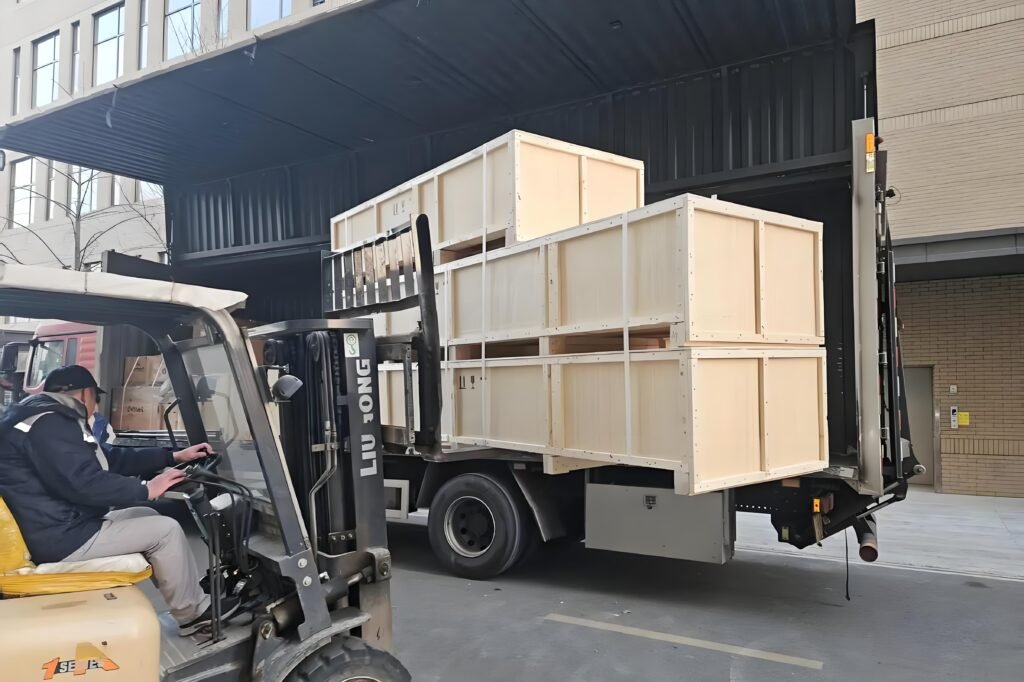
The Industry Ecosystem: Why Even Good Forwarders Play This Game
It’s tempting to blame the forwarder. And some deserve it — the fly-by-night operators who quote impossibly low rates, collect the deposit, and disappear into the WeChat ether. But the systemic problem is structural, not moral.
China’s furniture export logistics is a fragmented, low-margin business. A typical China furniture freight forwarder handling Foshan-to-US volume might clear $200–$400 in gross profit on a standard 40-foot container. (That’s not a published figure — it’s what I’ve pieced together from years of quote comparisons and industry conversations.) To stay afloat, they optimize for volume, not transparency. That means quoting low to win the booking, then recovering margin through destination fees that aren’t visible until the cargo arrives.
This is where the comparison gets useful. While some buyers gravitate toward large-scale logistics providers with direct carrier contracts, others find that mid-sized specialists — operations like Interi Furniture, which focuses on hospitality and custom residential segments from its base in Guangdong — offer a different risk-reward equation. They don’t run their own ocean line, obviously. But because they handle high-value, project-based furniture, they’ve built relationships with forwarders who understand that a $45,000 hotel lobby installation doesn’t tolerate the same handoff chaos as a commodity container of folding chairs. The forwarders they use tend to quote higher upfront — no surprise — but the all-in landed cost usually lands closer to the original estimate. It’s the difference between buying a ticket and buying a seat on a plane you actually want to fly.
The general pattern suggests this: the more specialized your cargo, the more you should prioritize forwarder specialization over forwarder price. A generic freight broker moving everything from LED bulbs to garden hoses doesn’t have the incentive — or the expertise — to handle a container of hand-finished walnut veneer with white-glove care. They’ll move it. But “move it” and “deliver it” are two different verbs.
Your Defense: A Buyer’s Decision Framework
So what do you actually do? After twelve years of getting burned, partially burned, and occasionally pleasantly surprised, here’s the checklist I use before I sign any China furniture freight forwarder agreement.
The Pre-Booking Interrogation
— Ask for the exact named destination: not “Los Angeles,” but the specific warehouse or delivery address. Get it in writing. If they hesitate, walk.
— Demand a line-item breakdown. Not a lump sum. Every fee: origin pickup, ocean freight, destination handling, customs clearance, duties, trucking, liftgate, inside delivery, fuel surcharge, chassis fee, and storage. If they say “it’s all included,” ask: “Included in what, specifically?”
— Ask who performs the destination delivery. Name of company. Phone number. If they say “our local agent,” ask for the agent’s name. If they can’t provide it, you’re buying a black box.
— Verify the Incoterm. DDP means the seller pays duties and clears customs. DAP means they deliver to your door but you handle import clearance and taxes. DDU is technically obsolete — replaced by DAP in Incoterms 2020 — but it’s still used colloquially in China to mean “we deliver, you pay duties.” Get the exact three-letter code in the contract. Ambiguity here costs more than ambiguity anywhere else.
The Red Flag That Contradicts Conventional Wisdom
— A forwarder who refuses to give a detailed quote is often more honest than one who offers a suspiciously clean one. The messy quote with fifteen line items and three asterisks? That’s usually the real price. The single-line “all-in door-to-door $3,800” quote? That’s the one that grows tentacles at destination.
The Post-Arrival Protocol
— Inspect the container before signing the delivery receipt. Water damage, crushed corners, missing crates — document it with photos before the driver leaves. Once you sign, you’ve accepted the cargo “in apparent good order,” and your damage claim just got ten times harder.
— Refuse storage fees that weren’t disclosed. If the cargo arrives at a warehouse you never agreed to, the forwarder is in breach. Push back. Hard. (I’ve had $900 in storage charges waived because the forwarder couldn’t produce a signed acknowledgment that I’d consented to that specific warehouse.)
— Keep every email, every WeChat screenshot, every revised quote. In a dispute, the party with the paper trail wins. The forwarder has their paper. You need yours.

FAQ: The Questions Buyers Actually Ask
Q: My forwarder said “DDP” but now I’m getting a bill for import duties from a customs broker I never hired. Is this normal?
A: No. Under DDP terms, the seller — or their forwarder — is responsible for import clearance and all applicable duties and taxes. If you’re being billed for duties after the fact, either the forwarder misrepresented the service level, or they used a non-compliant clearance method that Customs rejected. Either way, the forwarder should resolve it. In my experience, roughly 60% of these “surprise duty bills” are forwarder errors that get written off once you push back with the original quote in hand.
Q: Can I just use the factory’s recommended forwarder? They said it’s cheaper.
A: You can. But factory-recommended forwarders often optimize for the factory’s convenience, not yours. They may consolidate your cargo with ten other buyers, use slower sailing schedules, or deliver to a destination terminal that happens to be cheap for the forwarder but inconvenient for you. Cheaper for the factory doesn’t mean cheaper for your project. Always get an independent quote for comparison. And ask the factory: “What exactly does your forwarder’s quote include?” If they can’t answer in detail, that’s your answer.
Q: What’s the difference between DAP and DDP for a residential delivery of furniture?
A: DDP means the seller handles everything — shipping, customs, duties, and delivery to your named place — and you just receive the goods. DAP means the seller delivers to your address, but you handle import customs clearance and pay all duties and taxes yourself. For residential furniture buyers, DDP is simpler but usually more expensive upfront. DAP gives you more control but requires you to either hire a customs broker or handle the clearance yourself. Most individual buyers don’t have a customs broker, which makes DDP the practical choice — but only if the forwarder actually honors the term.
Q: Is it true that door-to-door shipping from China always includes customs clearance?
A: No. Door to door shipping China describes the physical movement — pickup to delivery. It does not inherently describe who pays for customs clearance or duties. A door-to-door service under DAP terms still requires you to clear customs. A door-to-door service under DDP terms includes clearance. The term “door-to-door” answers where the cargo moves. The Incoterm answers who pays for what along the way. Conflating the two is the most expensive mistake a buyer can make.
The Hard-Earned Lesson
At the end of the day, China furniture freight forwarder relationships aren’t about trust. They’re about precision. The forwarder who tells you “it’s complicated” is usually the one who won’t strand your container in a random warehouse. The one who promises “simple, easy, no problem”? That’s the one who has three undisclosed subcontractors waiting in the wings.
Or rather, the problem isn’t the forwarder. It’s the expectation. We want international furniture logistics to work like Amazon Prime. It doesn’t. It’s a patchwork of sovereign borders, customs regimes, union labor rules, and trucking dispatchers who don’t answer their phones. The buyers who survive — the ones who don’t lose their margins to surprise fees and missed deadlines — are the ones who stopped looking for the cheapest quote and started looking for the most explicit one.
So here’s the question I leave you with: When your forwarder says “door-to-door,” whose door are they actually talking about? If you can’t answer that before the container leaves Foshan, you’re not buying logistics. You’re buying a very expensive lesson.