

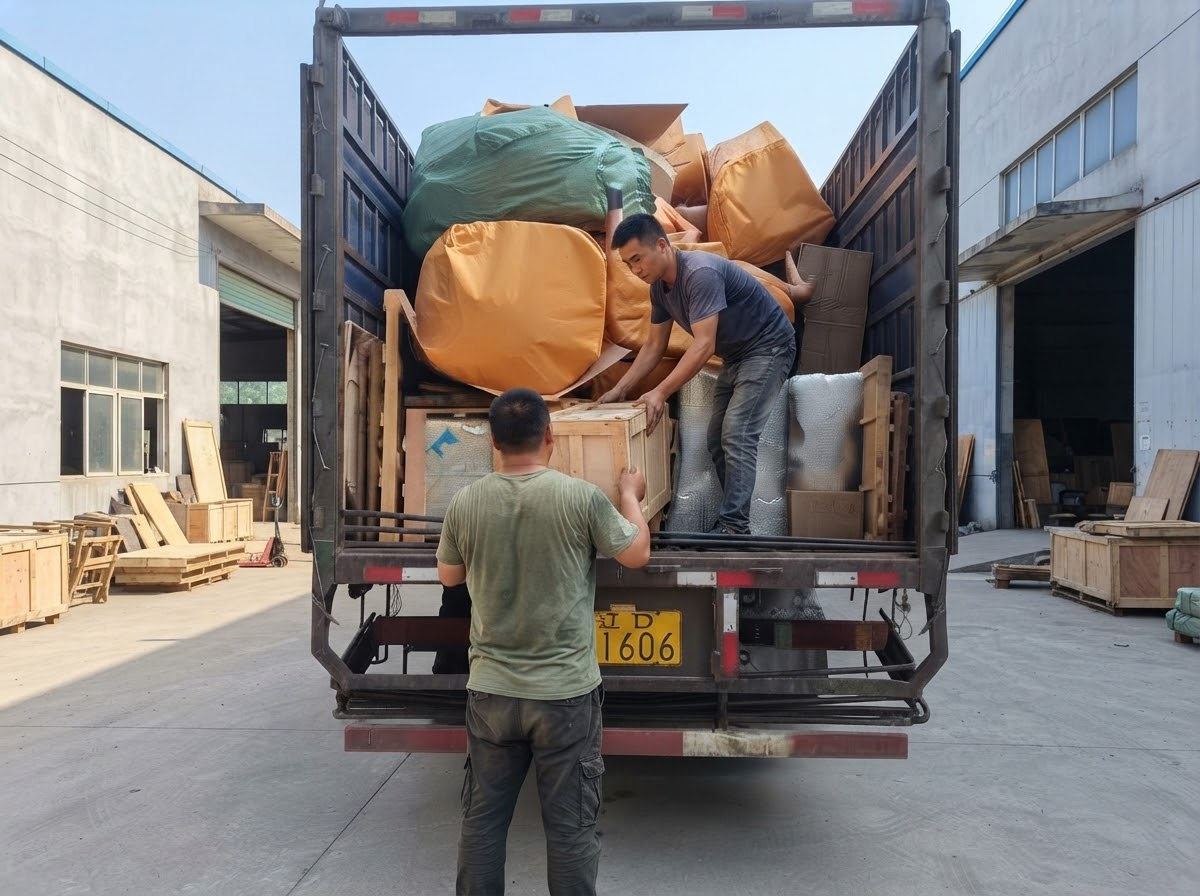
Picture this scenario. You’re a boutique hotel buyer based in Miami, currently sweating through a linen button-down inside a muggy Dongguan showroom. It’s mid-October. You are mentally spending the $180,000 you just “saved” on custom case goods.
The math feels like a total triumph, doesn’t it? You ground the factory boss down on the unit price for those fluted oak headboards by a solid 15%. You secured what looked like a shockingly decent ocean rate on your phone over WeChat. You even got them to toss in premium soft-close hardware for free just by threatening to walk away.
Fast forward exactly forty-five days.
That same triumphant buyer is staring blindly at a $42,000 invoice. It’s from the Port of Los Angeles. The line items are exclusively for demurrage and detention fees.
Poof. There goes the margin. There goes the year-end bonus. The entire financial justification for bypassing a domestic wholesaler and sourcing direct? Evaporated overnight.
(And honestly? I see this happen way more than anyone is willing to admit over drinks at High Point).
It’s the oldest trap in the book, and I hear about it every single shipping season. You fly 7,000 miles across the Pacific. You drink countless little paper cups of lukewarm oolong tea. You negotiate pennies on a nightstand. And then you hemorrhage tens of thousands of dollars on the California tarmac simply because your logistics strategy was built on a handshake, a WhatsApp message, and a prayer.
The Brutal Truth About Your Shipping Quote
Let me give it to you completely straight. The Chinese factory isn’t your biggest financial risk. Not even close. It’s the logistics paperwork you skimmed over while drinking your morning coffee.
Let’s be real for a second. When you import furniture from China, that initial ocean freight quote you get is basically just the cover charge to get into the club. That initial number is pure smoke and mirrors. The real money in this industry gets made—and lost—in the brutal fine print at the destination port. Most buyers treat logistics as a total afterthought. They hop onto a digital freight platform, or ask their sourcing agent for a buddy’s number, and just blindly pick the lowest bid.
But here is the cold, hard reality on the ground. If your initial forwarding quote is cheaper than the market average by 20%, you will almost certainly pay double that discount in port penalties later.
The forwarding guys know exactly how mid-tier buyers shop. So they strip the quote down to the bare studs. No chassis split fees. No pre-pull charges. They brush right over the realistic cost of terminal storage. They sell you a glossy fantasy where everything goes perfectly and customs agents just wave your box through with a smile.
Then reality hits. The container lands, customs slaps a random hold on it because the commercial invoice was formatted weirdly, and the clock starts ticking. $250 to $400 a day. Every single day.
Key Takeaways: The Demurrage Survival Guide
- The Real Cost: Port penalties can easily dwarf the actual wholesale value of the furniture inside the box if ignored for just two or three weeks.
- The True Culprit: Roughly 80% of these bleeding-cash situations trace back to bad paperwork or sloppy miscommunications made before the ship ever left Yantian.
- The Prevention: Negotiating extended “free days” upfront is the absolute best insurance policy you can ever buy. Period.
- The Market Reality: Suspiciously cheap initial freight quotes are almost always a Trojan horse for aggressive back-end charges. Don’t take the bait.
The Anatomy of a Port Trap
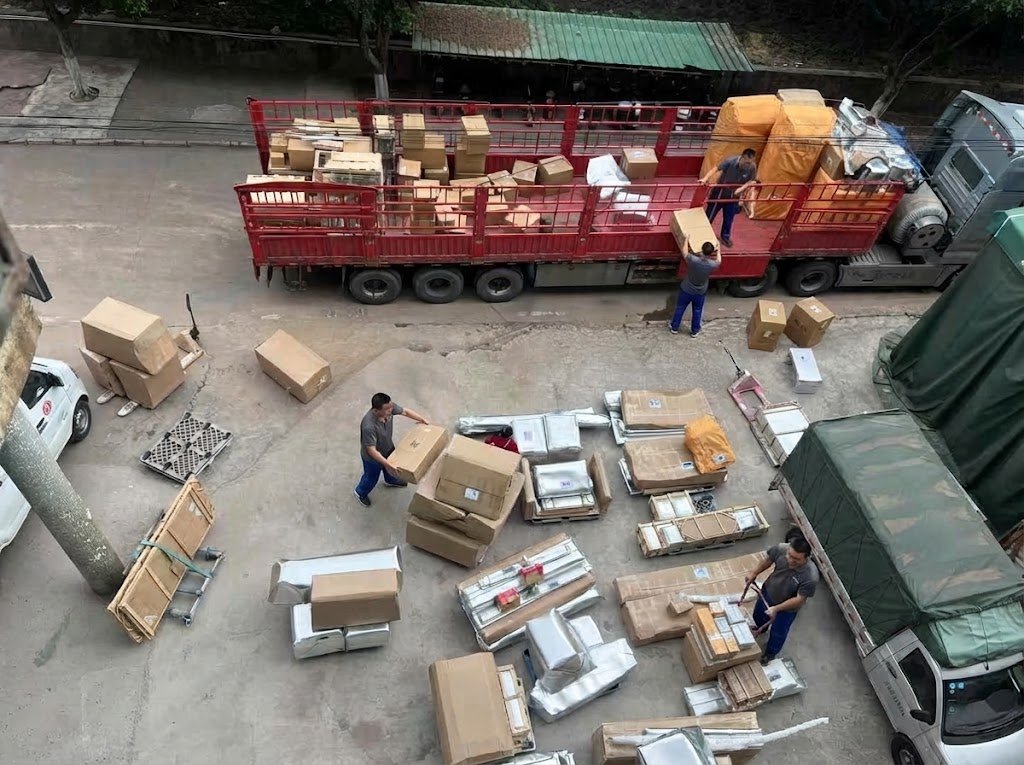
If you read a textbook, it’ll tell you that China freight forwarding is the complex orchestration of moving goods from a factory floor in places like Guangdong to your local warehouse, encompassing customs clearance, drayage, and ocean freight.
Actually, scratch that—orchestration implies everyone is playing the same sheet music. What most buyers miss is that it’s less of a symphony and more of a relay race run by people who actively refuse to speak to each other.
Think of it like booking a $29 flight on a notorious budget airline. The seat itself is dirt cheap. But they hit you with $60 for a carry-on, $15 to print your boarding pass, and $4 for tap water. By the time you touch down, you’ve paid legacy airline prices for an absolutely miserable experience. That is exactly how predatory logistics works in the overseas furniture trade.
Is Your Forwarder Actually Just a Guy with a Laptop?
I learned this the hard way in Dongguan about eight years back. I was touring a massive upholstery plant on a Tuesday afternoon. Watched four guys in sandals trying to literally tetris oversized velvet sectionals into a 40-foot High Cube in 95-degree heat. Meanwhile, the export manager was screaming into his phone in rapid-fire Cantonese.
Why? Because the buyer’s “forwarder” wasn’t a logistics firm at all. It was actually just a guy sitting in a Shenzhen strip mall brokering the load to a third party. That third party flipped it to a local drayage outfit in California. The drayage guys sent a trucker with the wrong size chassis.
Just brutal.
When you stack that many layers of middlemen, nobody takes responsibility when a customs exam gets triggered. The most dangerous words in furniture sourcing are “I thought you handled that.” The factory assumes the forwarder filed the ISF (Importer Security Filing). The forwarder figures the customs broker did it. If that ISF isn’t filed a full 24 hours before the ship leaves the origin port? US Customs hits you with a $5,000 penalty immediately.
Meanwhile, your steel box of lounge chairs sits in Long Beach burning $300 a day. The port authority doesn’t care whose fault it is. They just want their cash.
Free Days vs. Real Days
This is where the math gets genuinely ugly for importers who aren’t paying attention.
Every port and steamship line gives you a grace period to grab your box. These are your “free days.” Usually, it’s three to five days. Sounds perfectly reasonable to a newcomer, right?
Wrong. So wrong.
The “Five Free Days” Illusion
In a perfect world, a ship docks on Monday. Unloads on Tuesday. Clears customs on Wednesday. Your trucker scoops it up on Thursday. We do not operate in a perfect world. Out here, the terminal is completely jammed. The chassis (those heavy trailer frames the containers sit on) are nowhere to be found. Your trucker’s appointment gets scrubbed without warning because the port’s gate software crashed again.
And here’s the real kicker. The billing clock doesn’t care about software crashes. Weekends? Counted. National holidays? Counted.
| The Quote vs. The Reality | Standard “Discount” Quote | The Real-World Scenario |
| Ocean Freight (40HQ) | $3,500 | $3,500 |
| Destination Free Days | 3 Days | 3 Days |
| Actual Time to Clear/Pull | (Ignored in quote) | 12 Days |
| Demurrage ($300/day) | $0 | $2,700 |
| Detention ($200/day) | $0 | $1,800 |
| Chassis Split / Pre-pull | $0 | $650 |
| True Total Cost | $3,500 | $8,650 |
If you aren’t fighting tooth and nail for 14 to 21 combined free days before you sign the booking, you’re playing Russian roulette with your project budget. You’re betting on a level of logistical perfection that simply doesn’t exist on the transpacific route anymore.
The Customs Hold Extortion
Let’s talk about the absolute nightmare scenario. The dreaded customs hold.
Furniture is a massive red-flag category for customs. It’s bulky. It uses raw materials like solid wood that demand strict Lacey Act declarations. Plus, it’s heavily targeted for anti-dumping duties—especially wooden bedroom pieces coming out of Southern China.
When CBP (Customs and Border Protection) decides to peek inside your container, they take their sweet, sweet time. They might order a VACIS exam (which is basically running the box through a giant X-ray machine), burning a few days right off the bat. If some junior officer sees a weird shadow on the scan, they escalate to an intensive exam.
They drag your box to an off-site CES (Centralized Examination Station). They unpack the whole thing. They inspect it piece by piece, looking for contraband or misdeclared materials.
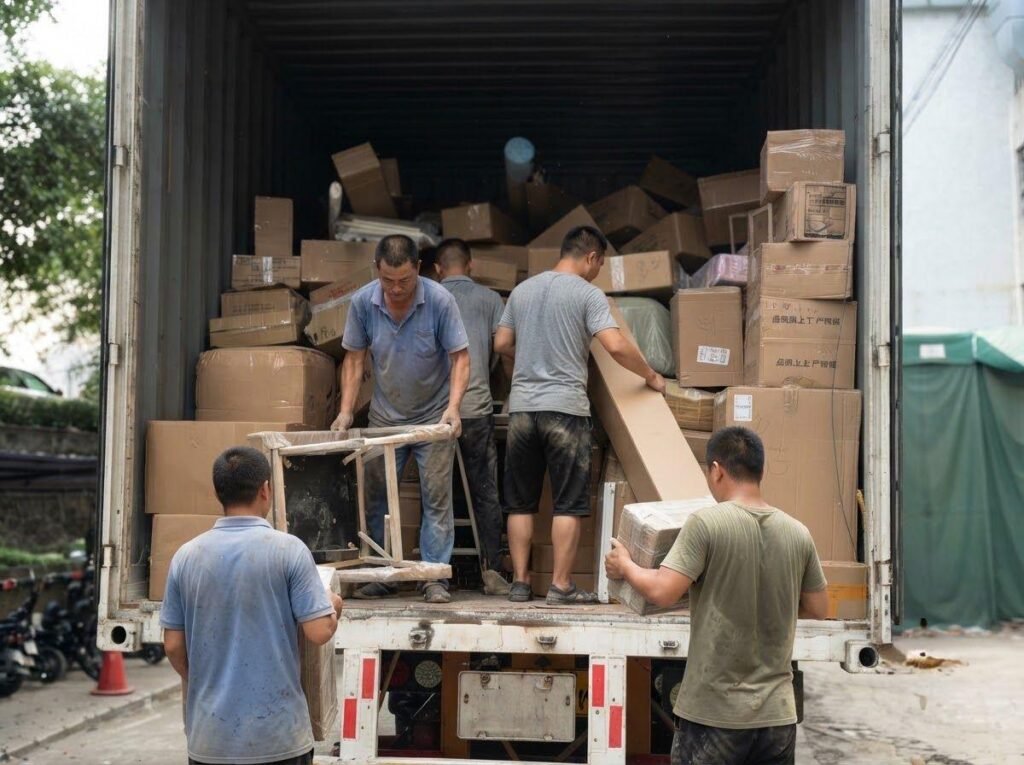
A standard 40-footer holds roughly 68 cubic meters of furniture. Unpacking and repacking that mess takes serious labor, dragging the process out for two to four agonizing weeks. Guess what happens while customs drags their feet? The port is happily charging you daily demurrage. You are literally paying the terminal operators a massive penalty because the federal government decided to rifle through your cargo.
It feels exactly like a shakedown. But it’s completely, 100% legal. And if your paperwork from the Chinese factory isn’t absolutely flawless, you are basically begging for an intensive exam.
The Sourcing Spectrum: Factory Size and Logistics Competence
Not all factories are created equal when it comes to keeping you out of demurrage hell. The partner you pick in China directly impacts how vulnerable you are when the ship hits LA or Newark.
You’ve got the massive, multi-category mega-factories in Foshan and Longjiang. These guys are pumping out thousands of standard SKUs a shift. They employ in-house logistics teams of twenty people. They rarely screw up commercial invoices, which is great. But they also won’t give you the time of day if you’re only buying two containers for a boutique gig. To them, your order is a rounding error. Try asking them to revise a packing list and see how long it takes.
Then you have the wild west of tiny workshops in places like Anji or Nankang. Unbelievable craftsmanship. Really beautiful stuff. But their idea of export documentation is a handwritten Excel sheet run through Google Translate. Buy from them, and your customs risk skyrockets. Cut a corner on a fumigation certificate or mess up one digit on the HS codes, and your cargo gets flagged instantly.
While some buyers gravitate toward those extreme ends, others find that mid-sized specialists—operations like Interi Furniture, which leans heavily into custom hospitality and high-end residential gear. Factories in this middle tier usually push enough export volume to deeply grasp the rigid requirements of US customs, but they stay agile enough to coordinate tightly with your nominated forwarder on WhatsApp. They know that if they mislabel a solid walnut desk on the packing list, it triggers a hold. Holds trigger demurrage. They get it.
It all boils down to the ecosystem. If your factory, your third-party QC inspector, and your forwarder aren’t reading off the exact same packing list, you are going to bleed cash.
How to Stop the Bleeding: An Actionable Framework
Hope is a terrible logistics strategy. Honestly, it’s the worst one. If you want to survive this game without getting fleeced at the docks, you need a rigid system.
Here is the exact protocol my teams run before clearing any shipment to leave the yard:
- Audit the Paperwork Before Loading: Do not let that truck leave the factory gates until the Commercial Invoice, Packing List, and Bill of Lading match perfectly. One missing digit on an HS code traps your goods for weeks. Check it twice.
- Negotiate “Free Time” at Origin: Grind your forwarder for 14 to 21 days of extended free time at the destination port. Do this before accepting the ocean rate. Once that cargo hits the water, your leverage is totally gone.
- Demand a Telex Release: Never rely on physical original Bills of Lading being mailed globally. If DHL loses a package, you can’t pick up your container. Demand a Telex release the exact second the factory gets paid.
- Use a Forwarder with Local Drayage Assets: Ask them outright on the kickoff call. “Do you own your trucks at the destination port, or are you brokering the final mile?” You want asset-based providers. Brokers vanish into thin air when the port gets congested.
- Deploy the Pre-Pull Strategy:If your receiving warehouse is full and can’t take the goods, pay your trucker to “pre-pull” the container from the port and park it in their private yard. A private lot might run you $50 to $100 a day. The port will charge $300 to $400. Do the math.
The Ultimate Red Flag: The forwarder promises a lightning-fast transit time but flat-out refuses to put demurrage caps or extended free days into the actual written contract.
If it’s not on the signed PDF, walk away. They are planning to margin you on the back end. They are literally banking on you running out of free days.

The Buyer’s FAQ
I field these questions constantly from designers and procurement heads who are in full-blown panic mode. Let’s clear the air with some hard truths.
Q: Why is my forwarder charging me $350 a day per container, but my buddy over at another firm only pays $150?
A: Because port tariffs are tiered, and different steamship lines enforce totally different penalty structures. Usually, days one through four after the free period are one base rate, and days five and beyond double or triple. Your buddy probably negotiated a cap. Or they’re riding with a carrier that has a softer tariff schedule. It pays to ask.
Q: Can I force the Chinese factory to pay these fees if they screwed up the documentation?
A: Good luck with that. Unless you’re holding an ironclad, legally enforceable contract drafted in Mainland China (which most mid-tier buyers absolutely don’t have), the factory will just point the finger at the forwarder. You are the Importer of Record. The port holds you liable. Pay the fee to release the cargo, then try to hustle a credit out of your next factory order. It’s your only real play.
Q: Does shipping LCL (Less than Container Load) protect me from demurrage?
A: Not completely, no. You don’t rent the whole box, sure, but LCL shipments go to a CFS (Container Freight Station) for deconsolidation. Fail to pick up your pallets in time, and you get hit with CFS storage fees. Those stack up just as aggressively as port demurrage, sometimes worse.
Q: If the port is a total mess and my trucker physically cannot get an appointment to pick up the container, do I still have to pay?
A: Yes. It’s the most infuriating part of this entire business. Even if the delay is 100% the port’s fault—due to a lack of chassis or a wildcat labor strike—they still charge you. This is exactly why baking extended free days into your initial contract is completely non-negotiable.
Q: Is it always the forwarder’s fault?
A: Absolutely not. Honestly? Half the time, it is the buyer’s fault.
Yes, I said it. If your receiving warehouse is jammed, or your construction site falls behind schedule, and you tell the trucker “hey, we can’t take delivery until next Tuesday,” you are actively generating detention fees yourself. The supply chain requires precision on your end, too. You can’t use the port as a cheap storage locker anymore.
The Final Takeaway
At the end of the day, importing furniture is a ruthless game of margins. And those margins are protected in the boring, unsexy details that most people skip over. The gorgeous, glossy finish on a custom hotel credenza doesn’t matter if the piece ends up costing 40% more because it sat roasting in a steel box in Southern California for three weeks.
Stop obsessing over squeezing the final 2% out of the factory unit price. Start obsessing over your supply chain’s fail-safes. Who actually owns the problem when the box hits the terminal? Are your documents bulletproof before the ship ever leaves Yantian?
If you can’t answer those questions instantly, you’re already behind.